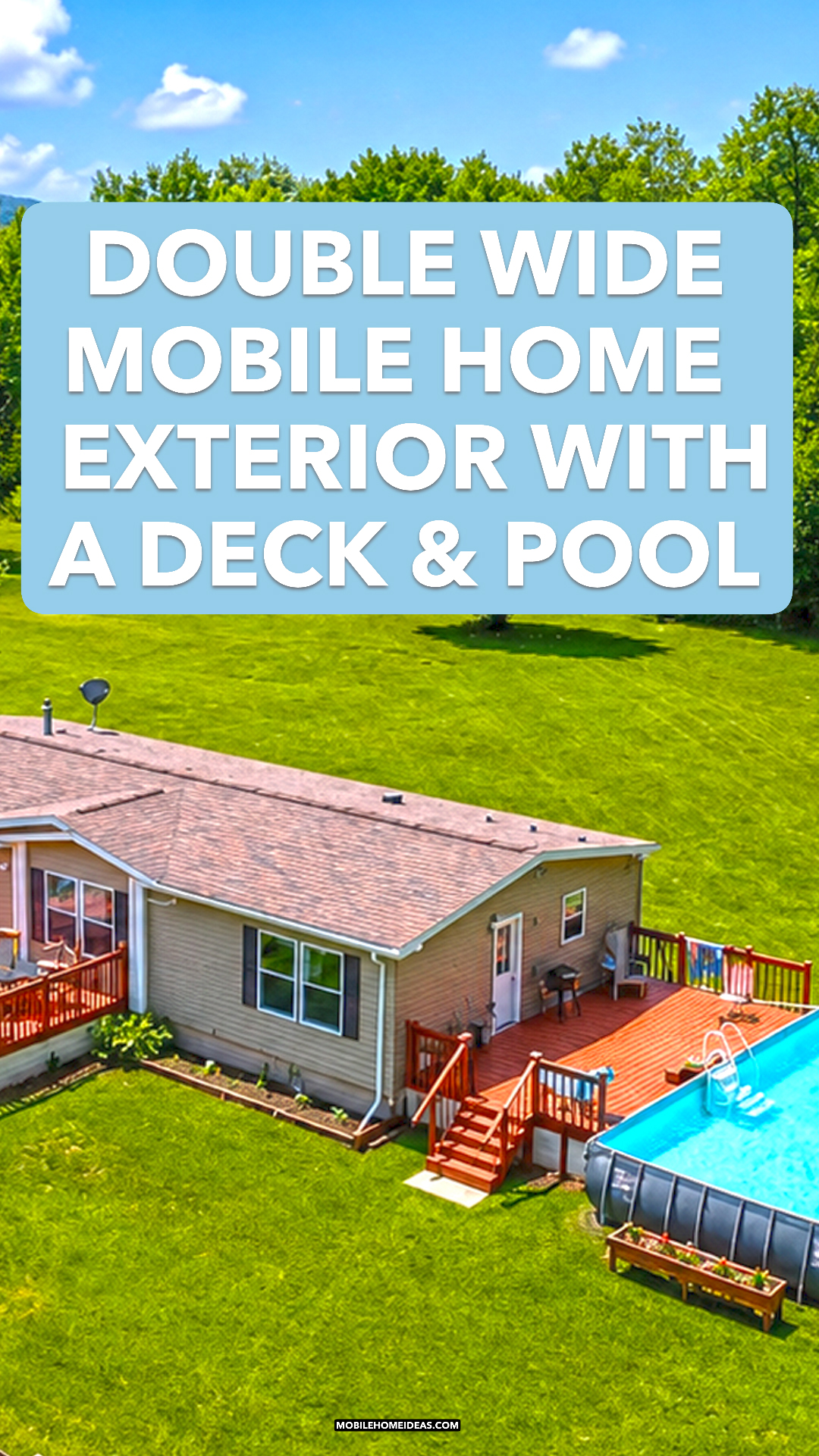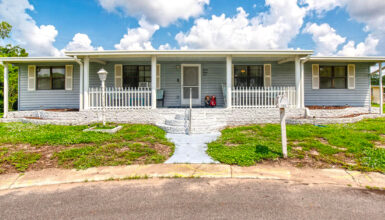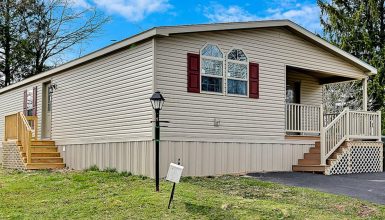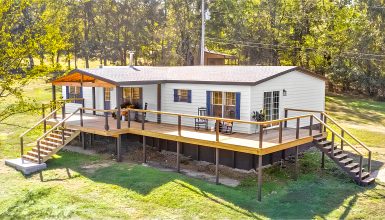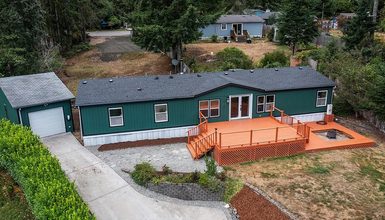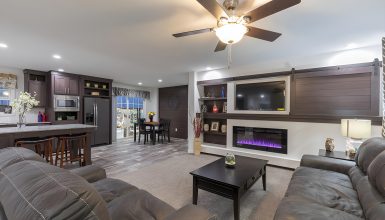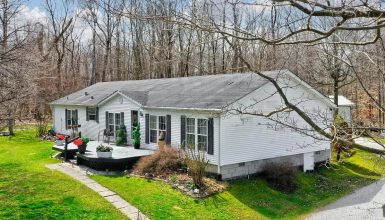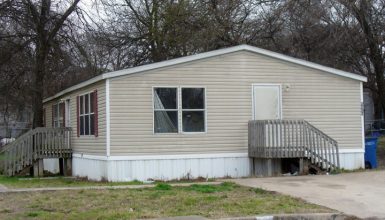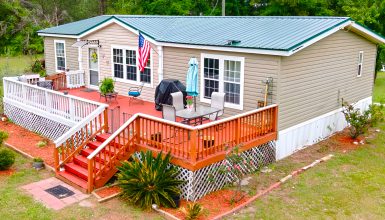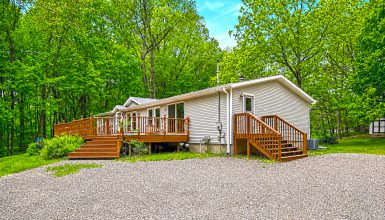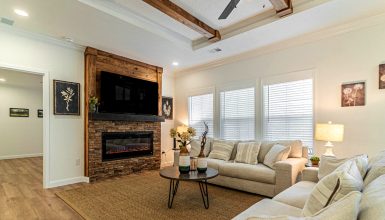
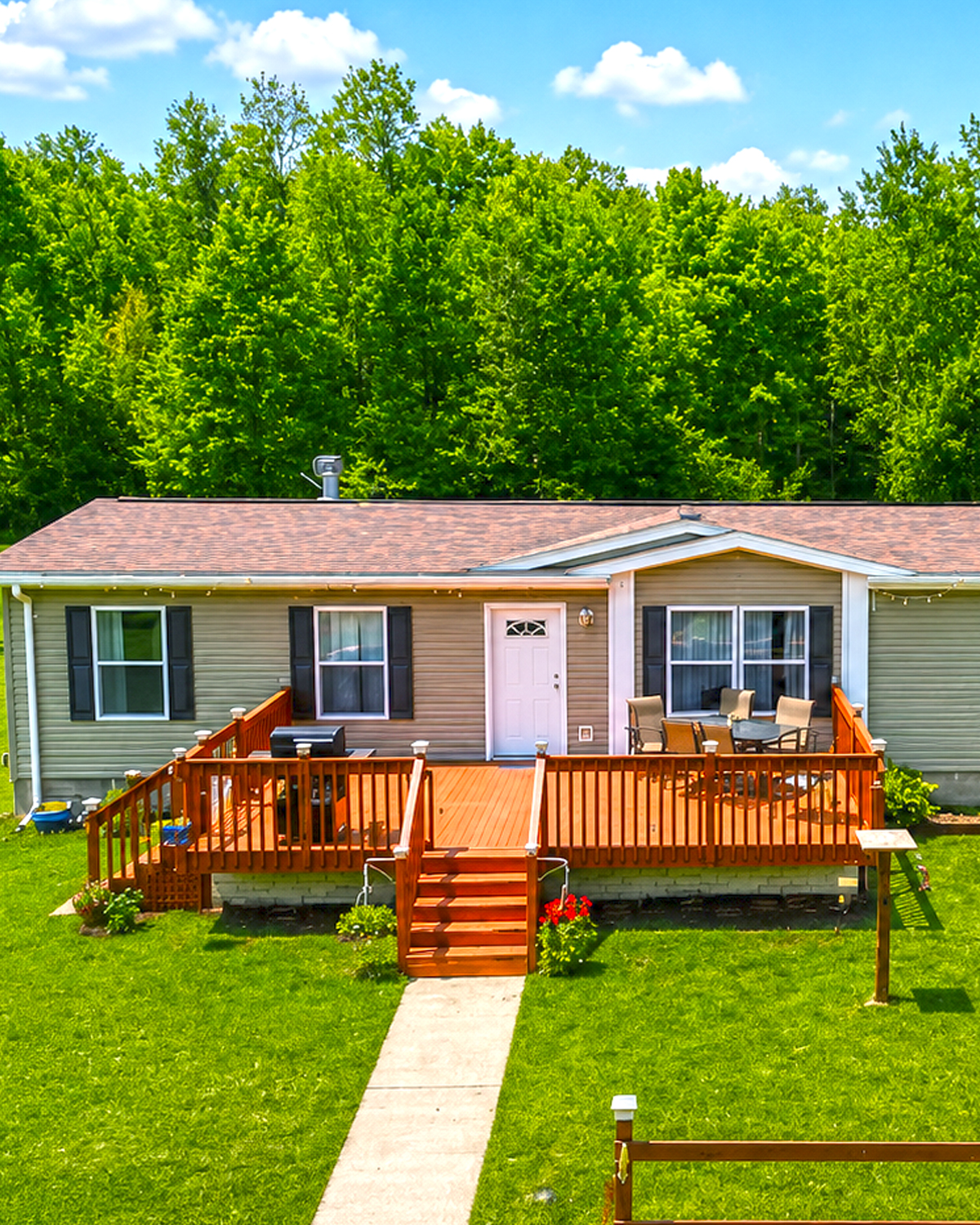
What if a simple double wide mobile home could feel like a peaceful country retreat? This exterior shows how much difference the right outdoor features can make. Soft gray siding, dark shutters, a warm wood deck, and a large above-ground pool give the home a relaxed and welcoming look. Add a huge green lawn and mature trees, and the whole property feels made for easy outdoor living.
Here is a closer look at the key design ideas and the cues that make this home work so well.
1. A Double Wide That Sits Naturally in the Landscape
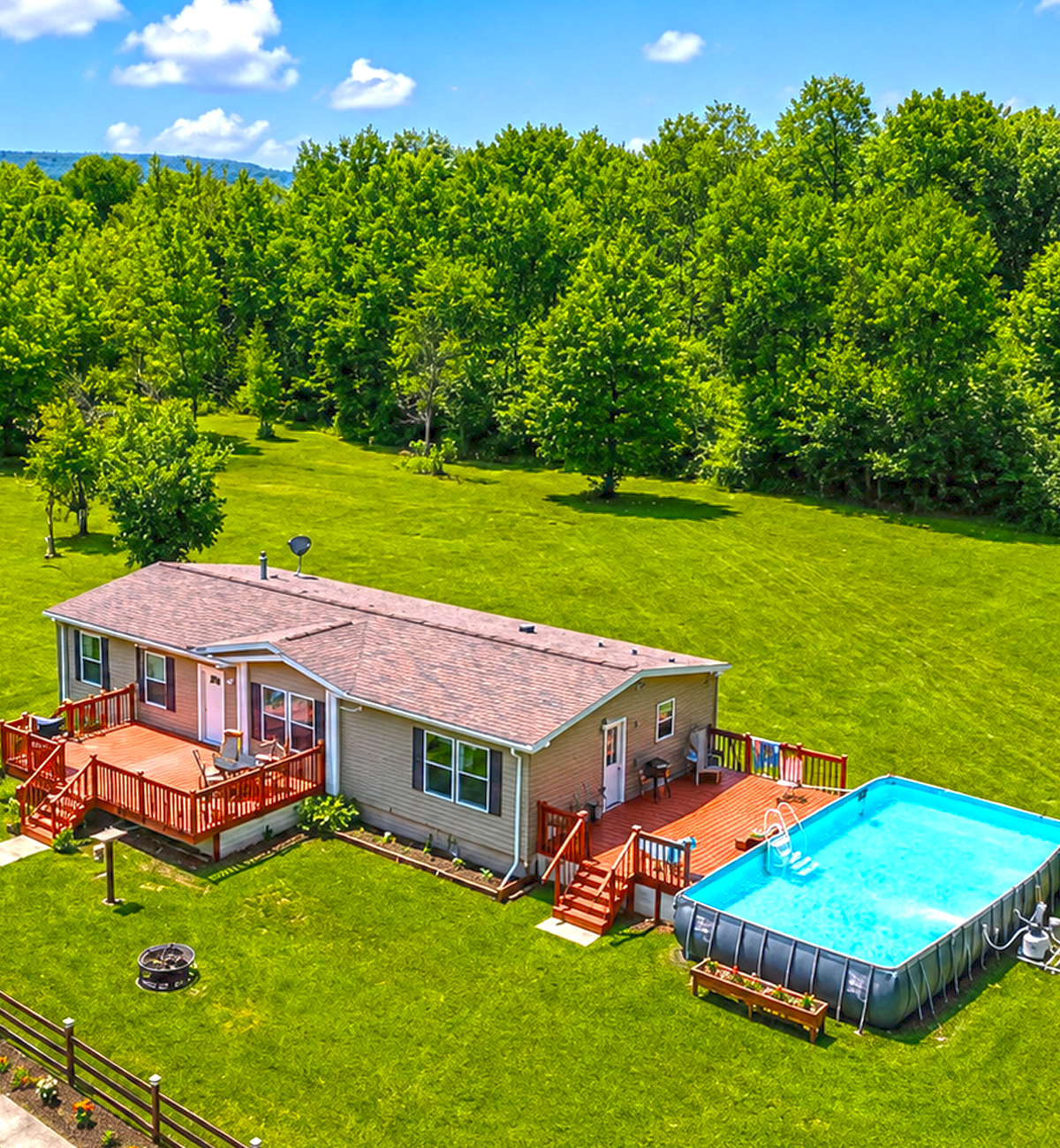
The setting plays a huge role in this home’s appeal.
From above, the house looks small compared with the wide stretch of lawn around it. That is a good thing. Rather than filling the site with structures, the design gives the home plenty of breathing room.
Large trees form a natural green wall along the edge of the property. The wooded backdrop also makes the home feel more private. Beyond that, distant hills add even more depth to the scene.
The lawn stays simple and open. There are only a few scattered trees and shrubs. As a result, your eye moves straight toward the home.
This approach works especially well with a double wide. These homes have a broad horizontal shape. Open land helps that low profile feel intentional rather than flat.
The property also has a true country feel. There is no formal garden or fancy hardscape. Instead, grass, trees, fences, decks, and useful outbuildings define the space.
Design cues
- Wide open lawn
- Mature wooded backdrop
- Long horizontal home placement
- Large areas of open grass
- Minimal formal landscaping
- Natural country setting
- Generous space around the house
- Distant hills and layered greenery
2. Soft Gray Siding Gives the Exterior a Calm Look
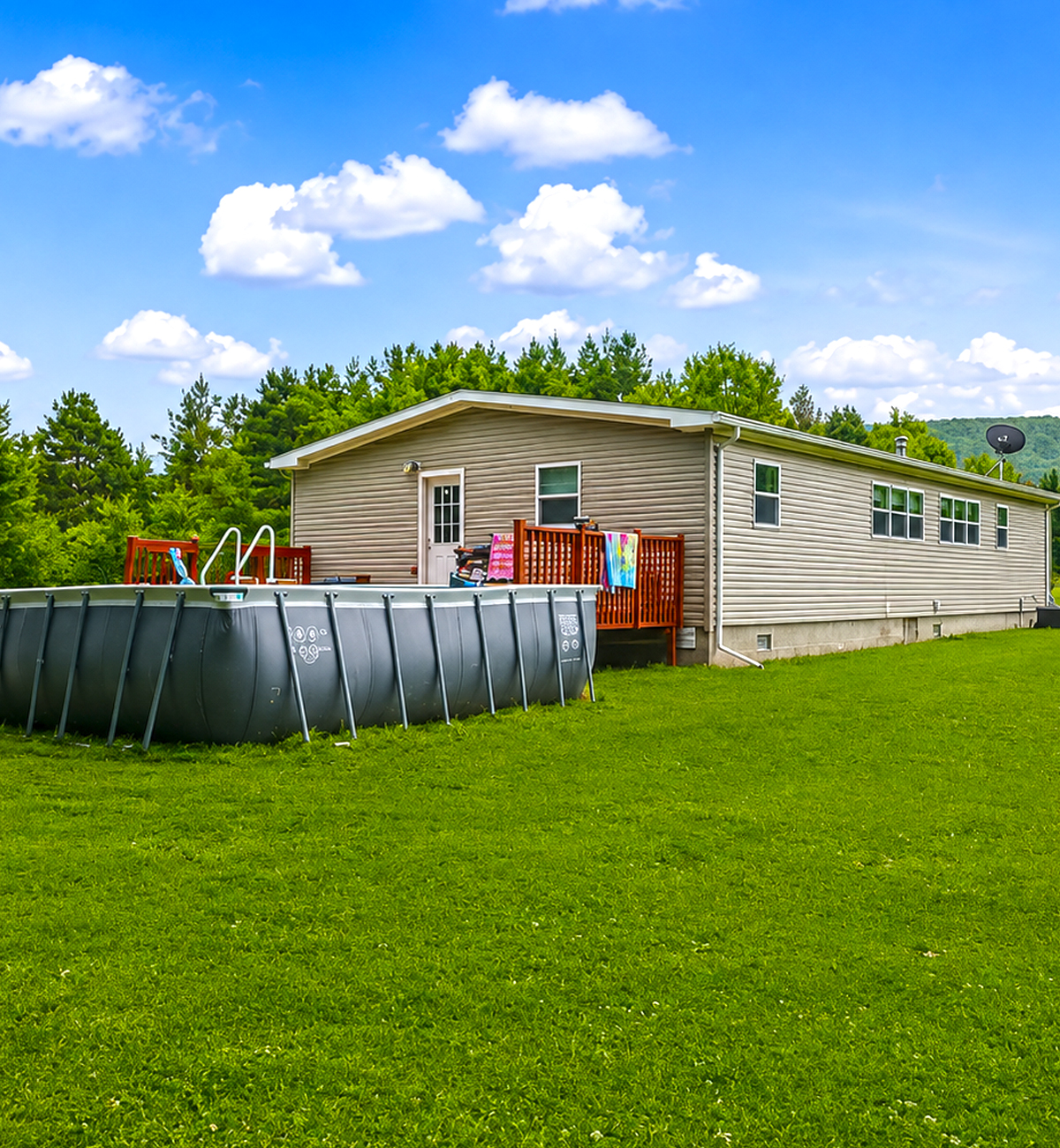
The home uses light gray-beige siding across most of the exterior. It is a smart choice for this large, long structure.
A dark color could make the facade feel heavy. Bright white might feel too sharp against such a natural site. This softer neutral sits between the two.
It also works well with the brown roof.
The siding has horizontal lines, which repeat the shape of the home. While that could make a double wide seem even longer, the windows, shutters, central gable, and deck railings break up those lines.
The color also acts as a quiet backdrop for the wood deck.
That contrast is important. The reddish brown deck becomes the strongest design feature without fighting with the walls.
For a home surrounded by so much green, a muted exterior color makes sense. Gray and taupe tones sit comfortably beside trees, grass, and wood.
Design cues
- Light gray or greige siding
- Simple horizontal siding pattern
- Low-contrast wall color
- Earthy neutral palette
- Warm brown roofing
- Strong contrast from stained wood
- Colors inspired by the landscape
3. A Simple Roofline Keeps the Home Approachable
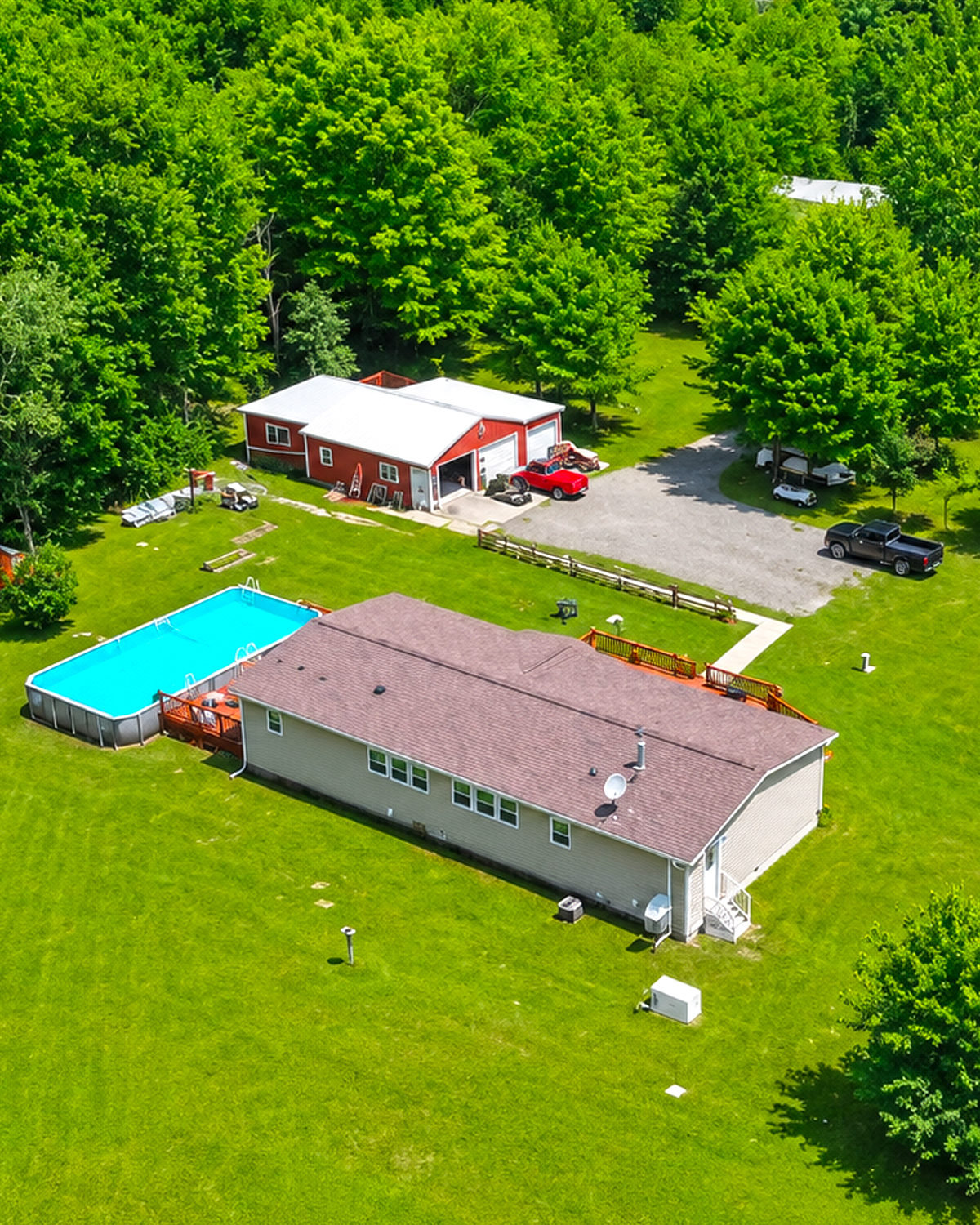
The roof is another good example of keeping things simple.
Most of the home has one long, low roof. However, a small front-facing gable marks the main entry area. That change makes a big visual difference.
Without the gable, the front could look like one long rectangle.
Instead, the raised center section creates a focal point.
The roof does not try to mimic an elaborate site-built house. There are no complex towers, dormers, or dramatic roof changes. That simplicity fits the home’s relaxed country setting.
The brown shingles also soften the overall appearance.
More importantly, the roofline works with the deck below it. Both stretch across the home, while the central gable and stairs give the facade a clear middle point.
This is a useful design lesson for double wides. You do not always need major construction to improve the front. Sometimes, one small architectural feature can break up a long exterior.
Design cues
- Low-pitched main roof
- Small central front gable
- Brown asphalt shingles
- Simple roof geometry
- Wide horizontal lines
- Clear central focal point
- Minimal decorative roof details
4. Dark Shutters Add Definition to the Windows
The dark shutters may be small, but they play an important role.
Against the pale siding, their deep brown tone creates clear contrast. Each window feels more finished because of them.
The shutters also help divide the long front facade into smaller sections.
This matters on a double wide because a row of plain windows can make the exterior look repetitive. Dark trim creates rhythm.
The windows themselves remain simple. Most appear to have white frames, so the design uses three basic exterior tones: pale siding, white accents, and deep brown shutters.
That limited palette keeps the home looking neat.
There is no need for ornate trim. The contrast does most of the work.
Design cues
- Dark brown shutters
- White window frames
- Repeated window groupings
- Simple rectangular windows
- High contrast against pale siding
- Minimal window trim
- Balanced spacing across the facade
5. The Large Front Deck Changes the Whole House
The deck is the star of this exterior.
It stretches across a generous part of the front of the home and creates a strong transition between the house and yard.
That transition matters.
A double wide can sometimes look as though it simply sits on top of a site. A large deck helps anchor it to the land. It gives the house a base and creates a clear outdoor destination.
The warm reddish stain stands out against the gray siding. Therefore, the deck feels like an intentional design feature rather than an add-on.
It is also deep enough for more than walking.
There is room for seating, dining, grilling, and movement. That makes the deck feel like a true outdoor living room.
The railings match the decking. Repeating one wood tone keeps the structure simple.
Design cues
- Wide front deck
- Warm red-brown wood stain
- Matching railing and decking
- Generous usable depth
- Open outdoor living space
- Strong connection to the yard
- Simple square railing posts
- Full-width visual impact
6. Centered Stairs Create a Clear Front Entrance
A large deck can easily make a main entrance feel lost. Here, the stairs solve that problem.
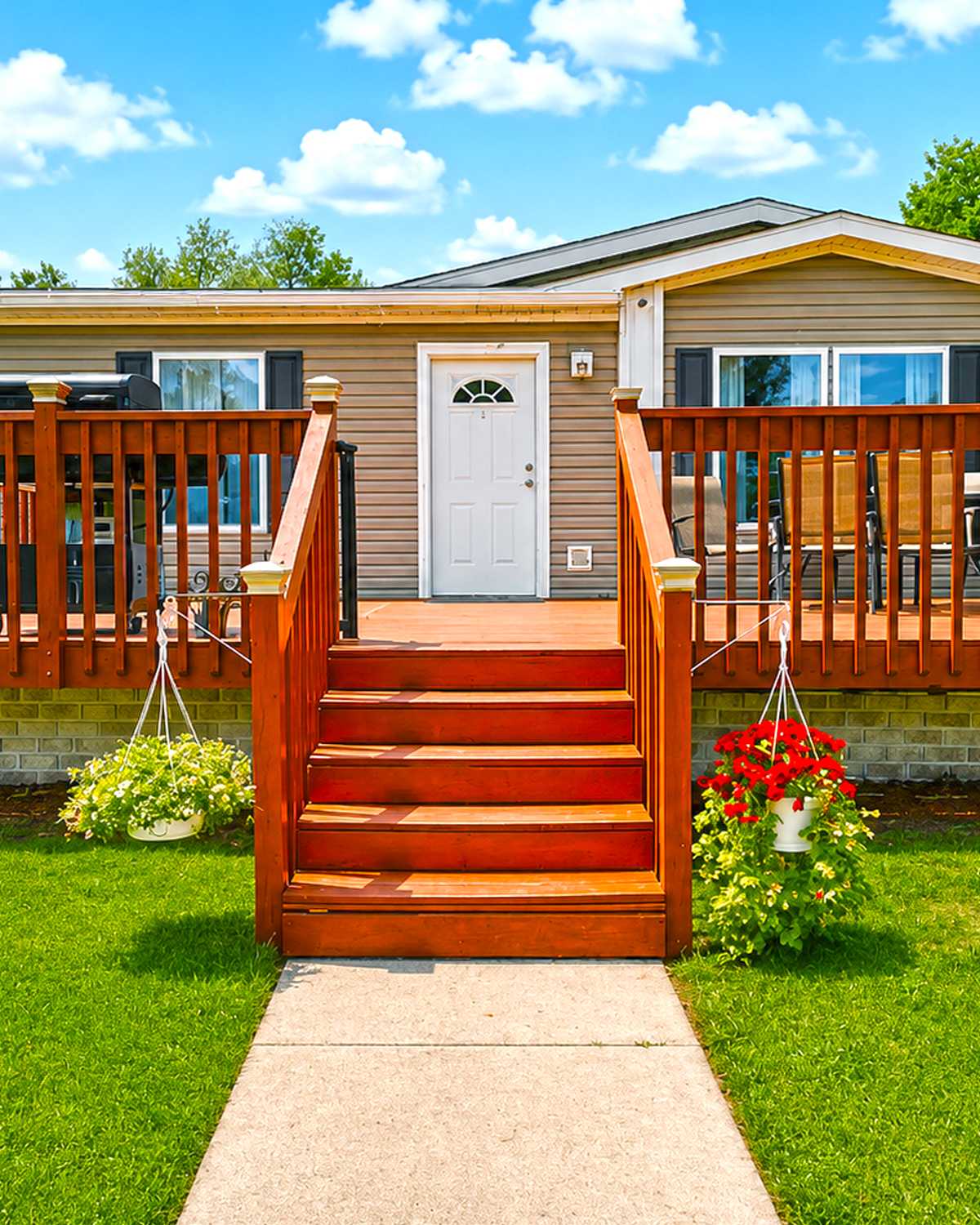
The front walkway leads directly toward a central staircase. That straight path gives the exterior a clear sense of order.
Your eye knows exactly where to go.
The stairs also line up closely with the front door and raised gable. These three pieces work together as one entrance zone.
This is especially helpful for a long home.
Instead of seeing one broad facade, you see a clear center with two sides spreading outward.
Flower baskets and small plantings soften the bottom of the steps. They add color without creating too much visual clutter.
It is a simple setup, yet it gives the home a stronger sense of arrival.
Design cues
- Centered front stairs
- Straight concrete walkway
- Direct path to the door
- Stair alignment with the gable
- Wide wood steps
- Matching deck railing
- Small flowers near the entry
- Clear front-door focal point
7. The White Door Adds a Clean, Bright Accent
The main door is simple white, and that choice works.
Because the deck has such a strong warm color, another bold tone could compete with it. White keeps the entry fresh.
The small half-moon window near the top adds a little character.
It also helps the door feel more like a front entrance rather than a plain utility door.
White trim around it further separates the entry from the gray siding.
This is a useful reminder that a front door does not always need a dramatic paint color. Sometimes a simple white door works best, especially when other elements already provide plenty of contrast.
Design cues
- White exterior door
- Small decorative window
- White door trim
- Simple hardware
- Neutral color choice
- Central placement
- Clean contrast with gray siding
8. The Deck Functions as an Outdoor Dining Room
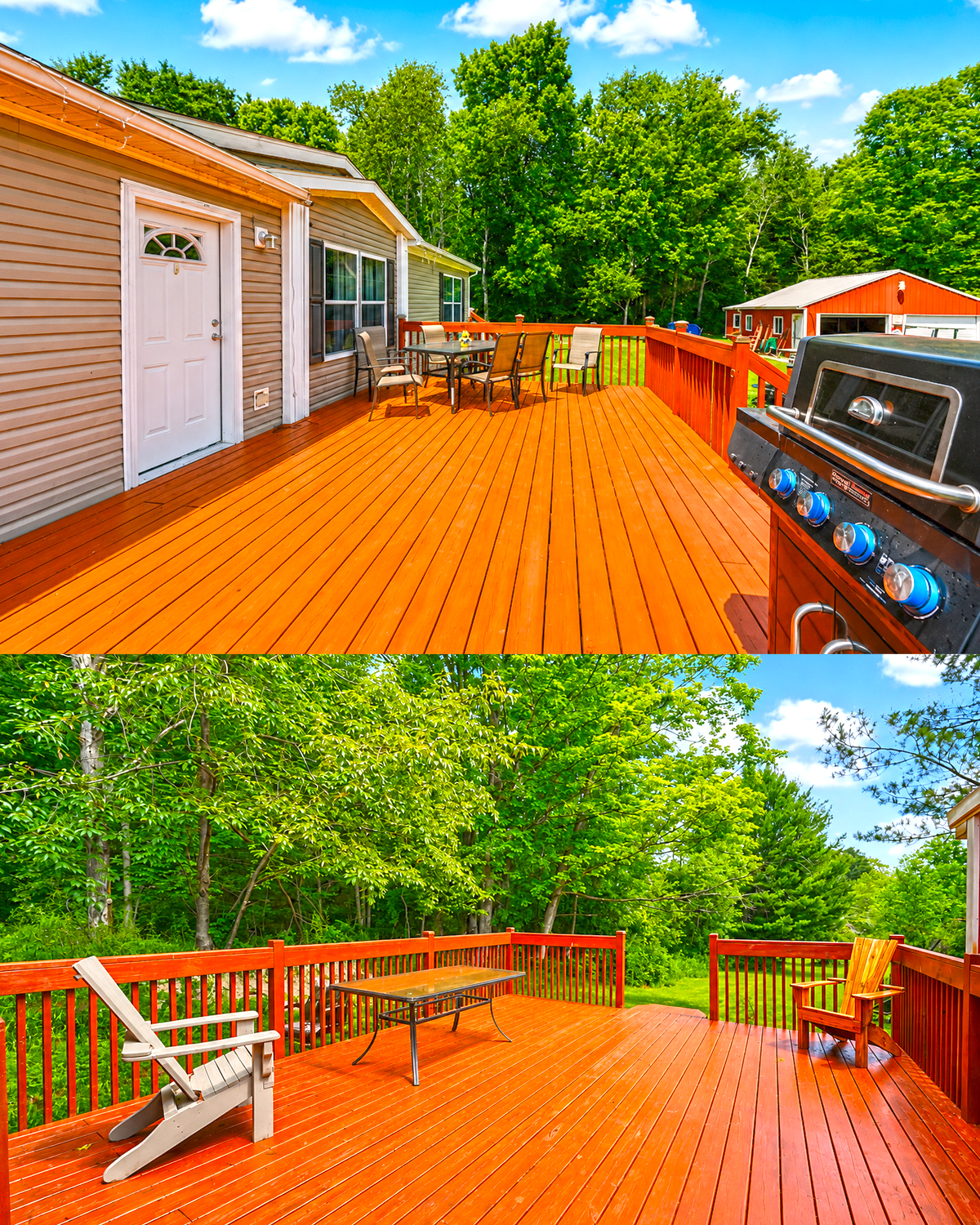
One view shows just how much usable space the front deck provides.
A table and chairs sit comfortably near the house. There is still plenty of open floor space around them.
This makes the deck useful for everyday meals, coffee, family gatherings, or quiet afternoons.
The furniture stays simple. There is no oversized outdoor sectional or elaborate built-in kitchen. Instead, movable chairs and tables keep the space flexible.
That approach fits the home.
Country outdoor spaces often feel best when they are practical rather than staged.
The railing also frames views of the lawn without blocking them. Its open vertical balusters let you see through to the trees and fields beyond.
Design cues
- Outdoor dining table
- Movable chairs
- Open deck layout
- Large clear walking paths
- Unblocked views of the yard
- Simple casual furniture
- Flexible gathering space
9. A Grill Turns the Deck Into a Practical Entertaining Zone
The grill adds another layer of function.
Placed near the edge of the deck, it stays close to the house while leaving the center open.
That layout works well for outdoor cooking. Food can move from the kitchen to the grill and then to the nearby dining table with little effort.
There is no full outdoor kitchen, but one is not really needed.
A good grill, table, comfortable chairs, and enough open floor space can create a very useful entertaining area.
This is one reason the exterior feels realistic. It is designed for actual daily life.
Design cues
- Freestanding outdoor grill
- Grill near the house
- Dining area close by
- Open circulation space
- Simple cooking setup
- No bulky outdoor cabinetry
- Functional deck zoning
10. A Second Deck Area Creates a Quiet Retreat
Another part of the deck feels more private.
Here, a few chairs and a table sit beside the trees. The furniture faces the landscape rather than the house.
That simple change creates a different mood.
The main deck works for meals and gatherings. This section feels better suited to reading, relaxing, or enjoying the view.
Using one deck for several purposes makes the outdoor space more useful.
You can create the same effect without walls. Furniture placement alone can define separate zones.
An Adirondack-style chair adds to the casual country mood.
Design cues
- Separate sitting zone
- Adirondack-style seating
- Small outdoor table
- Furniture facing the view
- Open corner layout
- Quiet connection with nature
- Flexible seating arrangement
11. The Above-Ground Pool Creates a Backyard Vacation Feel
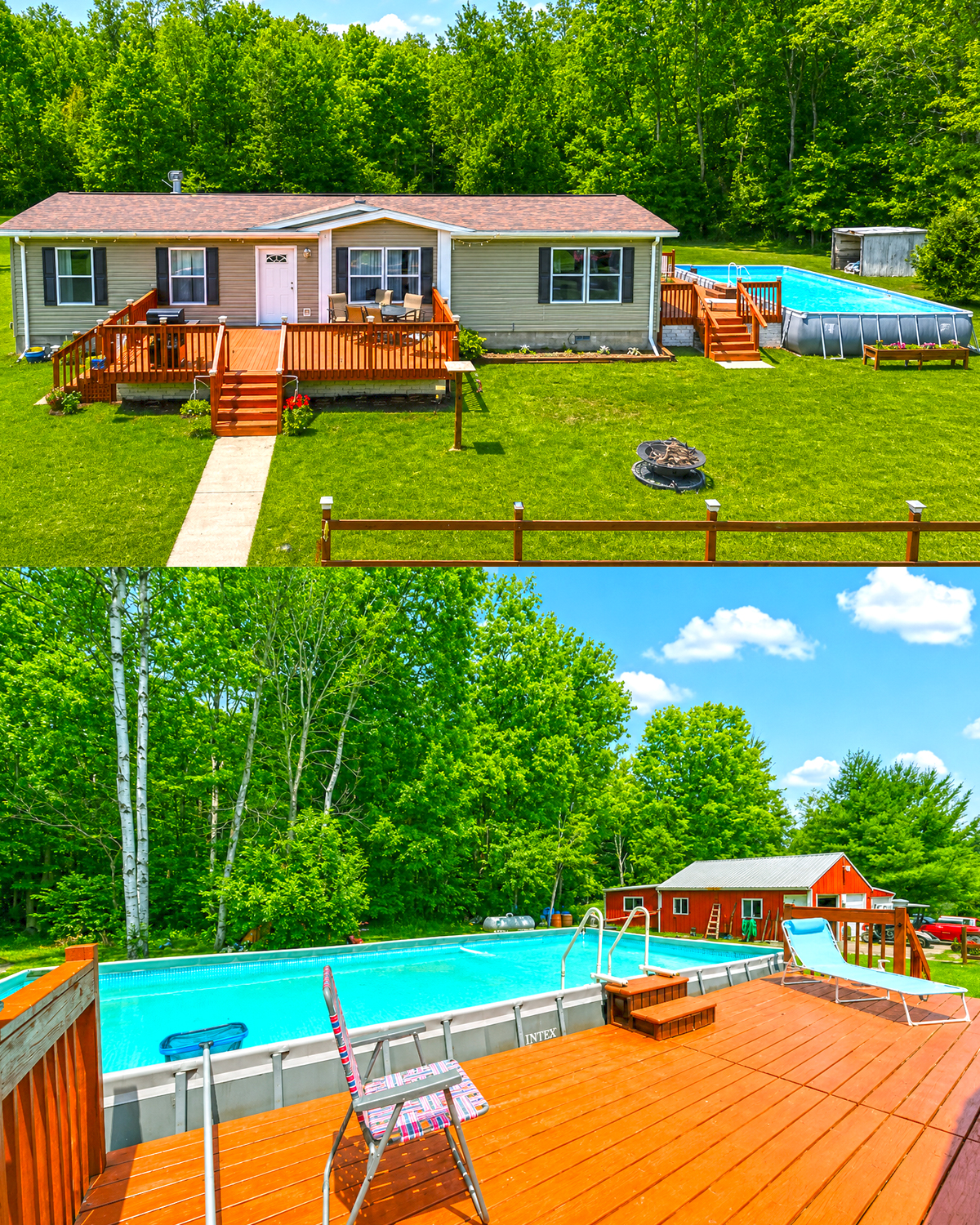
The pool gives this property its strongest lifestyle feature.
It sits close to the home rather than far out in the yard. As a result, the deck and pool work almost like one outdoor complex.
A separate set of wood stairs and a small landing provide access to the pool.
That detail is important.
Without a deck connection, an above-ground pool can feel like a stand-alone object in the yard. Connecting it with stained wood helps tie it back to the house.
The matching wood color makes the pool setup feel more planned.
There is also room beside the water for a lounge chair and other pool furniture.
The pool may be simple, but the large green setting makes it feel like a private summer retreat.
Design cues
- Large above-ground pool
- Wood deck beside the pool
- Matching red-brown stain
- Pool access stairs
- Lounge chair
- Open space around the water
- Close connection to the home
- Casual summer atmosphere
12. Matching Wood Connects the Different Outdoor Areas
One of the smartest choices here is repetition.
The main deck, railings, stairs, and pool deck all use a similar warm wood tone.
Because the structures match, they look related.
This creates visual unity even though the house, deck, and pool are separate elements.
The stained wood also provides a bold accent against the neutral siding and green landscape.
In fact, the exterior palette is very simple.
There is gray-beige siding, white trim, dark shutters, brown roofing, reddish wood, and lots of green.
That restraint gives the property a calm look.
When updating a mobile home exterior, repeating the same stain or paint color on several outdoor structures can make a huge difference.
Design cues
- One main wood stain
- Matching deck and pool structures
- Repeated railing design
- Warm tone against cool siding
- Limited exterior color palette
- Coordinated stairs and landings
- Strong visual connection
13. Simple Landscaping Keeps Maintenance Manageable
The landscaping does not try to compete with the home or the surrounding woods.
Small foundation plants run along parts of the house. A few flowers sit near the deck stairs. Hanging baskets add another soft touch.
That is about it.
The rest is lawn.
This works well on a large rural property. Too many flower beds could create hours of maintenance.
Instead, the design lets the natural setting provide most of the beauty.
The mature trees already supply height, color, texture, and shade. Therefore, the landscaping close to the house only needs to add a bit of softness.
The result looks cared for without looking formal.
Design cues
- Small foundation shrubs
- Simple flower beds
- Hanging flower baskets
- Large grass areas
- Mature existing trees
- Limited decorative planting
- Easy-care landscape
- Informal country style
14. The Fence Adds Structure Without Closing Off the Yard
A low wood fence appears near the front portion of the property.
It does not create a tall barrier. Instead, it helps organize the huge lawn.
The horizontal rails echo the long shape of the house.
They also add another warm, rustic element to the setting.
Because the fence stays low and open, views remain clear.
This is a good solution for country properties where you want some definition without making the house feel boxed in.
Design cues
- Low wooden fence
- Open rail construction
- Dark natural finish
- Long horizontal lines
- Clear views through the fence
- Rural character
- Simple property definition
Conclusion
This double wide mobile home proves that a beautiful exterior does not need complicated details. The neutral siding keeps the house calm, while the warm wood deck adds rich contrast. Meanwhile, the pool, open lawn, and wooded setting turn the property into a comfortable outdoor escape. Simple choices work together here to make the home feel larger, warmer, and much more connected to nature.