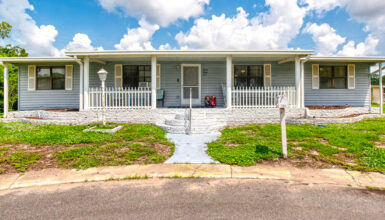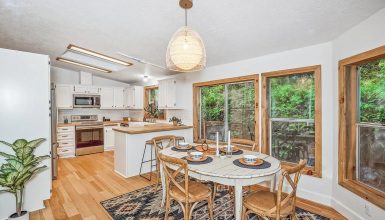
What can make a double-wide feel more like a home? A broad porch, a fresh color scheme, neat garden beds, and a place to sit outdoors can change the whole view. Together, these details give the home a warm, cared-for look. These ideas can guide a makeover of your own. You can use them as they are, or adjust the colors and materials to suit your home and yard.
1. Give the Home a Clear, Calm Look
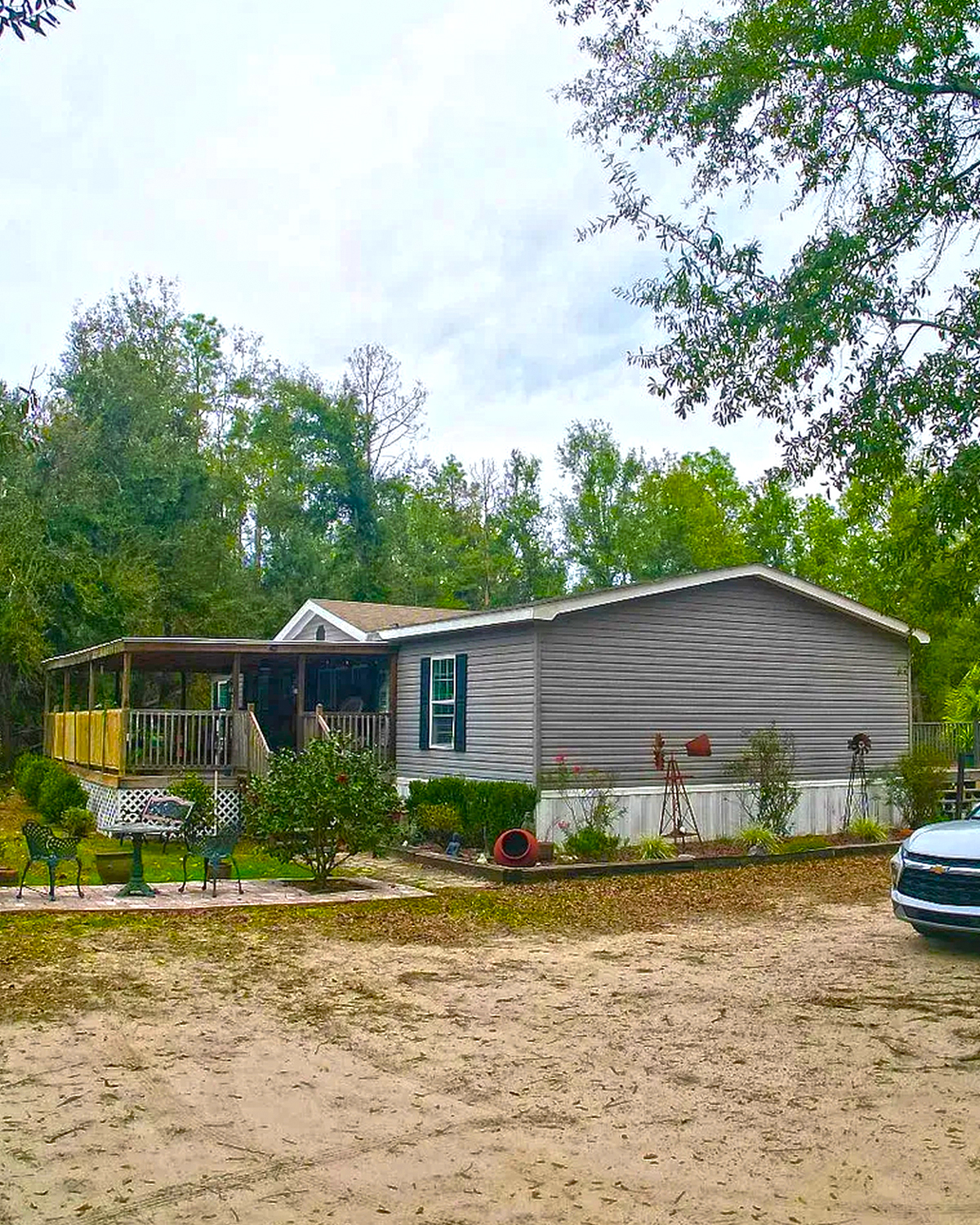
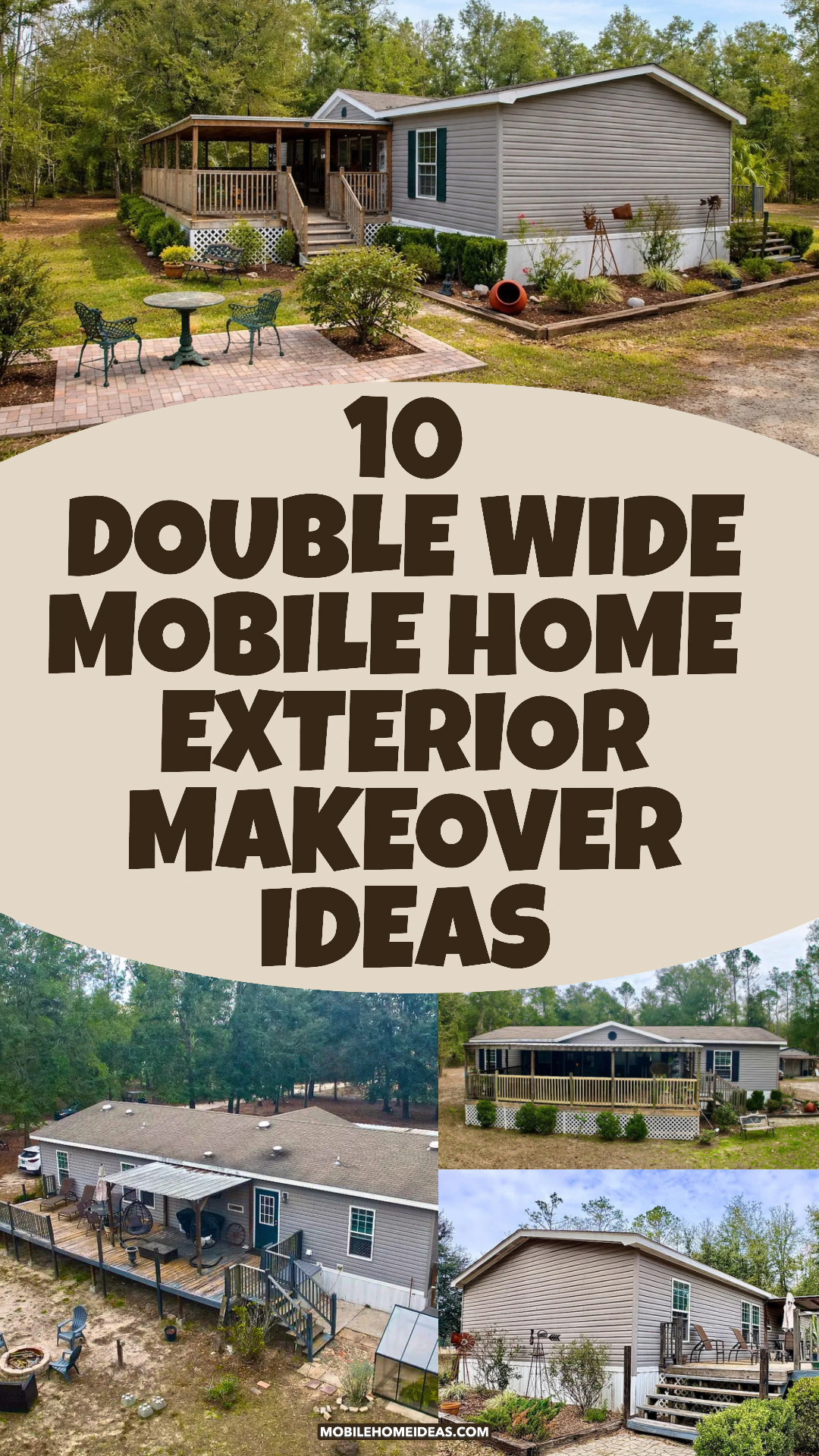
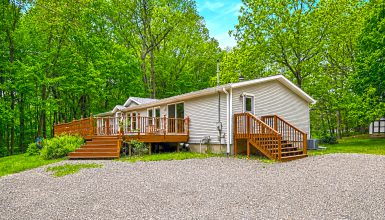
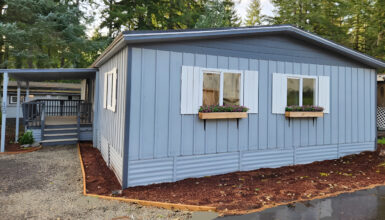
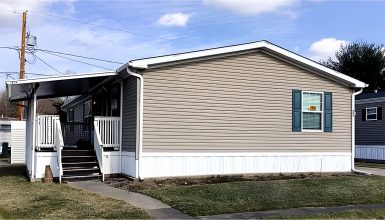
A double-wide has a long shape. That can make the outside feel plain if every feature blends together. This home uses a soft gray-taupe siding color, white trim, and dark shutters to give the walls a clear outline. The colors work well with the trees and wood around the house.
A calm color scheme can make a large wall feel less imposing. Gray and taupe bring warmth without adding a strong cast of color. White trim frames the windows and roof edges. Dark shutters and a dark entry door add contrast. The result feels tidy and easy to live with.
You do not need many colors to make the exterior stand out. Pick one main siding color, one trim color, and one accent shade. Then repeat them with care. For example, a deep green door can echo the nearby trees. A black or charcoal door can tie in with dark metal light fixtures.
Before you paint, check what kind of siding you have. Some mobile home siding needs a special primer or paint. Clean the surface first and repair loose pieces. If you rent the lot or live in a community, check its rules before you change the exterior.
Design cues:
- Soft gray or warm taupe siding
- White trim around windows and roof edges
- Dark shutters or a dark entry door
- A small, repeatable color palette
- Paint and siding products made for the surface
2. Make the Porch the Main Feature
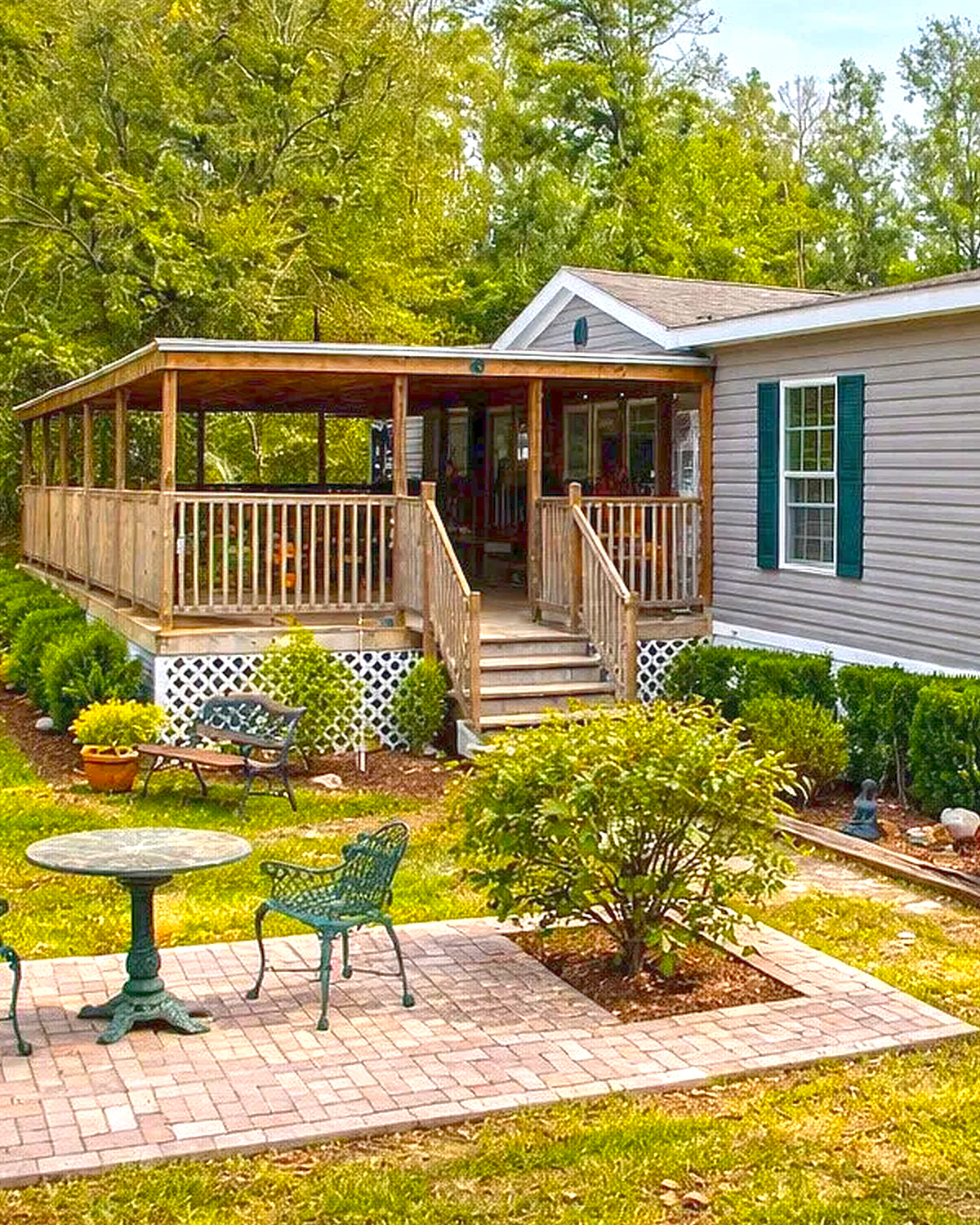
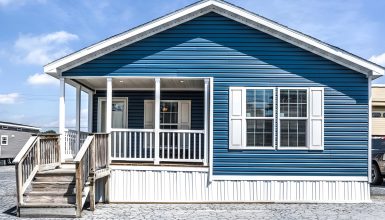
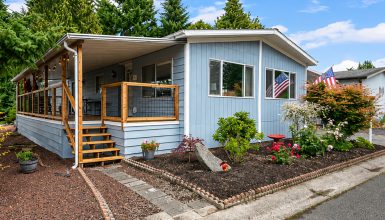
A porch can change the way a mobile home meets the yard. In the photos, the covered porch stretches across much of the front. Its wood posts and railings add texture, while the roof gives shade. That long porch also breaks up the home’s broad front wall.
A porch feels best when it has a clear job. It can hold a pair of chairs, a small table, or a bench near the door. You might use one end for quiet reading and the other for greeting guests. Keep a clear path from the stairs to the door so people can move through with ease.
The porch roof matters, too. It makes the space more useful on sunny days and gives the home a strong horizontal line. Keep the roof in scale with the house. A roof that looks too heavy can hide windows or make the front feel dark. A simple design with slim supports often feels lighter.
If you plan to build or change a porch, check local rules and the home maker’s guidance first. A porch adds weight and can affect the home’s structure. A qualified builder can help you plan safe steps, posts, and roof support.
Design cues:
- A long porch that softens the home’s broad front
- A roof that gives shade without hiding the house
- Wood posts and railings for a warm, natural look
- Seating placed away from the main walking path
- Safe steps and sturdy support built for the home
3. Add a Deck for More Outdoor Living
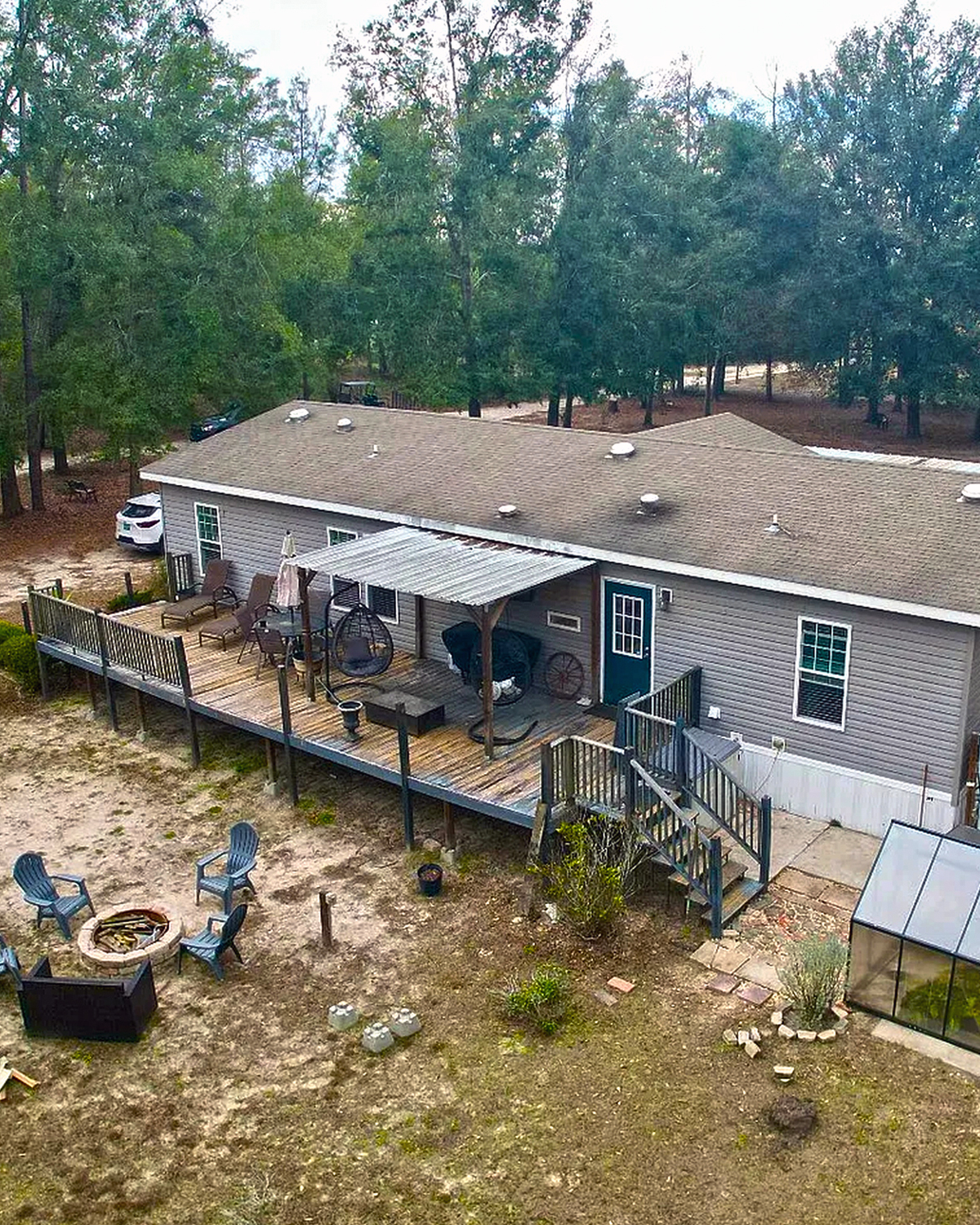
The photos show more than one way to use a deck. One porch has a covered sitting area. Another deck holds outdoor chairs and a grill. A wide deck gives the home space for meals, rest, and gatherings. It can also link the door to the yard.
Start by thinking about how you will use the deck. If you like to dine outside, leave room for a table and chairs. If you grill, place the grill where smoke can drift away from the home and seating. For a quiet spot, add two lounge chairs and a side table. You do not need to fill every corner.
Deck finishes can help the home feel more complete. Natural wood suits the wooded setting in the photos. Stain keeps the grain visible and can tie the deck to garden edging or porch posts. If the deck has aged wood, clean it and inspect it before you stain or seal it. Replace any boards that feel soft or loose.
A deck also needs a safe way down to the yard. Place the stairs where people can reach a path or patio. Add handrails where needed, and keep the bottom landing clear. Plants can soften the edge of the deck, but do not let shrubs block steps or cover the structure.
Design cues:
- Deck space sized for real use
- Separate zones for dining, grilling, and relaxing
- Natural wood or a stain that suits the siding
- Clear steps that lead to a path or patio
- Regular checks for loose, soft, or worn boards
4. Use the Covered Porch for Shade and Comfort
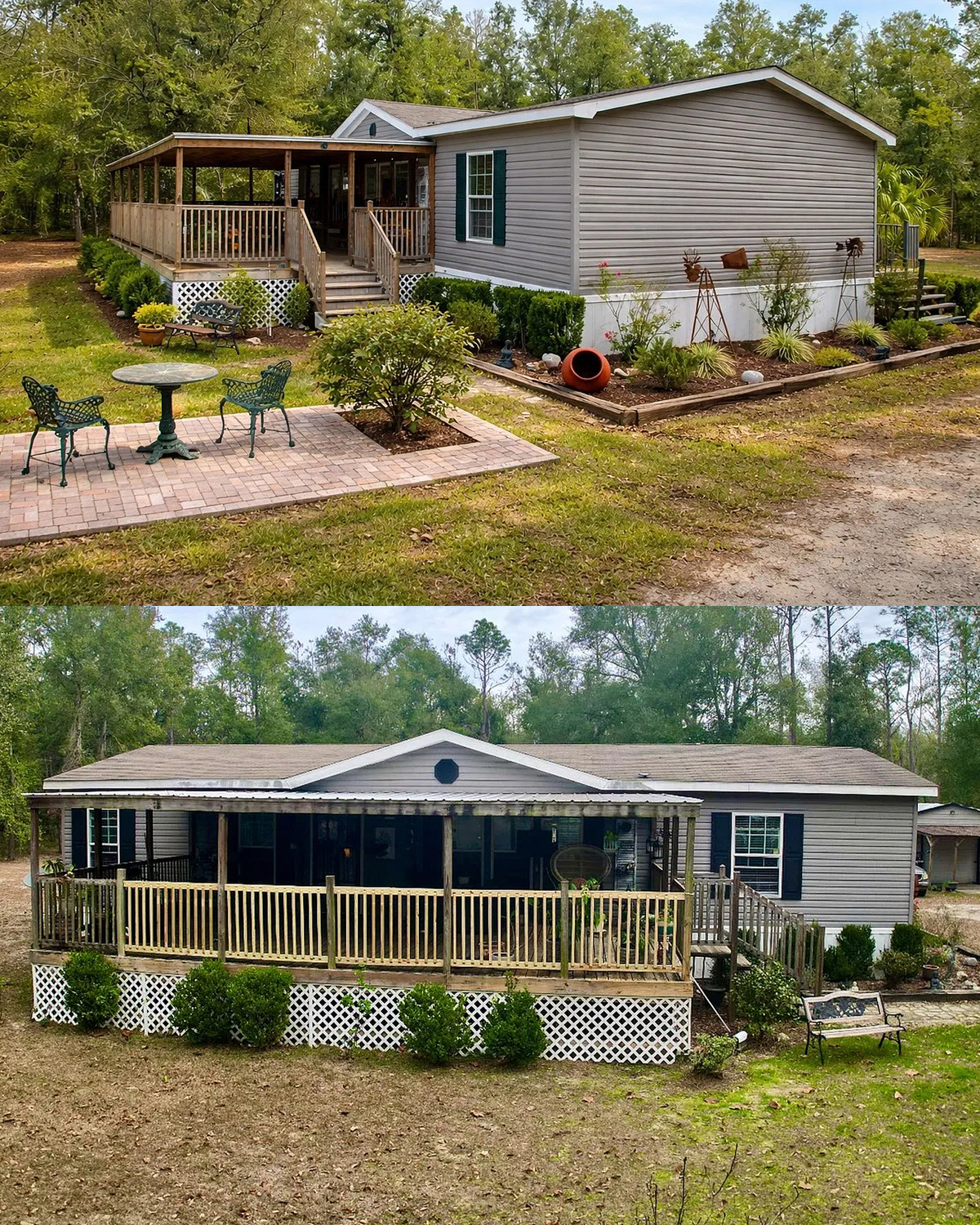
A covered porch offers a place to sit in more kinds of weather. In one photo, the porch roof covers much of the deck and gives the entry a sheltered feel. That makes the porch useful beyond sunny days. It can also help frame the front door.
Keep the area comfortable, but avoid crowding it. A pair of chairs can face the yard. A small table gives you a place to set a drink or book. Hanging baskets can add color, yet too many can make the space feel busy. Choose a few items that suit the home’s simple look.
Lighting can make a covered porch feel welcoming after dark. A wall light by the door helps guests see the entry. A ceiling fixture can brighten the sitting area. Use outdoor-rated fixtures and bulbs. If the porch has no wiring, use solar lights or battery lanterns made for outdoor use.
For a cozy look, mix wood, woven materials, and soft outdoor cushions. Choose fabrics made to handle sun and damp weather. If the porch faces a wooded lot, colors such as cream, olive, rust, or navy can sit well with the green backdrop.
Design cues:
- A roof that shades the porch and entry
- Two or three simple seats, not a crowded layout
- Outdoor cushions in weather-ready fabric
- A light near the door and one for the sitting area
- A few plants or lanterns for a lived-in touch
5. Finish the Base with Clean Skirting
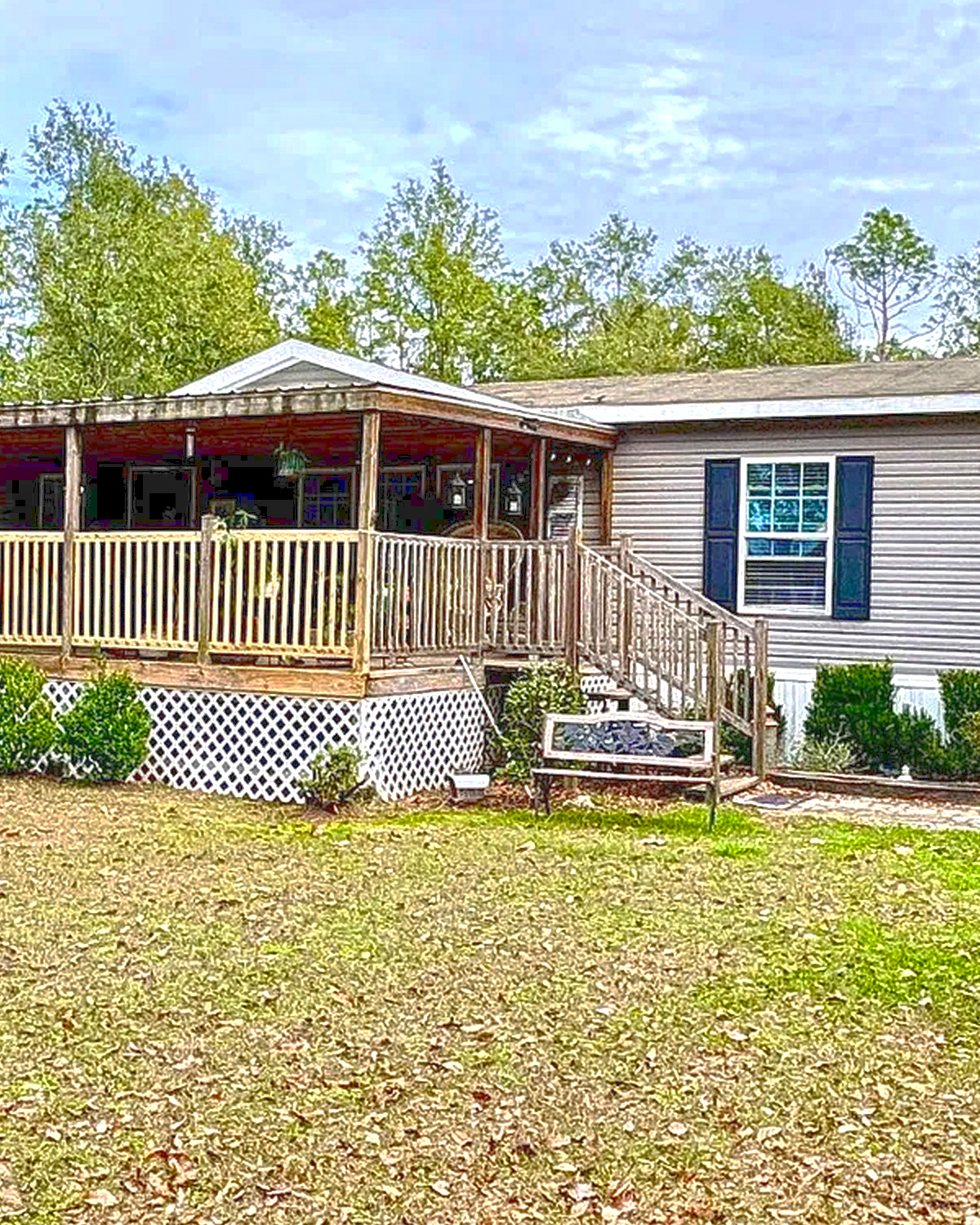
The white skirting in the photos gives the home a neat base. It contrasts with the gray siding and helps the house look finished from the yard. Skirting also covers the space beneath the home, but it must allow for access and airflow where the home’s design requires them.
Choose skirting that works with the home, porch, and site. White gives a crisp look. A shade that matches the siding can make the base blend in. Dark skirting can ground the home, though it may draw more attention to the foundation line.
Before you replace skirting, inspect the area underneath. Look for water, loose material, or signs of pests. Make sure you can still reach shutoffs and other service points. The home’s manual and local rules can help guide safe venting and access.
If you like the look of lattice, use it where it suits the design and local conditions. The photos show white lattice below a porch, where it adds a light pattern. Lattice can look charming, but it does not replace solid skirting when the home needs protection from wind, animals, or weather. Choose the right material for the job.
Design cues:
- Skirting that pairs with the siding and trim
- A clean, even line around the base
- Access panels for service areas
- Vent openings where the home requires them
- Lattice used as a porch detail, not a substitute for needed protection
6. Frame the Windows and Door
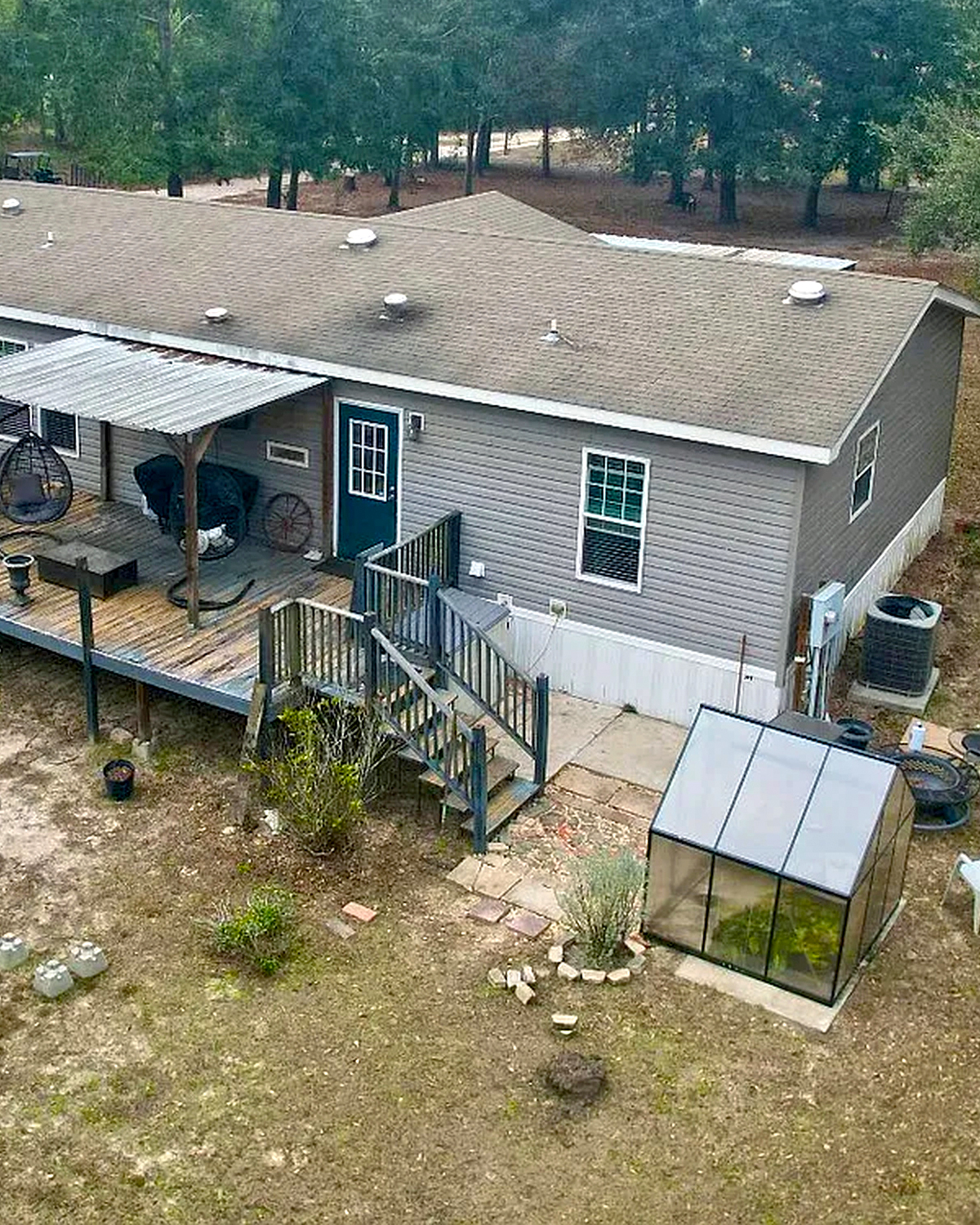
Windows and doors help break up a long exterior wall. In the photos, dark shutters draw the eye to the windows. The dark entry door adds another focal point. These details bring order to the facade without changing the shape of the home.
Shutters look best when they fit the scale of the window. If they are only decorative, they should still appear wide enough to cover the window if closed. Choose a color that repeats somewhere else. A dark green or deep blue can pick up outdoor colors. Black or charcoal can feel crisp and modern.
You can also give the door more presence with a new color, a clean handle set, and a simple wreath or planter nearby. Keep the entry clear. A small mat and two pots can make the door feel welcoming without blocking the steps.
Trim should look even and well kept. Clean it, repair loose parts, and touch up chipped paint. If you change the trim color, repeat it around all windows and doors. That simple consistency makes the whole exterior feel planned.
Design cues:
- Shutters sized to suit each window
- One accent shade repeated at the door or porch
- Fresh, even trim around windows and doors
- A clear path to the entry
- Simple planters or a mat that do not crowd the steps
7. Shape the Yard with Beds and Paths
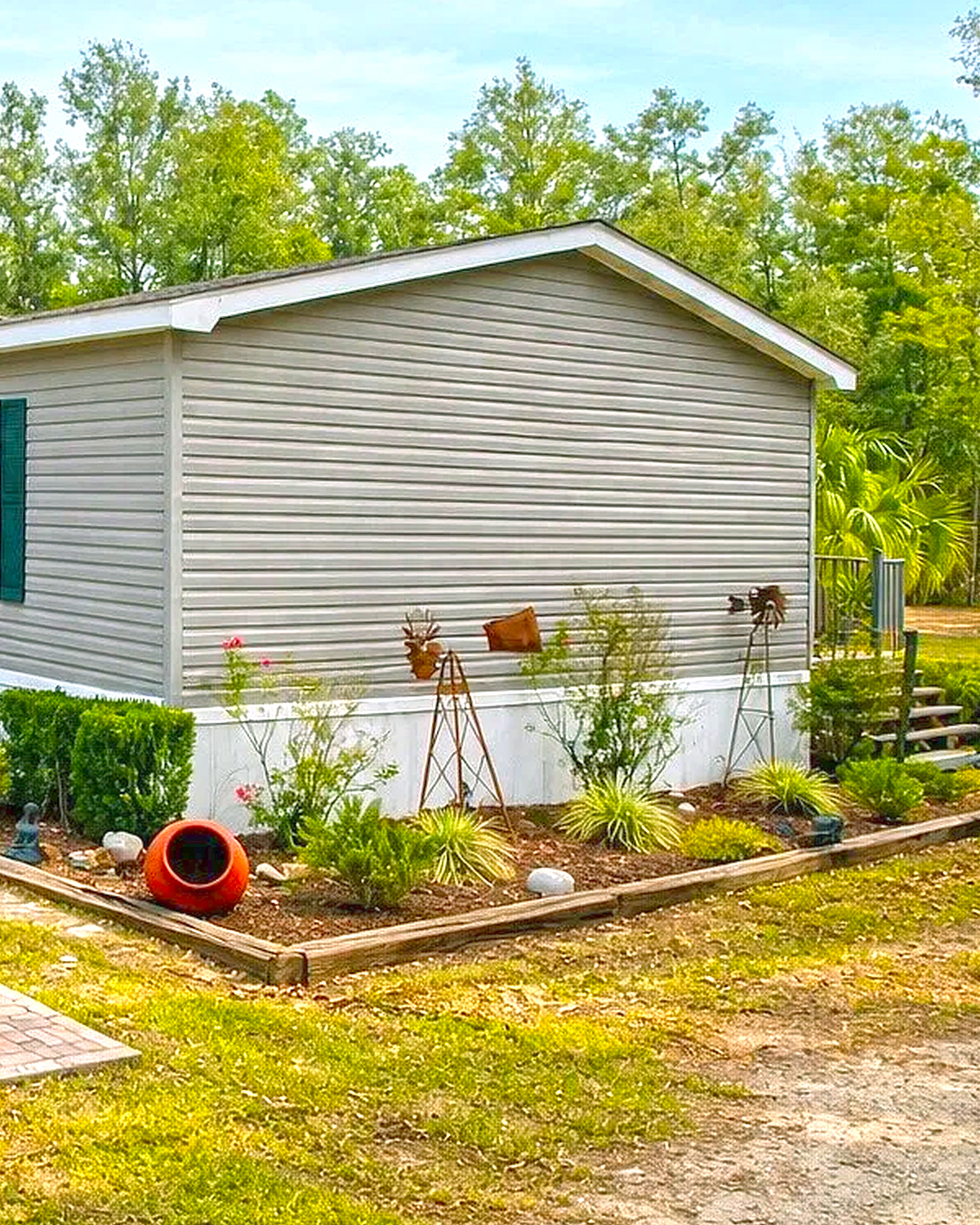
A home can look more inviting when the yard connects to the porch. The photos show raised garden beds, low shrubs, potted plants, and paved paths. Each feature gives the eye a place to rest. Together, they make the home feel part of the landscape.
Start with the path from the driveway or yard to the steps. Pavers create a firm, clear route. They also add a gentle pattern beside the lawn. If you already have a patio, keep it clean and level. Add a small outdoor table and chairs to make it useful.
Garden beds can soften a long wall. The images show low shrubs and flowering plants near the skirting. A mix of heights adds depth: small groundcovers at the edge, medium shrubs behind them, and a few taller plants near the corners. Keep plants away from vents, service panels, and the siding.
Raised beds with timber borders give the garden a tidy shape. Use plants that suit your light, soil, and climate. A few easy-care shrubs can make a strong base, while annual flowers add seasonal color. Keep some space between plants and the home so air can move and the siding can dry after rain.
Design cues:
- Paver paths that lead to the porch or patio
- Garden beds with clear, simple edges
- Low shrubs near the home and taller plants farther out
- Plants placed clear of vents and service panels
- A mix of evergreen structure and seasonal color
8. Make a Patio That Feels Like a Destination
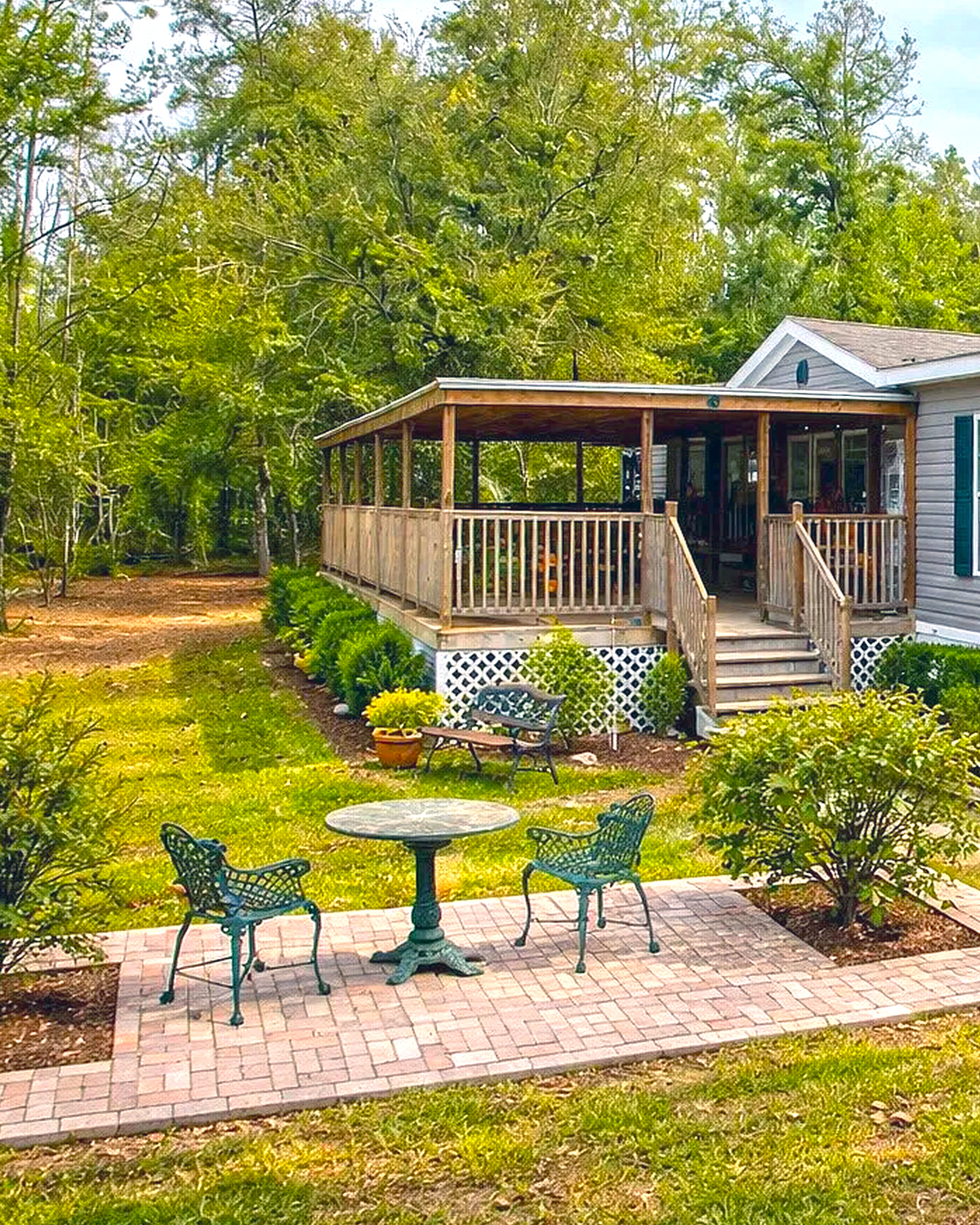
The paved patio in one photo sits off to the side of the home. It has a small table and chairs, with a shrub nearby. That gives the yard a second place to gather. A patio can serve as a breakfast spot, a reading corner, or a place to visit with friends.
You can create this feeling with a modest space. Lay pavers in a square or rectangle, then add a bistro table and two chairs. If the patio gets strong sun, add an umbrella. If it sits near the porch, use the same colors or materials so the two spaces feel linked.
Think about the ground before you lay pavers. The base should drain well and support the surface. Keep the patio level and stable, especially where people walk. If you want a fire feature, check local rules and place it at a safe distance from the house, deck, trees, and furniture.
A small patio can look polished with a few finishing touches. A planter at the corner, a low light along the path, or an outdoor rug can define the space. Choose pieces that can handle the weather and move them as needed.
Design cues:
- A patio with enough room for its main use
- Pavers that match or complement nearby paths
- A small table, chairs, and shade if needed
- Stable, well-drained ground
- Safe spacing for grills or fire features
9. Keep the Landscaping Simple and Easy to Care For
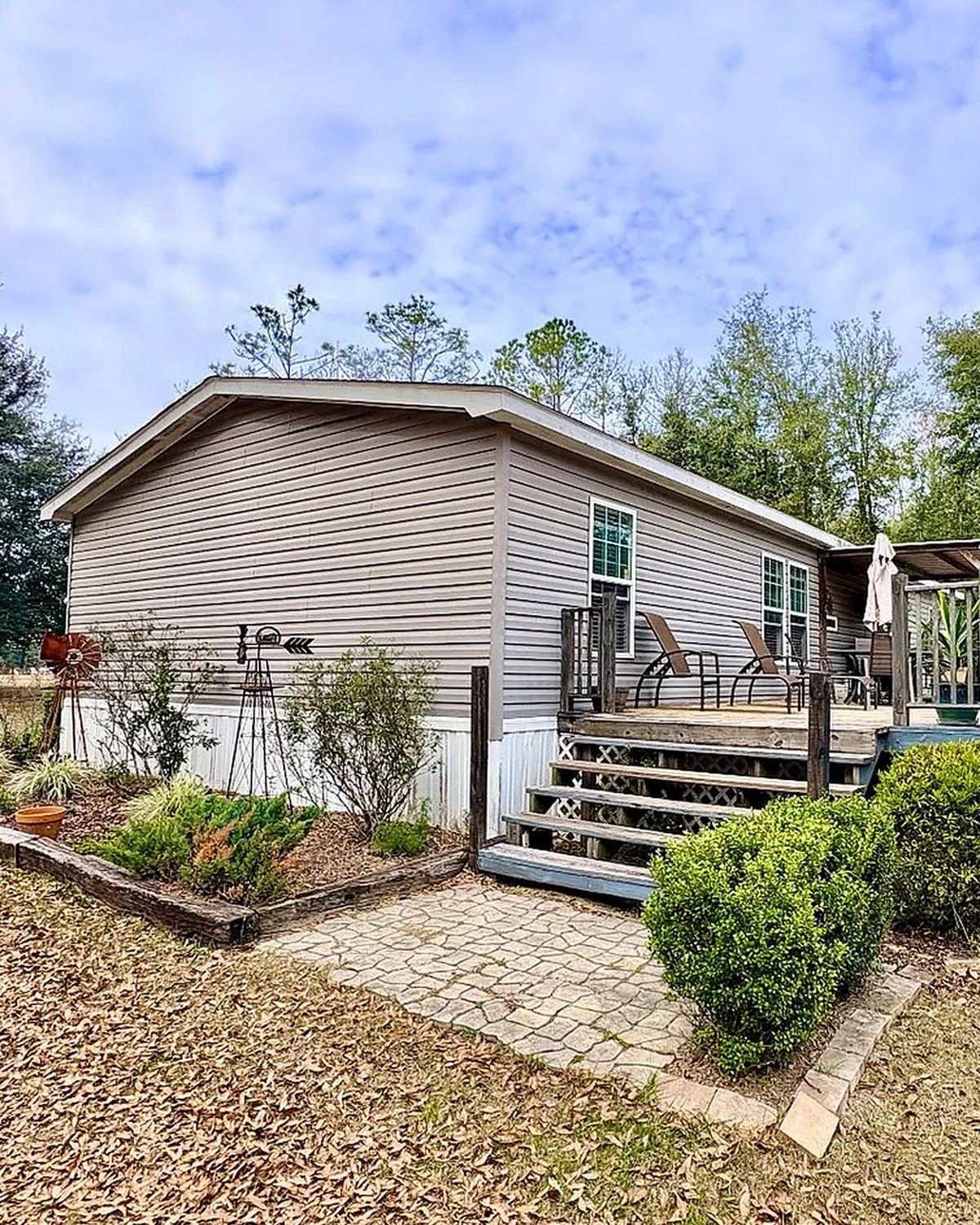
The wooded setting gives the home a natural backdrop. The yard does not need to compete with it. A few shrubs, neat beds, and a clear lawn can make the house stand out while keeping the view calm.
Use plants to guide the eye toward the entry. Place a pair of matching planters near the steps, or use the same shrub along a short section of the wall. Repeating a few plants looks neat. A wide mix can feel scattered, especially beside a long house.
Mulch helps beds look tidy and can reduce weeds. Keep mulch a few inches away from siding and wood. Trim branches that touch the house. This helps protect surfaces and lets air move around them.
If you want more color, use flowers in pots. You can move them as the seasons change. In the photos, small bursts of color brighten the beds without taking over. This is a helpful way to test colors before adding more plants.
Design cues:
- A few repeated plants for a steady look
- Clear lawn edges and trimmed shrubs
- Mulch kept away from siding and wood
- Branches kept clear of the house
- Flowers used in pots for easy seasonal change
10. Add Finishing Touches That Tie It Together
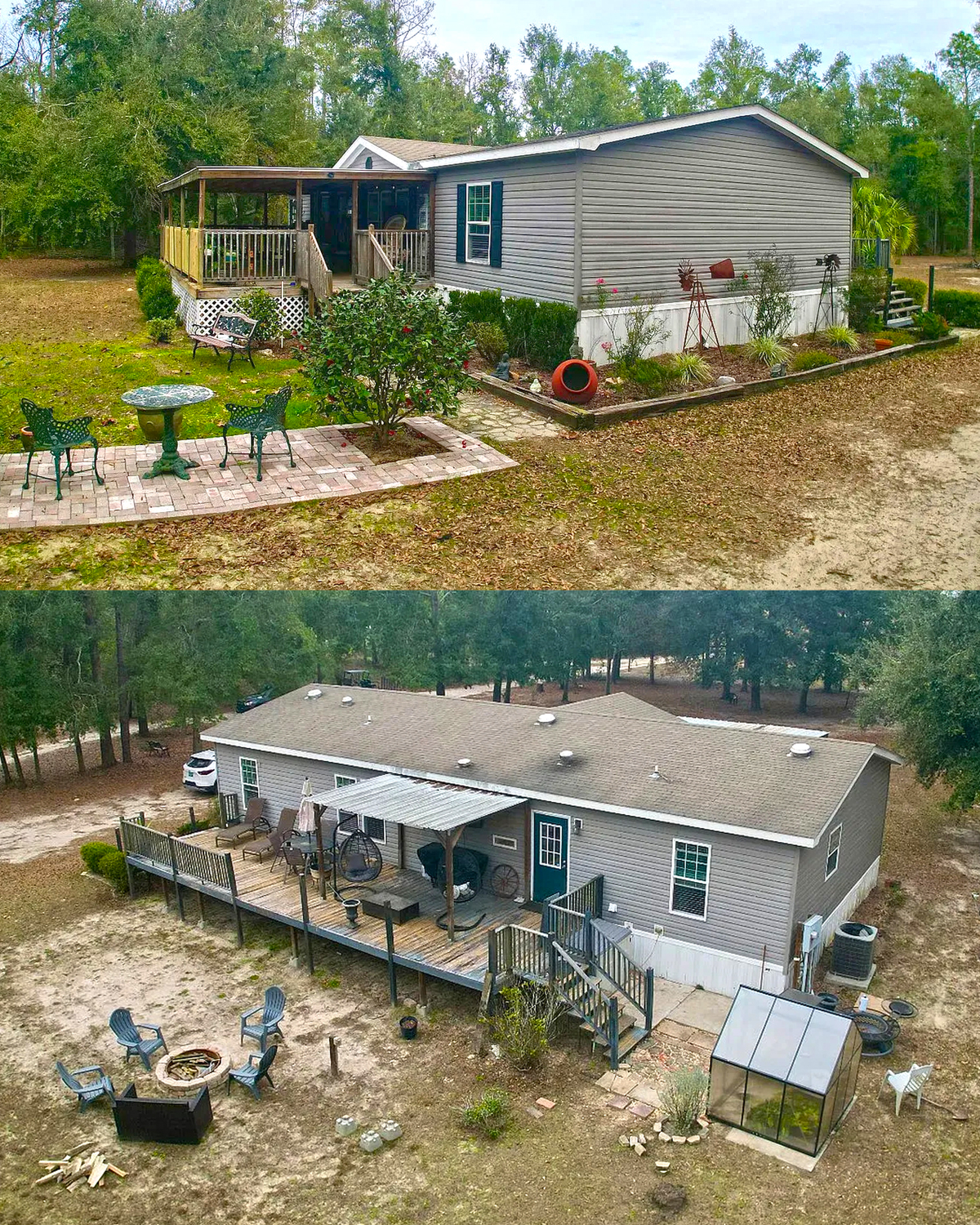
Small details can make an exterior makeover feel complete. A tidy porch, matching light fixtures, a clean path, and a few well-placed pots all support the same welcoming look. Each detail should relate to something already on the home.
Metal accents can complement the wood deck. Try a dark porch light, a simple house number, or a black planter. Keep the finish consistent across a few items. This can make older features feel more current without changing the whole home.
Outdoor furniture should suit the scale of the porch or patio. Small spaces work well with slim chairs and a narrow table. A larger deck can hold a dining set or bench. Leave room to walk, open doors, and use the stairs with ease.
Finally, take care of the basics. Clean siding and trim. Wash the porch. Sweep the pavers. Check the roof edge and gutters. These jobs do not call for a full remodel, yet they help the home look cared for all year.
Design cues:
- Dark metal details that repeat across the porch
- House numbers that are easy to see
- Furniture sized to the space
- A clear route through the deck and porch
- Regular cleaning and simple upkeep
Conclusion
A double-wide exterior makeover can grow from a few thoughtful changes. The home in these photos pairs taupe-gray siding with crisp trim, dark accents, wood decks, and a broad covered porch. Pavers, garden beds, and simple seating extend the welcome into the yard.
You can start with one area, such as the entry, porch, or garden path. Then repeat a few colors and materials so the whole exterior feels connected. A clean, useful porch and well-kept yard can make a big difference. The best makeover is one that looks good and works for the way you live.