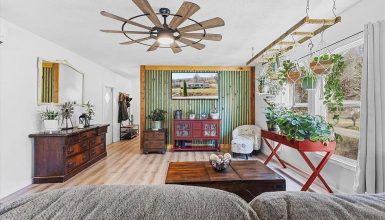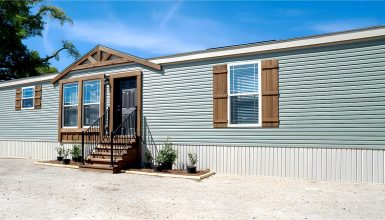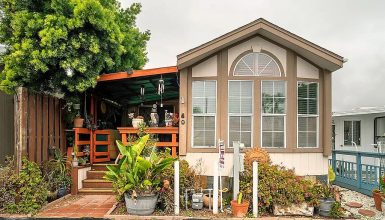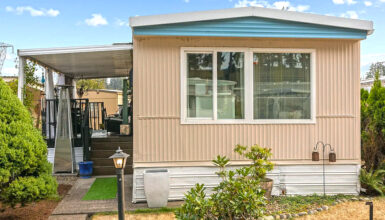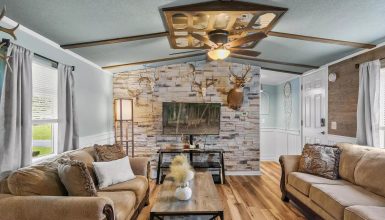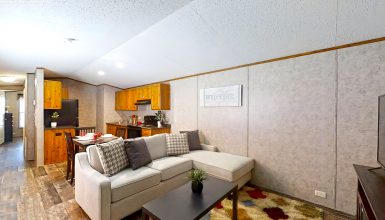
Want your single wide mobile home living room to feel light, calm, and full of beach-house charm? Coastal design can do just that. With soft colors, woven textures, weathered wood, and breezy fabrics, even a small living room can feel open and beautiful. These single wide mobile living room coastal design ideas will help you create a space that feels fresh, relaxed, and easy to love.
1. Start With a Soft Sand-and-White Color Palette
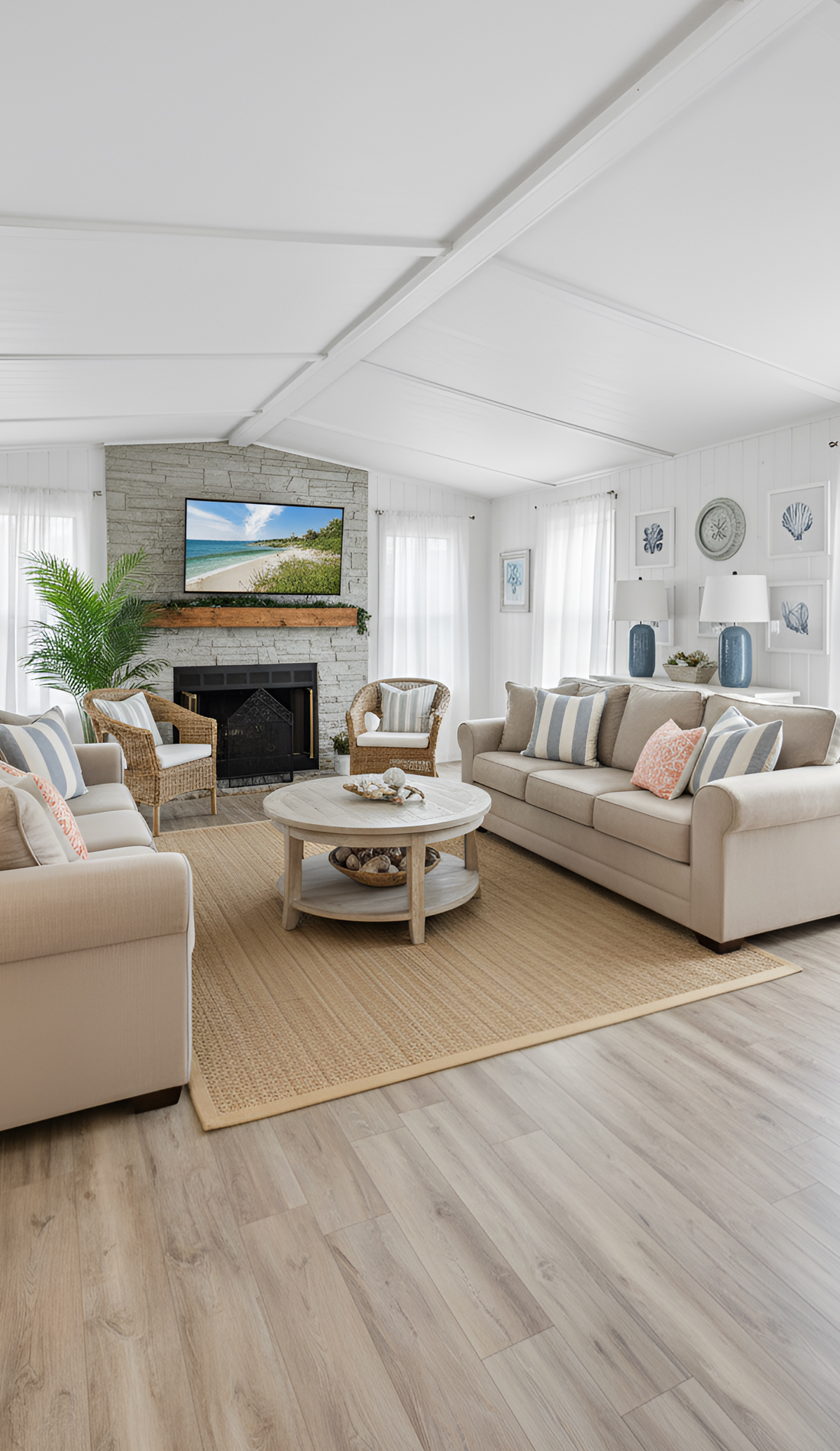
A coastal room almost always begins with color. In a single wide living room, a soft palette can do a lot of heavy lifting. Shades of white, cream, beige, and pale sand make the room feel larger right away. They bounce light around the space and create a calm backdrop for the rest of the design.
This look works so well because it keeps visual clutter low. In a narrow room, dark colors can sometimes make the walls feel closer. Meanwhile, light tones open things up. They create an easy flow from one end of the room to the other.
To make this palette feel coastal, layer in warm neutrals instead of stark white alone. Think driftwood tones, oat-colored textiles, and linen upholstery. Then add hints of sea-inspired color through pillows, art, or a throw. The result feels breezy rather than bland.
Design cues:
Use warm whites on the walls, choose a beige or cream sofa, and bring in pale wood or woven accents for a relaxed coastal base.
2. Choose Slipcovered Furniture for a Casual Beachy Feel
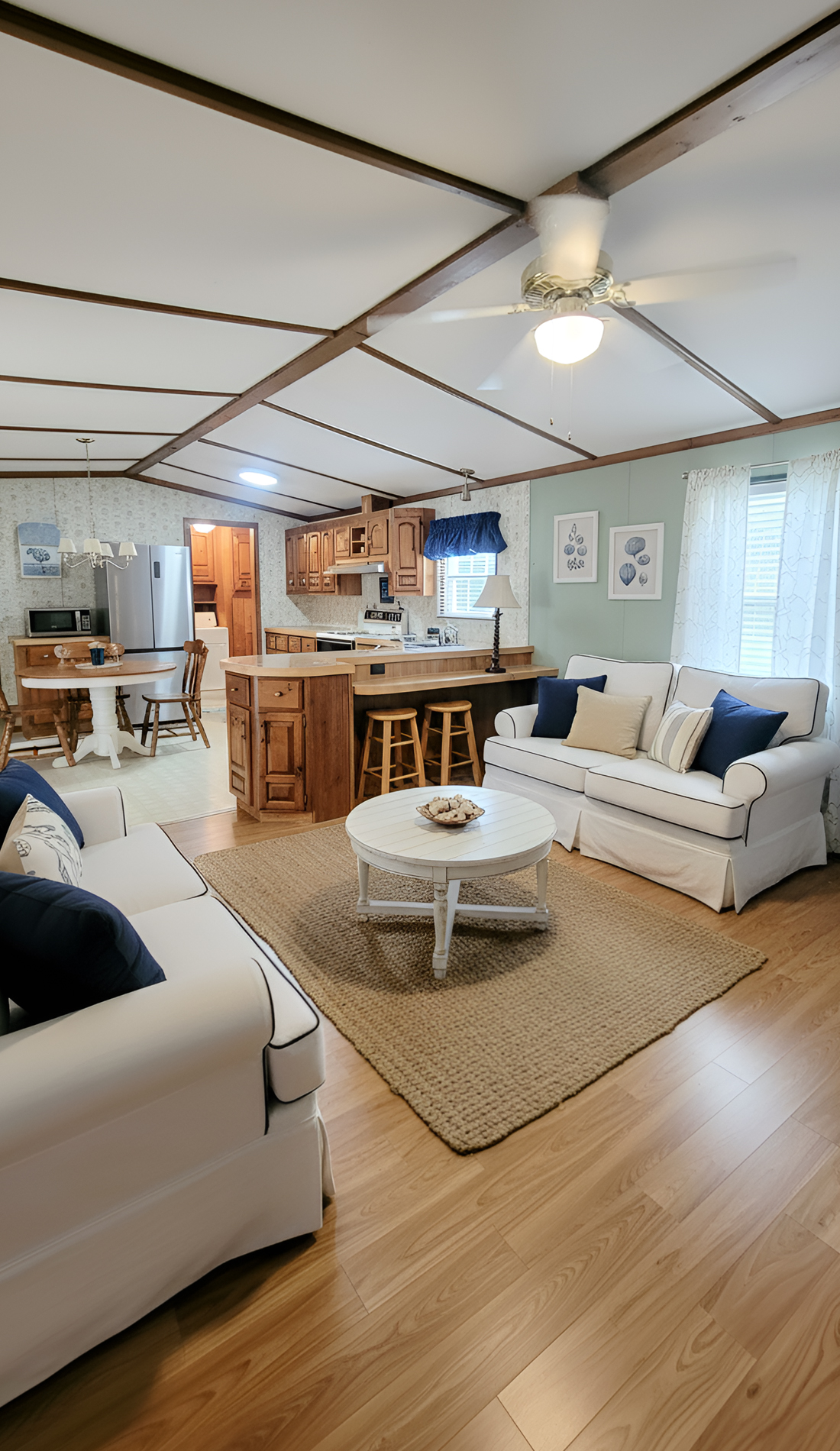
Nothing says easy coastal living quite like slipcovered seating. In a single wide mobile home, this style works beautifully because it feels soft, unfussy, and welcoming. A slipcovered sofa or armchair brings a relaxed beach-house mood without looking stiff or formal.
This idea also adds comfort in a practical way. Single wide living rooms often serve many roles. They are spaces for relaxing, watching TV, reading, and hosting family. Furniture needs to feel livable. Slipcovers help with that. They look laid-back, and many are easier to clean than structured upholstery.
White or off-white slipcovers feel classic. However, soft gray, sandy beige, or muted blue can work just as well if you want something more forgiving. Pair the pieces with striped or textured pillows for extra coastal charm.
Design cues:
Look for furniture with soft lines, washable fabrics, and a tailored but relaxed fit. Avoid bulky arms that take up too much visual space.
3. Bring in Weathered Wood for a Driftwood-Inspired Look
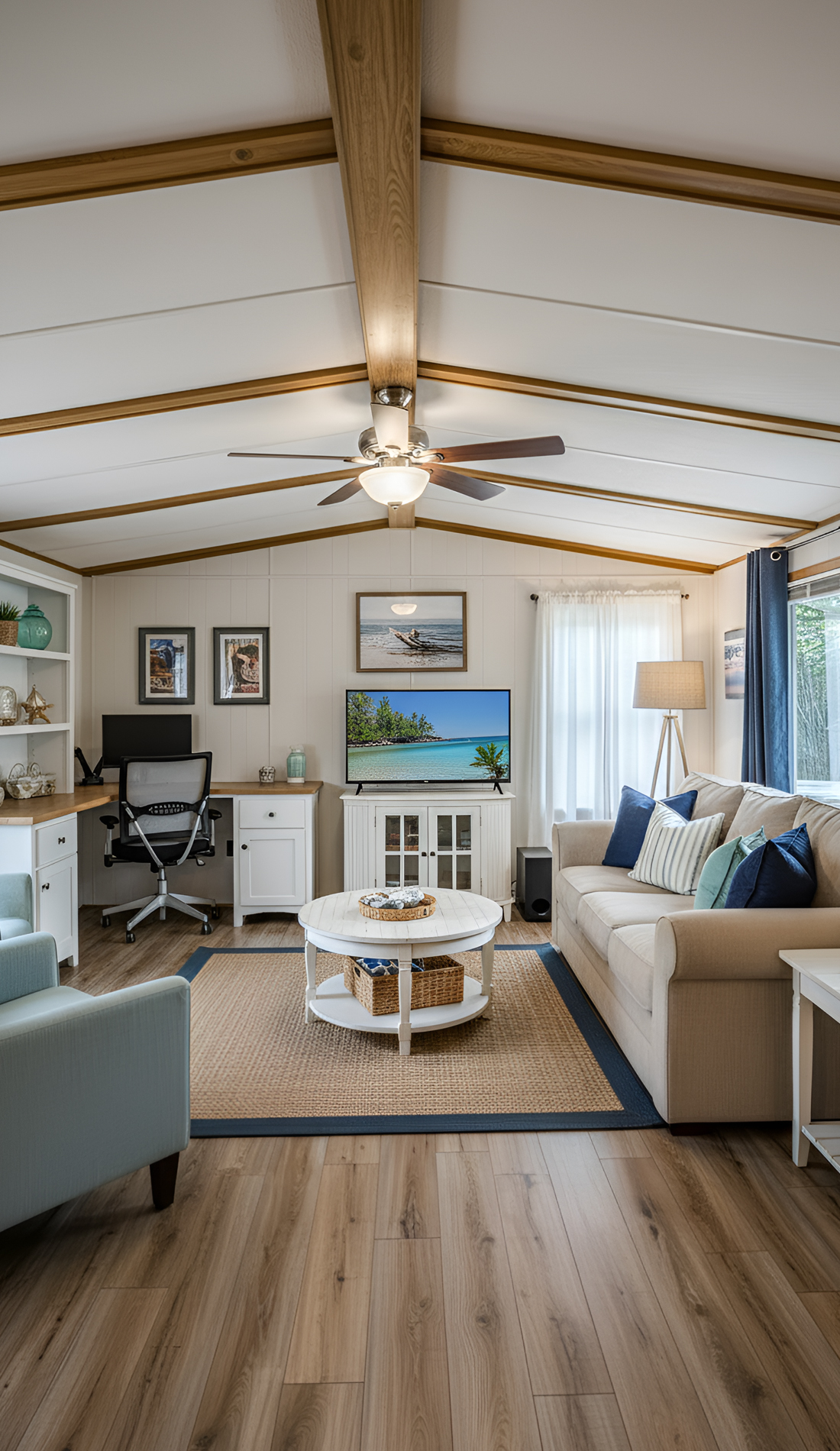
Coastal rooms feel grounded when they include natural wood with a worn, sun-washed look. In a single wide living room, weathered wood brings texture without making the space feel heavy. It adds character while keeping the mood casual and bright.
A driftwood-style coffee table, whitewashed media console, or lightly distressed side table can anchor the room. These pieces work best when the finish feels natural and faded, not too glossy or orange. The goal is to echo wood that has been softened by salt air and sun.
This look pairs especially well with white walls and light upholstery. It gives the room a sense of depth, which matters in smaller spaces. Even one or two wood pieces can make the room feel more layered and complete.
Design cues:
Choose tables with visible grain, light oak tones, or gray-washed finishes. Keep the shapes simple so the room still feels open.
4. Use Blue as an Accent, Not the Whole Story
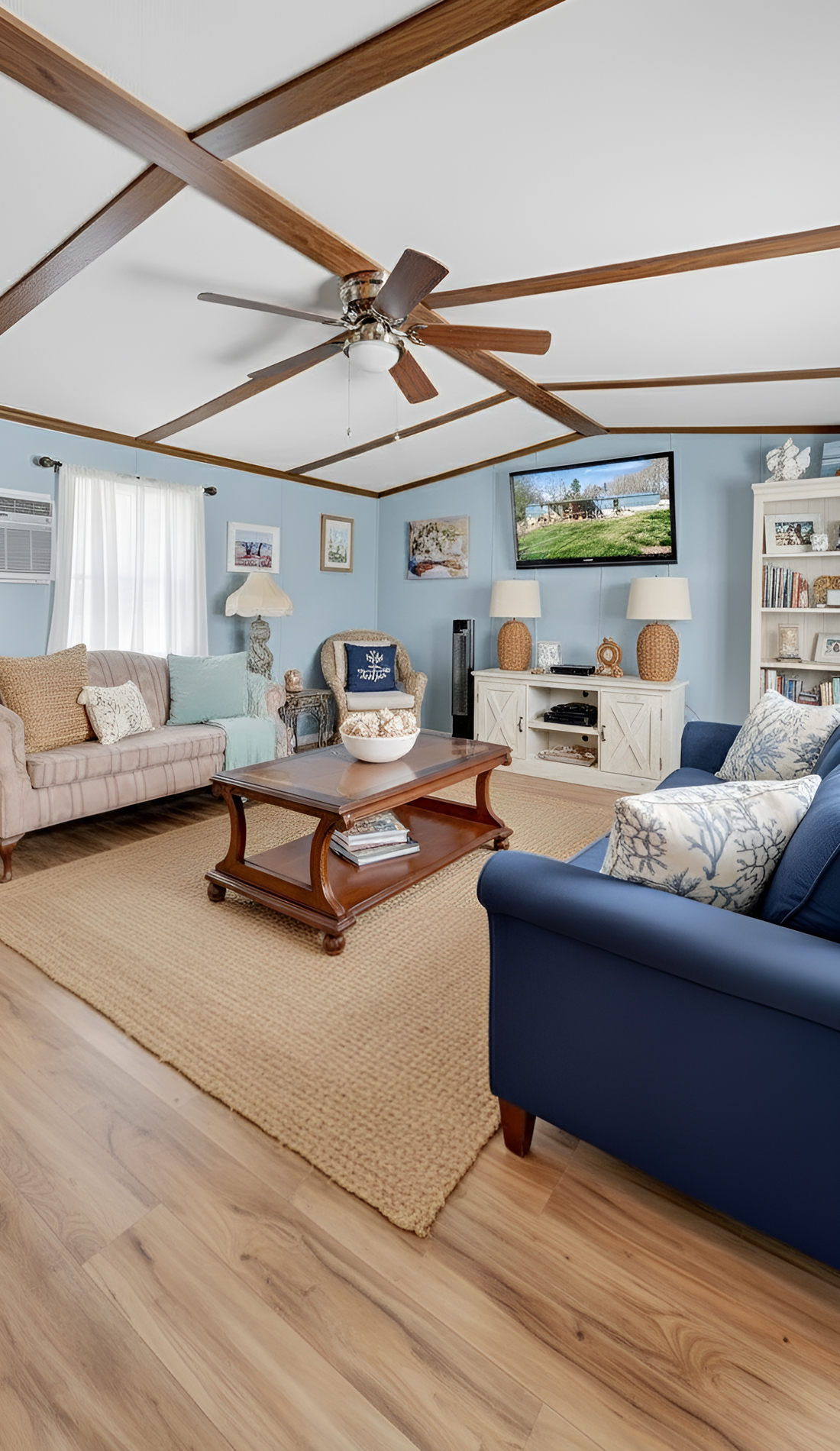
Blue is a classic coastal color, but too much of it can overwhelm a small room. In a single wide living room, blue works best as an accent. That way, the space still feels light and airy rather than dark or overly themed.
Try adding blue through throw pillows, artwork, vases, or a patterned rug. Soft shades like sea glass, sky blue, misty aqua, or muted navy can all work. These tones bring a fresh ocean feel without crowding the room.
This approach also keeps the design flexible. You can update the room easily by swapping out smaller items. That is helpful if you like to refresh your decor with the seasons.
Design cues:
Stick to one or two shades of blue and repeat them across the room in small touches for a clean, pulled-together look.
5. Make the Most of Natural Light
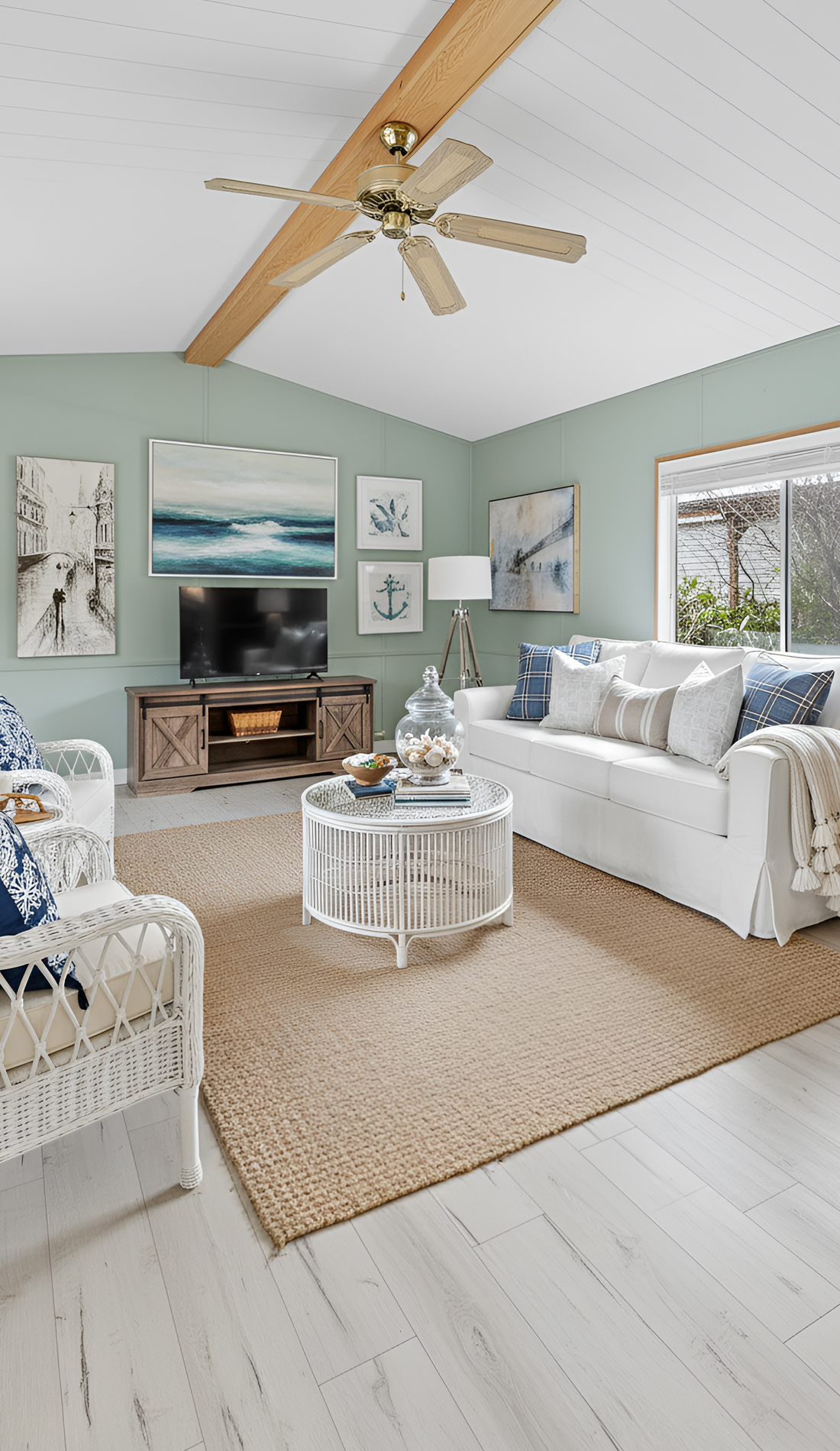
Natural light is one of the best design tools in any single wide mobile home. Coastal style depends on brightness, so this is one idea that matters more than almost anything else. The more light you let in, the more open and cheerful your living room will feel.
Skip heavy window treatments if you can. Instead, choose airy curtains in linen or cotton. Sheer panels, light-filtering shades, or bamboo blinds can all work well. These options give privacy without blocking sunlight.
Also pay attention to furniture placement. Avoid putting large, bulky pieces right in front of windows. Let the light travel through the room. If the layout allows it, place a mirror across from a window to reflect brightness and make the space feel deeper.
Design cues:
Use soft, breezy window treatments and keep the window areas clean and open. A bright room is the heart of coastal design.
6. Layer Woven Textures for Warmth and Charm
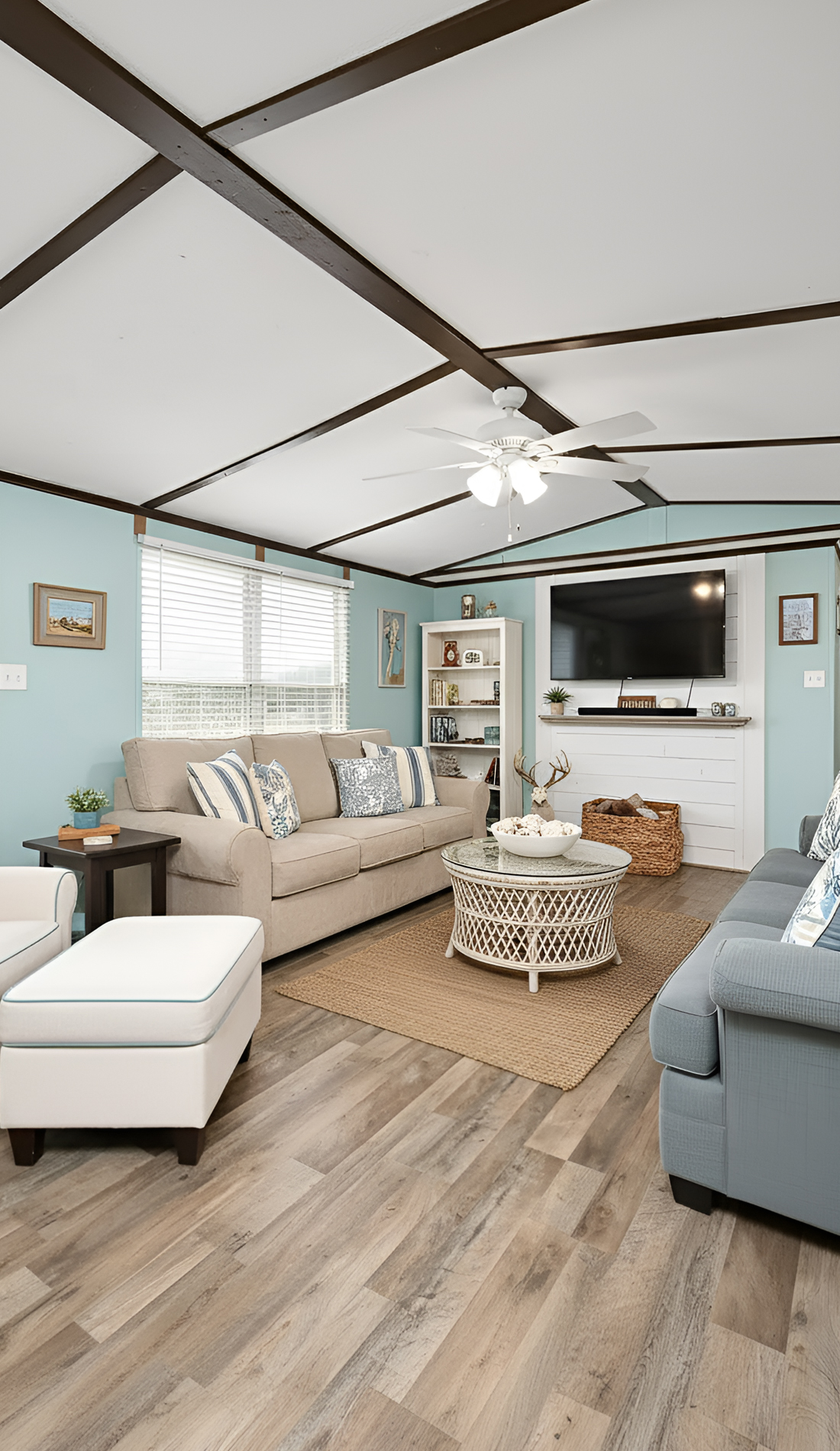
Coastal rooms need texture. Without it, all those pale colors can fall flat. In a single wide living room, woven materials add warmth, character, and depth without taking up extra room.
Think rattan baskets, wicker chairs, seagrass rugs, cane-front cabinets, or a woven pendant light. These details bring in the casual feel of beach cottages and help soften the straight lines often found in mobile home interiors.
Texture is especially important in narrow spaces because it keeps the room from feeling one-note. A woven coffee table tray, a basket for blankets, or a jute pouf can make a huge difference. These pieces add soul while still fitting the relaxed coastal mood.
Design cues:
Mix natural materials like jute, wicker, bamboo, and cane. Keep the finishes light and organic for the freshest look.
7. Go for a Light, Leggy Furniture Layout
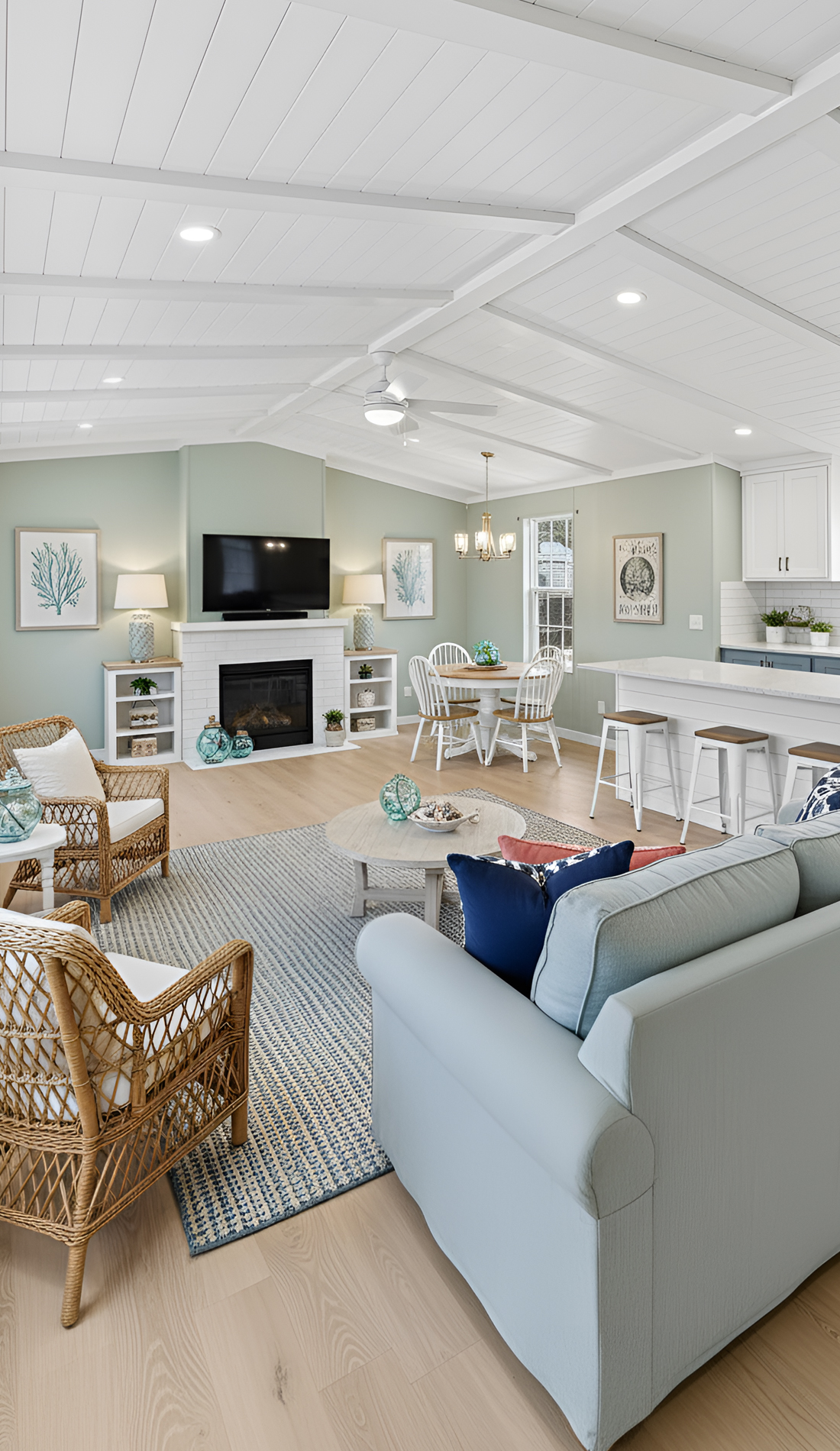
A single wide living room can feel crowded fast if the furniture is too bulky. That is why light, leggy pieces work so well in coastal design. Furniture with visible legs lets more floor show, which makes the room feel less cramped.
Choose a sofa with raised legs, slim accent chairs, and narrow side tables. Glass-top or open-frame coffee tables can also help. These pieces give the eye more room to travel, so the space feels bigger than it is.
This idea fits coastal design perfectly because beachy rooms tend to feel casual and open. Heavy, overstuffed furniture can fight against that mood. Instead, go for pieces that feel easy and lifted.
Design cues:
Pick furniture that sits slightly off the floor and avoid large blocky shapes. This creates a lighter, breezier flow.
8. Add a Striped Rug for a Classic Coastal Touch
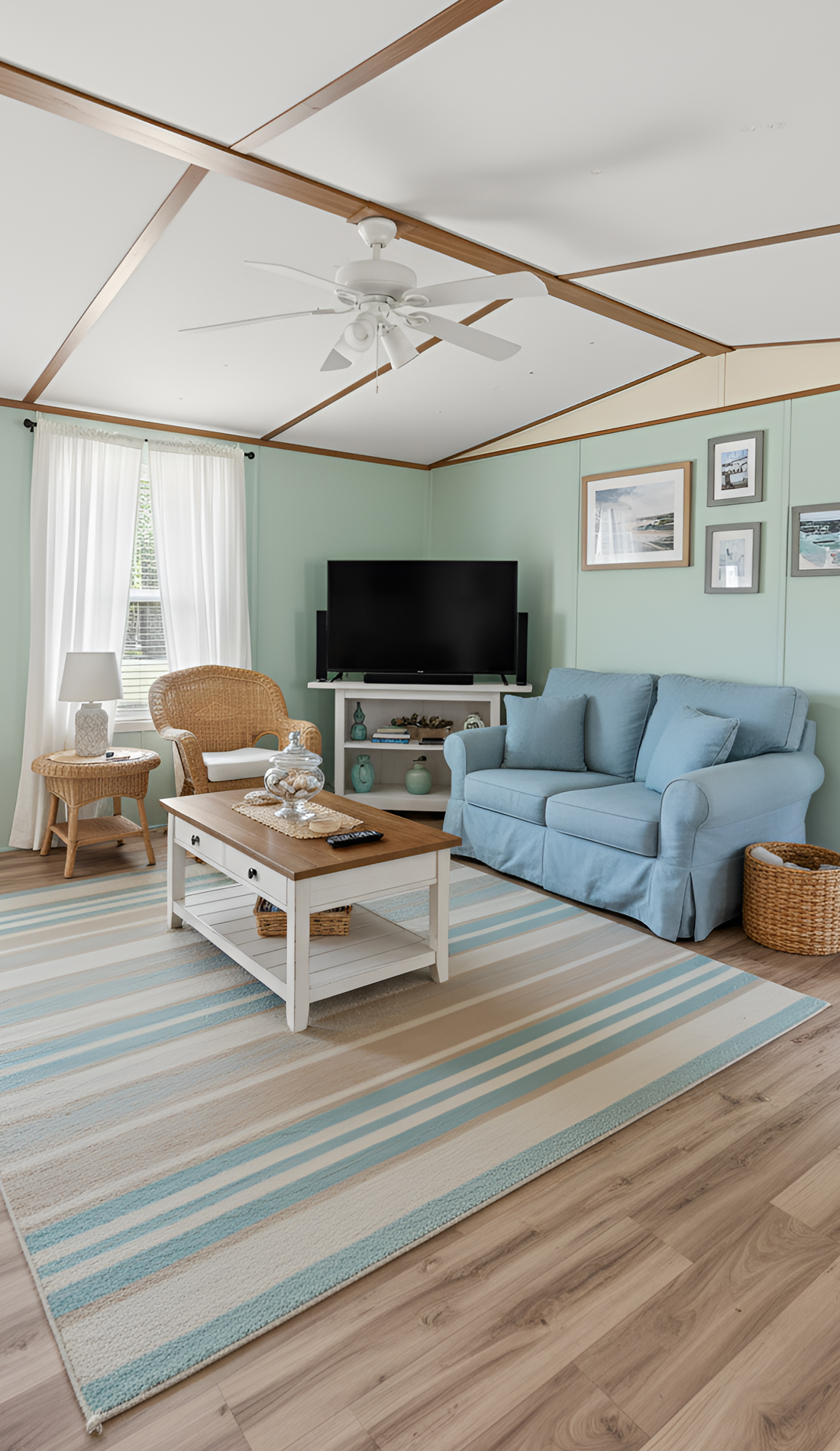
If you want one simple element that instantly says coastal, a striped rug is a great place to start. It adds pattern without too much fuss, and it helps guide the eye through a long, narrow room.
Blue-and-white stripes are the classic choice. Still, beige, ivory, gray, or soft green stripes can feel just as coastal. In a single wide living room, a rug can also help define the seating area and make the room feel more finished.
Choose a rug that is large enough for at least the front legs of the furniture to sit on. That will make the arrangement feel more grounded. Flatweave or low-pile styles are especially useful in high-traffic spaces.
Design cues:
Use stripes in soft tones, and let the rug support the room rather than dominate it. The pattern should feel crisp, calm, and easy.
9. Decorate With Coastal Art That Feels Subtle
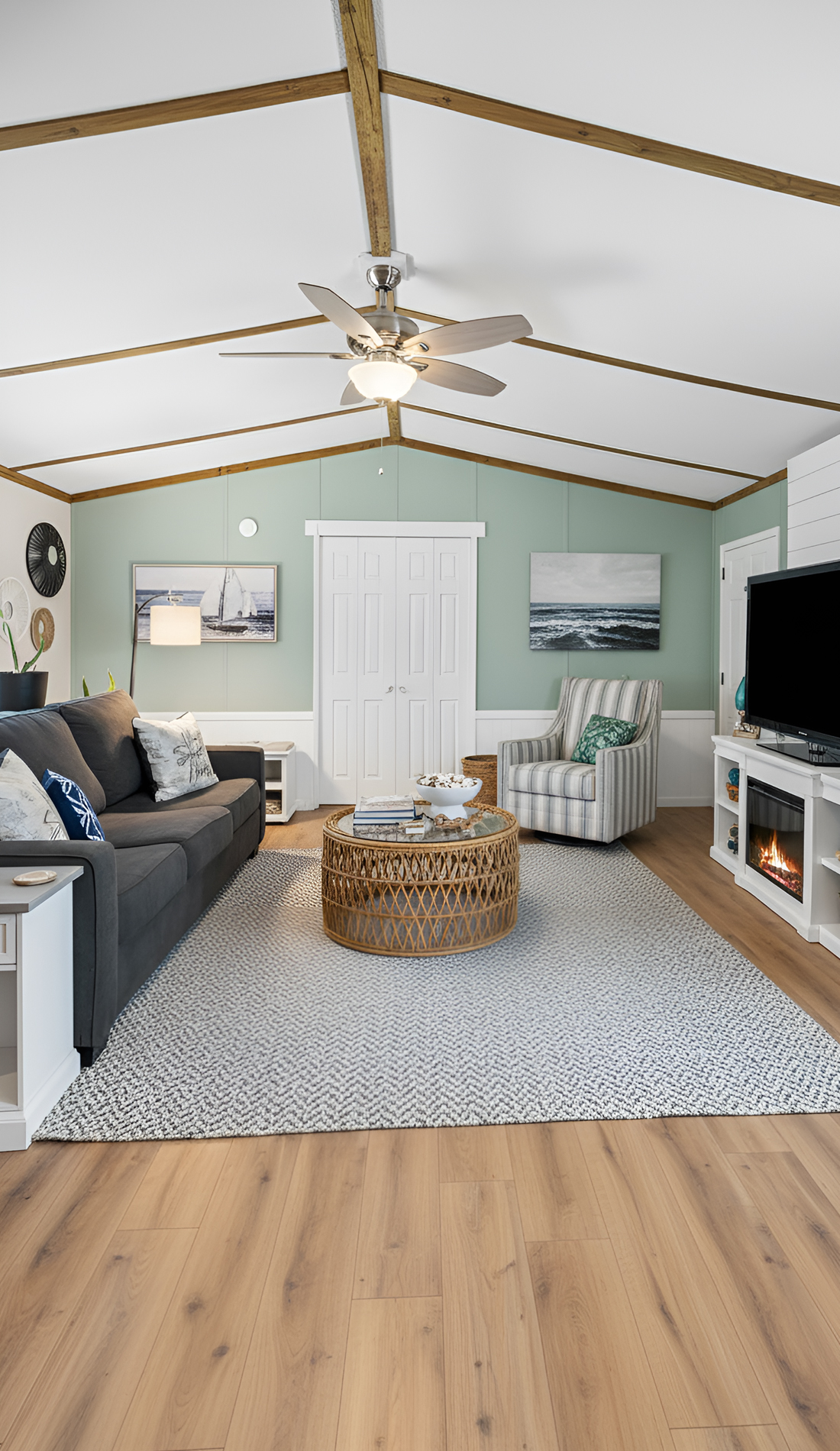
Coastal art can set the mood fast, but subtlety matters. In a small living room, you want art that enhances the space, not takes over. Pieces inspired by the shore work beautifully when they feel soft and natural.
Look for seascapes, abstract ocean tones, dune photography, shell sketches, or watercolor pieces in pale blues and sandy neutrals. Art with white mats or light wood frames works especially well in coastal spaces.
This idea helps tell the story of the room without leaning into obvious beach decor. You do not need signs, anchors, or loud nautical themes. A simple oversized ocean print can say enough.
Design cues:
Choose art with soft movement, light colors, and natural subjects. Keep frames clean and simple for a polished but relaxed finish.
10. Use Shiplap or Plank Walls in Small Doses
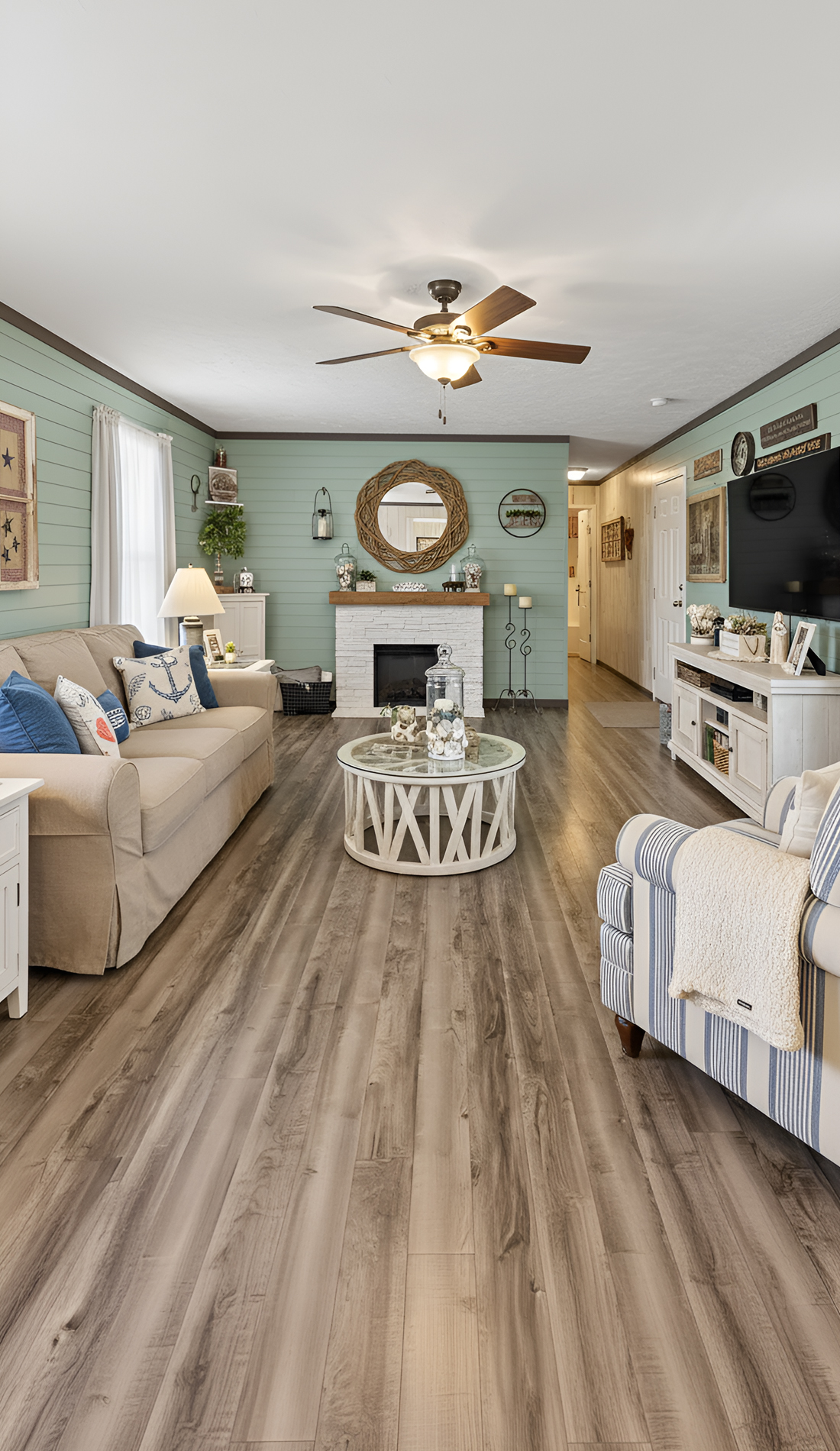
Wall texture can bring coastal character to a single wide living room, and shiplap is one of the most popular ways to do it. Even so, too much can make a narrow room feel busy. The trick is to use it in small doses.
Try adding shiplap to one accent wall, around a fireplace, or behind the TV. Painted in white, soft cream, or pale gray, it adds just enough cottage charm without overwhelming the room. Vertical planks can also help draw the eye upward, which makes the ceiling feel taller.
This detail works because it adds architectural interest to a simple space. Many mobile homes have plain walls, so a little paneling can make the room feel more custom.
Design cues:
Keep the plank lines crisp and the color light. Let the texture be part of the background, not the star of the room.
11. Style the Coffee Table With Beachy Simplicity
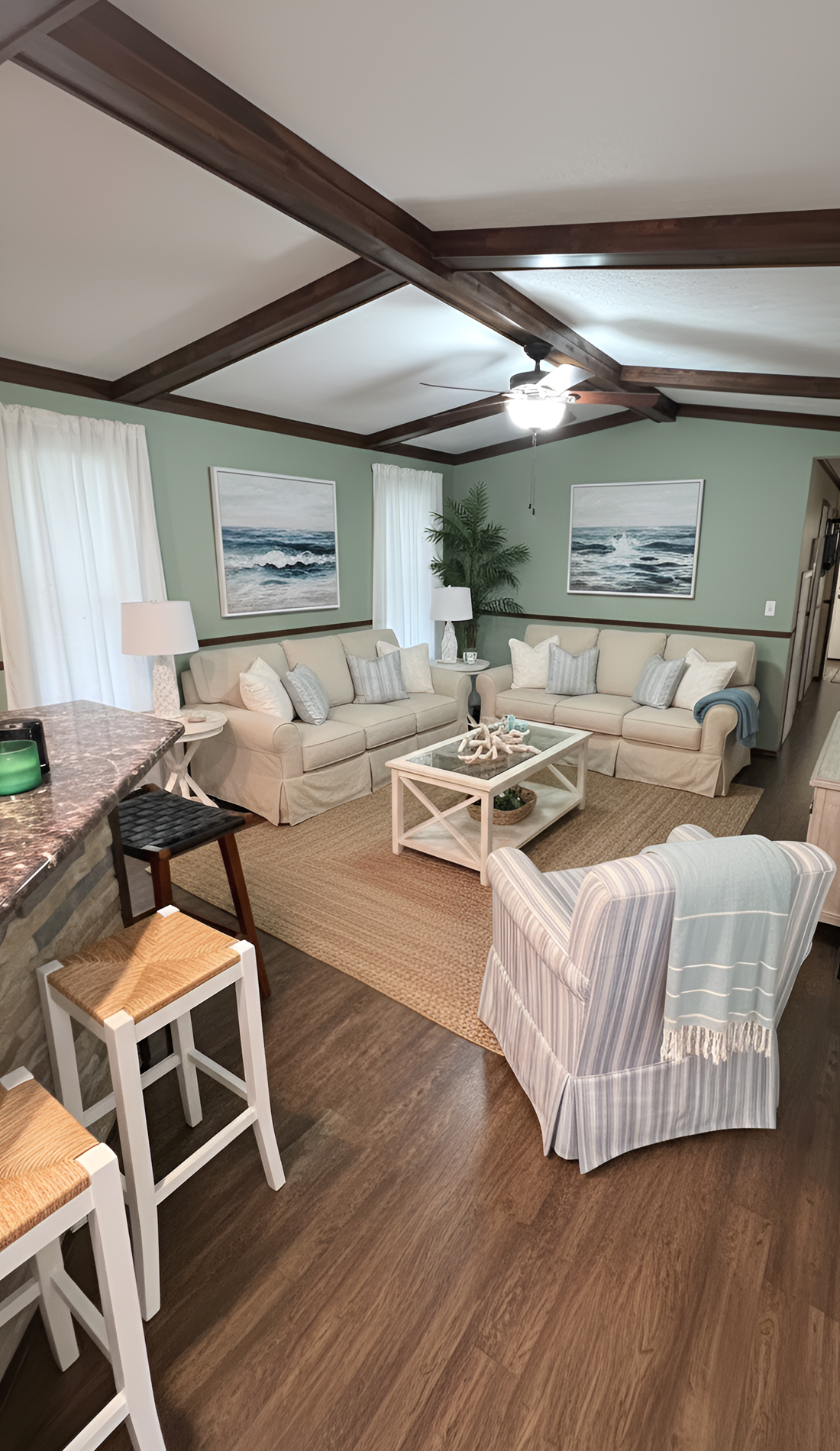
The coffee table is a small spot, but it can do a lot for the room’s style. In a coastal single wide living room, simple styling keeps the space fresh and uncluttered.
Start with a tray in wood, rattan, or woven material. Then add a few relaxed pieces like a candle, a stack of books, coral-inspired decor, or a small vase with greenery. Keep the arrangement loose and airy. Do not fill every inch.
This matters in a small room because surfaces can get crowded fast. Clean styling makes the room feel calmer. It also keeps the focus on texture and tone rather than clutter.
Design cues:
Use just a few pieces with varied height and natural texture. Aim for pretty, practical, and easy to move.
12. Bring in Linen and Cotton for a Breezy Finish
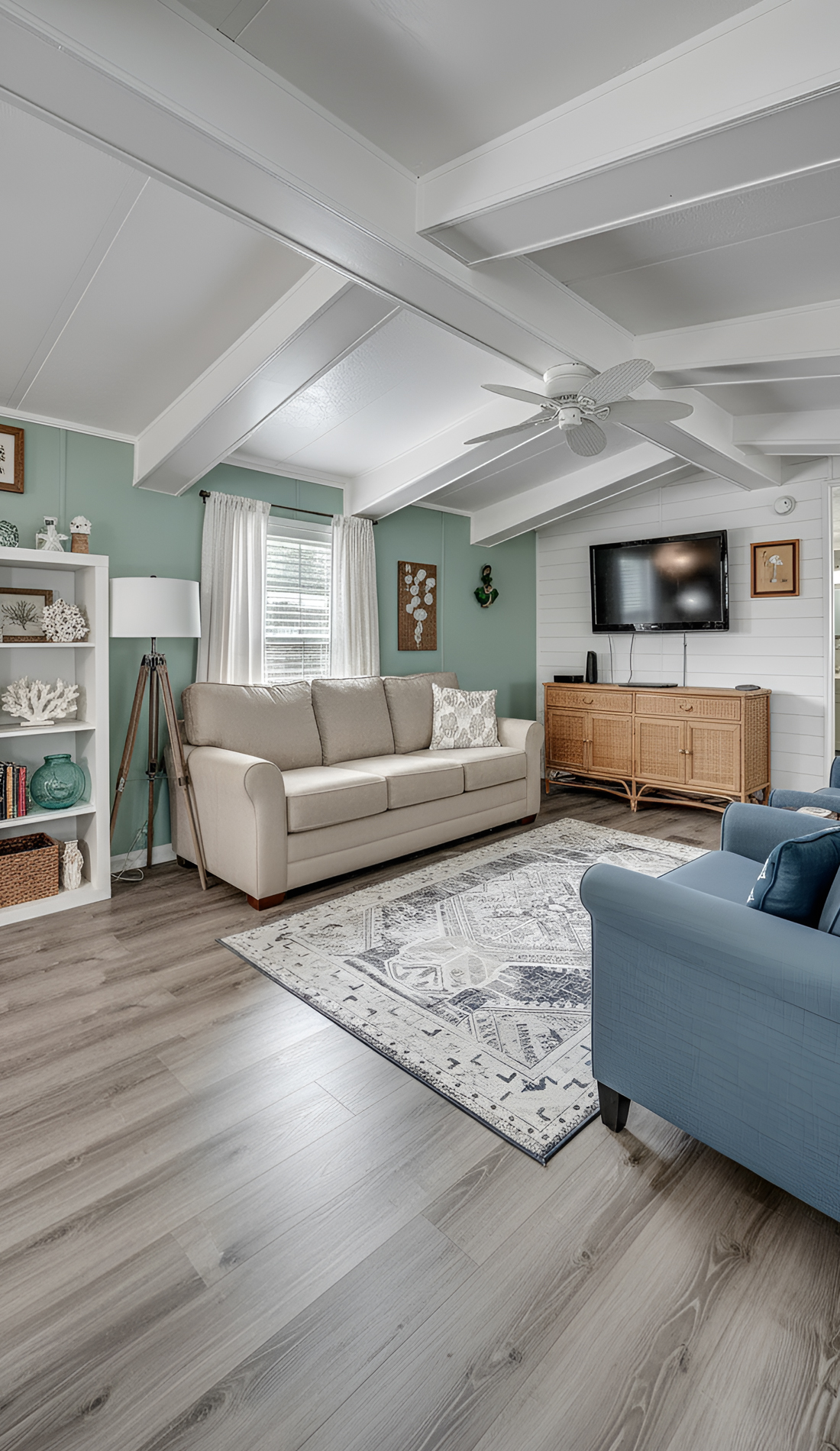
Coastal style always feels better when the fabrics are soft and breathable. Linen and cotton are perfect for this look. They make a single wide living room feel lighter, more relaxed, and more inviting.
Use these fabrics in curtains, throw pillows, slipcovers, and blankets. A mix of solids and subtle patterns keeps the room from feeling flat. Washed textures work best. They bring that easy, lived-in softness that coastal rooms do so well.
This idea helps the room feel comfortable, not staged. And in a space you use every day, that matters. Crisp but cozy is the sweet spot.
Design cues:
Choose fabrics in white, oat, pale blue, or sandy beige. Look for texture, softness, and a natural drape.
13. Add Sea Glass Colors for a Fresh Twist
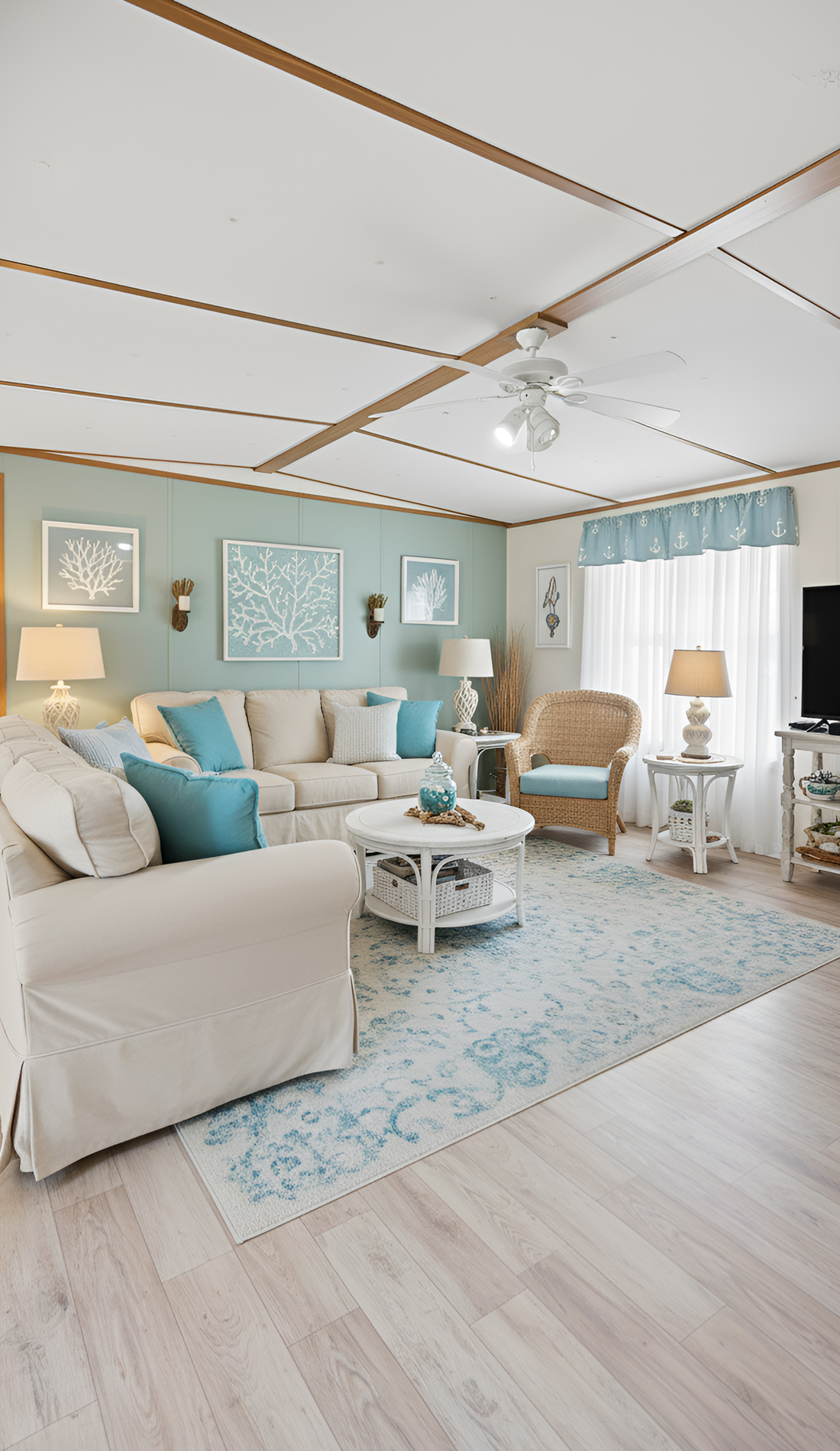
Not every coastal room needs to lean only on navy and white. Sea glass shades can give the space a softer, more modern feel. Think pale aqua, misty green, soft turquoise, and faded blue-gray.
These colors feel fresh and beachy, but they also work beautifully in small spaces because they stay light and soothing. You can bring them in through accent pillows, a painted side table, art, or even a lamp base.
Sea glass tones pair especially well with white walls and light woods. They add just enough color to keep the room interesting while still feeling restful.
Design cues:
Use sea glass shades as highlights. Pair them with warm neutrals so the room feels balanced and calm.
14. Create a Cozy Reading Corner by the Window
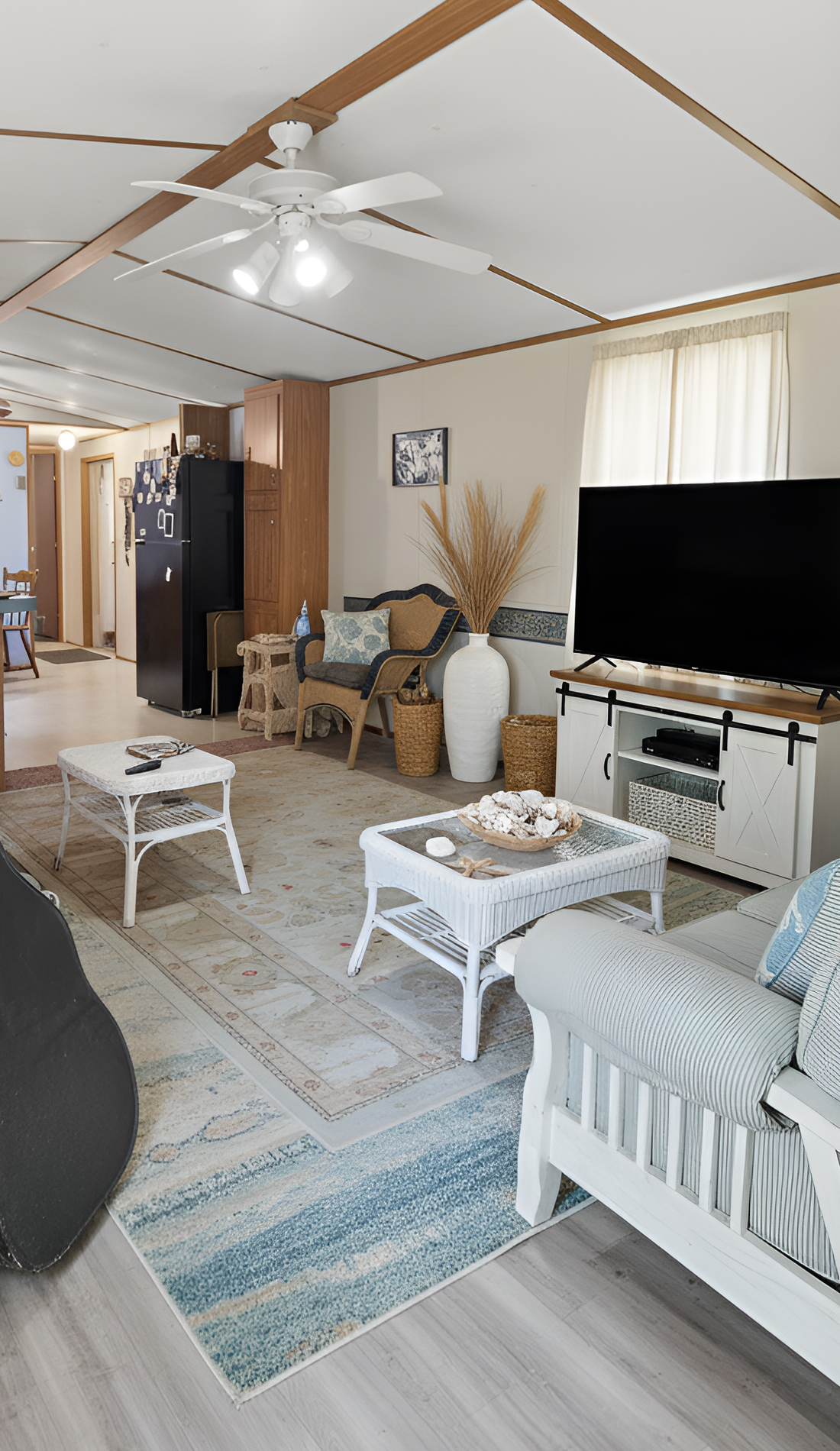
Even a small single wide living room can hold a little moment of charm. A reading corner by the window adds function and personality while making the room feel thoughtfully designed.
A slim armchair, a small side table, and a woven lamp can turn an empty corner into a favorite spot. If space is tight, try a small accent chair with exposed legs so the area still feels open. Add a soft throw and one coastal pillow to tie it into the rest of the room.
This kind of setup works well in coastal spaces because it supports the relaxed, slow-living mood. It makes the room feel personal and complete.
Design cues:
Keep the corner light and uncluttered. Let it feel like a peaceful little retreat inside the larger room.
15. Use Mirrors to Expand the Space
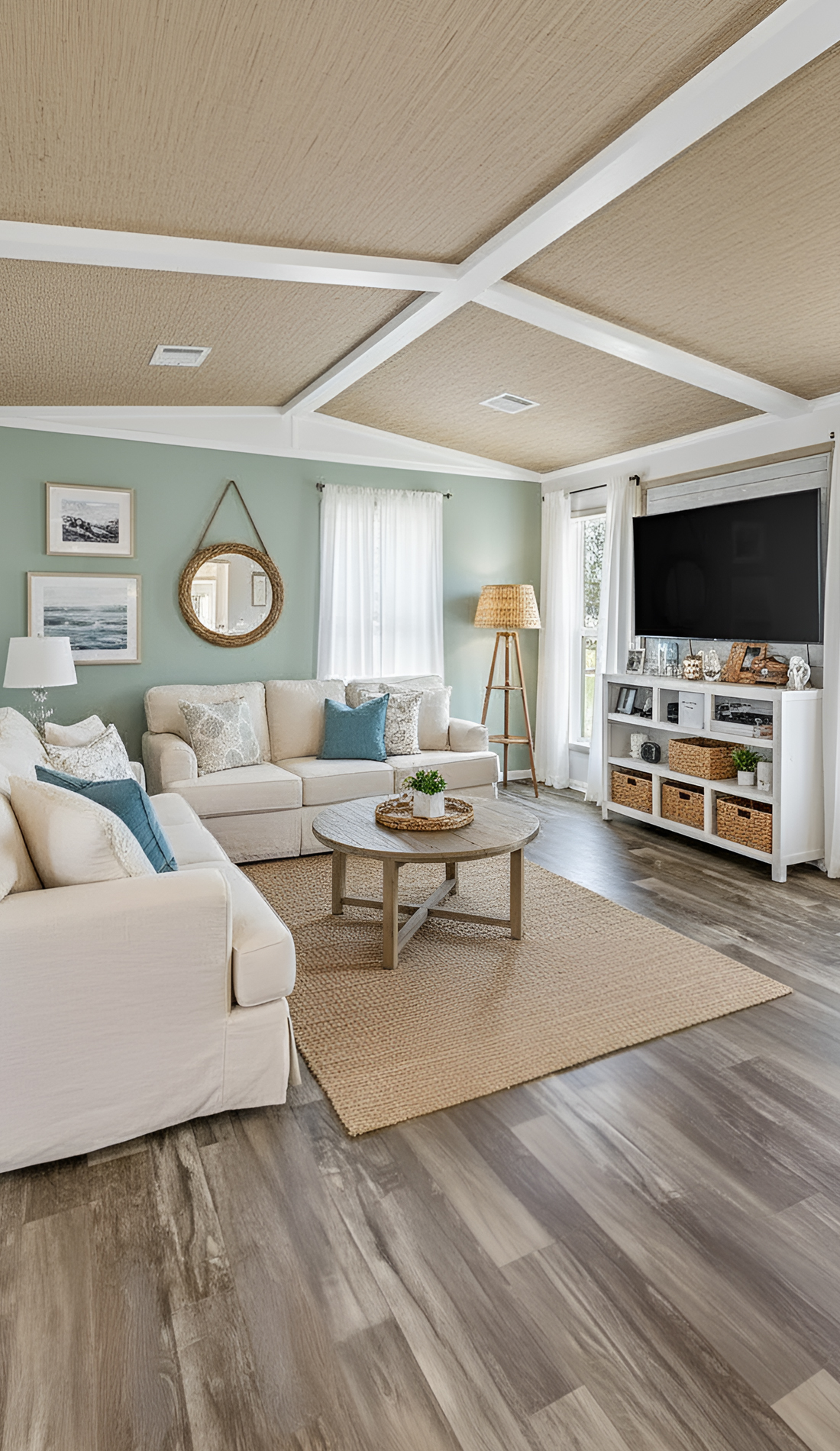
Mirrors are a smart move in any small room, and they work especially well in coastal design. They reflect light, open up the room, and add a polished touch without adding bulk.
A large mirror over the sofa, console, or opposite a window can make a single wide living room feel much bigger. Coastal mirrors often feature whitewashed wood, rope details, driftwood finishes, or simple rounded frames.
Still, the best coastal mirrors do not feel too themed. Clean lines and natural finishes will usually age better than overly decorative designs.
Design cues:
Place mirrors where they can reflect daylight. Choose frames that feel light, organic, and slightly weathered.
16. Keep Decor Minimal but Meaningful
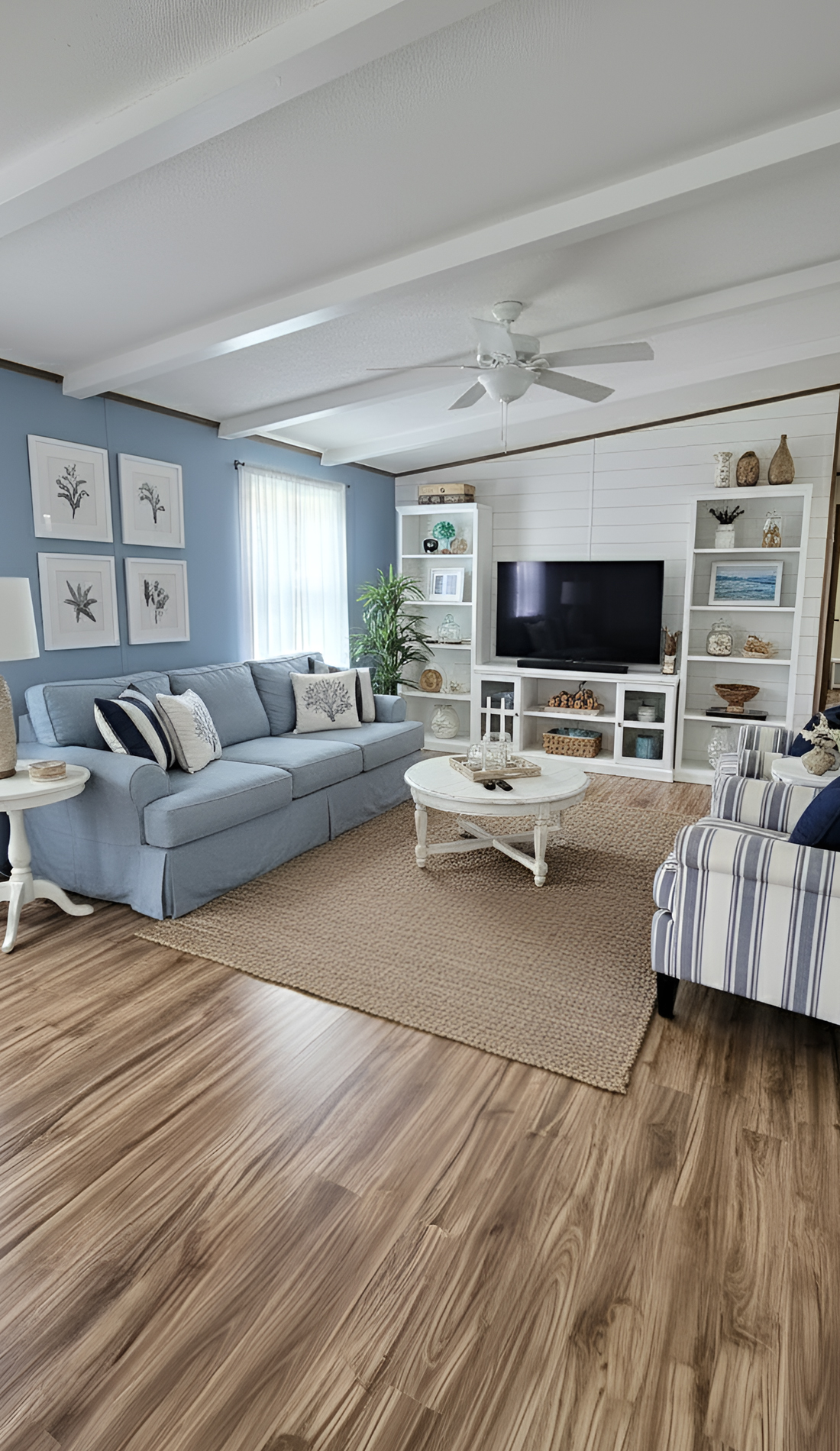
One of the biggest mistakes in small coastal rooms is adding too many themed accessories. A single wide living room looks best when the decor feels edited. That means fewer items, but better ones.
Instead of filling shelves with small beach trinkets, choose a handful of pieces with impact. A large vase, one beautiful art print, a woven basket, or a sculptural lamp can do more than lots of tiny decor. This approach keeps the room feeling open and intentional.
Coastal design is about ease. It should never feel crowded or fussy. When each item has space around it, the whole room feels calmer.
Design cues:
Use decor that adds texture, shape, or softness. Skip anything too kitschy or overly literal.
17. Blend Coastal Style With Everyday Comfort
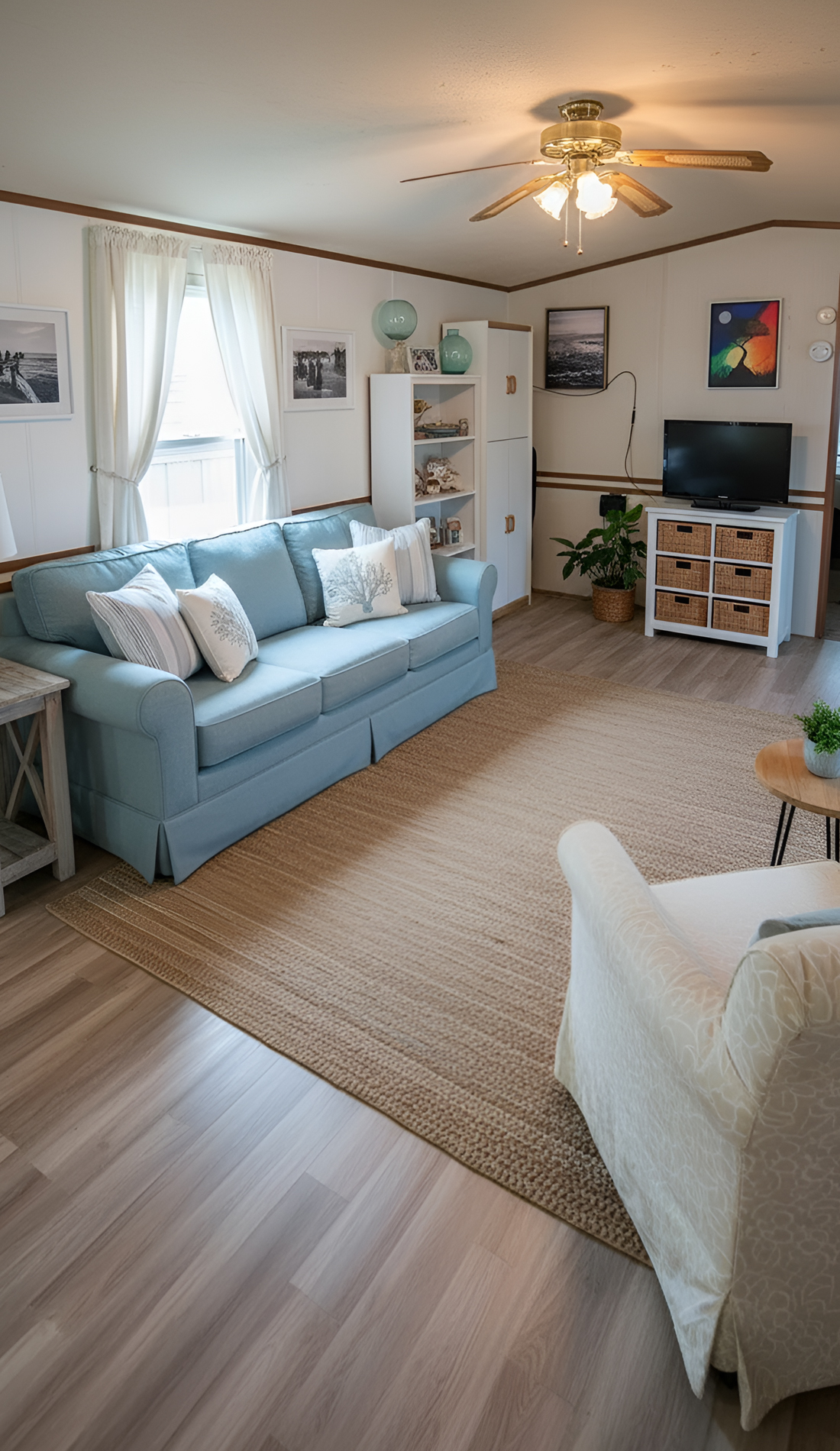
The best single wide mobile living room coastal designs are not just pretty. They feel good to live in. That is the final idea, and it may be the most important one. A beautiful room should still feel easy, warm, and real.
Make space for storage baskets, cozy throws, practical lighting, and seating that people actually want to use. Choose finishes that hold up to daily life. Let the room feel polished, but never too precious. Coastal design shines brightest when it feels effortless.
In a single wide mobile home, that balance matters even more. Every choice needs to support both style and function. When you combine light colors, natural textures, smart furniture choices, and a soft beachy mood, you can create a living room that feels special without trying too hard.
Design cues:
Focus on comfort first, then layer in beauty. The room should feel calm, useful, and full of simple charm.
Conclusion
A coastal living room is all about comfort, light, and simple beauty. In a single wide mobile home, that style works especially well because it helps the space feel bigger, brighter, and more inviting. From slipcovered sofas to sea glass accents, these ideas prove that you do not need a huge room to create a stunning coastal retreat. With the right mix of texture, color, and layout, your living room can feel like a peaceful getaway every day.