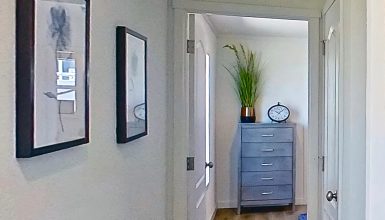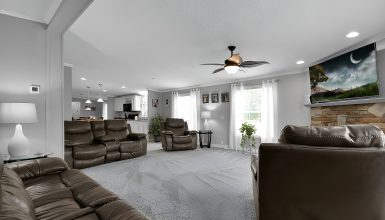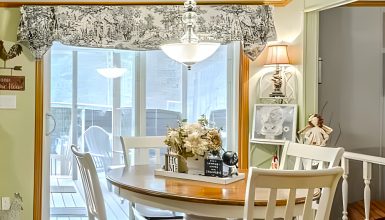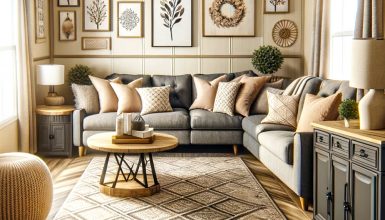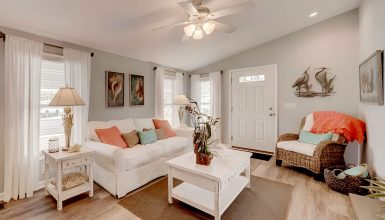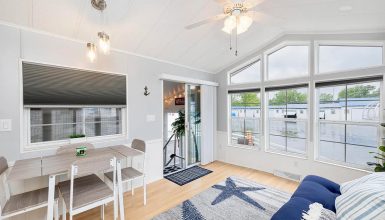
A mobile home can feel warm, bright, and roomy with a few smart design choices. In this home, white walls open up the space. A sage green accent wall adds color. Soft sofas, warm floors, and a connected kitchen make the whole room feel like home.
You can bring this look into your own home, too. Start with a light base, add a few warm tones, and give each area a clear purpose.
1. Start With a Light Color Palette
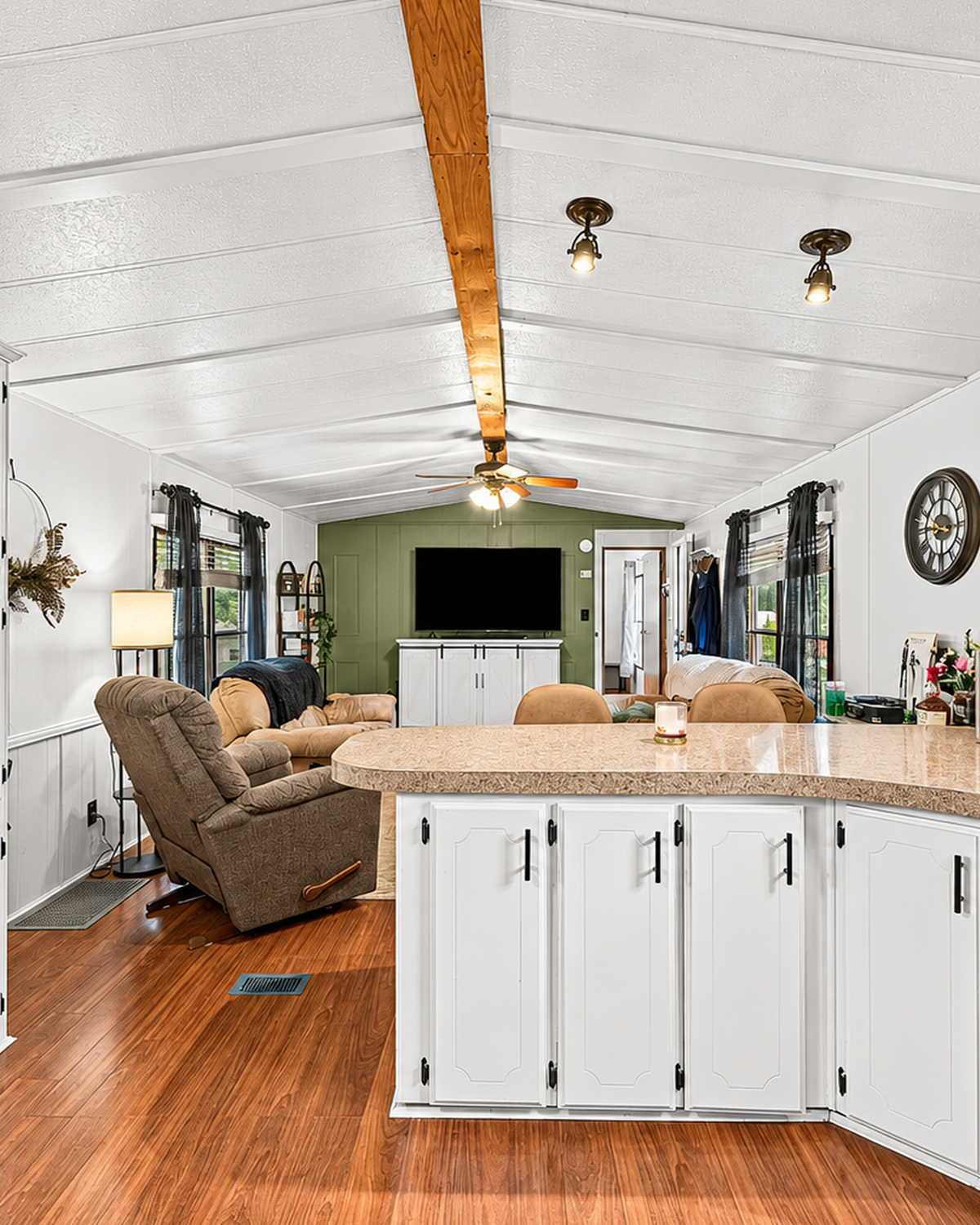
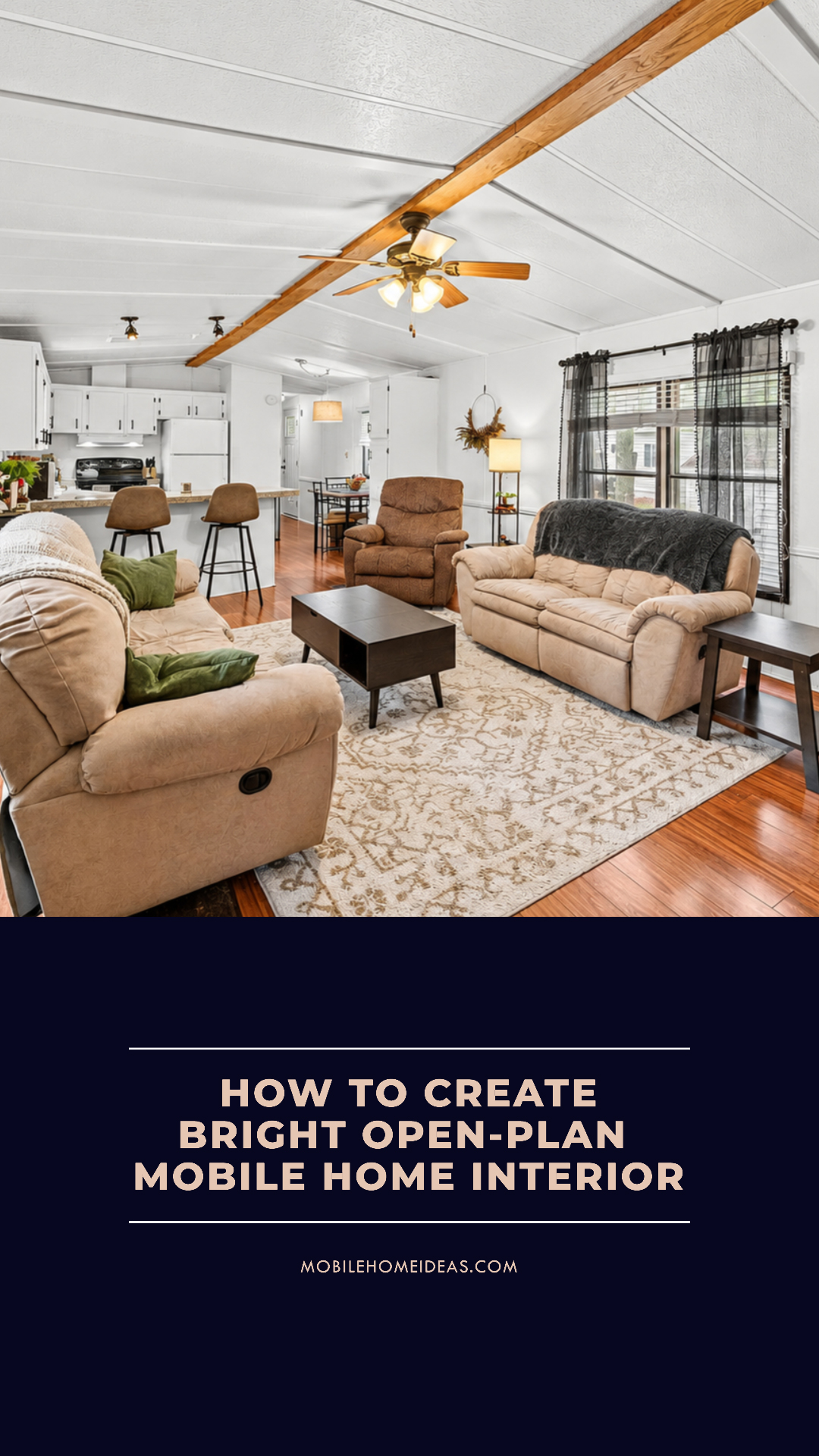
White walls help a small room feel open. They also reflect light from the windows. In this home, white covers most of the walls, cabinets, and ceiling. That clean backdrop lets the wood tones and green accent wall stand out.
Choose a warm white for a softer look. Test paint samples on the wall before you commit. Check them in the morning, afternoon, and evening. Light can change how a color looks.
If you cannot paint, use white curtains, light rugs, or pale decor to brighten the room. Keep the palette simple. Too many strong colors can make an open room feel busy.
Cues list:
- Pick a warm white for walls or large surfaces.
- Test paint in more than one area.
- Use light colors to help daylight move through the room.
- Keep bold colors to one or two spots.
2. Add One Colorful Focal Wall
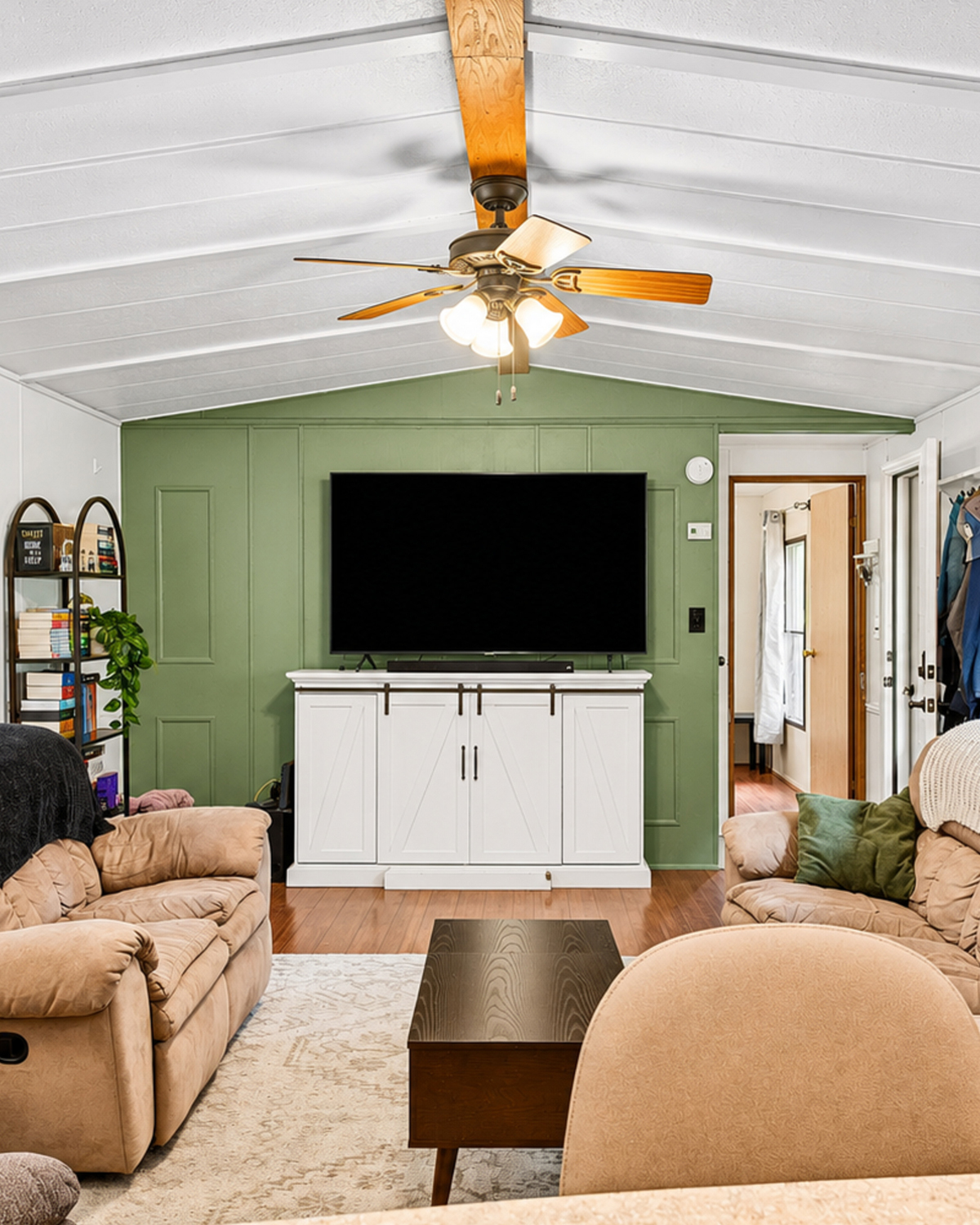
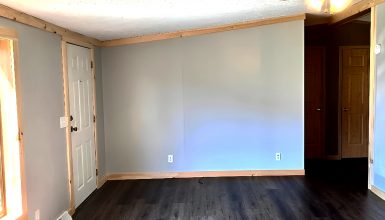
The sage green wall behind the TV gives the living room a clear focal point. Its muted color feels calm. The panel details also add texture without taking over the room.
You can create a similar look with paint. A soft sage, olive, or gray-green works well with white walls and tan furniture. For more detail, add simple trim strips before painting. First, check the wall surface and make a plan for outlets, switches, and the TV.
Keep the rest of the room quiet. A single accent wall can add depth without making a small space feel crowded.
Cues list:
- Choose a calm green or another muted shade.
- Use one wall as the main feature.
- Add simple trim for a paneled look.
- Keep nearby decor light and simple.
3. Use Warm Wood to Balance the White
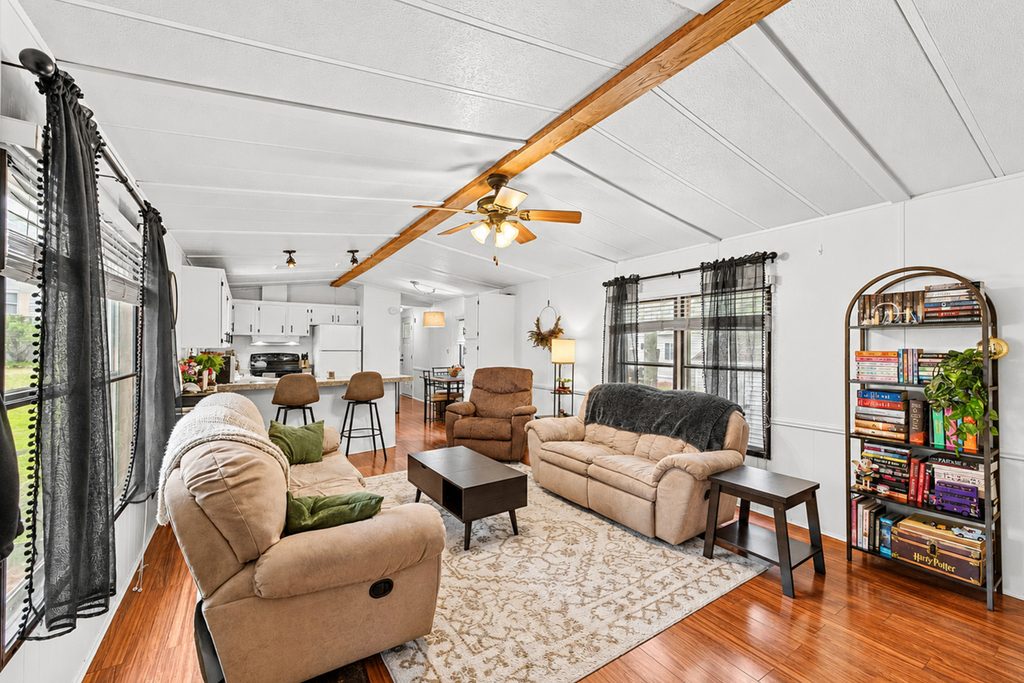
Warm wood tones keep this room from feeling stark. The wood-look floor adds color across the open space. A long wood beam draws the eye along the ceiling and adds a rustic touch.
If your home has a ceiling beam, you can clean and refinish it to show its natural color. If you want to add a decorative beam, check how it will attach before you begin. Do not cut or alter ceiling parts without knowing what they do.
You can also bring in wood through a coffee table, shelves, or bar stools. A few pieces can create a warm link between the living room and kitchen.
Cues list:
- Use warm wood tones in the floor or furniture.
- Add one or two wood accents near the ceiling or walls.
- Match new wood pieces to the floor’s undertone.
- Check ceiling structure before adding a beam.
4. Arrange Furniture for Easy Conversation
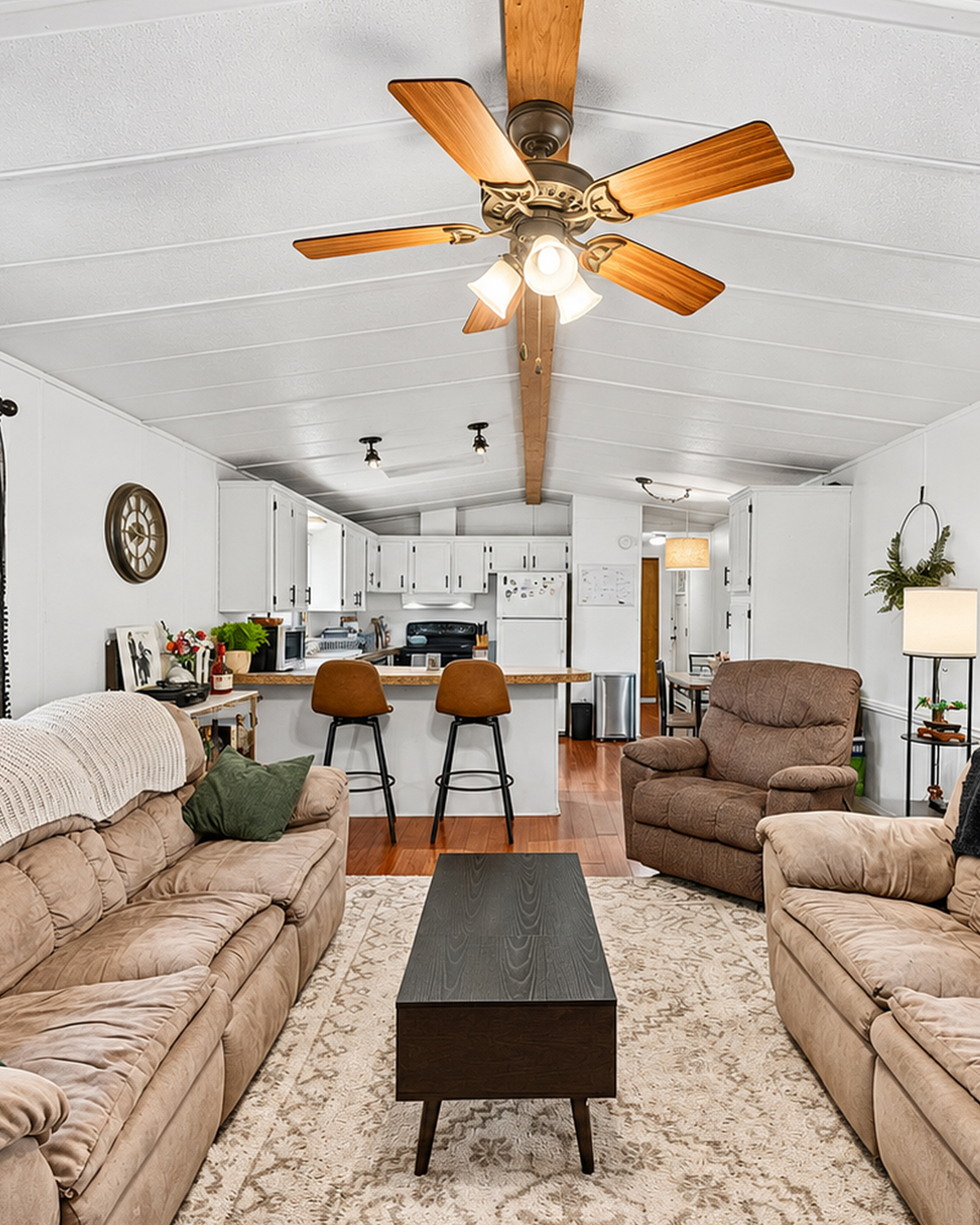
The sofas face each other across a coffee table. This layout makes the living room feel like a place to gather. It also creates a clear path between the seating area and kitchen.
Start by placing the largest pieces first. Leave room to walk around them. Then add a coffee table that people can reach from each seat. If a full-size table feels too large, try a smaller one or two nesting tables.
A soft recliner adds another seat without changing the room’s layout. Keep furniture close enough for conversation, but leave enough space to move through the room with ease.
Cues list:
- Face seating toward each other or a shared focal point.
- Leave a clear path to the kitchen and doors.
- Choose a coffee table that fits the space.
- Place the largest furniture pieces first.
5. Make Neutral Seating Feel Cozy
The tan sofas bring a warm, relaxed feel to the room. Their soft color works with the white walls, sage accent wall, and wood floor. A cream throw and dark blanket add texture and contrast.
You can create the same layered look with pillows and blankets. Try cream, olive green, charcoal, or muted brown. Mix a few textures, such as knit, linen, and cotton. Keep the number of patterns low so the room still feels calm.
Before buying new furniture, measure the room and the doorways. A large sofa can look cozy, but it should not block a walkway or cover too much floor.
Cues list:
- Choose a sofa color that works with your floors.
- Add throws and pillows in two or three related colors.
- Mix soft textures for a lived-in feel.
- Measure furniture and walkways before you buy.
6. Use a Rug to Define the Living Room
The pale patterned rug marks the living room within the open floor plan. It also softens the space underfoot. Its light color ties the sofas to the white walls.
Choose a rug large enough for the front legs of the main seats to rest on it. This helps the furniture feel connected. A low-contrast pattern can hide daily wear while keeping the room calm.
If your home has wood-look flooring, use a rug pad beneath the rug. It helps keep the rug in place and can add a little cushion.
Cues list:
- Use a rug to mark the seating area.
- Choose a size that reaches under the front legs of the sofa.
- Pick a soft pattern that fits your palette.
- Add a rug pad for grip and comfort.
7. Let in Daylight, Then Add Soft Layers
Large windows bring natural light into the room. Blinds offer privacy and help control glare. Dark sheer curtains add contrast while still letting light pass through.
Hang curtain rods a little higher and wider than the window frame, if the wall allows. This can make the windows feel larger. Check that the curtains do not block doors, trim, or heating vents.
At night, use lamps to add a softer glow. A floor lamp near the sofa or a table lamp beside a chair can make the room feel cozy without relying only on ceiling lights.
Cues list:
- Use blinds for privacy and light control.
- Add sheer curtains for softness.
- Hang curtain panels high and wide when space allows.
- Use lamps for warm evening light.
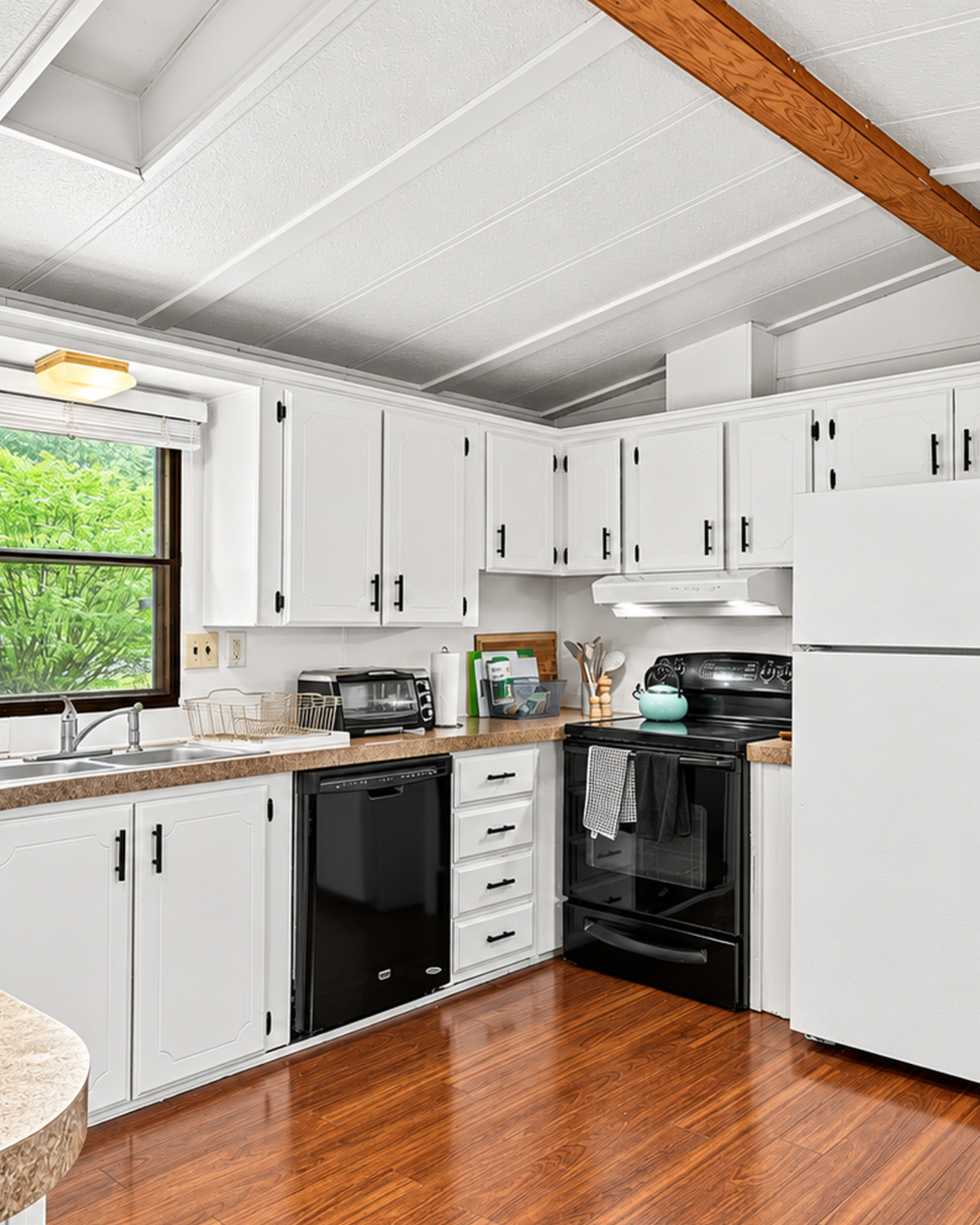
8. Keep the Kitchen Bright and Useful
The white kitchen connects with the living room through its shared colors. Black cabinet pulls and appliances add contrast. Warm counters and wood floors keep the kitchen from feeling cold.
You can update a kitchen without replacing every cabinet. Clean the doors, repair loose hinges, and repaint if the surface allows it. New hardware can make a simple cabinet feel fresh. Keep counters clear enough for daily tasks, then group small items on a tray or in a basket.
A peninsula can serve as prep space, a place to eat, and a visual link to the living room. If you add stools, leave room to pull them out and walk behind them.
Cues list:
- Use light cabinet colors to keep the kitchen bright.
- Add dark pulls for a simple contrast.
- Clear work areas before styling the counters.
- Leave enough room around stools and walkways.
9. Finish With Personal Details
A bookcase, green plants, and simple wall decor make the room feel lived in. These items add character without filling every open surface.
Group books by color or size. Add a plant or two to break up rows of books. Use baskets to hold small items. Then step back and remove anything that feels crowded.
The best open-plan rooms feel connected, but each area still has a purpose. A rug marks the living room. The peninsula marks the kitchen. Color, light, and wood tie both spaces together.
Cues list:
- Display books, plants, and a few favorite objects.
- Use baskets to hide small items.
- Leave some shelf and counter space empty.
- Repeat colors from one area in the next.
Final Look
To create this bright mobile home interior, keep the main surfaces light, add warm wood, and choose soft neutral seating. Use one muted accent wall to give the room focus. Then define each area with furniture, rugs, and useful lighting.
Small changes can make a big difference. A fresh coat of paint, new curtain panels, or a well-placed rug can help your home feel brighter and more welcoming.