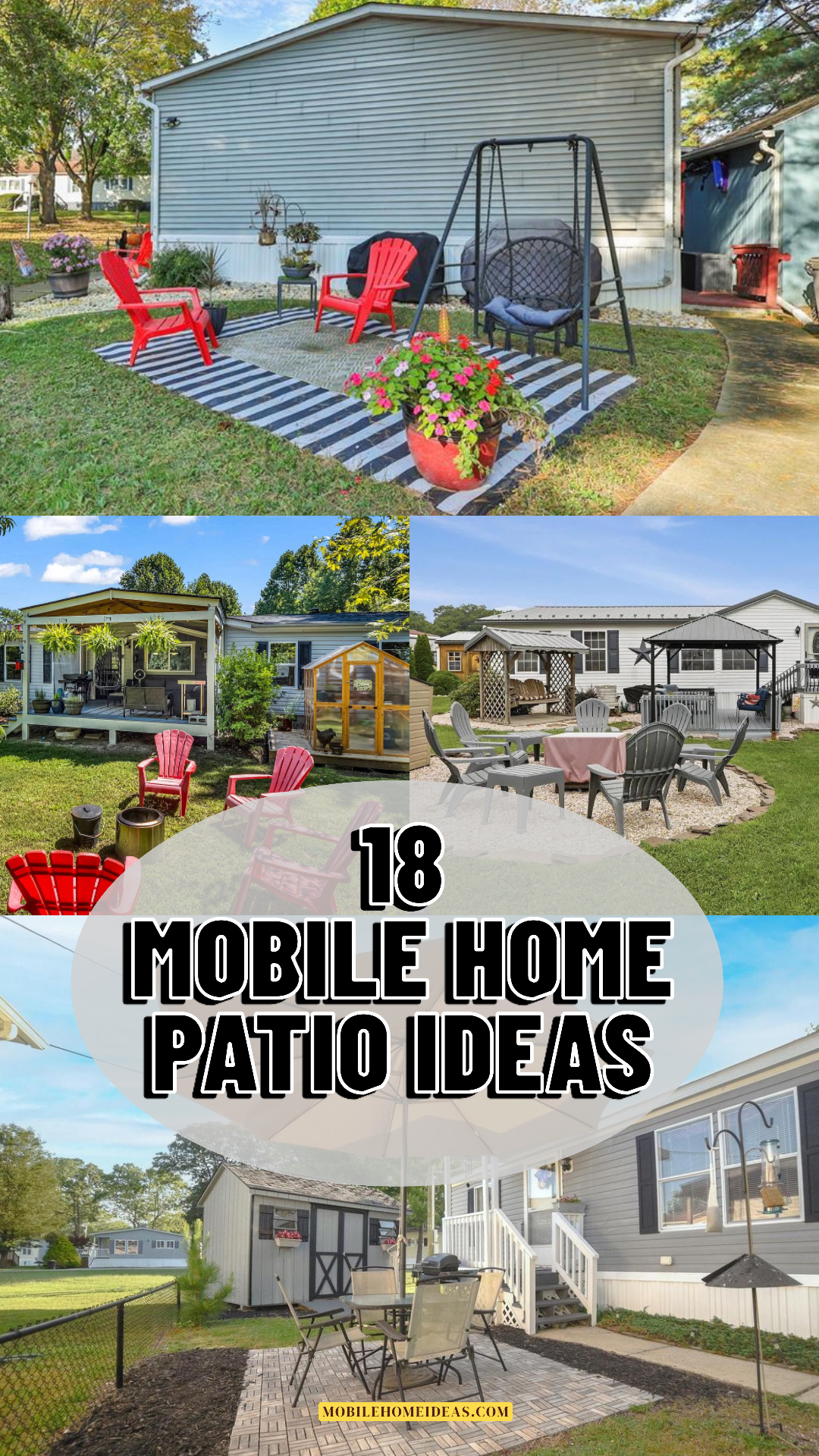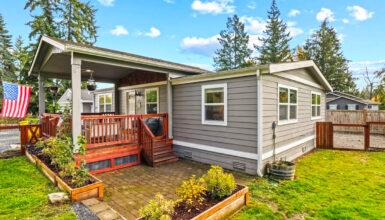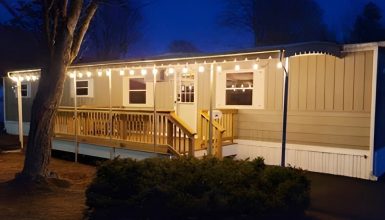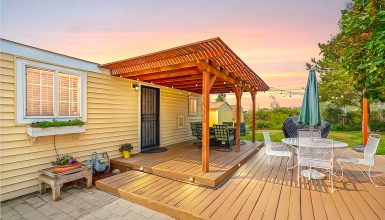
A small patch of yard can become the best seat in the house. Add a place to eat, a spot to relax, and a little shade, and your patio can feel like a true outdoor room. These 18 mobile home patio ideas show how to make that happen with pavers, gravel, umbrellas, gazebos, plants, and simple furniture.
1. Create a Paver Patio With a Gazebo
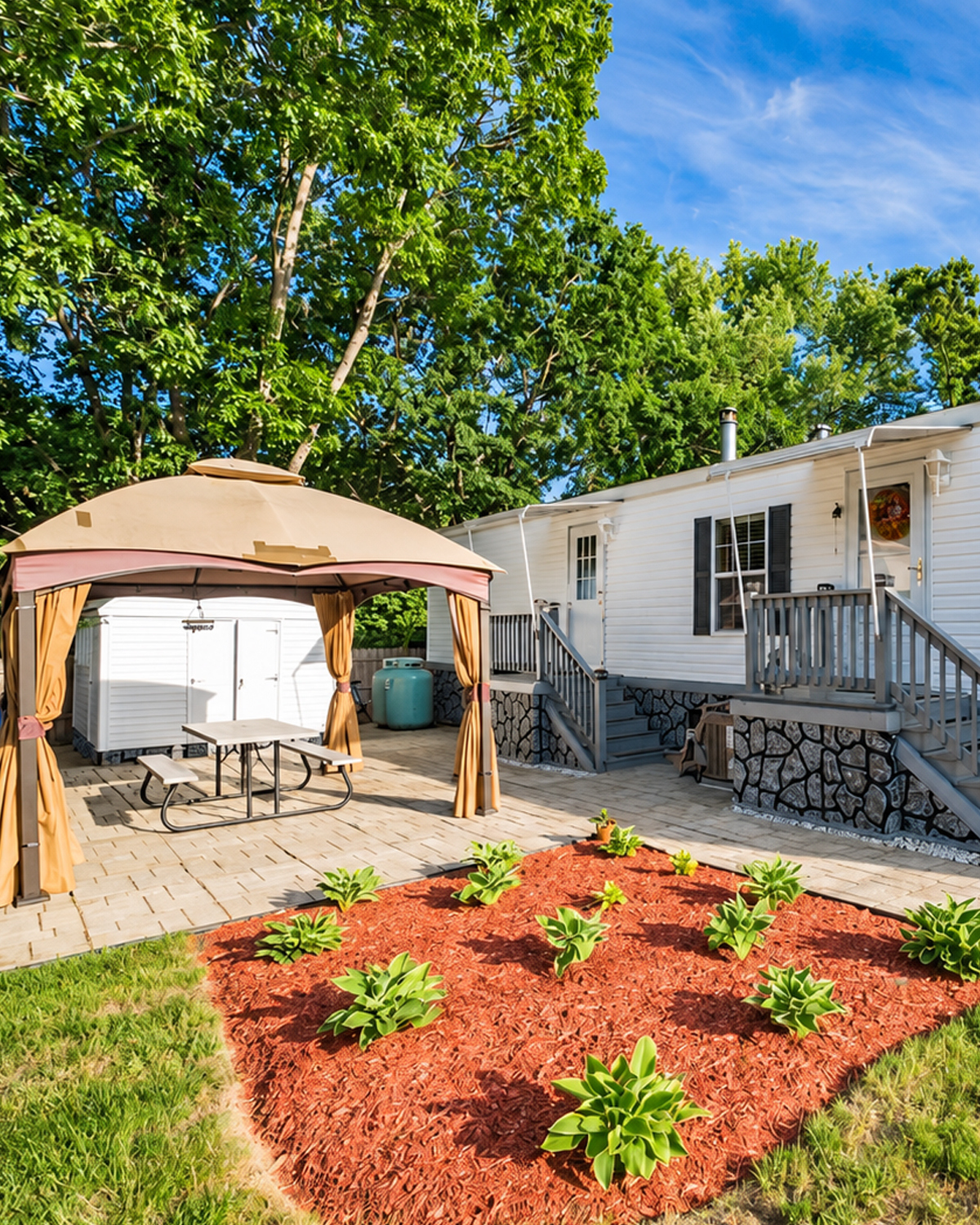
This patio pairs a paved seating area with a tan gazebo. The paving gives chairs and a table a firm, level base. The canopy adds shade and helps define the space. Its curtains soften the frame and offer a bit of privacy when you want it. A neat bed of red mulch and low plants adds color in front of the home. Together, these details make the yard feel planned and welcoming. This setup works well for lunch outside or a quiet break in the afternoon.
Cues to copy:
- Lay pavers in a level, compacted base.
- Add a gazebo with fabric panels for shade.
- Use mulch and low plants to frame the patio.
2. Make Room for Outdoor Meals
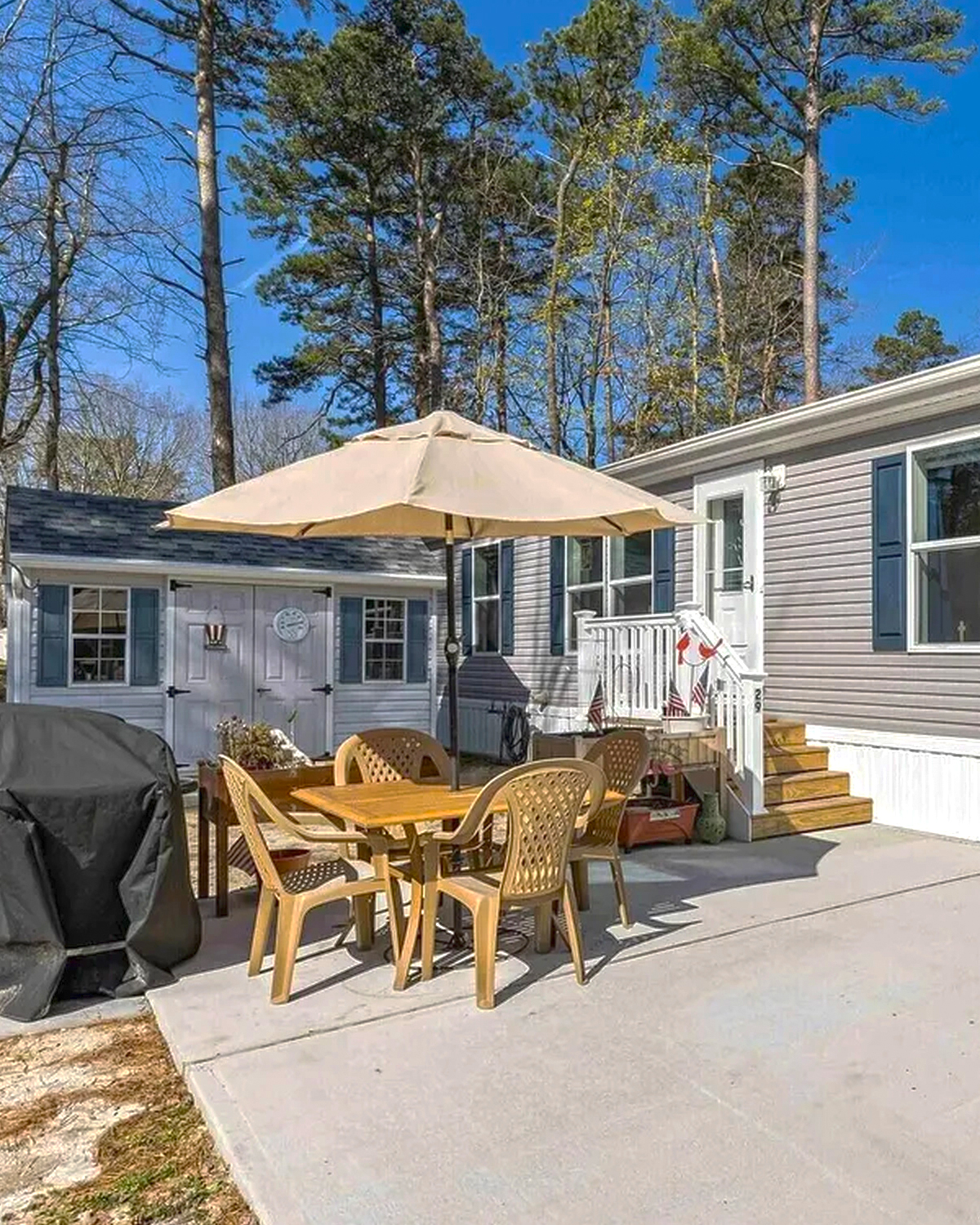
A simple concrete slab can serve as an easy dining patio. Here, a table and chairs sit under a large umbrella, close to the home’s back steps. The broad, smooth surface leaves room to pull out chairs and walk around the table. A covered grill sits nearby, ready for a cookout. The umbrella brings shade without taking up much floor space. Choose outdoor furniture that folds or stacks if you need to clear the patio for other activities. A few planters can add color without crowding the walkway.
Cues to copy:
- Use a concrete pad for a clean, low-care base.
- Place an umbrella over the main dining spot.
- Keep the grill close, with room to move around it.
3. Add a Metal-Roof Gazebo for Lasting Shade
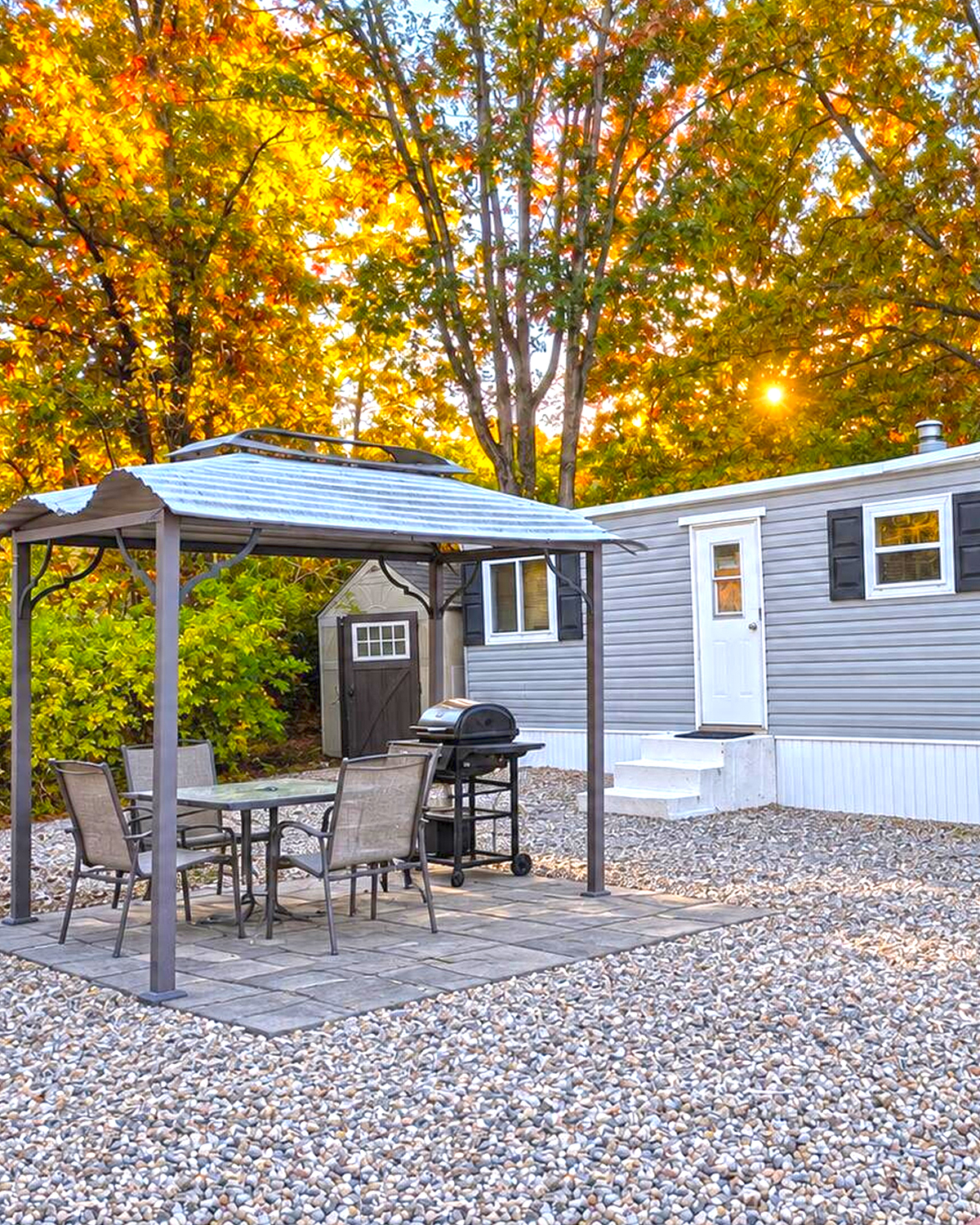
This patio uses a metal-roof gazebo to cover a paver seating area. The roof gives steadier shade than a small umbrella and can help shelter the table from light rain. A grill sits nearby, so the space can serve as both an outdoor kitchen and dining area. Gravel around the pavers creates a tidy border and helps the patio stand out from the yard. If you choose this style, check that the gazebo fits the space and meets local rules. Secure it well, especially in areas with strong winds.
Cues to copy:
- Set the gazebo over a paver pad.
- Place the grill near the dining area, with safe clearance.
- Use gravel around the patio for a neat edge.
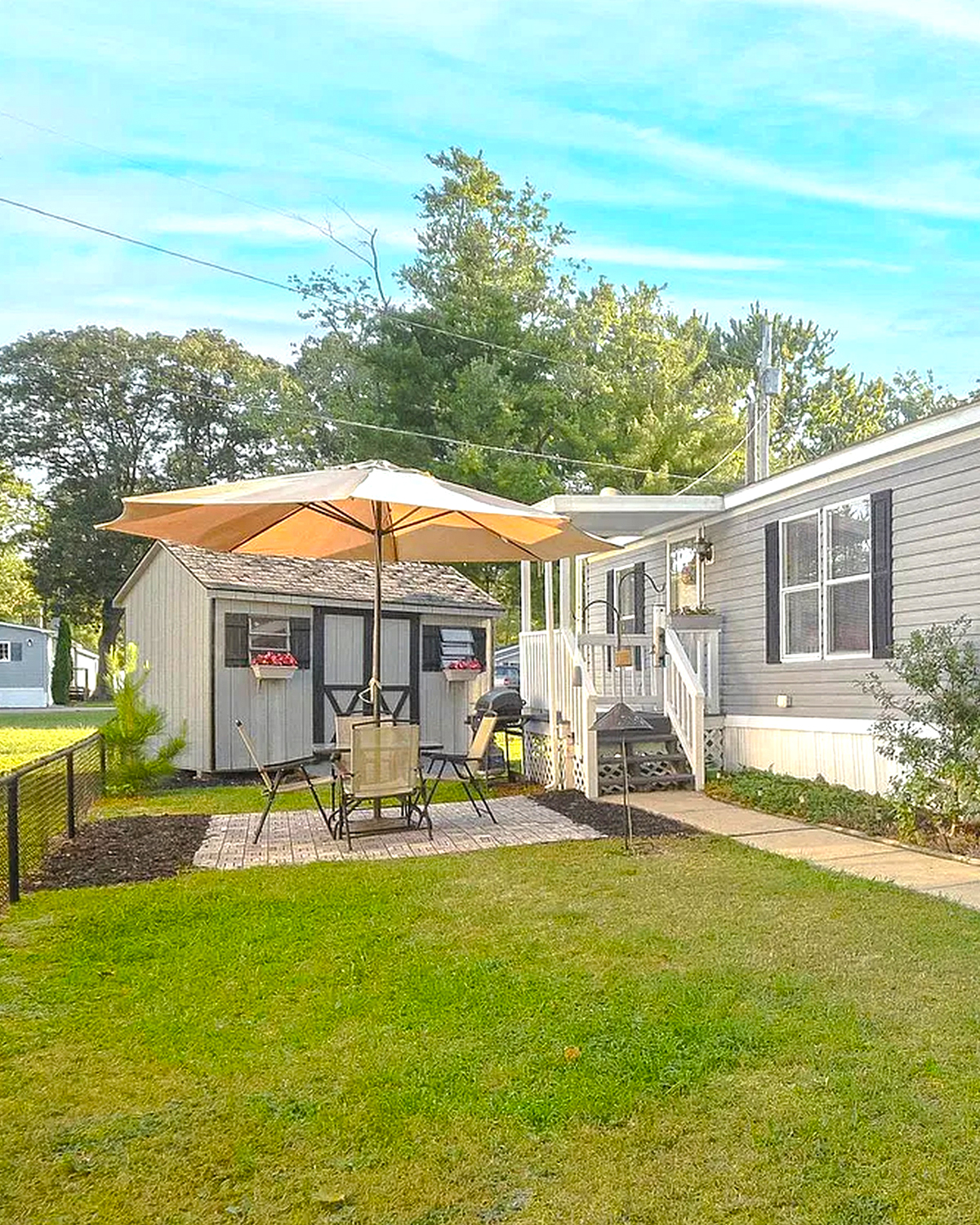
4. Use a Large Umbrella to Shade a Small Patio
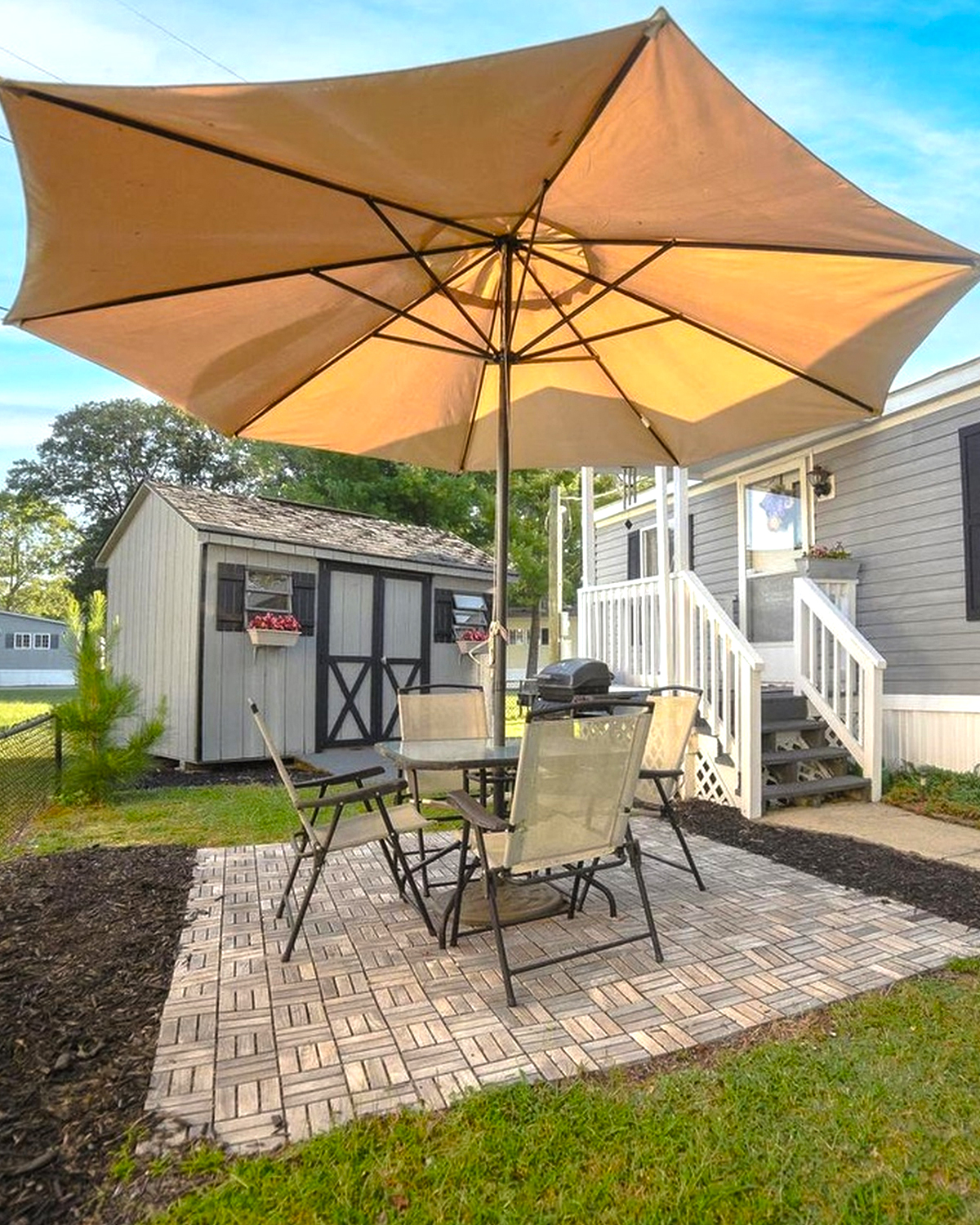
A patio does not need a roof to feel comfortable. This square paver area uses a large tan umbrella to shade a small dining set. The open lawn around it keeps the yard bright, while a dark mulch border marks the patio’s edge. The umbrella adds a soft, warm tone beside the home’s gray siding. It can also move as the sun shifts. Choose a weighted base that fits the umbrella pole and the patio surface. Then leave enough space to open the canopy without hitting the home or nearby objects.
Cues to copy:
- Lay pavers in a simple square or rectangle.
- Pick an umbrella large enough to cover the table.
- Add a mulch border to set the patio apart from the lawn.
5. Pair a Gazebo Patio With a Long Planter
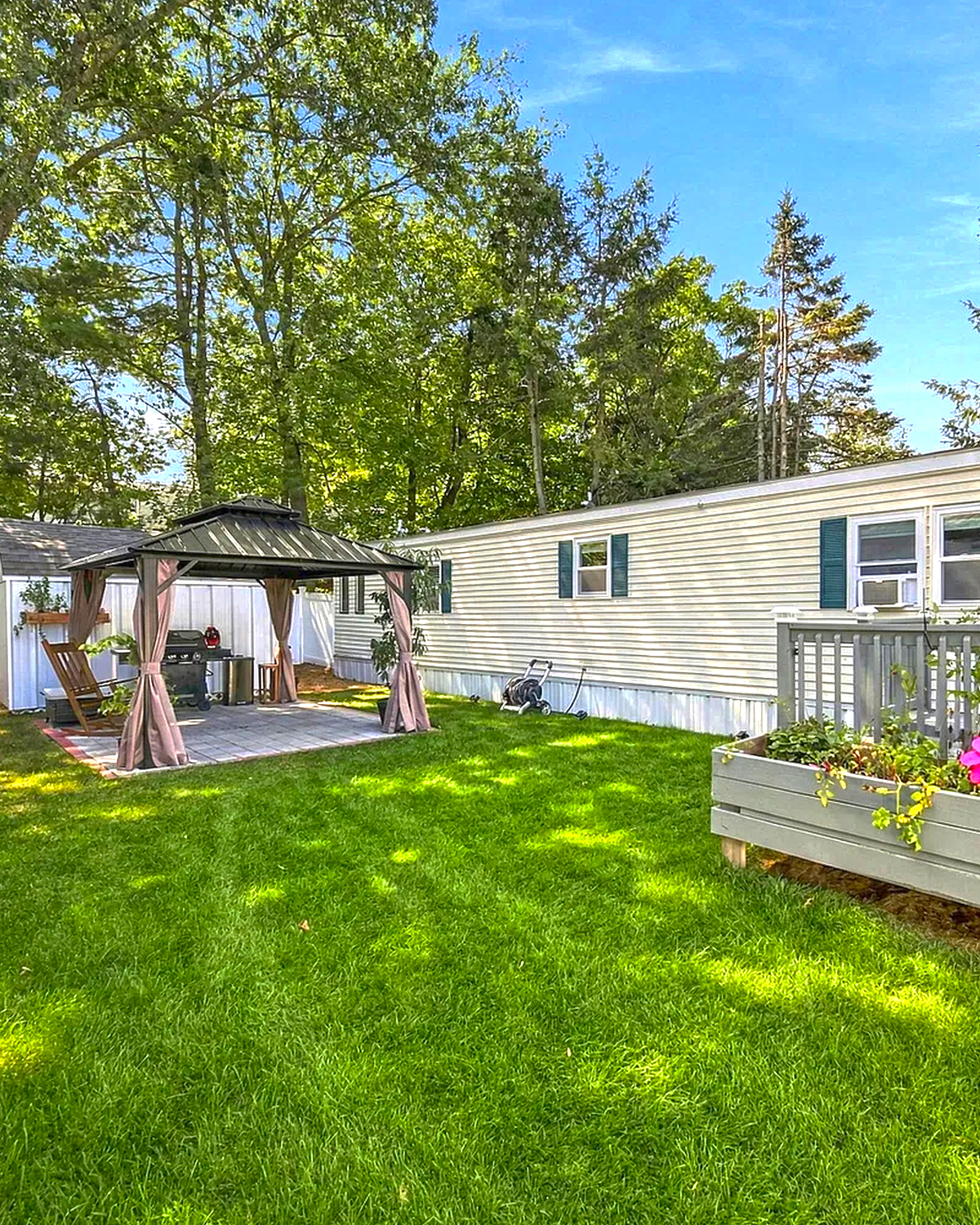
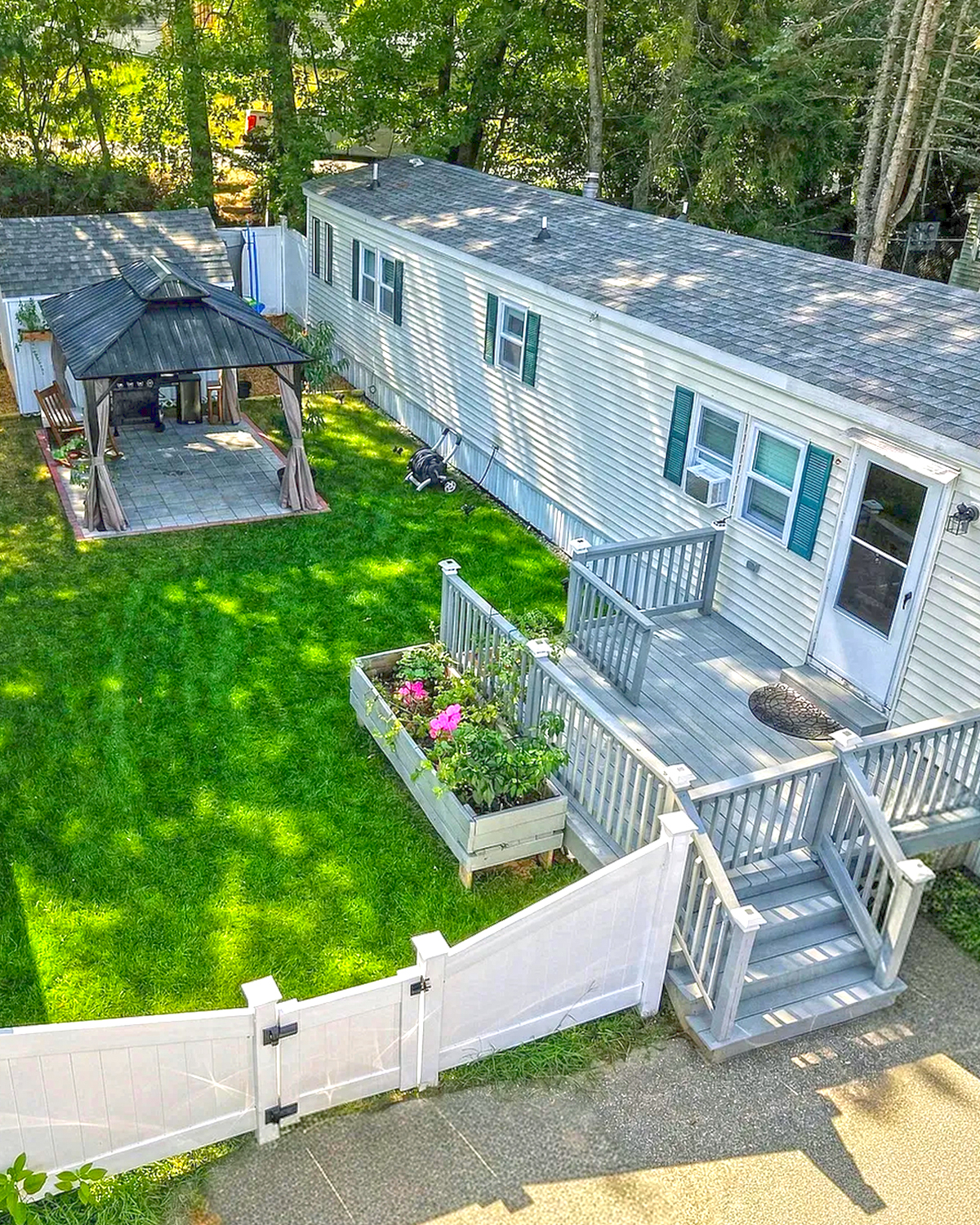
A gazebo can turn a basic patio into a cozy outdoor room. In this yard, a small paved area sits beneath a dark-roofed canopy. Chairs and a grill make it useful for both relaxing and cooking. Across the lawn, a raised planter follows the edge of the home’s deck. It adds flowers and greenery at eye level, where they are easy to enjoy. This layout also keeps the main lawn open for play or gardening. Use plants that suit your sun and climate, and leave room to water and tend them.
Cues to copy:
- Cover the seating area with a compact gazebo.
- Place a raised planter beside the deck or patio.
- Keep the center of the yard open for other uses.
6. Give a Small Seating Spot a Bold Rug
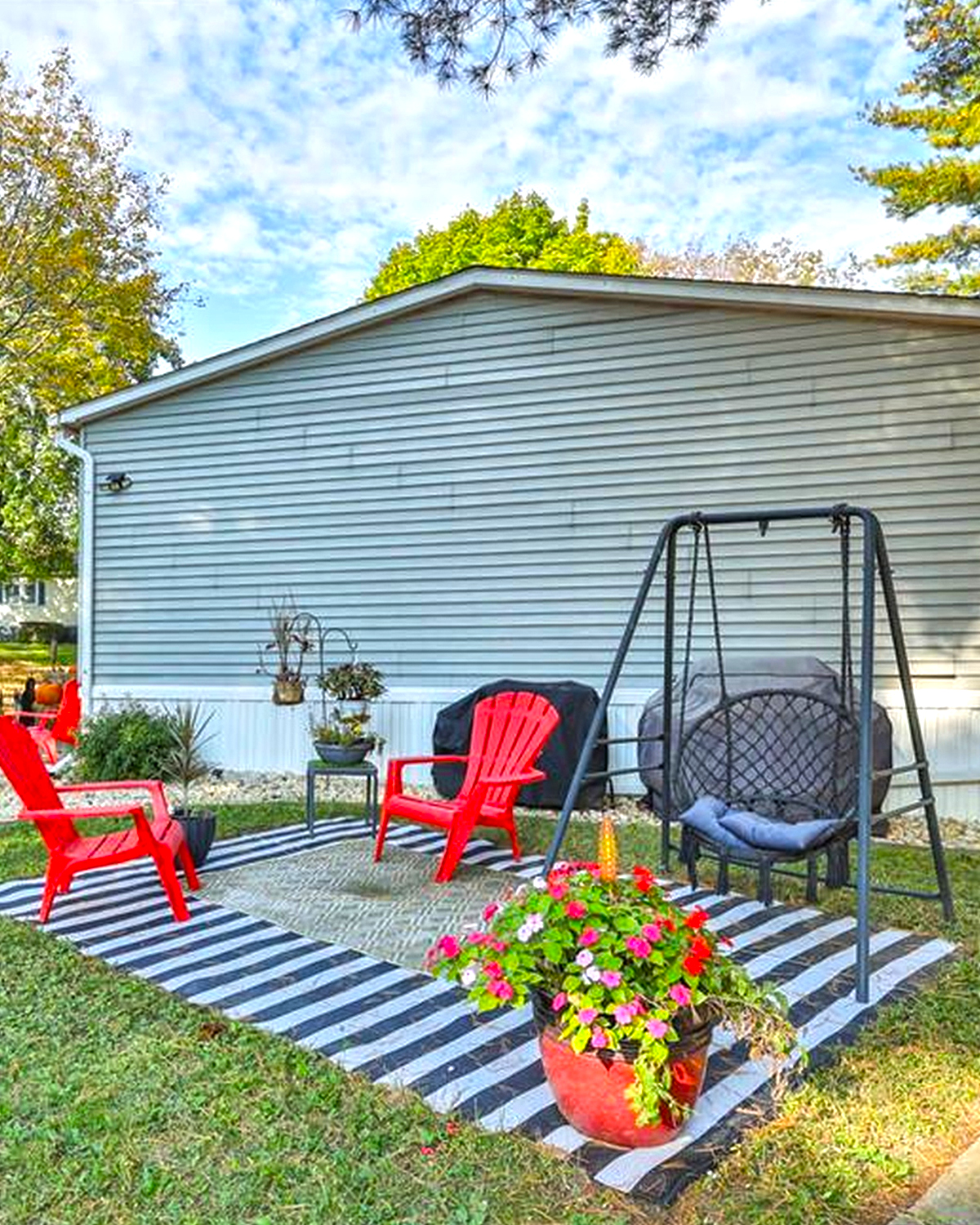
A striped outdoor rug can make a simple lawn seating area feel like a patio. Here, the black-and-white pattern creates a clear base for red Adirondack chairs, a hanging swing, and bright flowers. The rug adds color and helps the furniture feel grouped together. It also brings a strong graphic look that stands out against the grass. Choose a rug made for outdoor use, and lift it now and then so the grass below can dry. Keep the swing on a stable frame and set it on level ground.
Cues to copy:
- Use a weather-safe rug to mark the seating area.
- Repeat one bright color in chairs and flowers.
- Set a swing on a firm, level surface.
7. Build a Gravel Fire Pit Patio
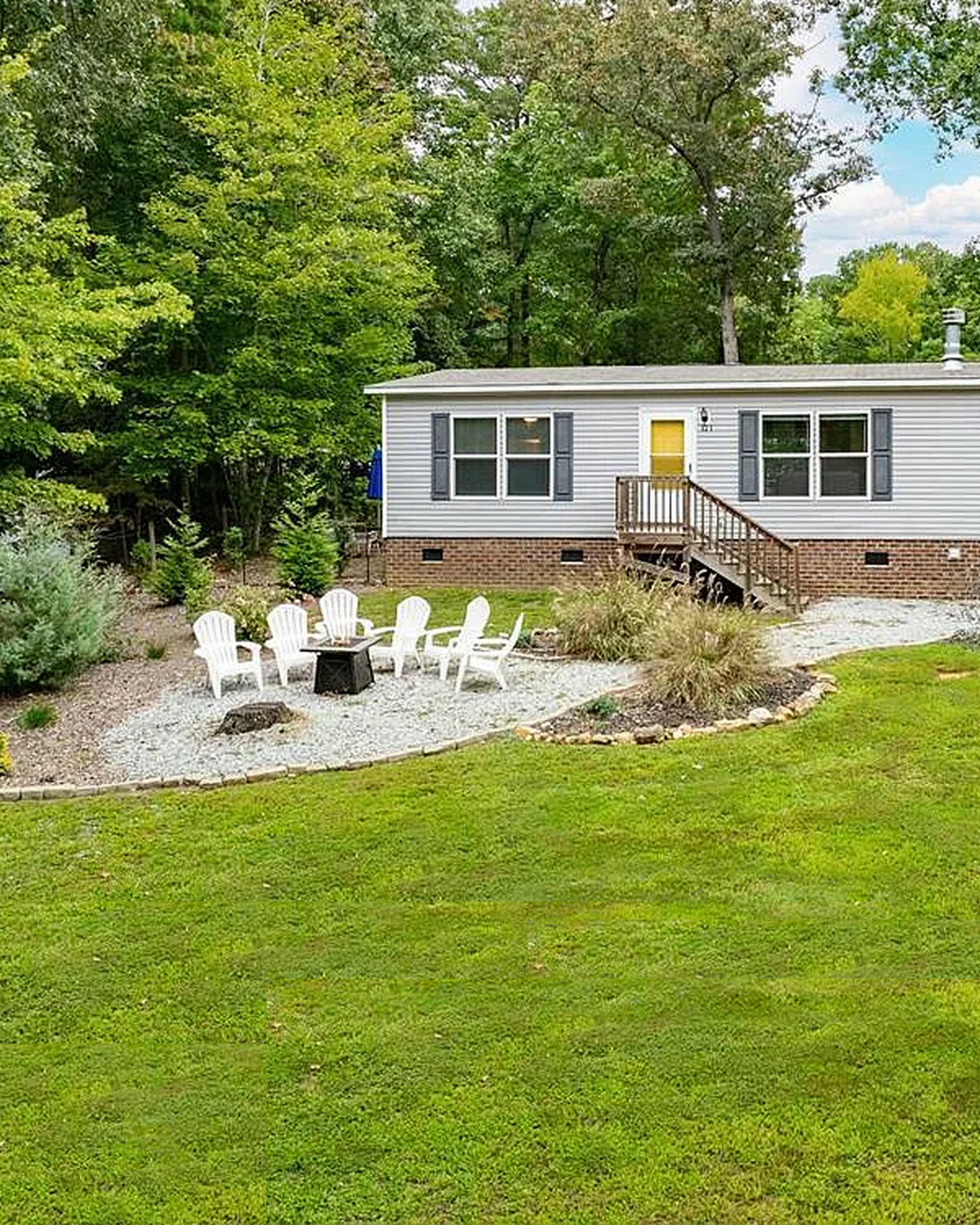
A gravel patio offers a relaxed base for a fire pit and outdoor chairs. In this example, pale stone spreads out in a broad curve, with a low stone border to hold the shape. White Adirondack chairs gather around a compact fire feature, creating a clear place to sit. The light gravel contrasts with the green lawn and soft planting beds. Before adding a fire pit, check local fire rules and keep it far from the home, trees, and dry plants. A stable ring and safe seating distance matter.
Cues to copy:
- Shape the gravel patio with a curved stone edge.
- Arrange chairs around a central fire feature.
- Check local fire rules and keep clear space around the flame.
8. Lead Guests to the Patio With a Curved Walk
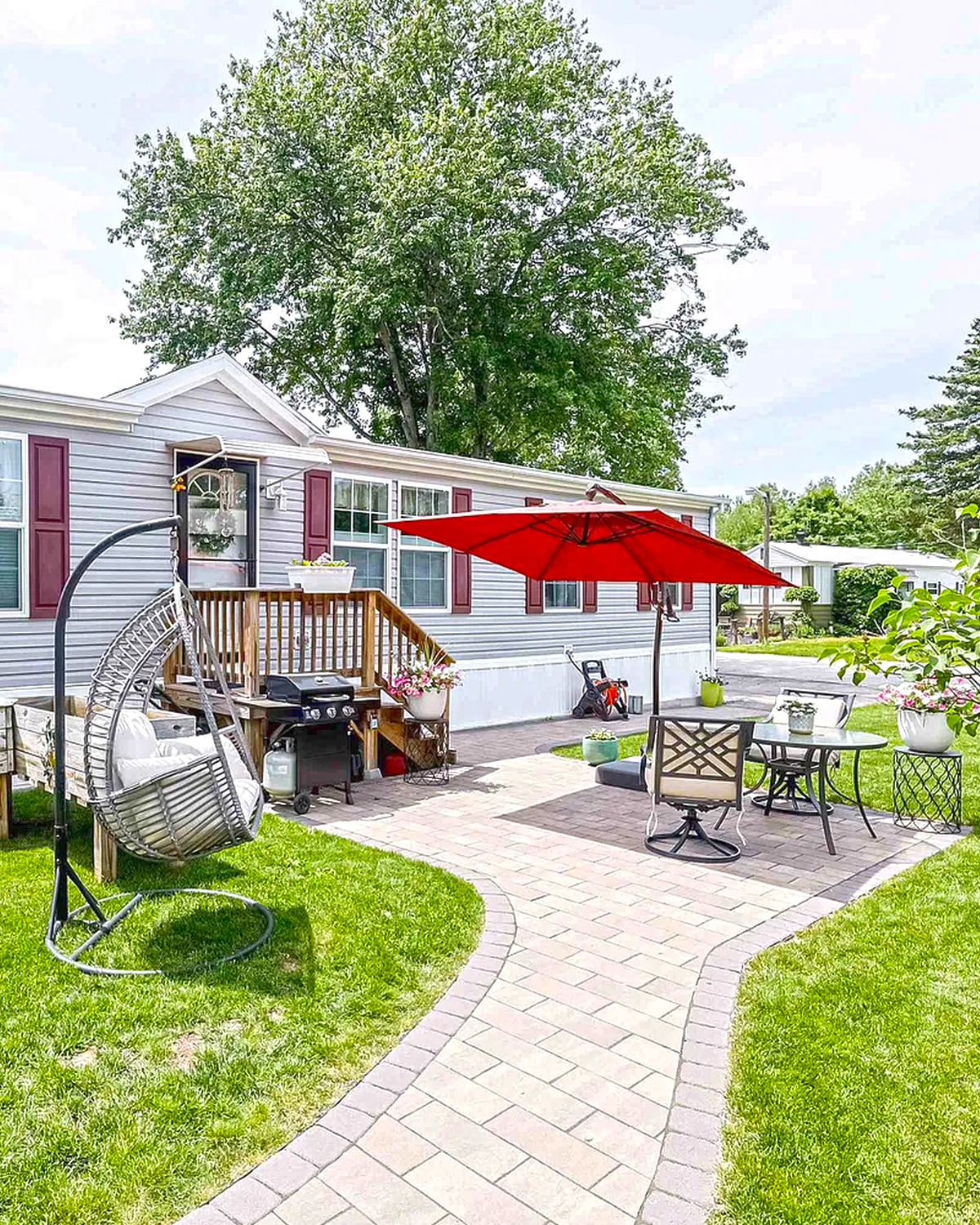
A curved paver path can make a small patio feel connected to the whole yard. Here, the path bends from the lawn toward the home’s steps and an umbrella-shaded dining set. The curve adds movement and draws the eye through the garden. A hanging chair and raised planter offer extra spots to sit and enjoy the view. This layout suits a yard where the patio is not right beside the door. Keep the path wide and smooth, and use an edge that holds the pavers in place.
Cues to copy:
- Use curved pavers to link the patio and entry.
- Add a table under a broad umbrella.
- Place a hanging chair or planter along the route.
9. Make a Narrow Side Yard Work
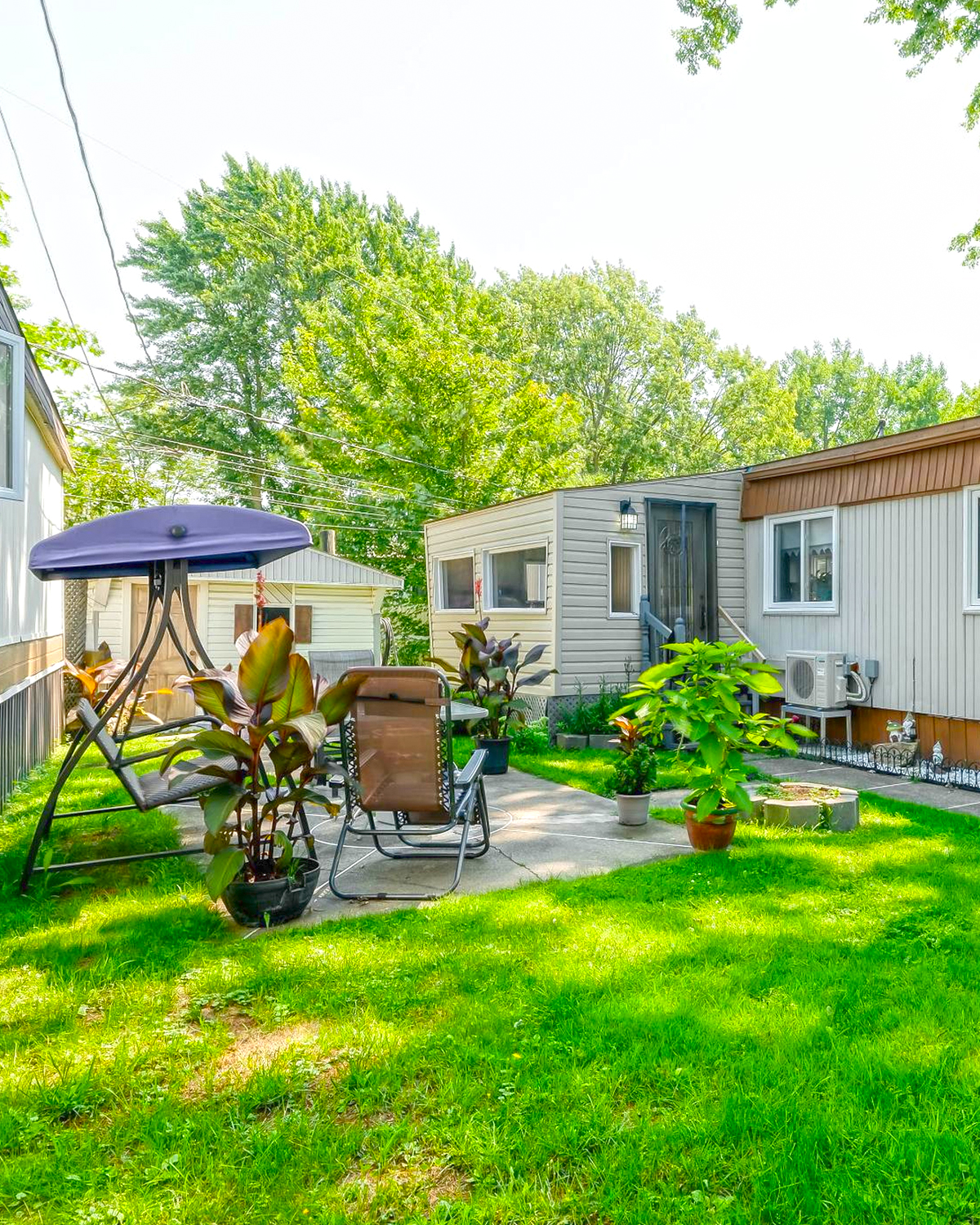
A narrow space between homes can still hold a useful patio. This one uses a small concrete pad with a swing and umbrella. Potted plants add greenery without taking up much ground space. The layout feels tucked away, which can make it a quiet place to read or rest. In a tight side yard, measure before you buy furniture. Leave enough room to walk past the chairs and reach gates, storage, or utility equipment. Choose compact pieces that fold or move when you need more space.
Cues to copy:
- Fit the patio to the available width.
- Use potted plants to save floor space.
- Keep a clear path to doors and utility areas.
10. Set a Dining Spot Beside a Screened Porch
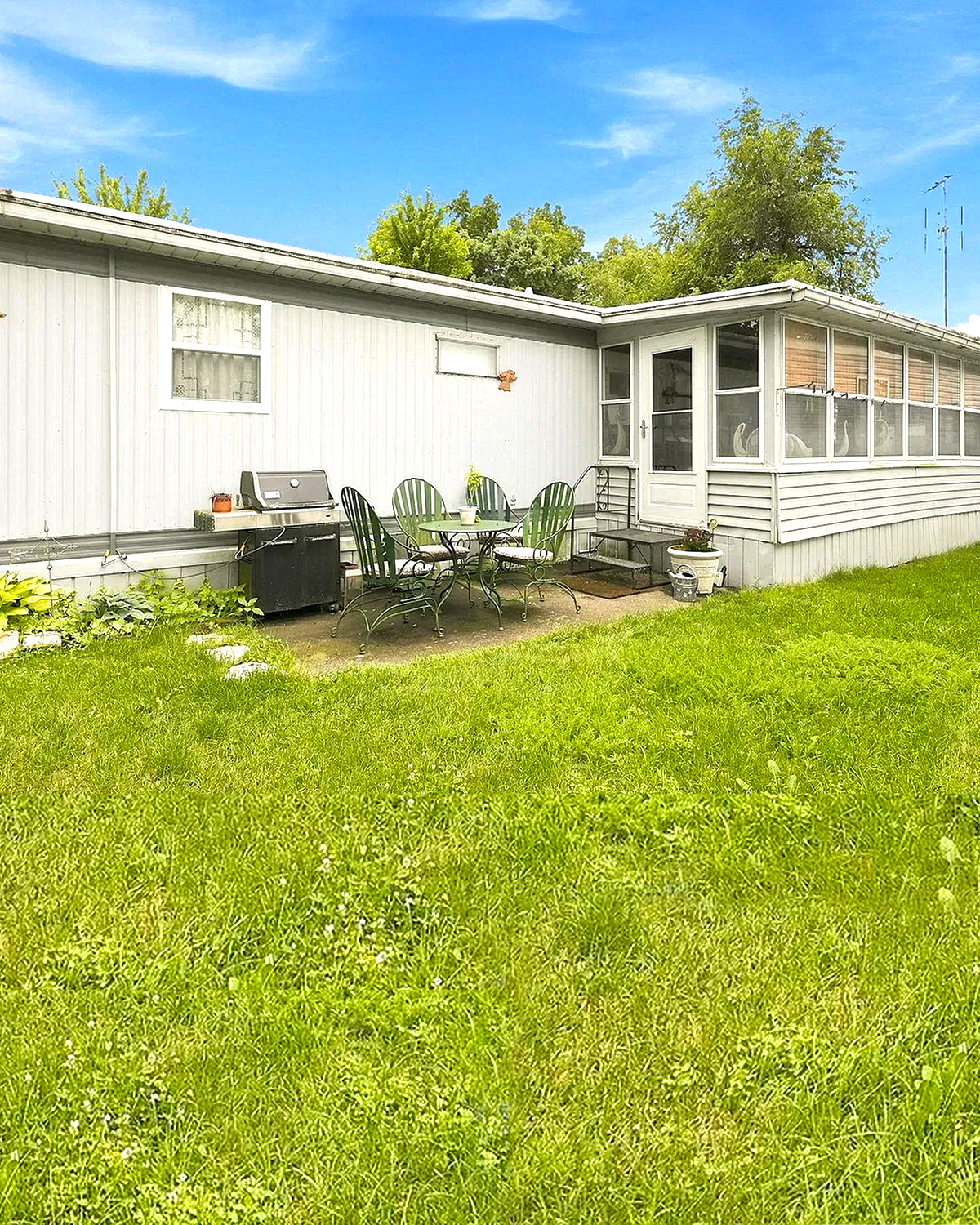
A screened porch can serve as a covered lounge, while a small table and grill outside create a separate place to eat. This home places the dining area beside the porch, so the two spaces work together. The lawn keeps the setting soft and green. A small paved pad under the table can help keep chair legs stable, even if the rest of the yard stays grassy. This idea works well when you want room to cook, dine, and relax without building one large patio.
Cues to copy:
- Use the porch as a sheltered sitting area.
- Add a small dining pad nearby.
- Keep the grill away from screens and other flammable materials.
11. Brighten the Patio With a Red Umbrella
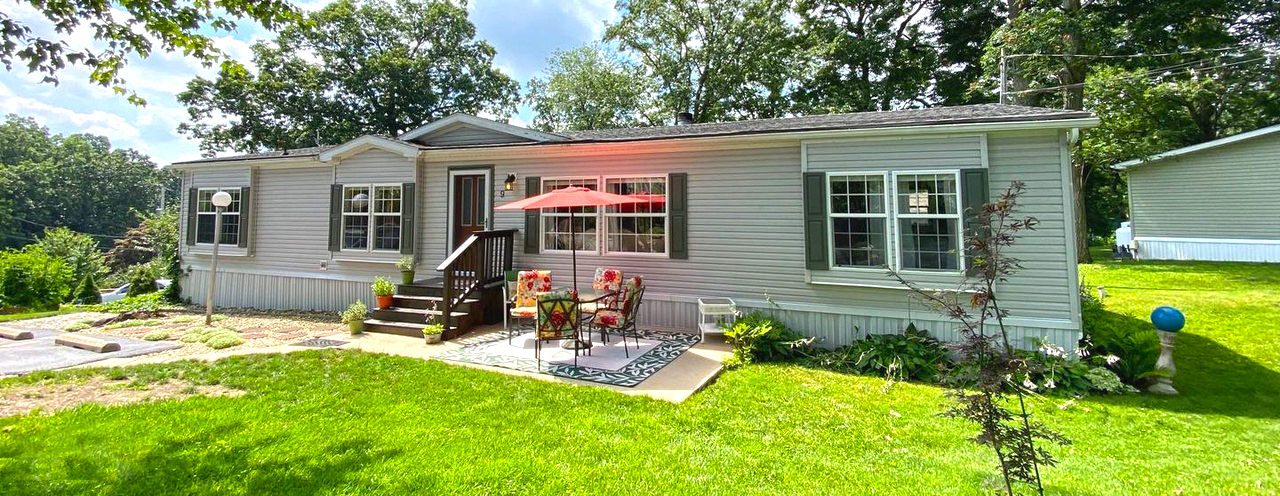
A red umbrella gives this patio a cheerful focal point. It brings a bold splash of color to a calm gray home and makes the outdoor table easy to spot from the yard. Flower pots repeat that lively feel, while the steps connect the patio with the entry. A bright umbrella is a simple way to refresh a space without replacing every chair. Keep the rest of the palette quiet, then add one or two matching accents. Close the canopy in strong wind to help protect it.
Cues to copy:
- Choose one bright color for the umbrella.
- Echo that color in cushions or flower pots.
- Keep the patio path clear from the steps to the table.
12. Try a Portable Patio Rug in a Side Yard
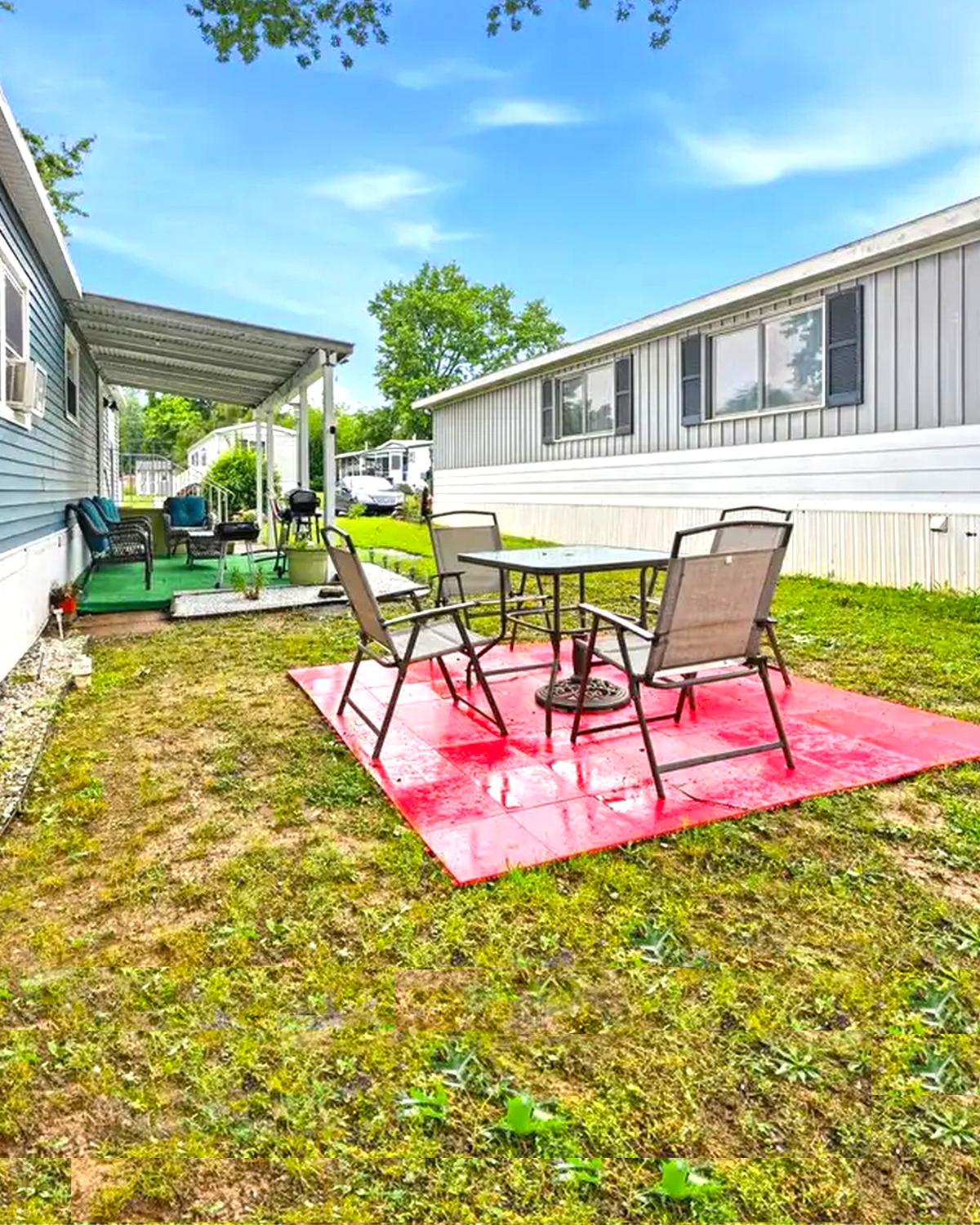
A weather-resistant outdoor mat can create a temporary patio on a flat patch of ground. In this side yard, a red mat defines a small dining spot with a table and chairs. The covered porch nearby offers another place to sit, so the yard can serve different needs. This approach suits renters or anyone who wants to test a layout before adding pavers. Choose a mat with a non-slip backing, and place it on a firm, even surface. Lift it after rain so water and damp grass do not collect beneath it.
Cues to copy:
- Use an outdoor mat to mark a small dining zone.
- Pick compact chairs that are easy to move.
- Lift the mat often to let the ground dry.
13. Create a Welcoming Entry Patio
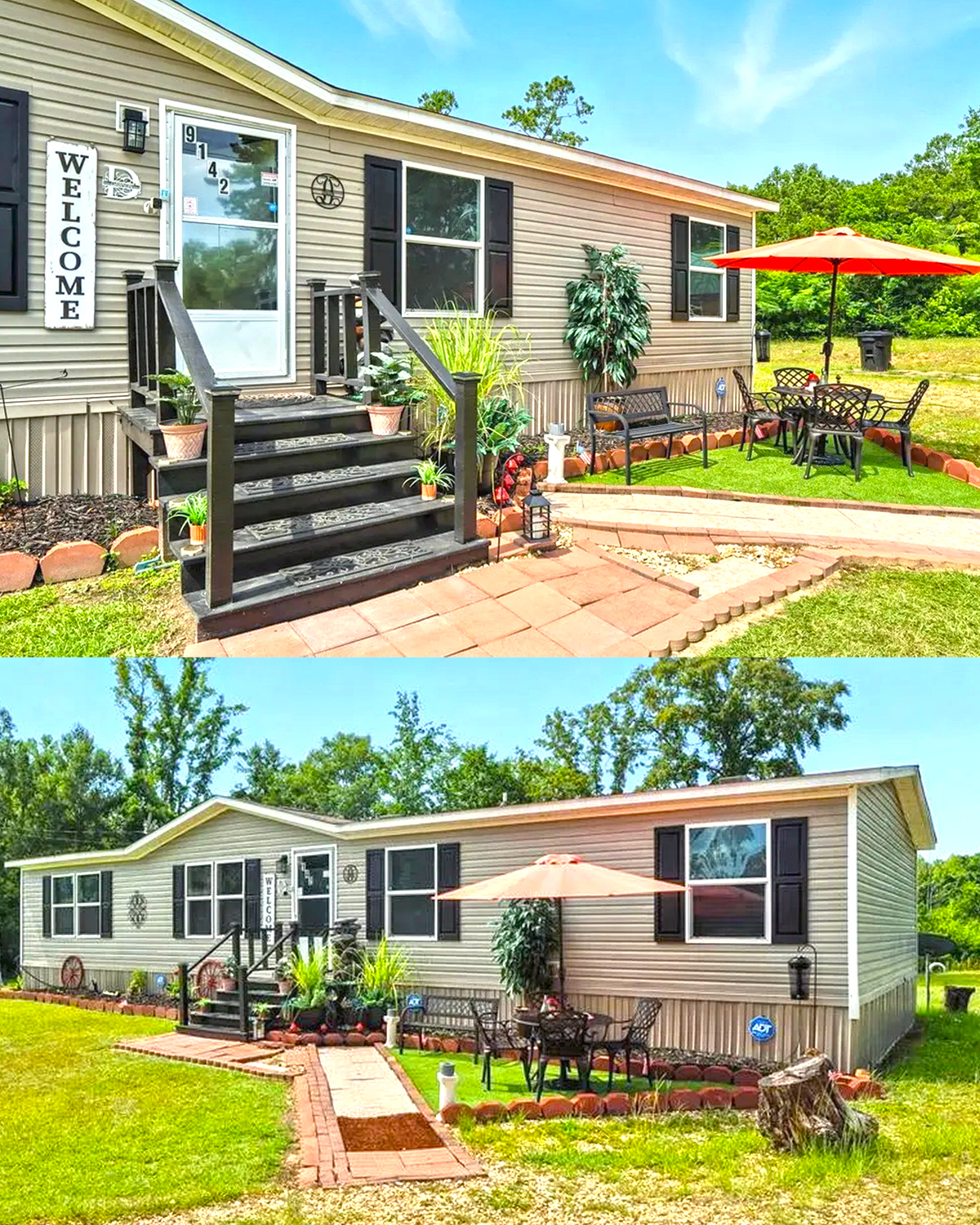
A paver path can connect the steps, front door, and outdoor dining area. Here, the broad entry patio gives guests a clear place to walk and a nearby table for casual meals. A bench and potted plants make the space feel lived in, while low edging keeps the pavers in place. If you want the patio to feel polished, choose pavers that suit the home’s siding and trim. Use plants in different heights to add depth, but avoid blocking windows or the route to the door.
Cues to copy:
- Link the stairs to the seating area with pavers.
- Add a bench for a quick place to sit.
- Use pots and low borders for color and shape.
14. Plan Two Outdoor Zones
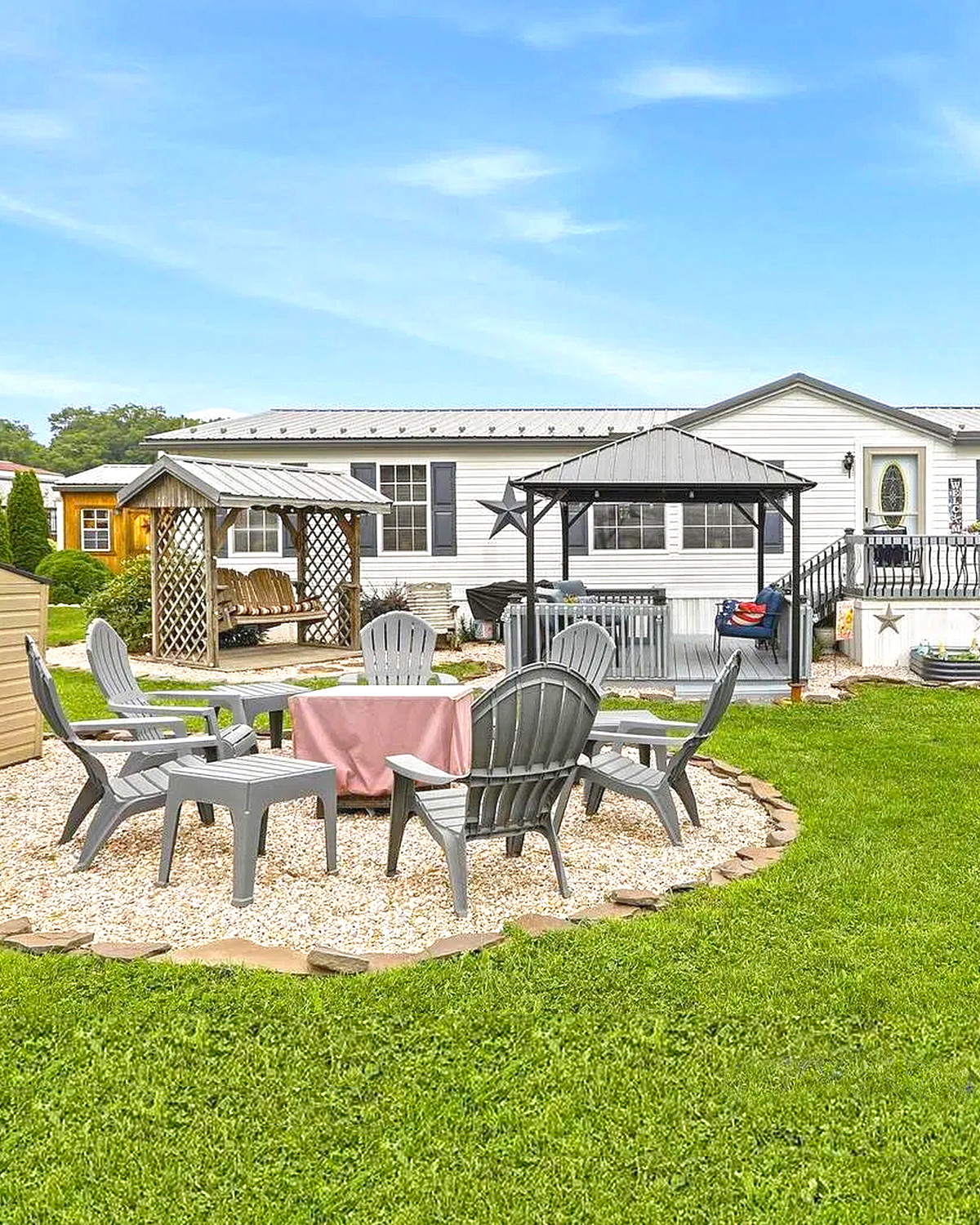
A large yard can hold more than one place to relax. This layout combines a dining area, a gazebo, and a separate swing or lounge spot. Gravel and stone mark the different zones, while open lawn links them together. This approach works well for gatherings, since people can eat in one spot and talk in another. To keep the yard from feeling cluttered, repeat a few materials and colors across both areas. Place seating where it has a view of the home or garden, and keep paths open between each zone.
Cues to copy:
- Make separate areas for dining and lounging.
- Use matching stone or gravel to connect them.
- Leave open lawn between the seating zones.
15. Mix a Covered Porch With a Fire Pit
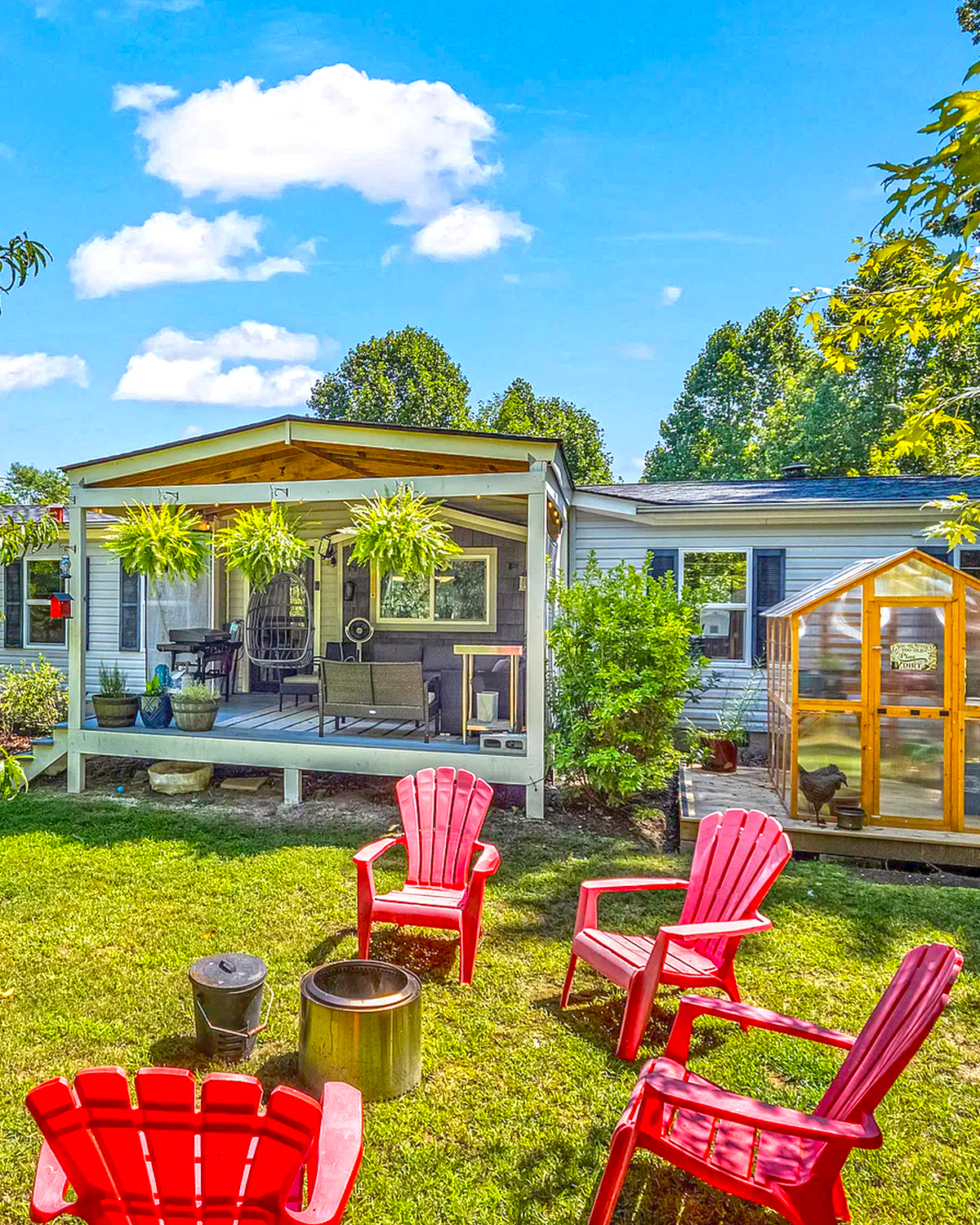
This yard offers several ways to enjoy the outdoors. A roofed porch shelters a table and lounge chairs, while red Adirondack chairs gather around a fire pit on the lawn. A small greenhouse sits nearby, adding a practical garden feature. The mix makes the yard useful in different weather and for different activities. Keep a safe gap between the fire pit, porch, greenhouse, trees, and chairs. Choose a firm surface beneath the fire feature, and store cushions indoors when rain is due.
Cues to copy:
- Use the porch for shade and the lawn for extra seating.
- Place a fire pit on a stable, nonflammable surface.
- Add a greenhouse or potting area near the garden.
16. Connect a Stone Patio to the Deck
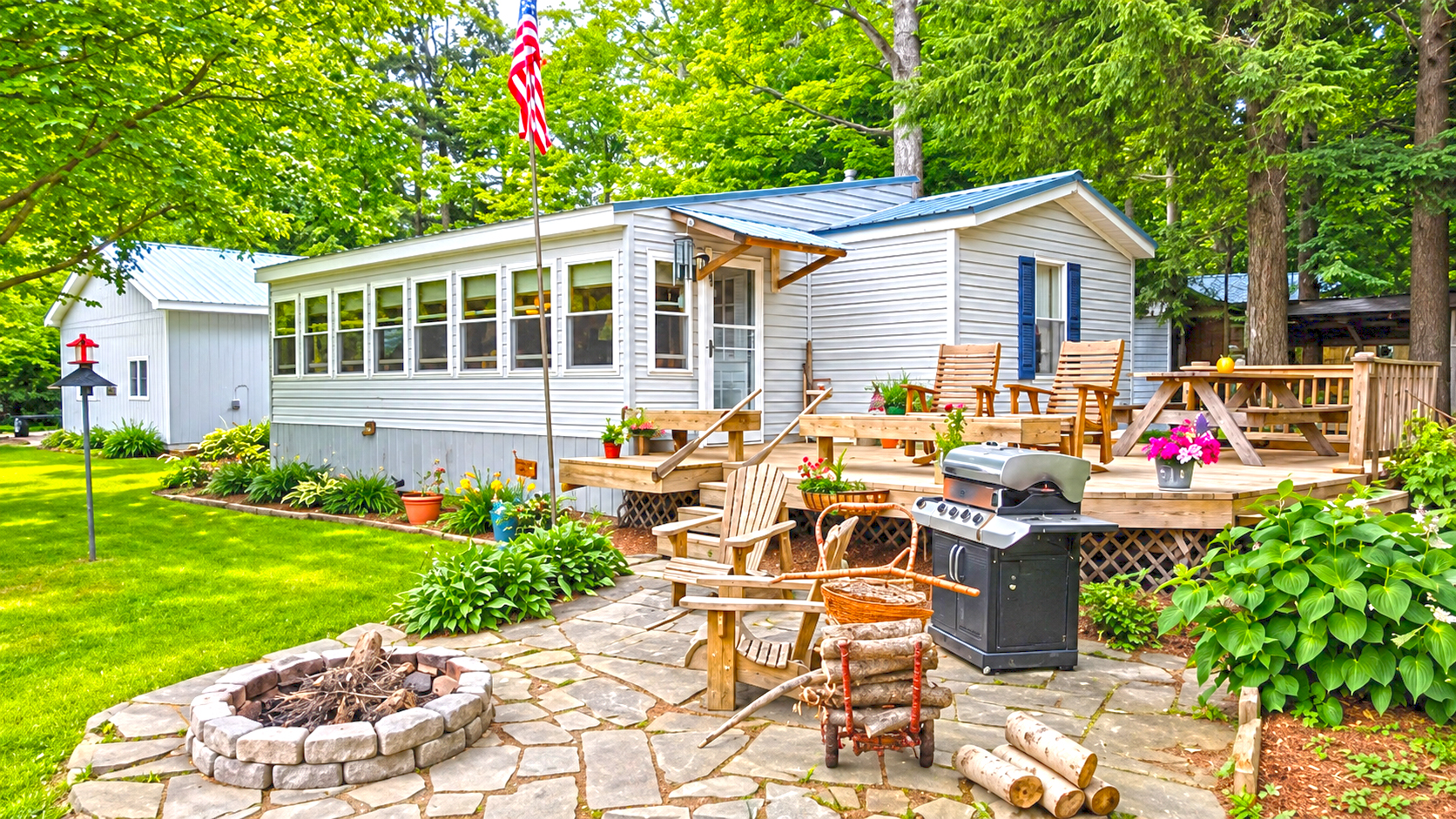
A stone patio beside a raised deck gives you more room to host. The deck holds one seating or dining area, while the stone surface below offers space for a fire pit, grill, or extra chairs. Natural stone adds texture and blends with the garden. If the yard slopes, plan drainage before you lay the patio. The ground should direct water away from the home. Keep the grill and fire pit in safe spots, and leave clear paths between the deck, seating, and door.
Cues to copy:
- Use stone pavers to extend the deck’s living space.
- Place the grill where smoke can move away from the home.
- Plan drainage and walking paths before installing the patio.
17. Make a Round Fire Pit Patio
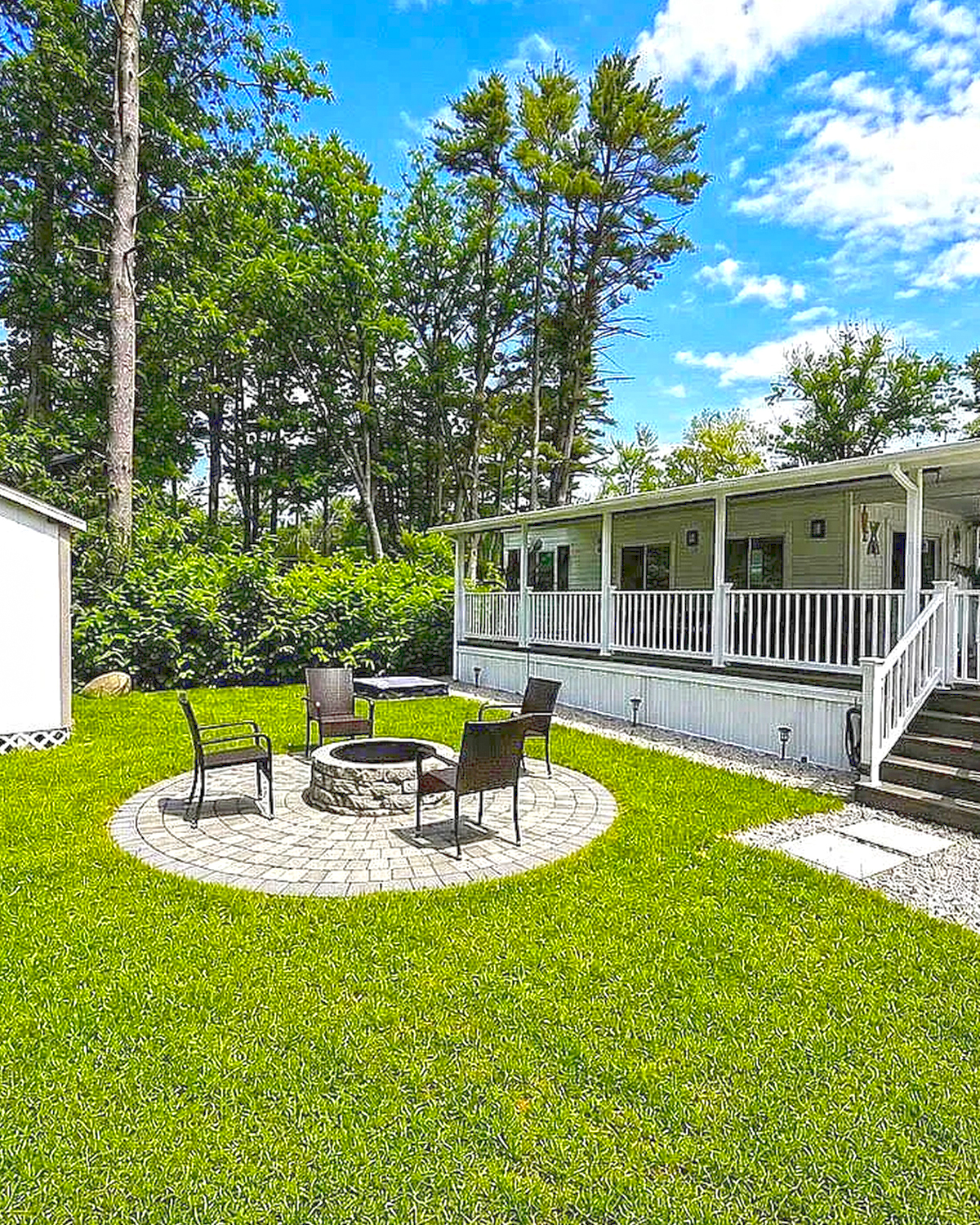
A circular paver patio creates a natural gathering spot. The curved shape draws chairs toward the fire pit and feels distinct from the straight lines of the home. In this example, the patio sits in the lawn near a covered porch, so it works as a separate destination. A circle can fit a compact yard, too, if you scale the chairs and fire feature to the space. Choose pavers rated for outdoor use and build on a level base. Keep the fire area clear of grass, branches, and loose items.
Cues to copy:
- Shape pavers into a circle around the seating area.
- Center the fire pit for easy conversation.
- Keep the patio level and clear of nearby plants.
18. Arrange Gravel Seating Near a Screened Porch
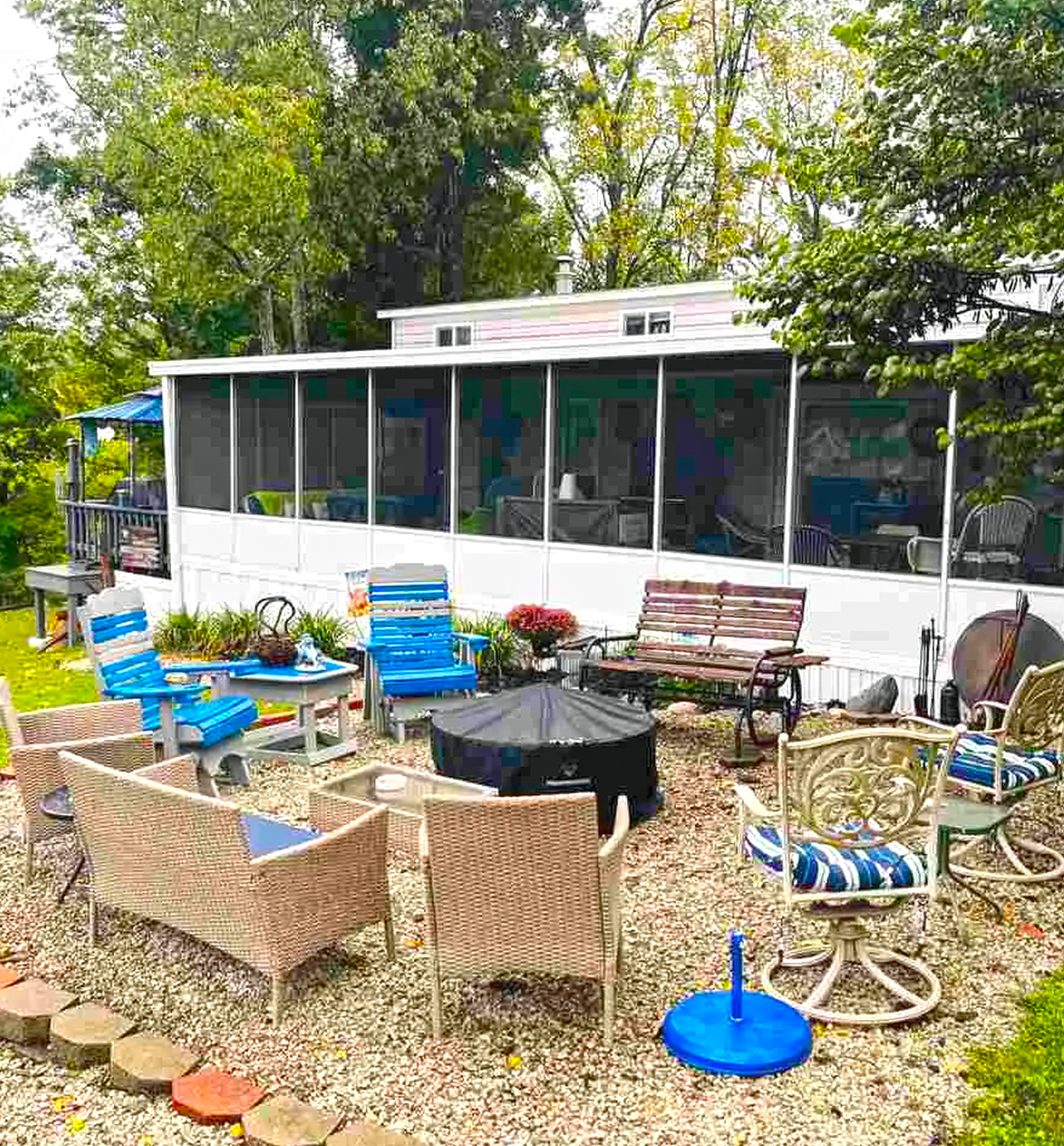
A gravel patio can hold several kinds of seating without the cost of a large paved surface. This one pairs woven chairs, colorful seats, a bench, and small tables outside a screened porch. A low border gives the gravel a clean edge, while the porch offers a shaded option close by. To make a mixed seating area feel calm, repeat a color in cushions or accessories. Add stepping stones if you need a smoother path across the gravel. Choose chairs with stable legs that sit well on loose stone.
Cues to copy:
- Use gravel for a broad, flexible seating area.
- Mix chair styles but repeat a few colors.
- Add a defined border and stepping stones for easy movement.
Conclusion
A welcoming mobile home patio starts with a clear purpose. Pick a spot for meals, shade, a fire pit, or quiet rest. Then choose a surface and furniture that fit your yard and daily life. Even a small change, such as an umbrella, a few pavers, or a row of planters, can make the space feel more inviting. Start with one useful feature, and build from there.