A narrow home can still feel open, warm, and full of character. The secret is to use light, color, and furniture with care. This single-wide mobile home shows how small choices can make a big difference, from a cheerful screened porch to a calm bedroom in soft blue.
1. Frame the Home With Simple Landscaping
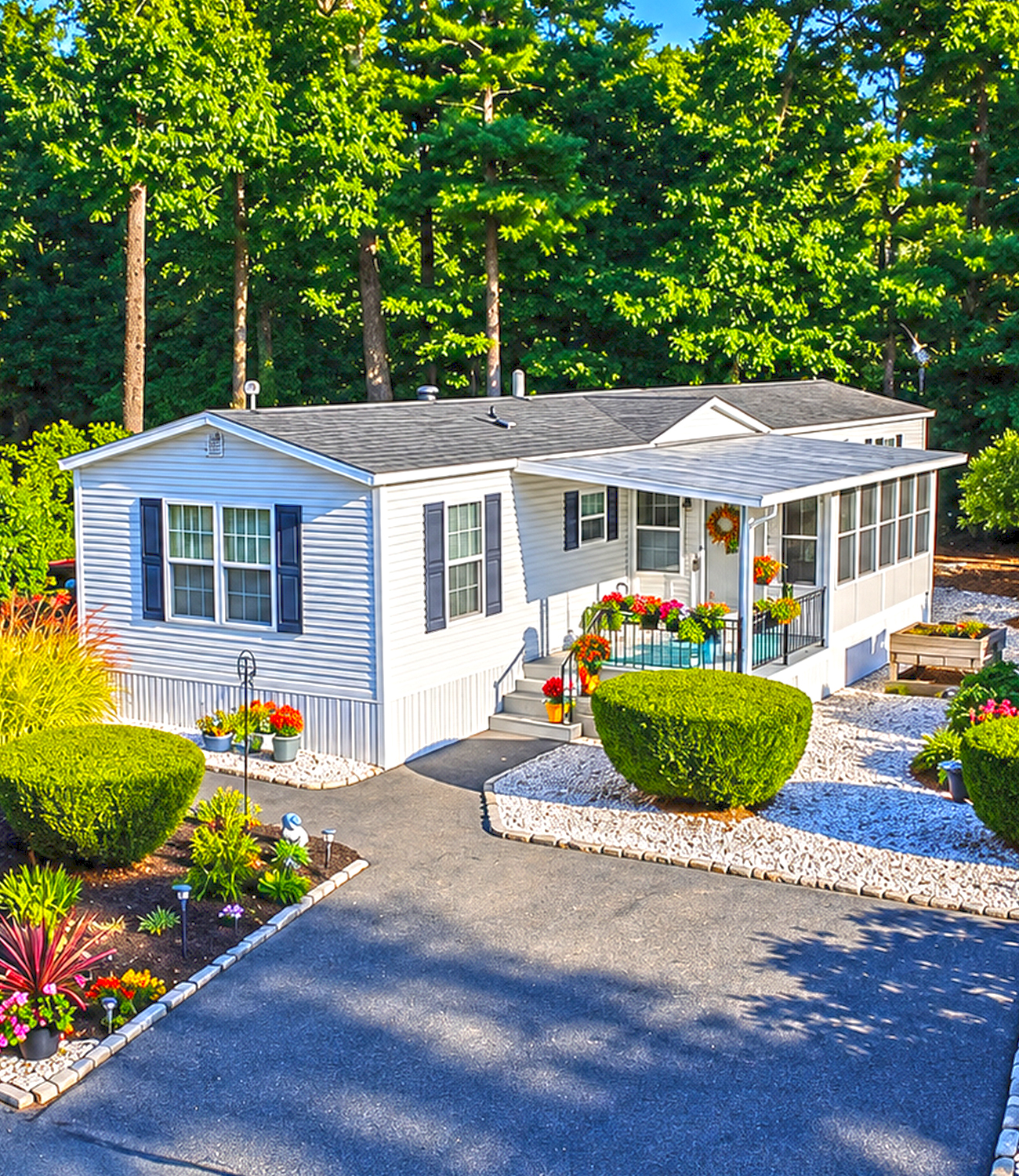
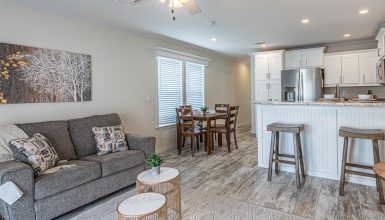
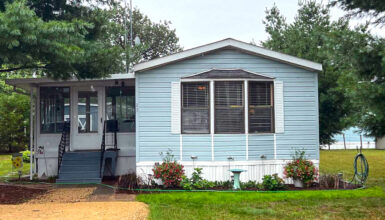
The white siding gives this home a clean, bright look. Dark shutters add contrast around the windows. Neat shrubs, flower beds, and pale stone help the house feel settled into its green setting.
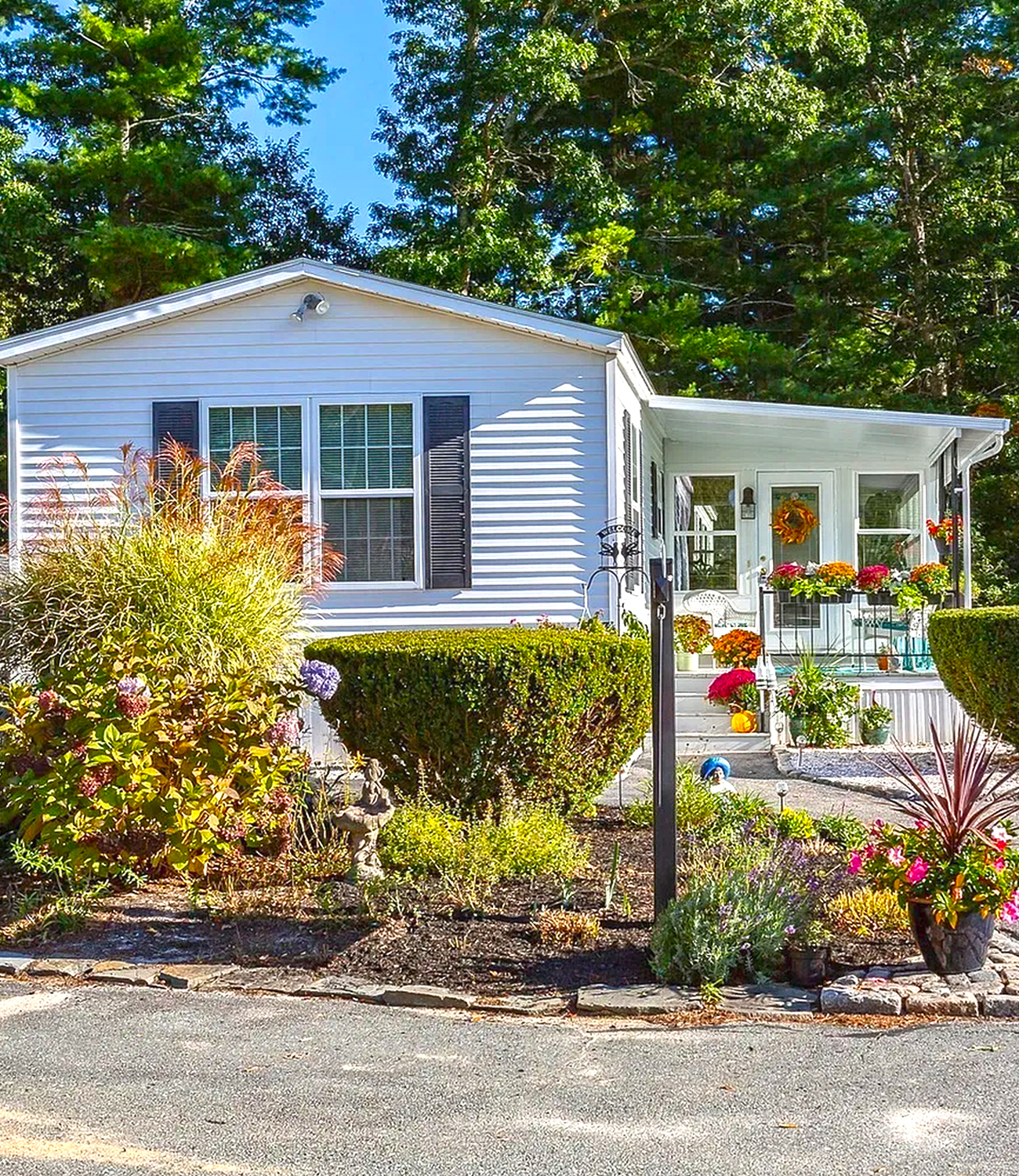
You can use the same idea at your home. Start with a clear path to the front door. Then add shrubs or flowers along the house. Keep plants low near windows so they do not block light. A few larger plants can mark the corners and help the long shape of a single-wide feel balanced.

Gravel and stone can also keep the yard tidy. They make a clear edge between the drive, flower beds, and home. Add color with flowers in pots near the entry. This is an easy way to change the look with the seasons.
Cues to copy:
- Choose light siding or paint for a fresh, open feel.
- Add dark shutters or trim for contrast.
- Use stone or gravel to define garden beds.
- Plant flowers near the entry for a warm welcome.
- Keep shrubs neat and clear of windows.
2. Make the Front Porch a Colorful Welcome
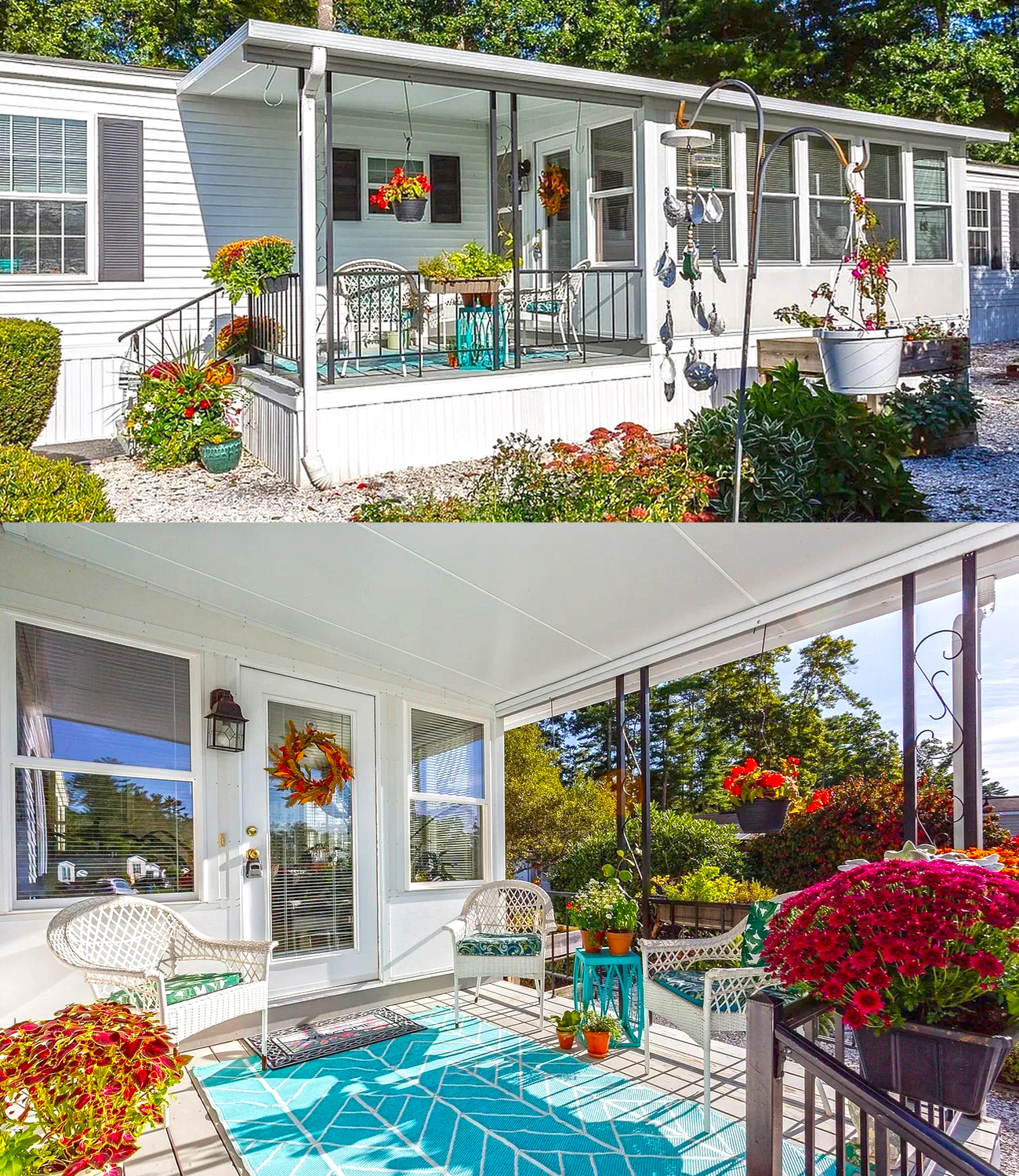
The covered front porch works as an outdoor room. White walls and trim keep it bright. Black metal rails add a slim outline, while white wicker chairs bring a relaxed feel. A turquoise rug gives the floor a bold splash of color.
This is a smart way to decorate a small porch. Keep the largest pieces light in color and easy to move. Then use one strong color in a rug or cushions. Here, turquoise links the rug to the garden and makes the porch feel lively. Planters bring flowers up to eye level, and a wreath adds a seasonal touch to the door.
Leave enough room to walk through the porch with ease. A pair of chairs and a small table can be enough. When every piece has space around it, the porch feels calm and usable.
Cues to copy:
- Use a weather-safe rug to add color and pattern.
- Pair wicker or slim metal chairs with soft cushions.
- Add a small table for drinks or potted plants.
- Hang a wreath or simple sign on the door.
- Keep a clear path from the steps to the entry.
3. Turn a Screened Porch Into a Second Living Room
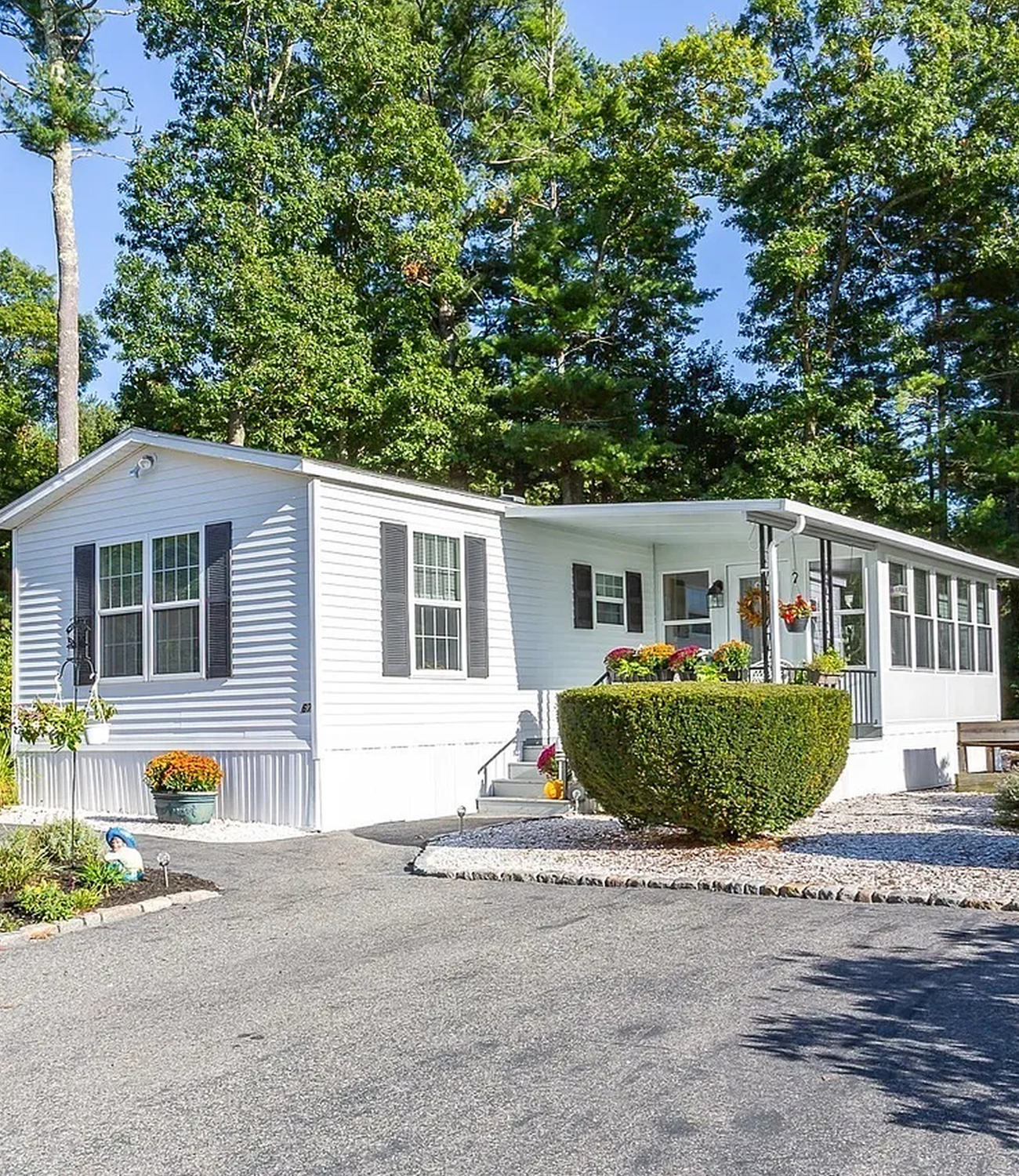
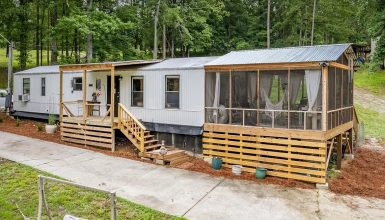
The enclosed porch adds a bright place to sit. Large windows bring in daylight and give a view of the garden. Woven chairs, a small side table, and houseplants make the room feel cozy without crowding it. The pale carpet and walls keep the look light.
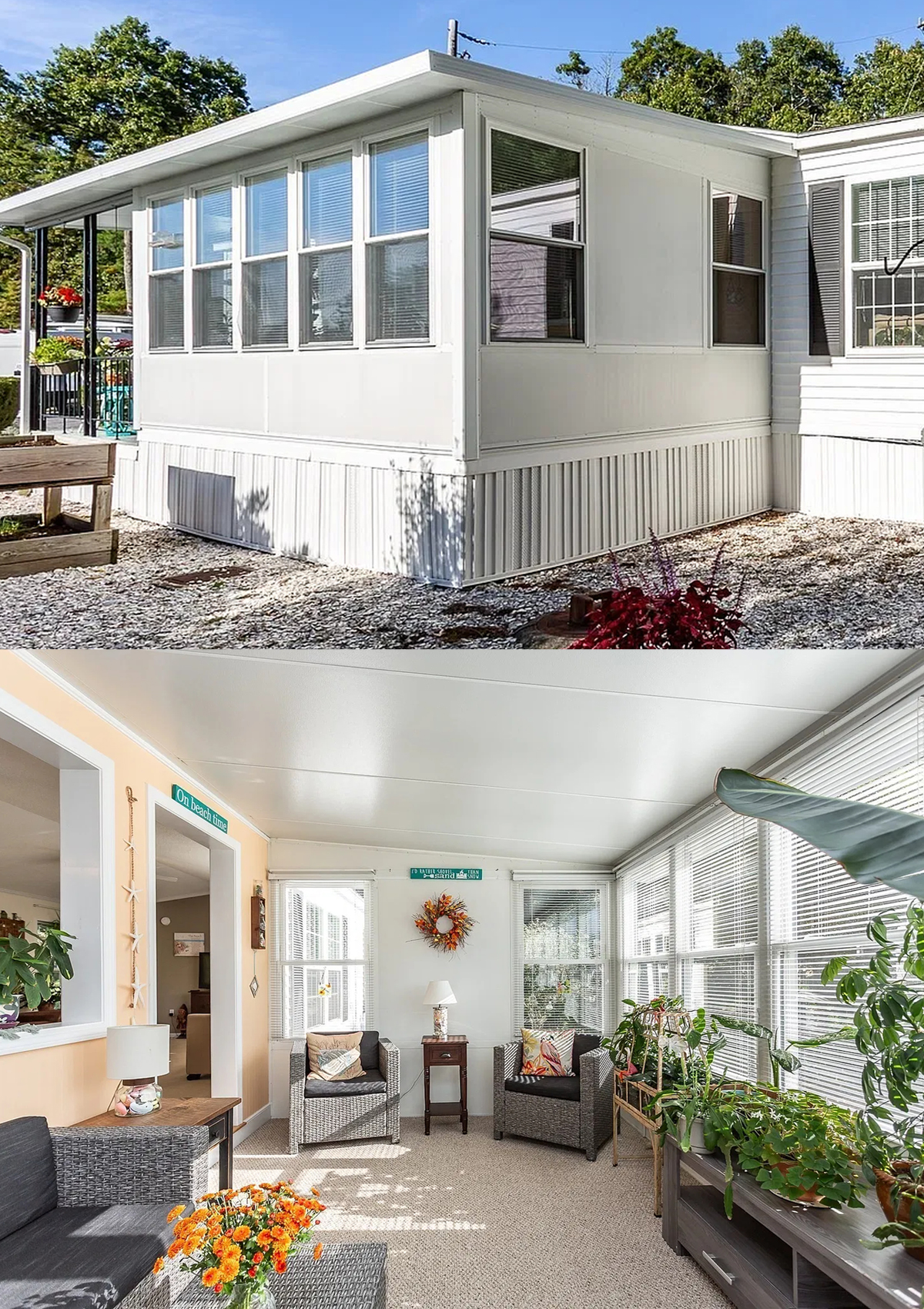
Treat a screened porch as part of the home. Choose furniture that can handle sun and changes in temperature. A pair of chairs gives the room a clear purpose. Add a narrow table between them for a lamp, a cup, or a book. If you need more seats, pick pieces with open frames so the room still feels airy.
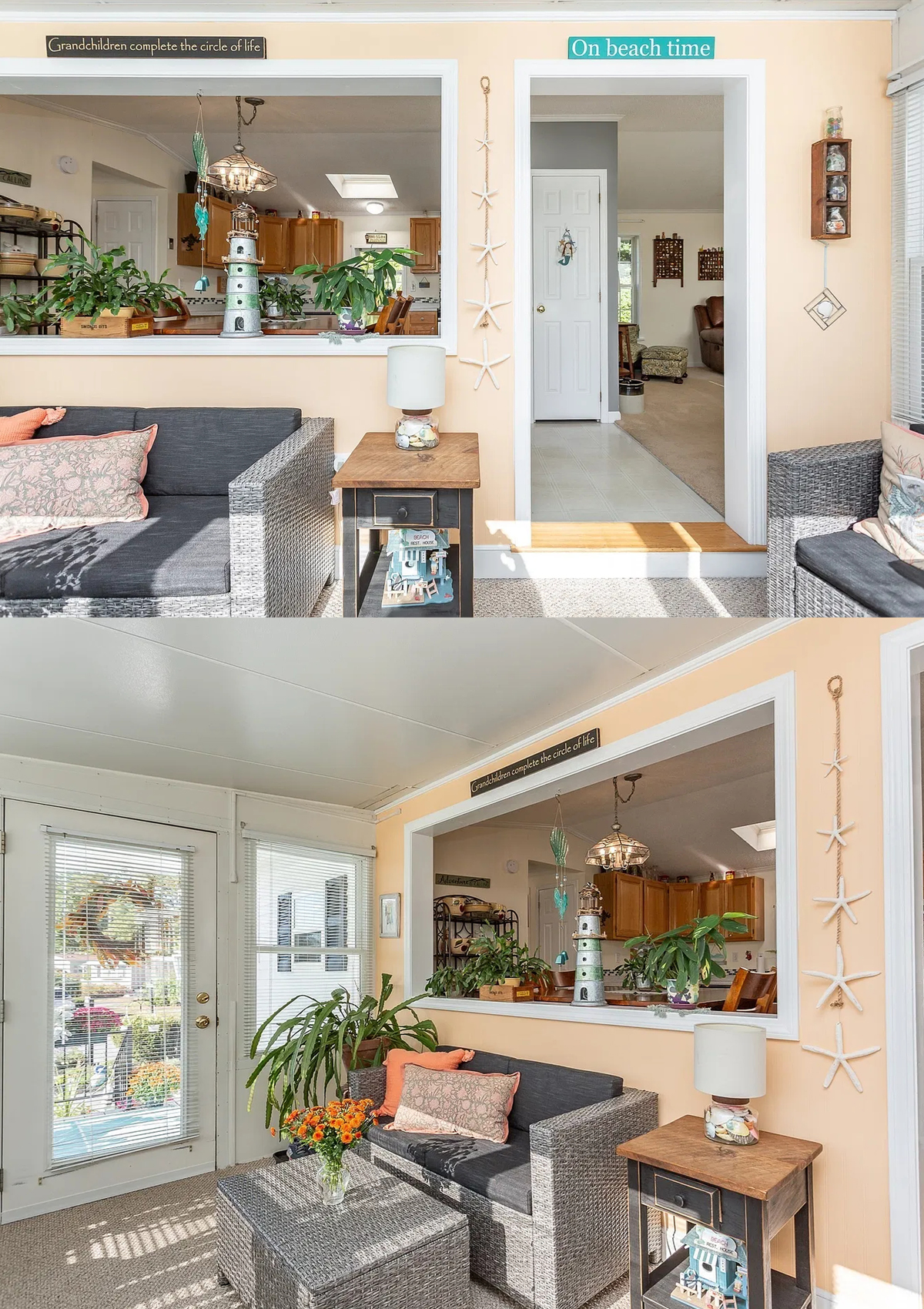
Plants help soften the lines of the windows. Place a few on a low shelf or plant stand. Keep taller plants near the corners. This adds color without blocking the view.
Cues to copy:
- Arrange two chairs around a small table.
- Use woven or outdoor-safe furniture.
- Choose a pale rug or carpet to brighten the space.
- Group plants at different heights.
- Keep window views open and easy to enjoy.
4. Give the Living Room a Clear Layout
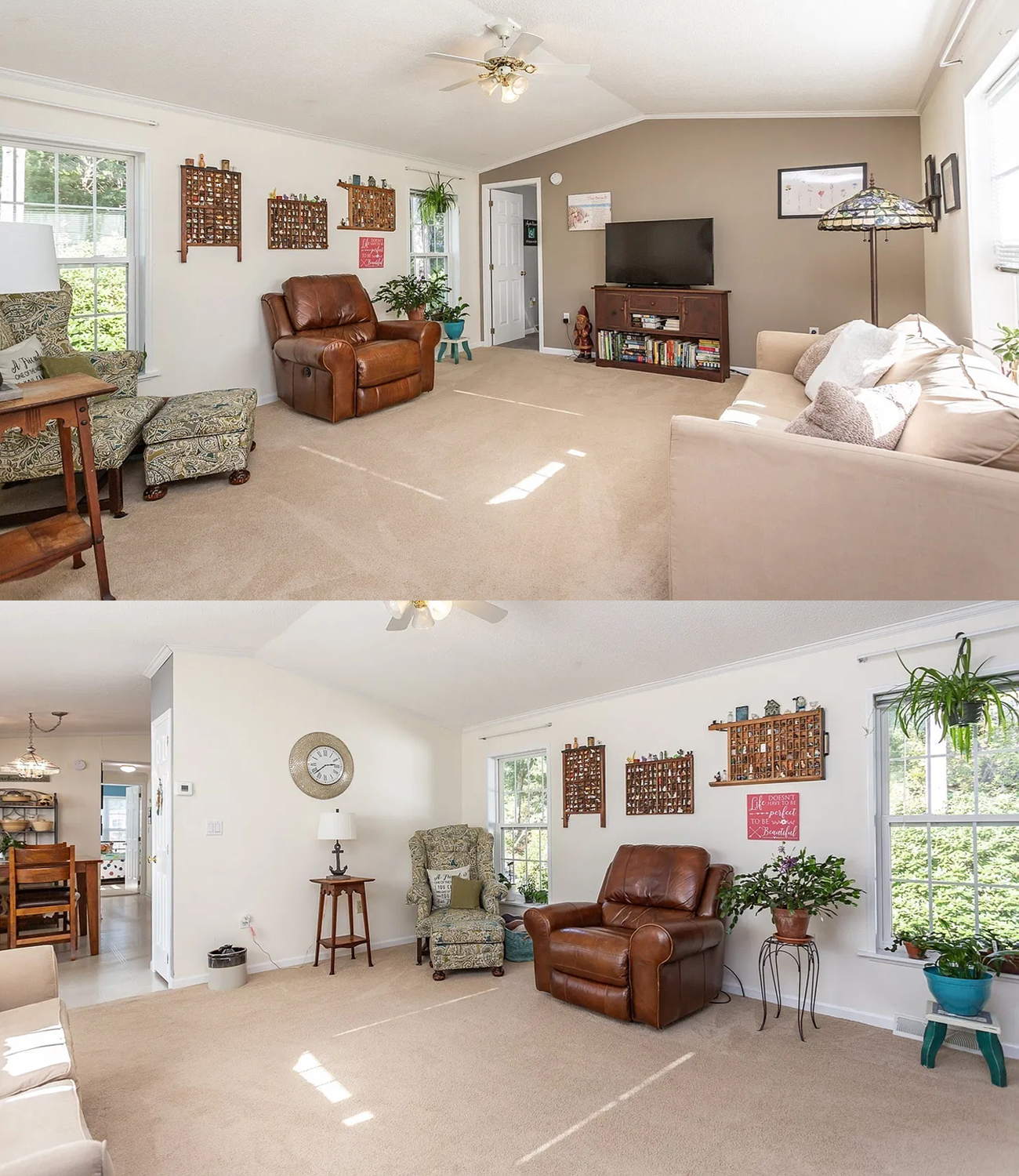
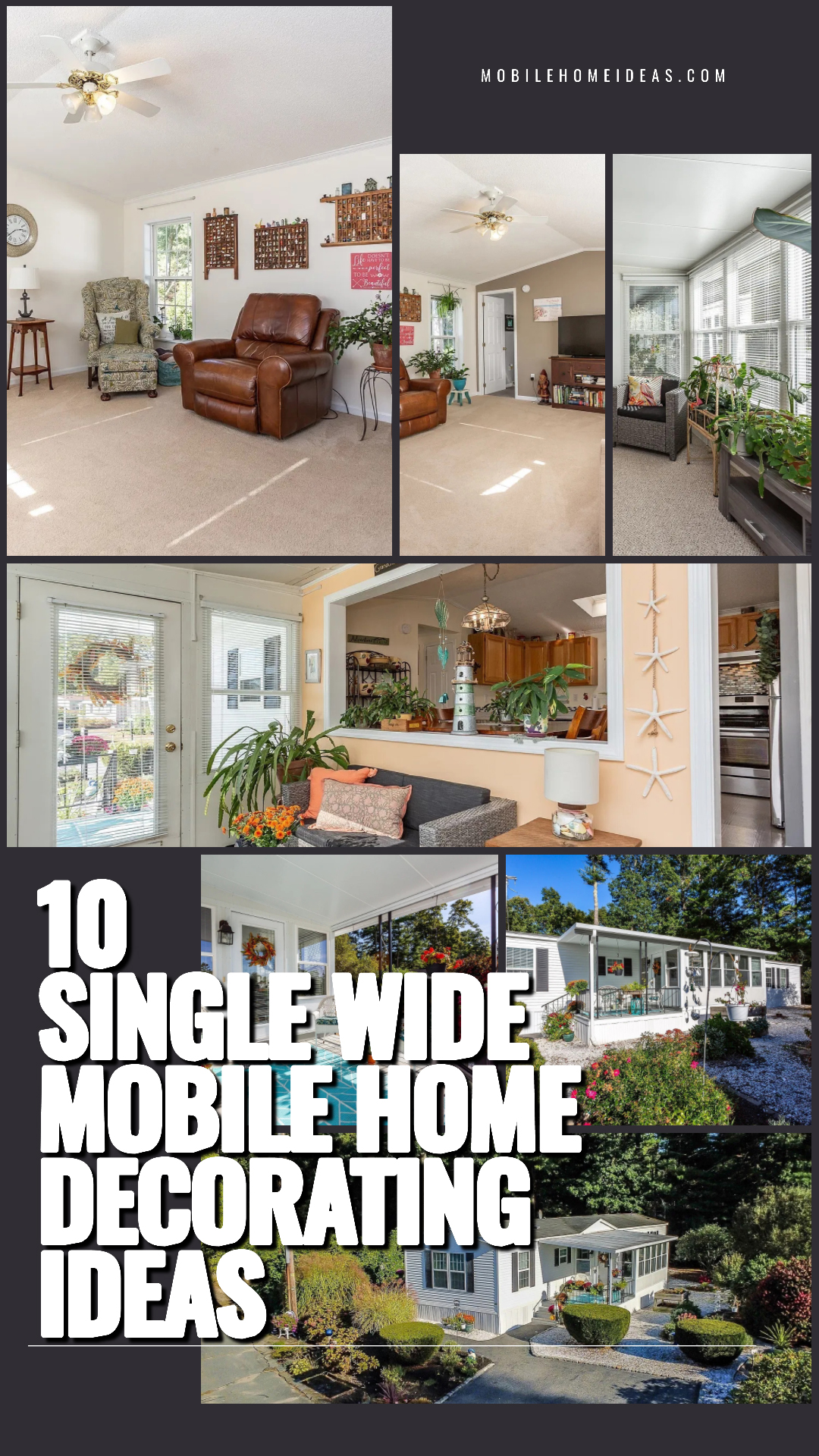
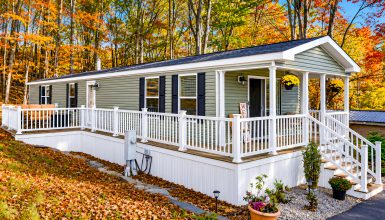
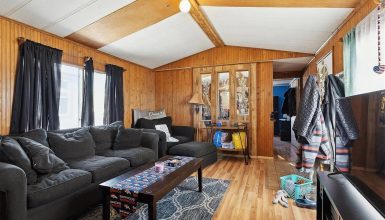
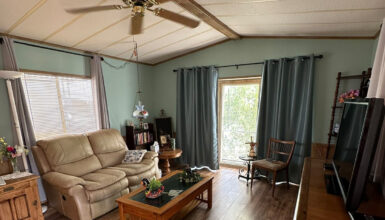
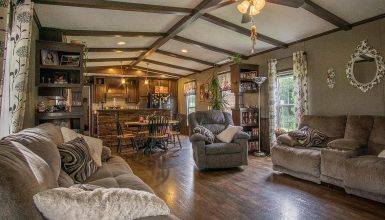
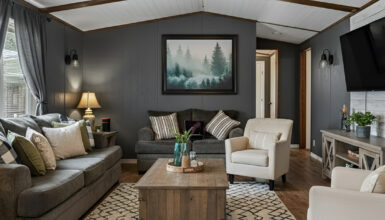
The living room uses a simple mix of light walls, a soft sofa, and warm wood furniture. A leather recliner adds a rich brown tone. A patterned armchair brings another layer of color and texture. The room feels open because the main pieces sit around the edges, leaving a broad walking area through the center.
That open floor matters in a single-wide home. A long room can feel awkward if furniture sits in the path. Place the sofa along a wall, then face it toward the TV or a focal point. Add one chair nearby to form a small seating group. A slim side table can hold a lamp without taking up much space.
The wall decor adds personality. Small display shelves show collections, while framed art gives the walls a finished look. Try grouping small items together. A few arranged pieces often look calmer than decor spread across every wall.
Cues to copy:
- Keep the main walking path open.
- Place the sofa and chairs in a clear conversation area.
- Mix a light sofa with one darker chair or recliner.
- Use small shelves to show collections.
- Add floor or table lamps for evening light.
5. Let the Kitchen Feel Bright and Useful
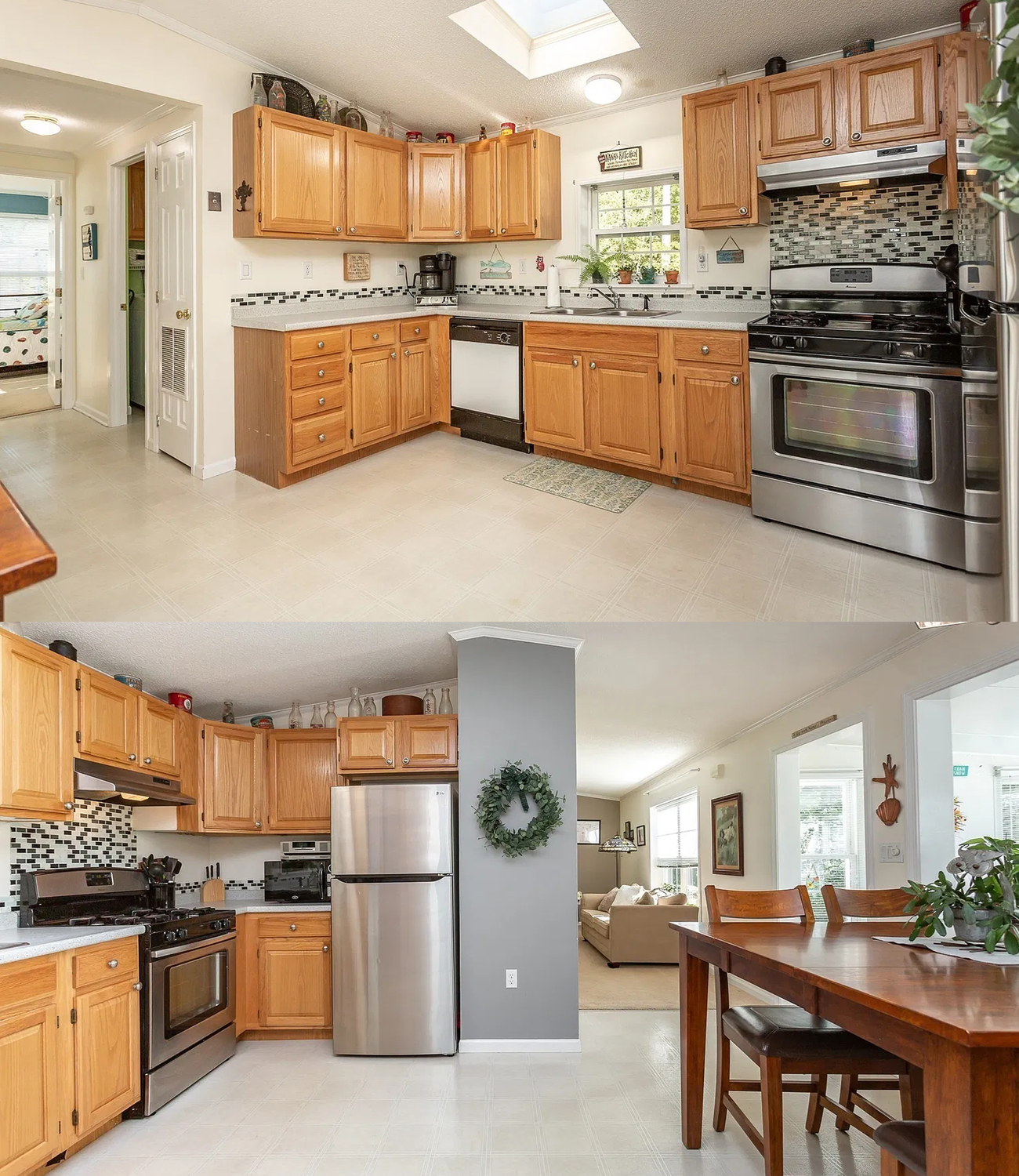
The kitchen combines honey-colored wood cabinets with pale walls and light flooring. Stainless steel appliances add a clean, modern note. A skylight brings in extra daylight, while the patterned backsplash adds contrast behind the stove.
Warm wood cabinets can feel fresh when the rest of the room stays light. If your cabinets have a similar finish, clear the counters and use a few simple accents. A small plant near the sink brings life to the room. A light runner can add softness, as long as it does not block a work area.
The backsplash helps the cooking zone stand out. You can use tile, peel-and-stick panels, or a painted accent, depending on the surface and your budget. Keep the pattern in one area so the room does not feel busy.
Storage matters in a compact kitchen. Use baskets or trays to group daily items. Put less-used items in cabinets, and keep the counters clear where you prep food.
Cues to copy:
- Pair wood cabinets with pale walls and counters.
- Add a backsplash to create one strong focal point.
- Keep everyday tools in a tray or crock.
- Use a small plant or herbs near a window.
- Clear counter space around the sink and stove.
6. Make the Dining Area Feel Open
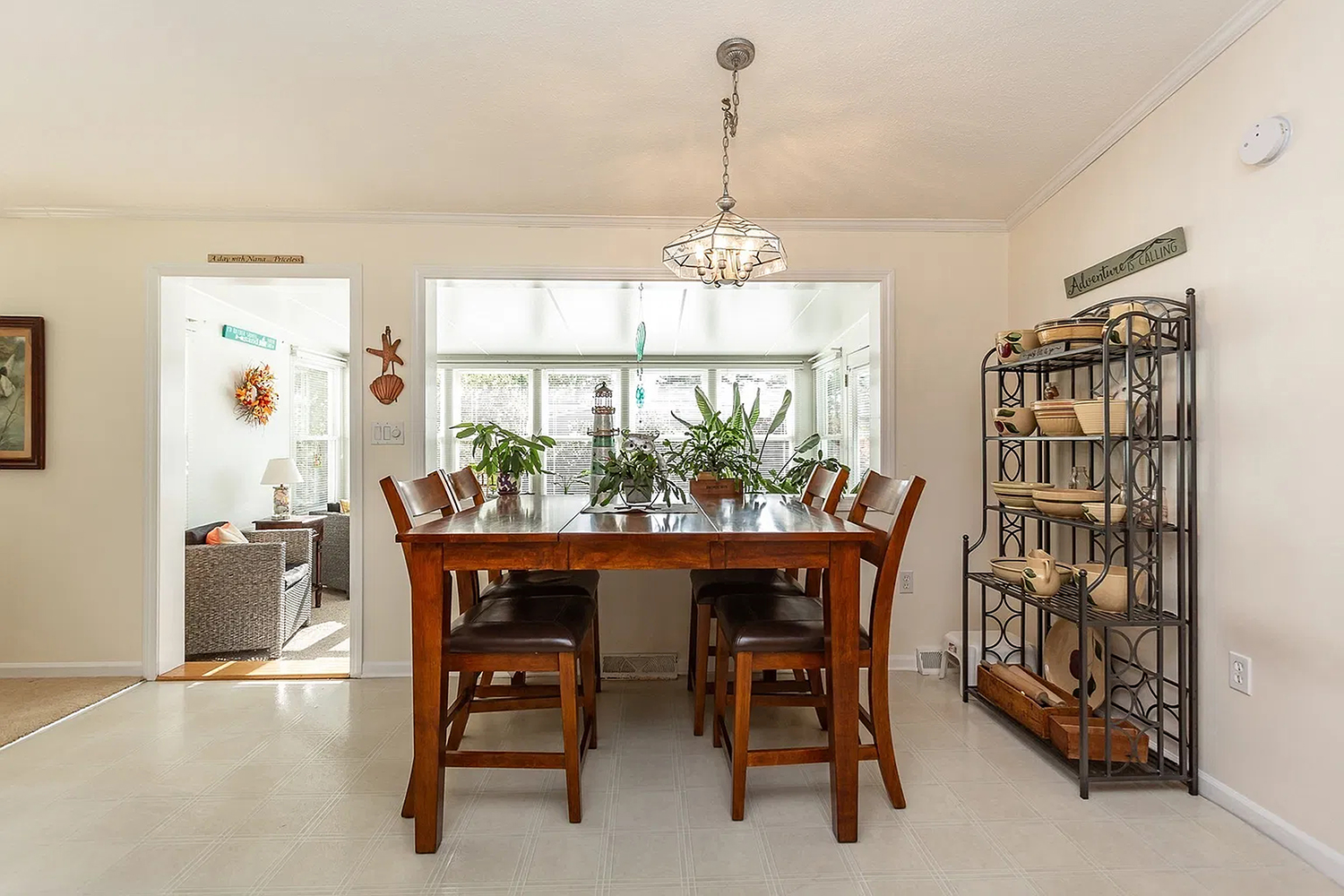
The dining area sits close to the kitchen, so meals and cleanup feel easy. A wood table gives the room a warm center. Matching chairs keep the look neat. A simple pendant light marks the dining spot without adding walls or furniture dividers.
In a narrow home, keep the dining set in scale with the room. A table that is too large can make it hard to move around. Leave space to pull out chairs. If you often eat with just a few people, a smaller table can work every day and still seat guests when needed.
A narrow shelf can add storage and display space. Arrange dishes, bowls, or a few favorite pieces on it. Keep the display simple, with some open space between items. A small plant or bowl on the table gives the room a natural touch.
Cues to copy:
- Pick a table that leaves room to walk around it.
- Use a pendant or ceiling light to define the dining area.
- Keep table decor low and simple.
- Add a slim shelf for dishes or serving pieces.
- Repeat wood tones from the kitchen for a linked look.
7. Create a Calm Main Bedroom
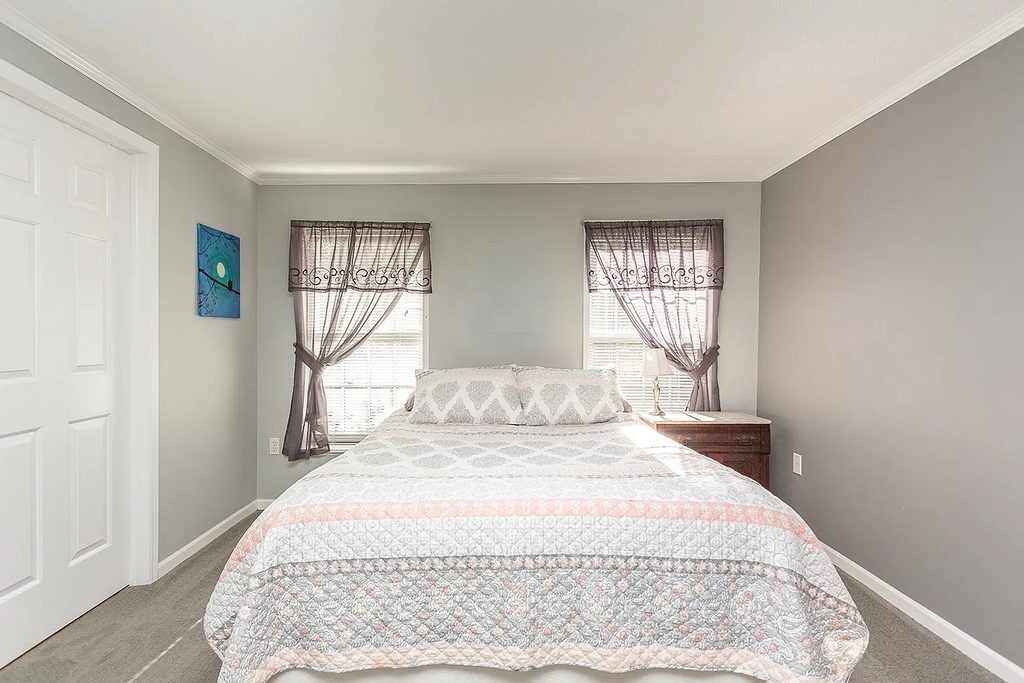
The main bedroom uses gray walls, white bedding, and soft curtains. The bed takes center stage. Its patterned quilt adds detail, while the rest of the room stays quiet. This balance helps a smaller bedroom feel restful.
A simple color plan can make the room look larger. Choose one calm wall color, then use white or pale bedding to reflect light. Add a small pattern through a quilt or pillows. You do not need many extra objects on the walls or tables.
Curtains soften the windows and add privacy. Hang them high, if the wall allows, to draw the eye upward. Keep bedside pieces slim so there is room to walk around the bed. A small lamp gives the room a warm glow at night.
Cues to copy:
- Use a calm wall color such as gray, blue, or soft green.
- Choose light bedding with one gentle pattern.
- Hang simple curtains to soften the windows.
- Use narrow bedside tables and lamps.
- Keep surfaces clear for a restful feel.
8. Add Color and Purpose to a Second Bedroom
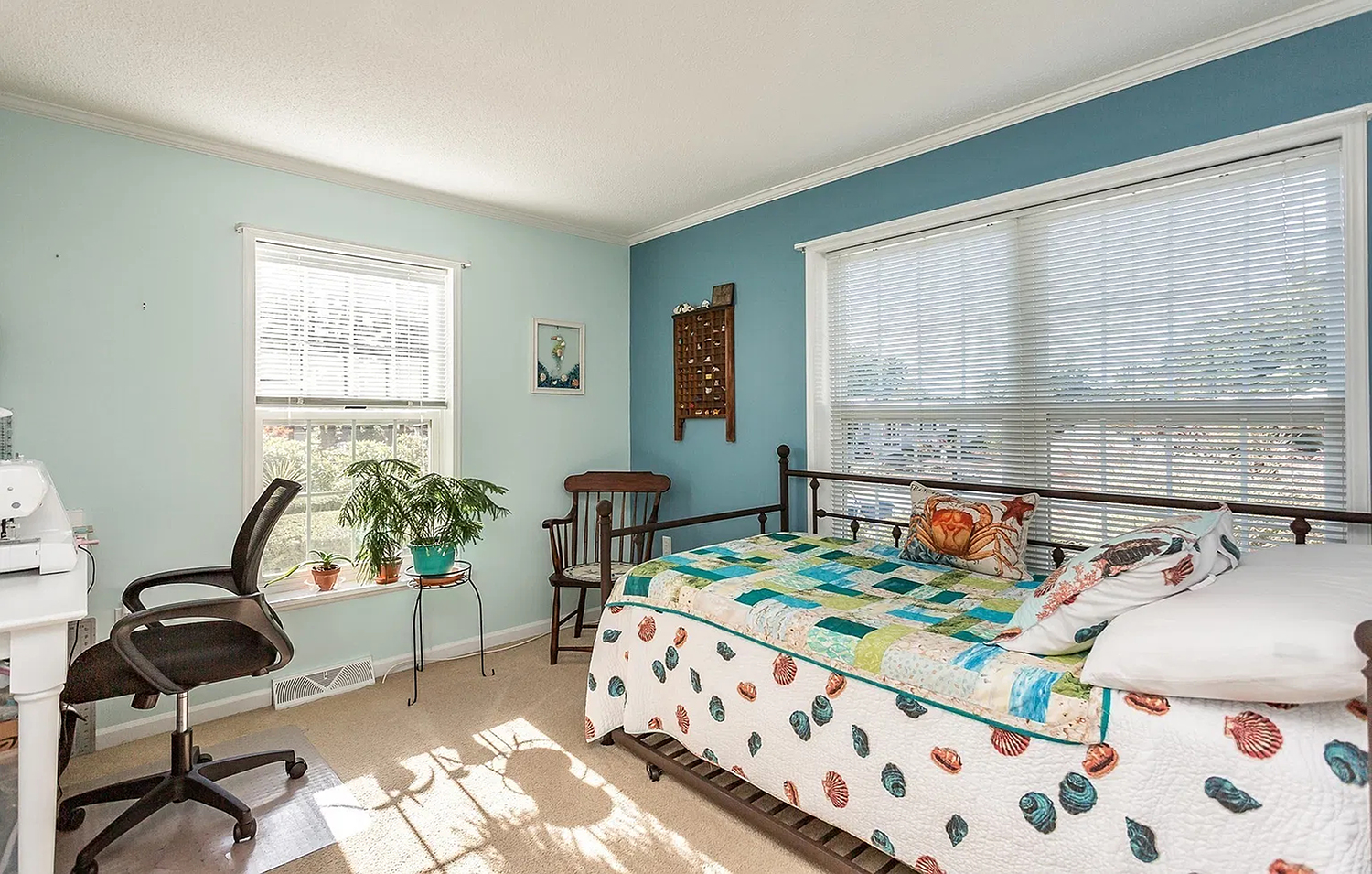
The second bedroom uses pale aqua walls and a deeper blue accent wall. A patchwork quilt brings in turquoise, green, and white. The room also has a desk, so it can serve as a guest room and a work space.
This mix works well when one room needs to do more than one job. Keep the bed as the main feature, then place the desk near a window for daylight. A small chair can serve as a work seat and an extra spot to sit. Use wall shelves to store small items without taking up floor space.
The quilt ties the colors together. This is a useful trick: let one fabric set the palette for a whole room. Pull two or three colors from it for the walls, curtains, or accessories. The result feels planned, even when you mix old and new pieces.
Cues to copy:
- Use one accent wall to add depth.
- Pull wall and decor colors from a quilt or comforter.
- Place a desk near a window when possible.
- Add shelves for books and small items.
- Keep the floor open so the room can serve two needs.
9. Keep the Bathroom Light and Tidy
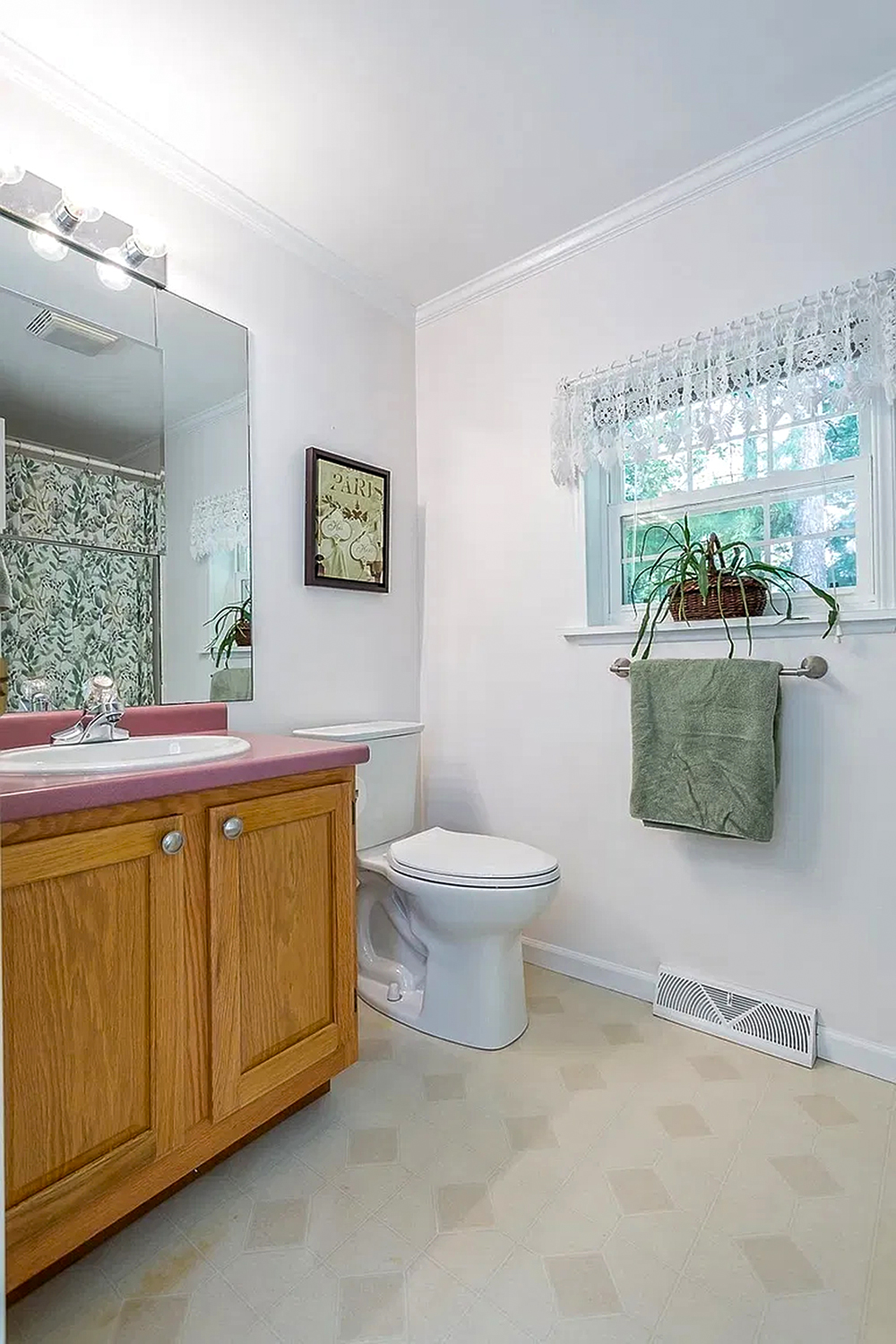
The bathroom feels fresh with white walls, a wood vanity, and a pale floor. A small window brings in daylight. Green towels and a plant add a soft touch of color. The vanity gives the room useful storage while keeping a warm wood note in the home’s palette.
Small bathrooms benefit from clear counters. Keep only daily items near the sink. Put extra towels and supplies in the vanity or a narrow wall cabinet. A mirror can also help the room feel brighter by reflecting light from the window.
Choose a few matching accents to bring the look together. Here, green towels pick up the plant leaves. You could also use soft blue, sand, or white. Keep patterns small so the room stays calm.
Cues to copy:
- Use white or pale colors to reflect light.
- Store extra supplies inside the vanity.
- Add one plant or a small natural detail.
- Repeat one accent color in towels and accessories.
- Keep the sink area clear and easy to clean.
10. Carry the Same Easy Style Outdoors
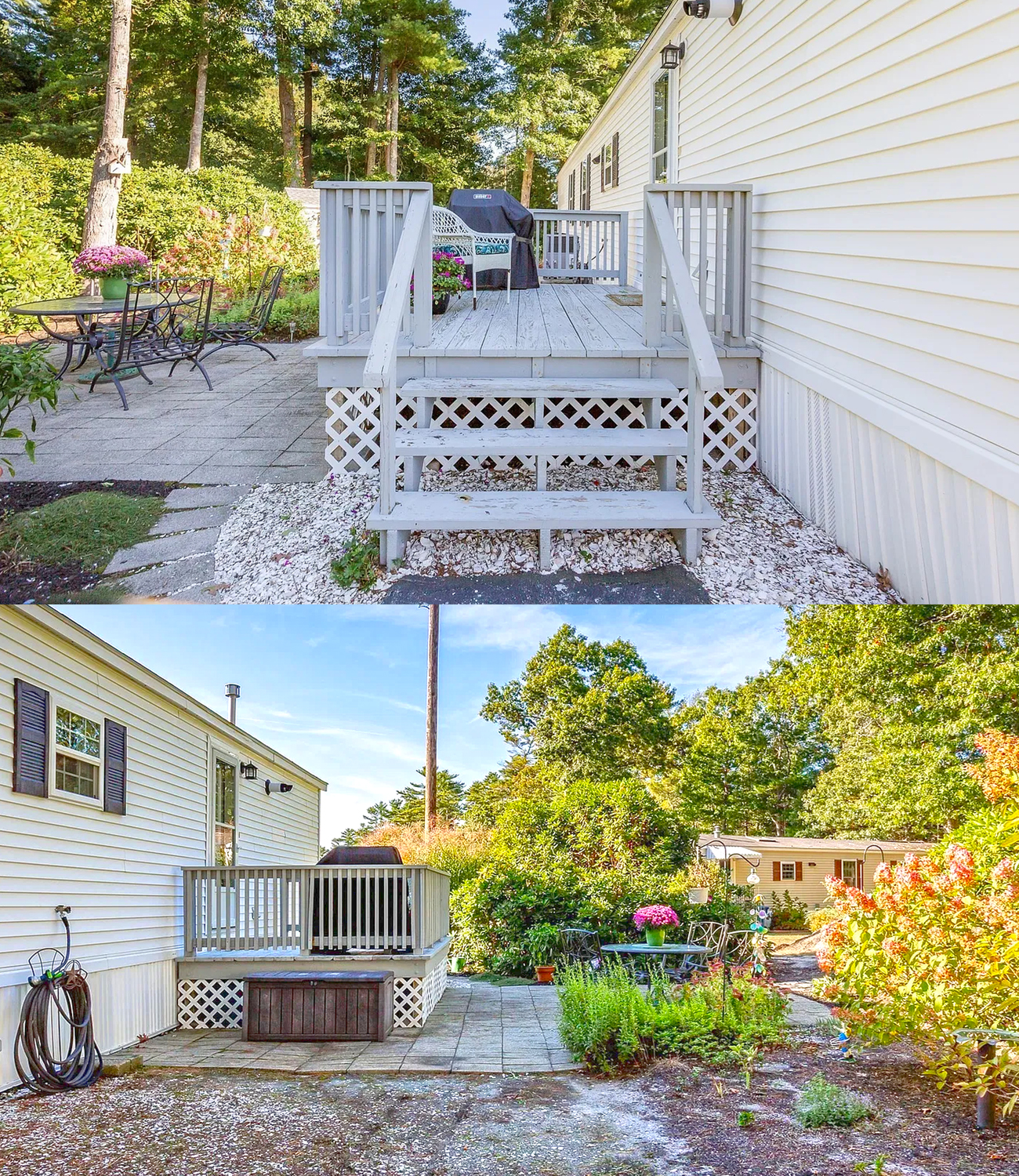
The back deck and patio extend the living space. A small raised deck gives a spot for a grill or a few chairs. Pale railings and lattice match the home’s light siding. Nearby stone paths and flower beds link the deck to the yard.
You can make an outdoor area feel finished without filling it with furniture. Start with one main use, such as dining, grilling, or relaxing. Then add only the pieces that support it. A bistro set suits a small patio. A bench can fit along a wall and leave the center open.
Use planters to bring color near the deck. Choose pots that match or repeat one color. Add outdoor lights for a soft glow after sunset. Before changing a deck or adding steps, check the home’s setup and local rules so the work stays safe.
Cues to copy:
- Give the deck one clear purpose.
- Match railings and trim to the home’s exterior.
- Use planters to soften hard edges.
- Add a small table and chairs that fit the space.
- Keep steps and walkways clear.
Conclusion
These single-wide mobile home decorating ideas show how light colors, thoughtful furniture, and a few bold accents can make each space feel welcoming. A bright porch, an open living room, and calm bedrooms all start with the same simple idea: give each area a clear purpose, then choose pieces that support it. Add color through rugs, plants, quilts, and flowers. Keep paths open, and let daylight do its work.