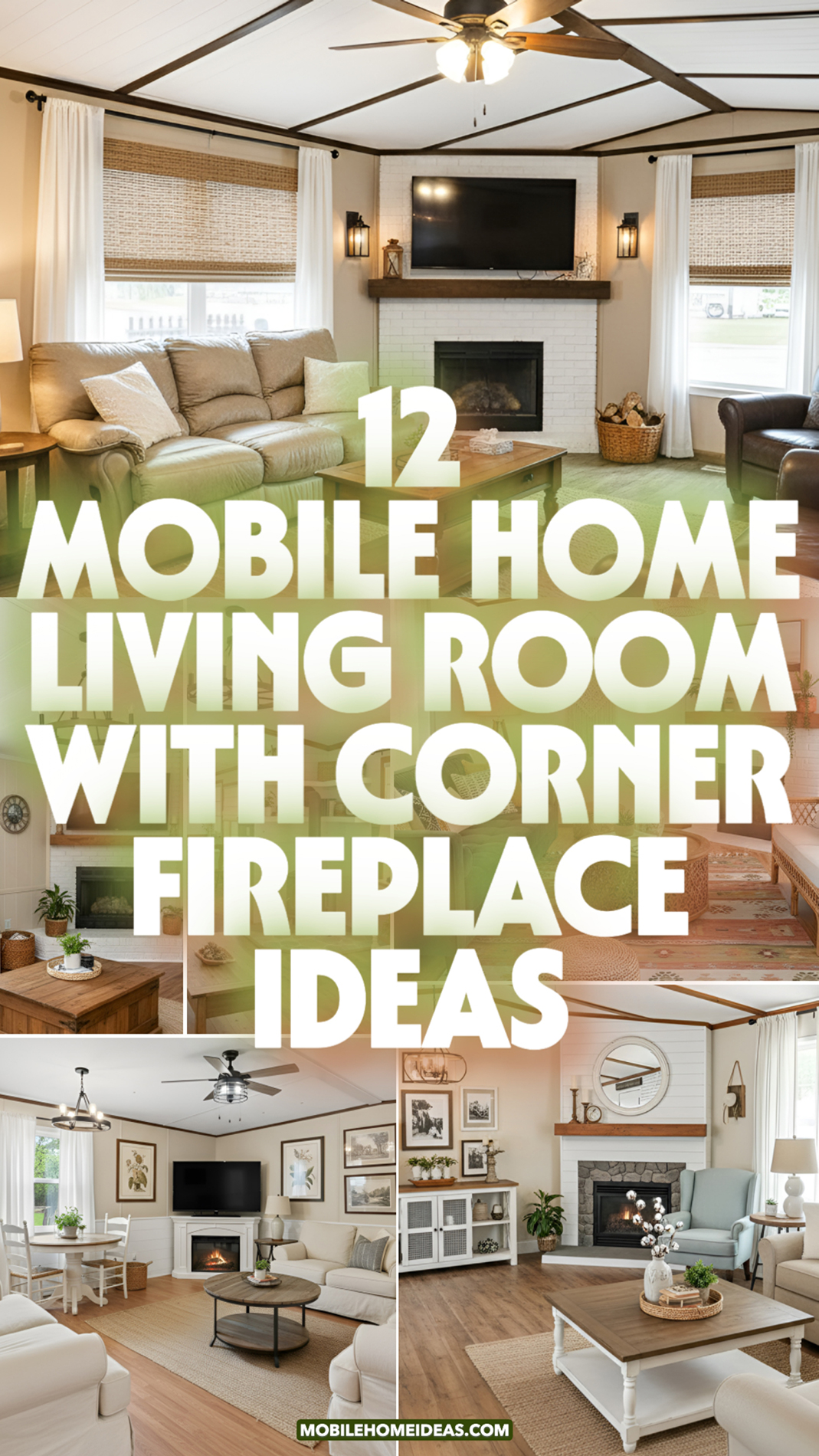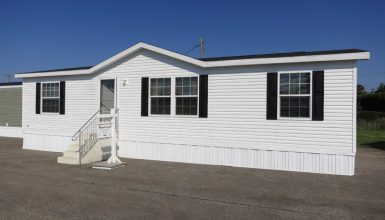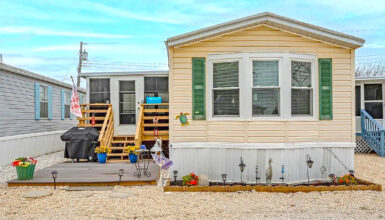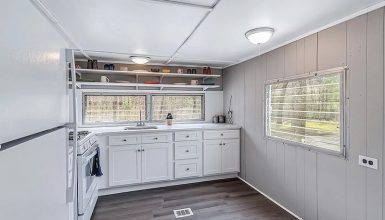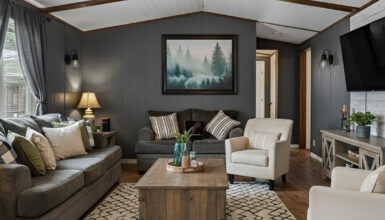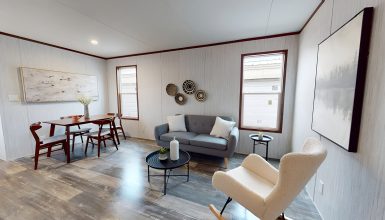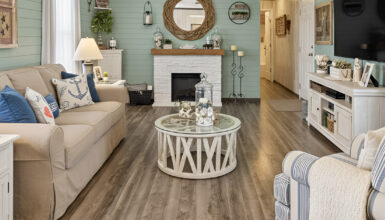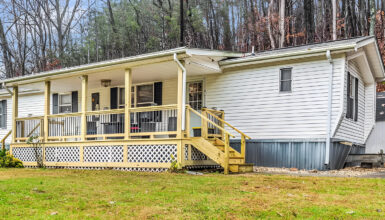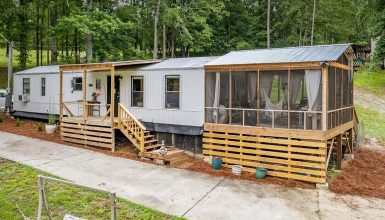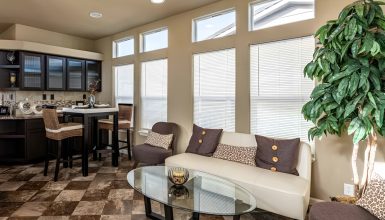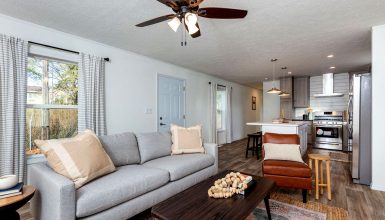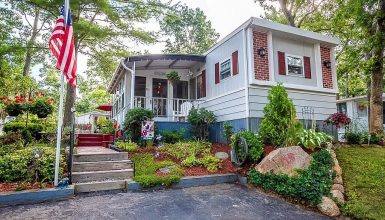
A mobile home living room with a corner fireplace can feel cozy, stylish, and a little tricky to arrange. The good news is that the right furniture layout can make the whole room feel bigger, warmer, and easier to use. These ideas will help you create a layout that works with the fireplace, not against it.
1. Start With the Fireplace, Not the Sofa
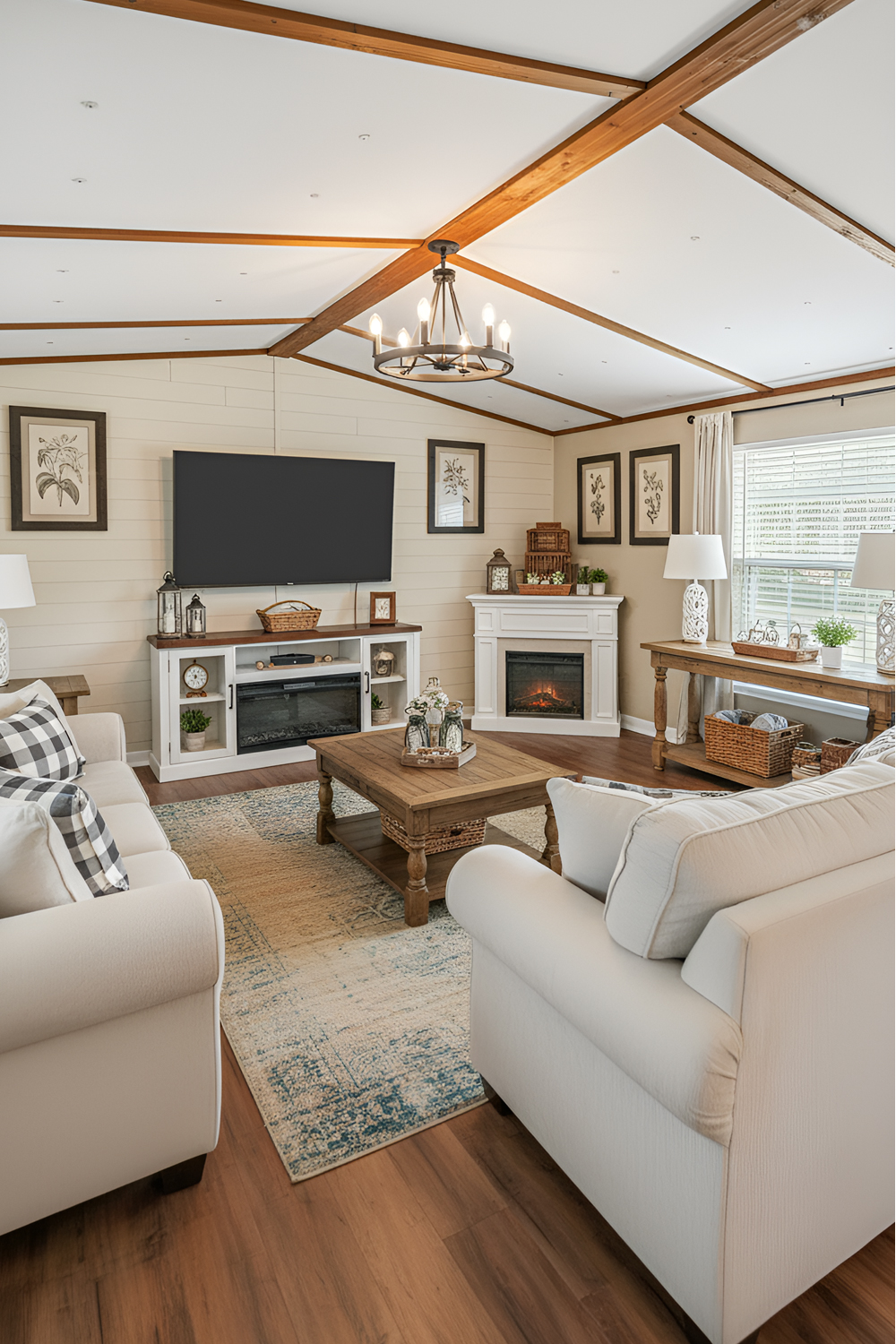
Many people begin with the biggest piece in the room, which is usually the sofa. That makes sense in a regular living room. However, in a mobile home living room with a corner fireplace, the fireplace should lead the plan.
Why? Because it already creates a visual anchor.
A corner fireplace naturally draws the eye. It has shape, texture, and presence. So instead of treating it like an obstacle, treat it like the room’s built-in focal point. Once you decide how much attention you want the fireplace to get, the rest of the layout becomes easier.
If you love the fireplace and want it to shine, angle the main seating toward it. If you also need a TV in the room, think about creating a shared focal zone where both features work together without competing too much.
This first choice matters because it affects every other move, from rug placement to chair angles to traffic flow.
Cues to look for
- The fireplace is the strongest feature in the room
- One corner already feels visually heavier than the others
- The layout feels easier once seating faces the fireplace
- The room looks more balanced when the fireplace gets a clear role
2. Measure the Room Before You Move a Thing
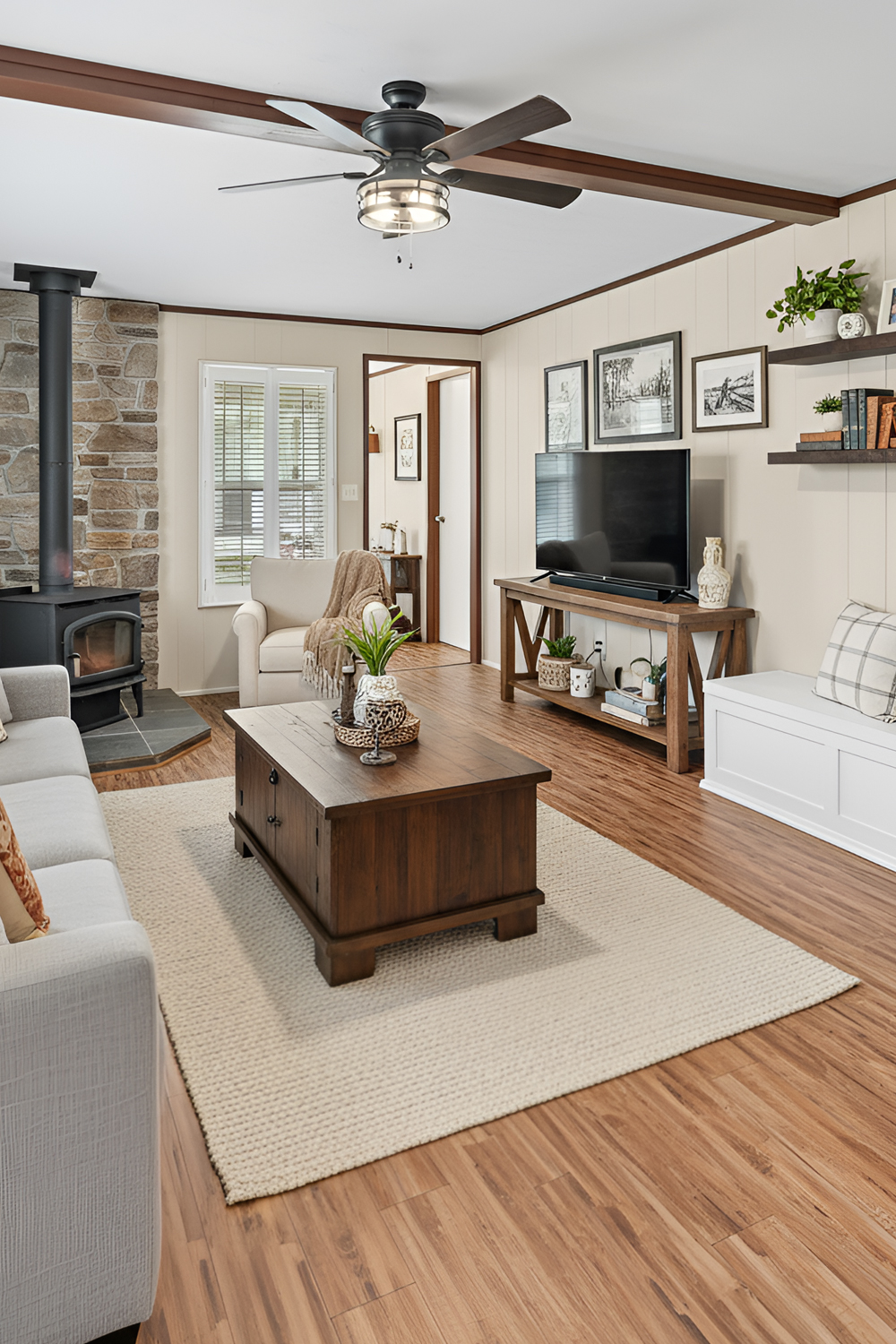
This step may sound boring, but it saves so much frustration.
Mobile home living rooms often have tighter dimensions than site-built homes. That means every inch matters. Before you start dragging furniture around, measure the width of the room, the distance from the fireplace to nearby walls, the window locations, and the main walking paths.
Also measure your furniture. A sofa that looked fine in your old space may feel too deep here. A large coffee table may crowd the path between the seating area and the hallway. Even a side chair can feel bulky if the angle is wrong.
When you know the numbers, you stop guessing. That alone makes the room easier to plan.
Try sketching a simple floor plan on paper. Mark the fireplace, doors, windows, and vents. Then test a few furniture positions before you move anything heavy. It does not need to be fancy. A quick drawing can reveal problems you might miss at first glance.
Cues to look for
- Narrow walkways near the fireplace corner
- Windows that limit tall furniture placement
- Entry points that need open clearance
- Oversized pieces that eat up floor space
- Vents or built-ins that must stay uncovered
3. Keep a Clear Walking Path
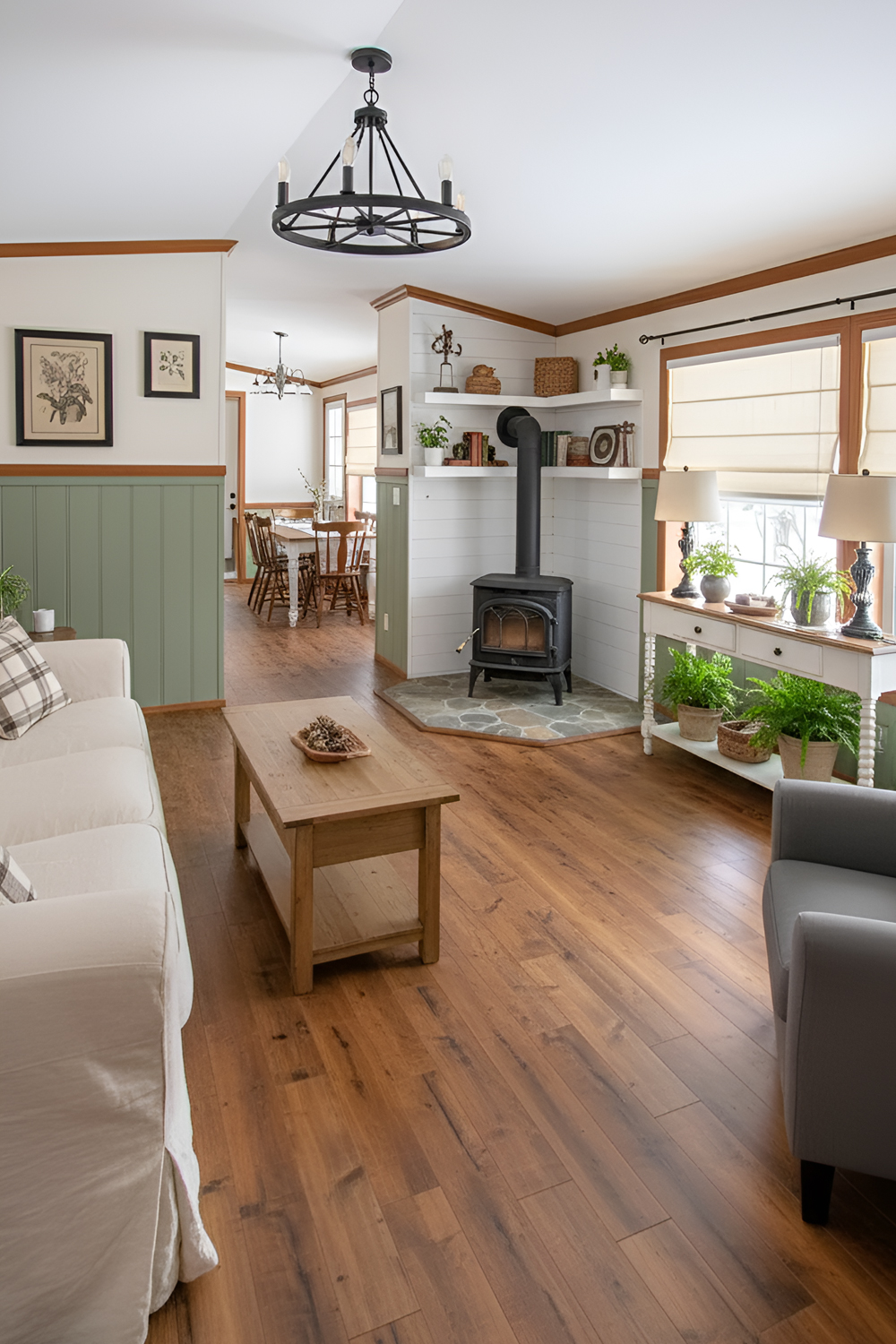
This is one of the biggest layout mistakes in small living rooms.
People often push furniture into spots that look good from one angle but block how the room actually works. In a mobile home, the living room may connect to a hallway, kitchen, or front door. So the room has to do more than look pretty. It has to let people move through it with ease.
A good layout feels natural. You should be able to walk across the room without weaving around furniture. The path should feel open, not squeezed.
That means you may need to pull the sofa away from a wall, skip an oversized recliner, or use a smaller coffee table. It also means the area near the corner fireplace should not become a dead zone packed with decor or bulky pieces.
Think of traffic flow as invisible design. When it works, the whole room feels better.
Cues to look for
- You can walk through the room in a straight, easy path
- No furniture blocks the fireplace corner
- Doorways open fully
- The coffee table does not crowd the seating area
- The room feels airy instead of packed
4. Float the Sofa When Possible
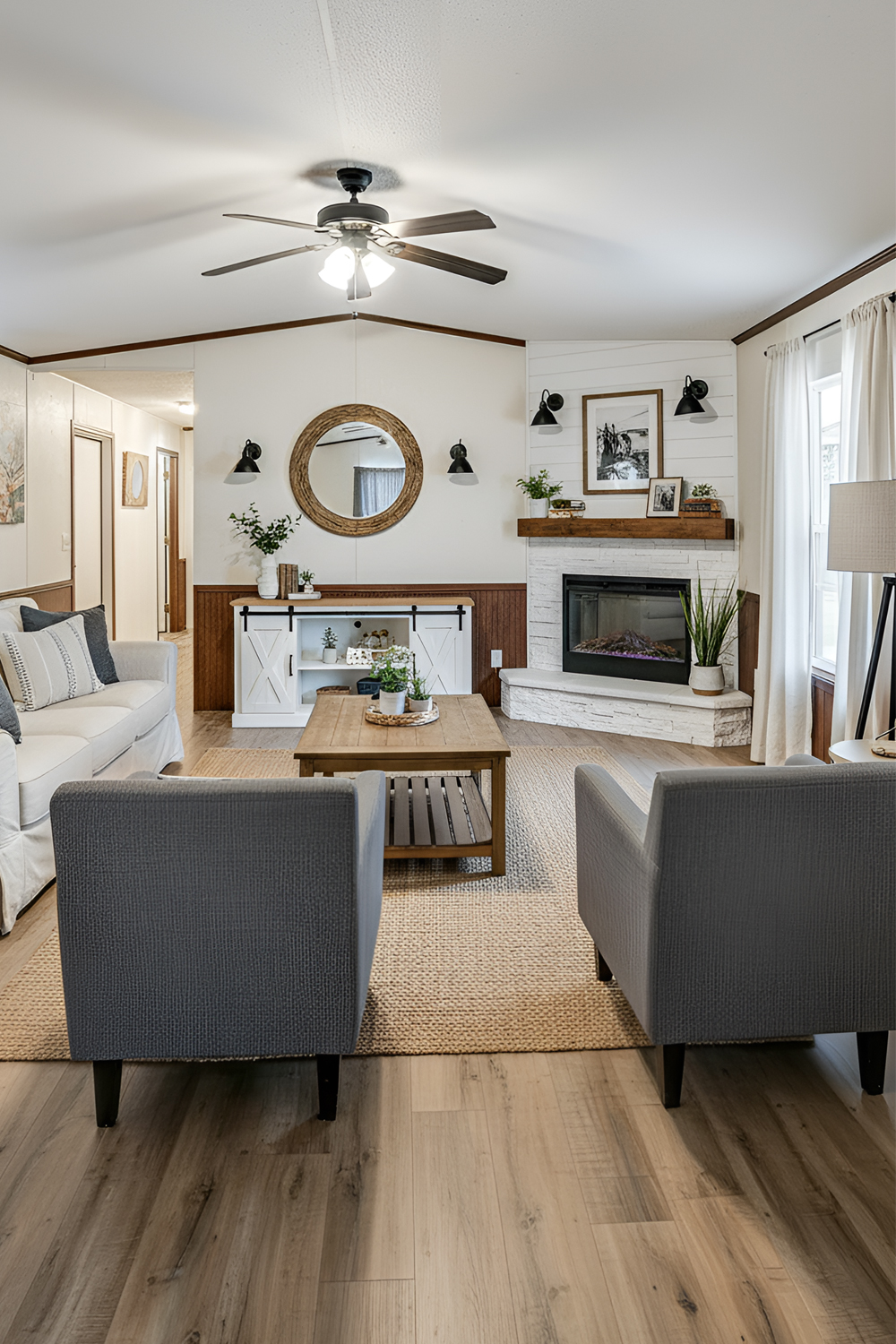
Many people think every piece has to sit against a wall in a small room. That is not always true.
In fact, floating the sofa a few inches or even a foot away from the wall can make a mobile home living room feel more intentional. It helps define the seating area and keeps the layout from looking flat. It can also improve the angle between the sofa and the corner fireplace.
If your room allows it, place the sofa across from the fireplace zone rather than forcing it onto the longest wall. Then use a slim console table behind it if you want extra function. This trick can create a finished look while still keeping the room open.
Of course, you do not want the sofa floating in a way that blocks movement. But when done right, it gives the room shape and helps the fireplace feel connected to the seating area.
Cues to look for
- The sofa looks better facing the fireplace at a slight angle
- Wall-hugging furniture makes the room feel stiff
- A floating layout improves conversation and comfort
- The seating area feels more grounded with a rug underneath
5. Use the Fireplace Corner as Part of the Seating Zone
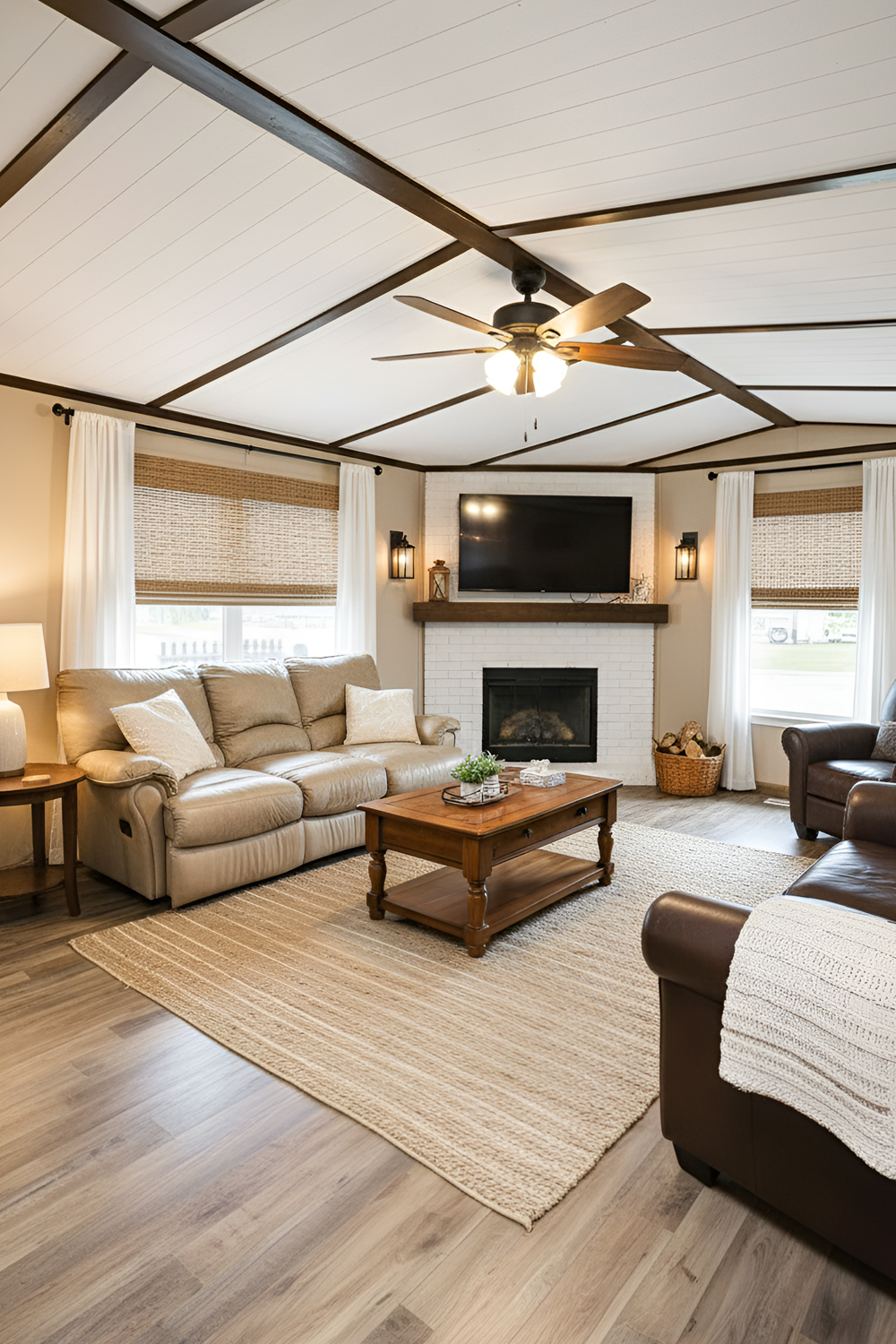
A corner fireplace should not sit awkwardly off to the side like it belongs to another room.
Instead, pull it into the conversation area. Arrange furniture so the fireplace feels included. That may mean turning accent chairs slightly toward it or using a round coffee table that softens the angles in the room.
You do not need every seat to face the fireplace perfectly. That can make the room feel forced. However, the seating should at least acknowledge it. A room feels more cohesive when the fireplace and the furniture seem to belong to the same story.
This is especially helpful in mobile homes where the living room is often the main shared space. You want the fireplace to add comfort, not confusion.
Cues to look for
- Chairs angle naturally toward both the sofa and fireplace
- The fireplace feels connected to the conversation area
- The furniture layout creates one unified zone
- Sharp room angles feel softer with curved pieces
6. Pick the Right Sofa Shape
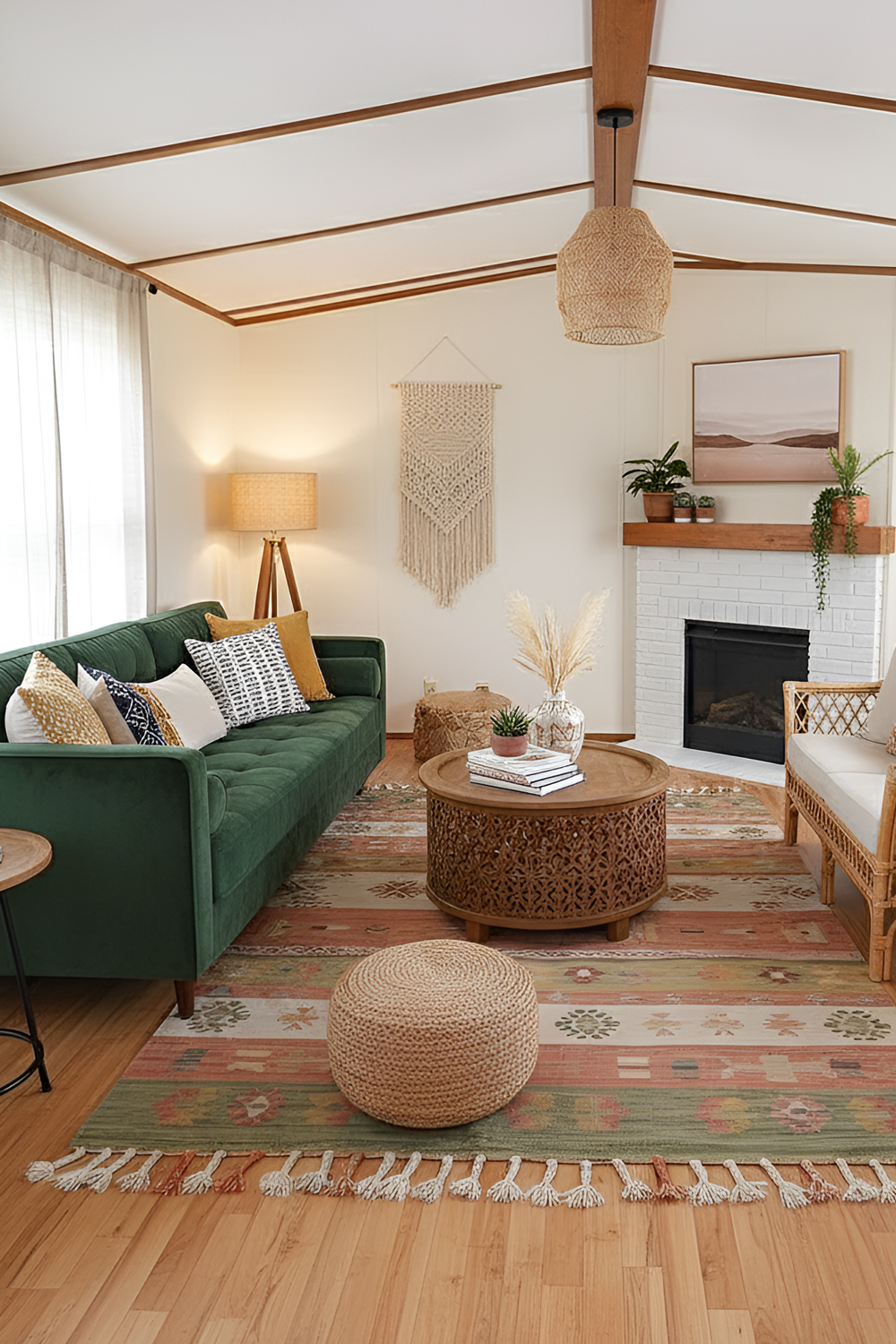
The wrong sofa can make the whole room feel off.
In a mobile home living room with a corner fireplace, a standard three-seat sofa often works well. It gives enough seating without swallowing the room. A loveseat can work too, especially in narrower layouts. Apartment-size sofas are often a smart choice because they offer slimmer proportions.
Sectionals can work, but only if the room truly has enough space. In many mobile homes, a bulky sectional overwhelms the room and competes with the fireplace. It can also block windows or walking paths. If you love the sectional look, try a small-scale L-shaped piece with clean lines and a raised leg. That will feel lighter than a chunky overstuffed style.
The goal is to match the furniture to the room, not the other way around.
Cues to look for
- Slim arms and raised legs make the sofa feel lighter
- The sofa fits the room without touching every wall
- The seat depth feels comfortable but not oversized
- The shape supports the fireplace instead of fighting it
7. Balance the Room With Two Chairs or One Swivel Chair
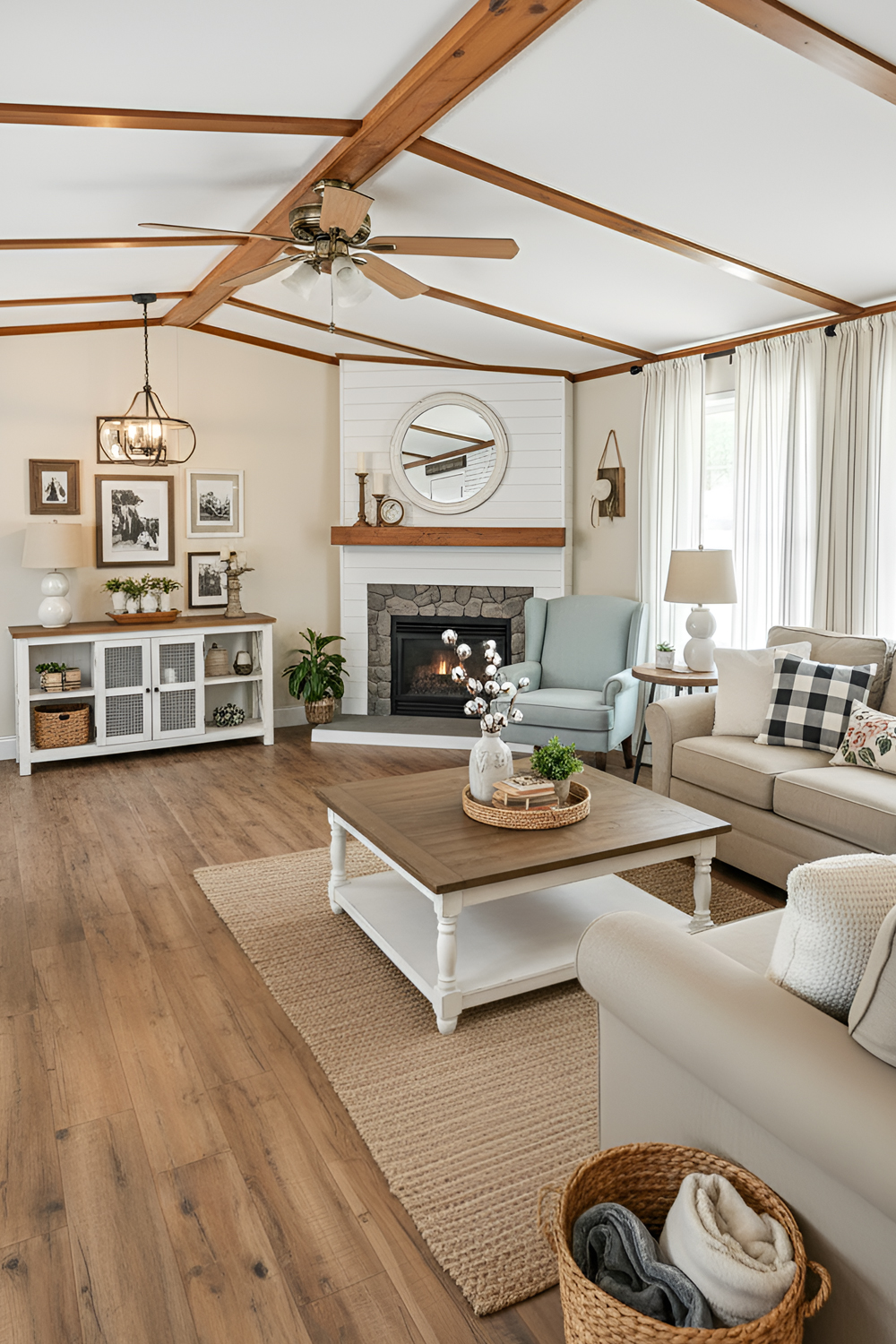
A corner fireplace often creates an uneven visual weight on one side of the room. Chairs can help fix that.
If you have space, add two smaller accent chairs across from or beside the sofa. This balances the layout and makes the room feel complete. If space is tighter, even one swivel chair can work beautifully. A swivel chair is especially useful because it can turn toward the fireplace, the sofa, or the TV.
That flexibility matters in a room with multiple focal points.
Choose chairs with a lighter footprint. Open frames, wood arms, or exposed legs can help the room breathe. Heavy recliners often feel too bulky unless the room is quite large.
Cues to look for
- The room feels more even once chairs are added
- Smaller chairs fit better than one oversized recliner
- Swivel seating improves function in a multi-use room
- The layout feels complete from every angle
8. Think Carefully About the TV
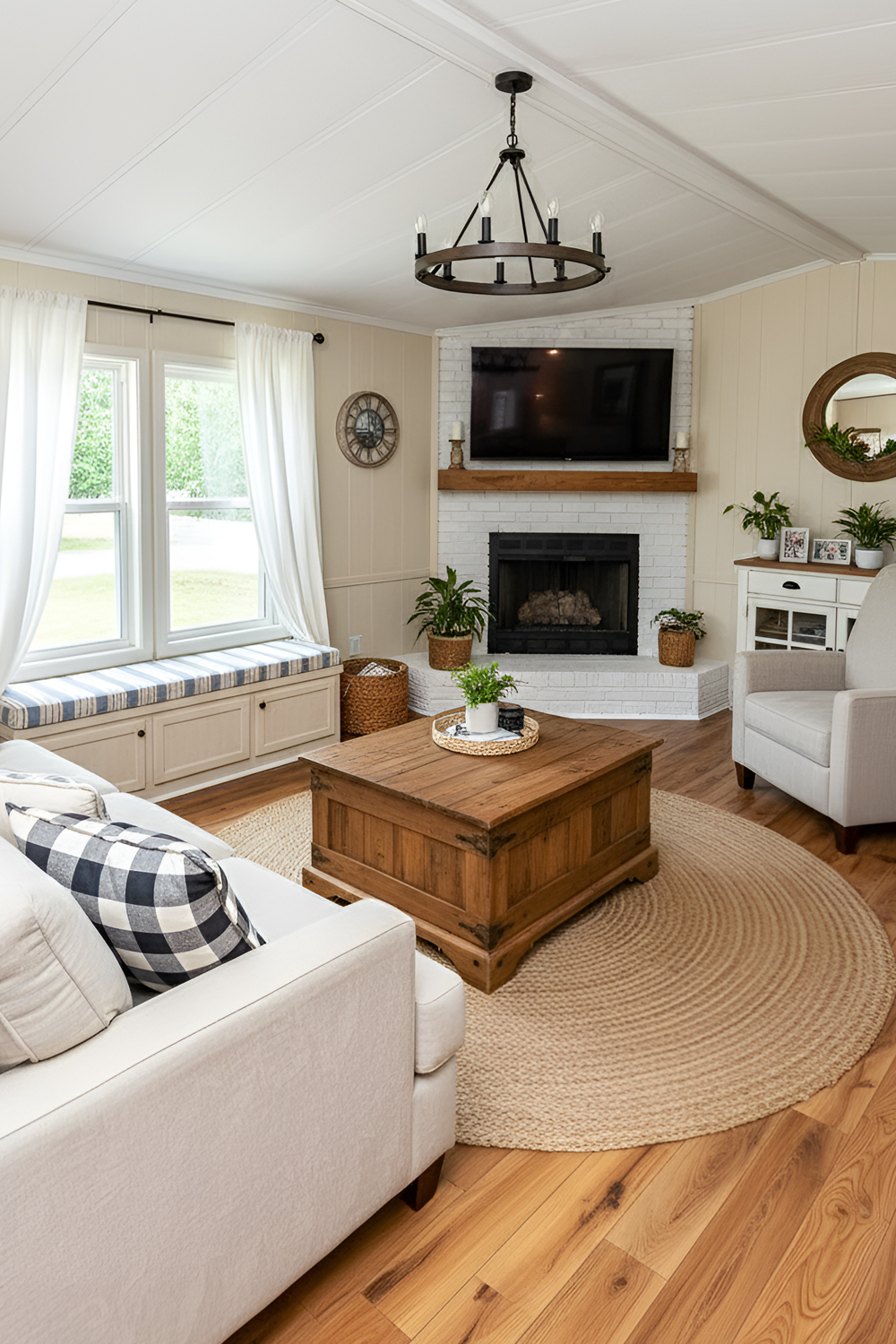
This is where many layouts get stuck.
If the fireplace is in the corner, placing a TV directly above it may not be possible or practical. The angle may be awkward. The height may feel too high. In some cases, the corner unit is simply too small.
That is okay. The TV does not always need to sit over the fireplace.
You can place the TV on a nearby straight wall and angle the seating so it relates to both the TV and the fireplace. Another option is a low media console on the wall across from the sofa, while the fireplace remains a secondary focal point. In some rooms, a swivel mount can help bridge the gap.
The best choice depends on how you live. If you watch TV every night, let it have a practical place. If the fireplace is your favorite feature and the TV is used less often, let the fireplace lead.
Cues to look for
- The TV is easy to see without straining your neck
- The fireplace still feels like part of the layout
- The room does not feel like two unrelated zones
- Seating supports both relaxing and viewing
9. Choose a Coffee Table That Fits the Shape of the Room
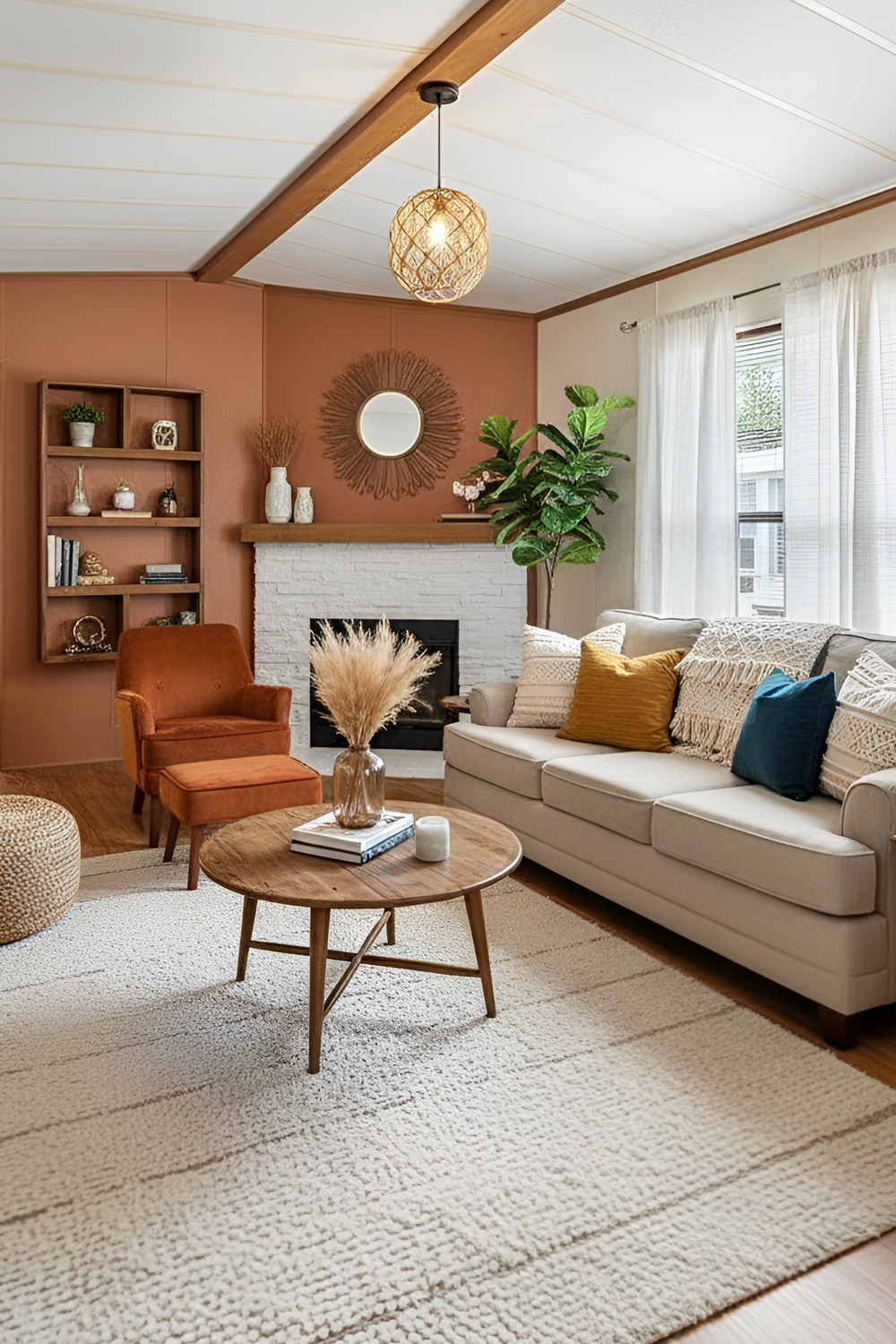
The coffee table may seem like a small detail, but it changes how the room flows.
In a living room with a corner fireplace, round and oval coffee tables often work better than large square ones. They soften the sharp angles created by the corner feature and make it easier to move around. They also help prevent the room from feeling boxy.
If the space is very tight, consider a pair of small nesting tables or an upholstered ottoman. These choices give you flexibility without adding visual heaviness.
A glass-top table can also help a small room feel lighter. Meanwhile, a wood table adds warmth if the room feels too plain.
Cues to look for
- Curved shapes soften the room layout
- The table leaves enough leg room and walking space
- The size matches the sofa, not the whole room
- The center of the seating area stays open and usable
10 Anchor Everything With a Rug
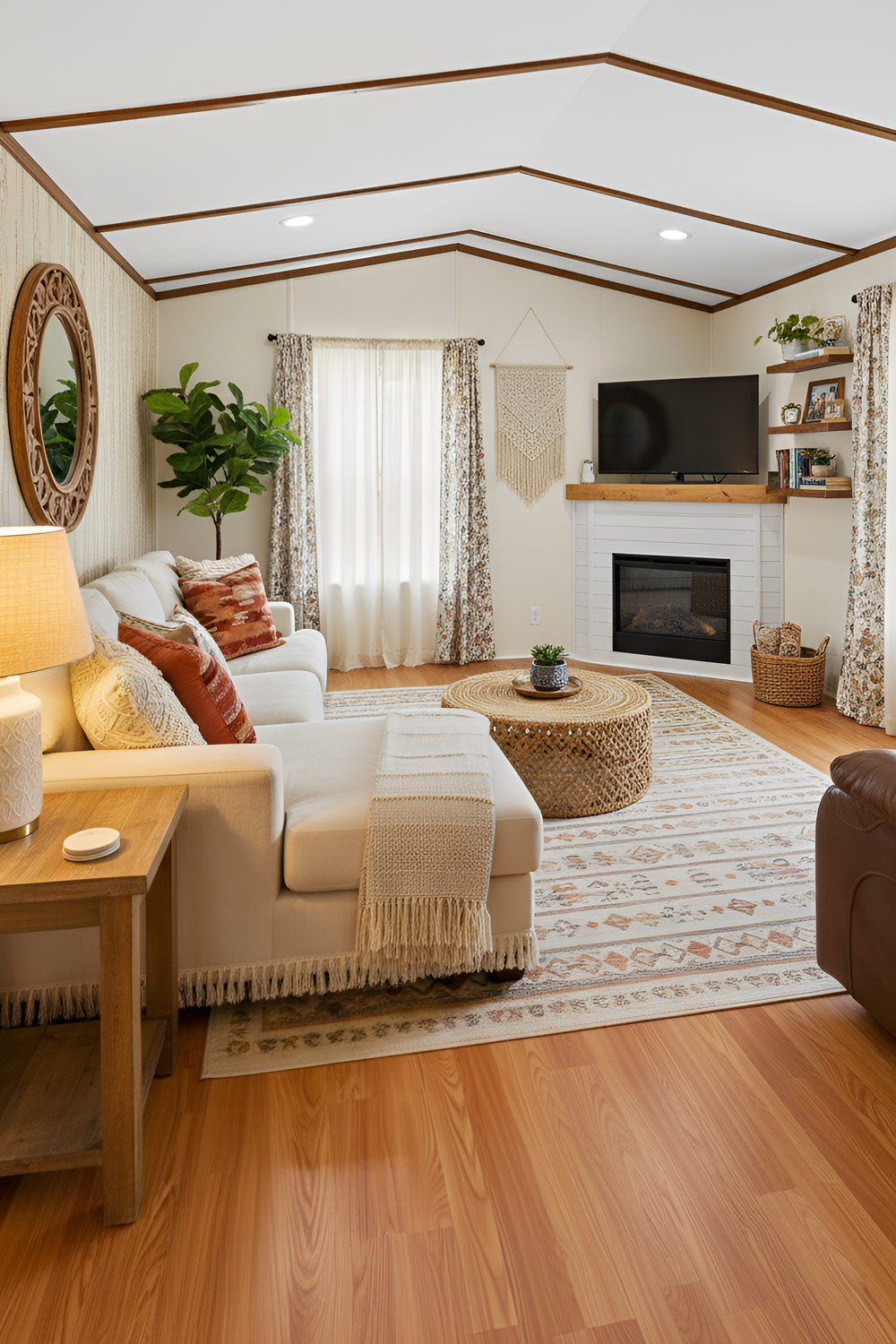
A rug does more than add softness underfoot. It tells the eye where the seating area begins and ends.
This matters even more in a mobile home living room, where the space may blend into the kitchen or dining area. A rug helps the furniture feel grouped instead of scattered. It also keeps the corner fireplace from feeling disconnected.
Choose a rug large enough for at least the front legs of the sofa and chairs to sit on it. That creates a more polished look. A rug that is too small can make the room feel choppy.
Pattern also matters. If your fireplace has stone, brick, or tile, you may want a rug with a subtle pattern so the room does not feel too busy. If the fireplace is simple, the rug can add more personality.
Cues to look for
- The rug connects the sofa, chairs, and fireplace zone
- The seating area feels intentional
- The rug is large enough to ground the layout
- The room looks warmer and more layered
11. Use Vertical Space Around the Fireplace
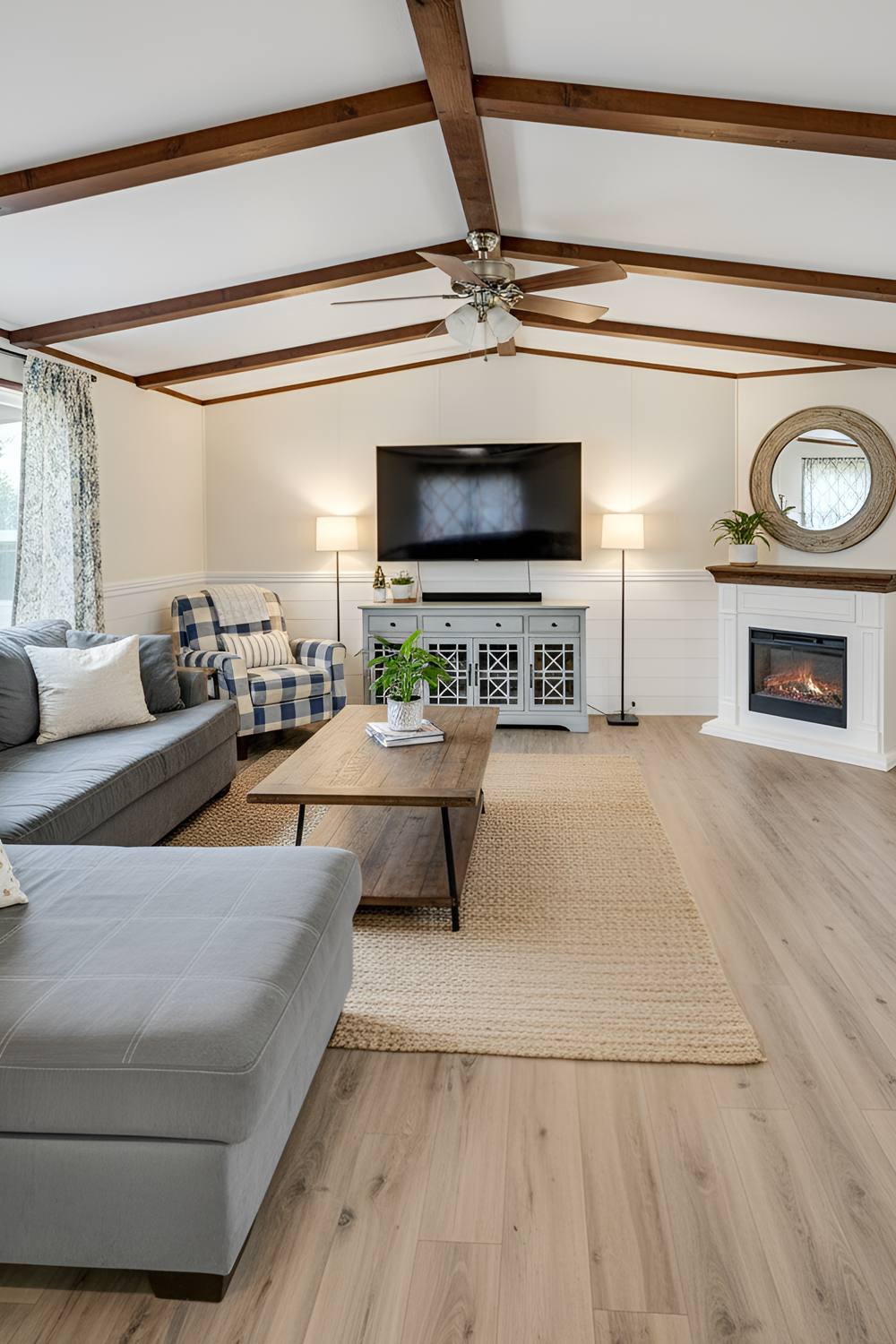
A corner fireplace takes up wall space in an unusual way, so you may need to think upward instead of outward.
Add art above a nearby wall section, install floating shelves if the layout allows, or use a tall plant to soften the angle. A mirror can also help bounce light and make the room feel larger. Just do not overcrowd the fireplace corner with too many items.
The key is balance. You want the area to feel styled, not stuffed.
Because mobile homes often have limited square footage, vertical decorating can help add charm without taking up precious floor space.
Cues to look for
- Bare walls make the room feel unfinished
- Tall decor draws the eye up and adds height
- The fireplace corner feels styled but not crowded
- The room gains warmth without losing open space
12. Keep Scale Light and Simple
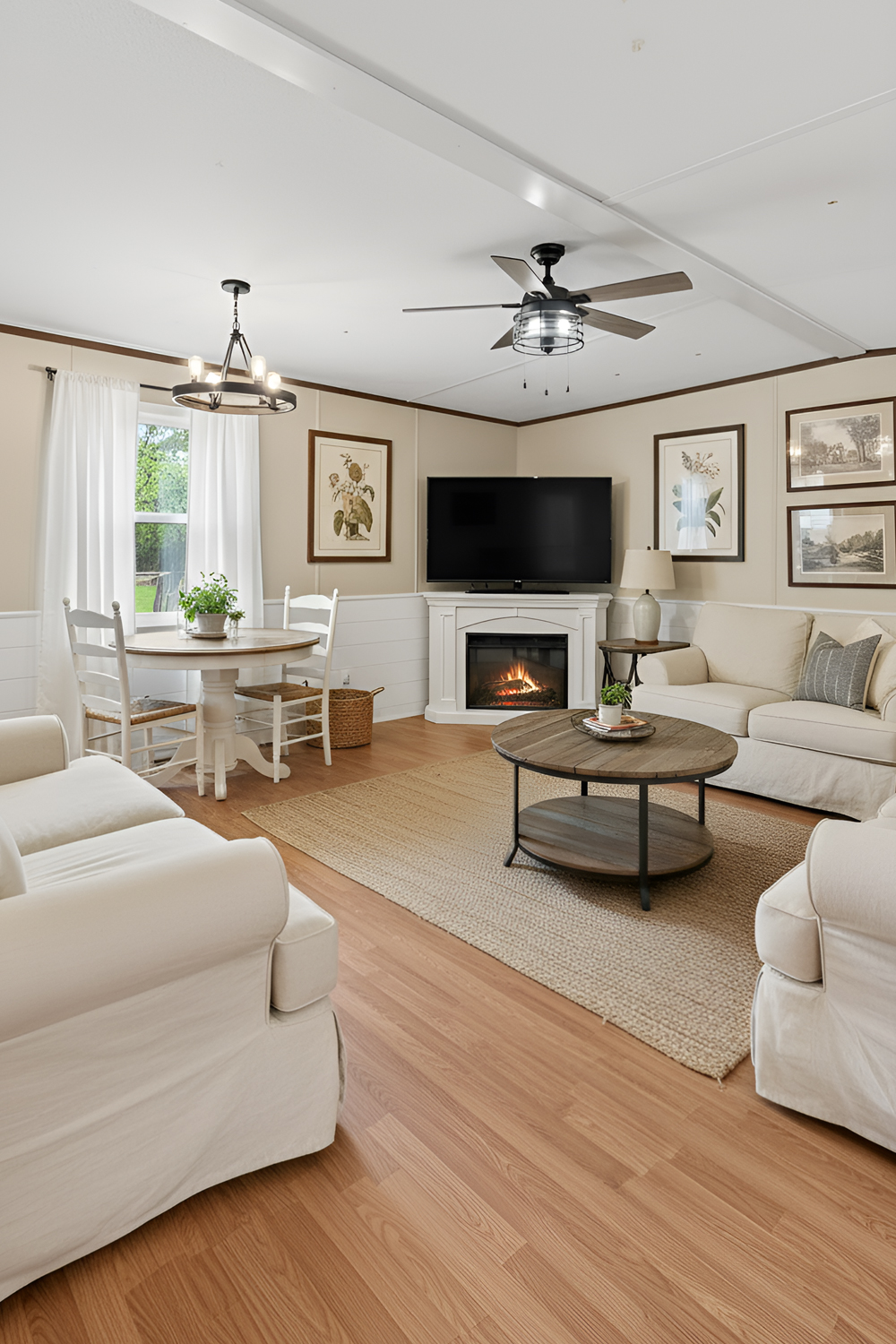
This may be the most important design rule of all.
A mobile home living room with a corner fireplace needs furniture that fits the scale of the room. That means pieces should feel comfortable, but not oversized. It also means you should avoid too many heavy shapes in one area.
Look for sofas with slimmer arms. Choose tables with open bases. Use chairs that feel airy. Skip extra pieces that do not serve a purpose.
When scale is right, the room feels relaxed. When scale is wrong, even beautiful furniture can make the room feel cramped.
Simple choices often look the best here. Clean lines, soft textures, and a few well-placed accents go a long way.
Cues to look for
- Furniture feels proportional to the room
- Open-leg pieces create visual breathing room
- The space looks calm instead of crowded
- Every piece has a purpose
Easy Layout Ideas That Work Well
If you need a starting point, these layout ideas usually work well in a mobile home living room with a corner fireplace:
1. Sofa facing the fireplace zone
Place the sofa across from the fireplace area, then add one chair on each side if space allows. This creates a balanced and classic conversation layout.
2. Sofa plus one swivel chair
This works well in smaller rooms. The chair can turn toward the fireplace or TV, which makes the room more flexible.
3. Loveseat and two accent chairs
This setup feels lighter than a full sofa and can be perfect if the room is narrow.
4. Small sectional opposite the fireplace
Use this only if the sectional is apartment-sized and does not block windows or walkways.
5. Floating sofa with console behind
This layout helps define the living area in an open-plan mobile home.
Final Thoughts
A corner fireplace can seem tricky at first. Yet once you stop fighting the shape of the room, it becomes one of the best features in the space.
It adds warmth. It adds character. And with the right furniture plan, it can make a mobile home living room feel layered, cozy, and beautifully pulled together.
Start with the fireplace. Respect the walking path. Choose furniture with the right scale. Then build a seating area that feels natural, not forced. That is the real secret.
When the layout works, the whole room changes. It feels easier to live in. It feels nicer to look at. And most of all, it feels like home.