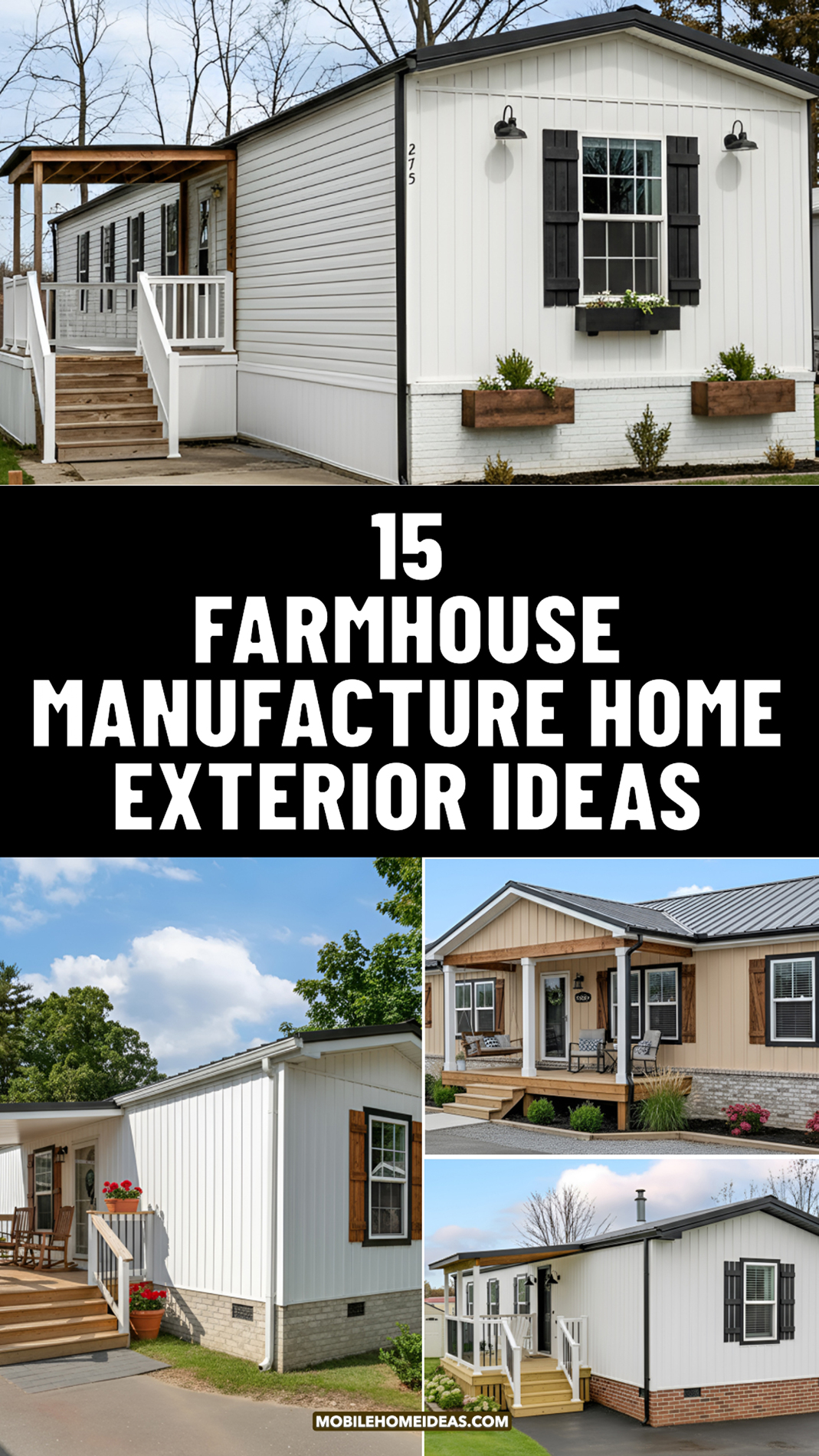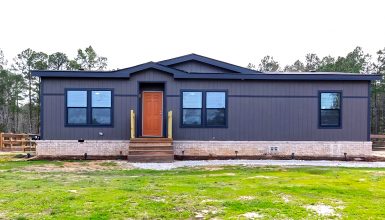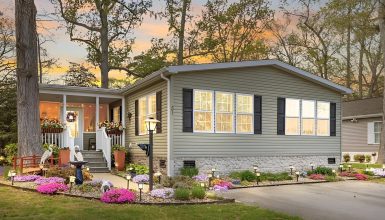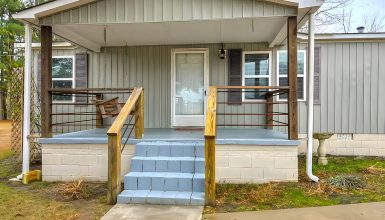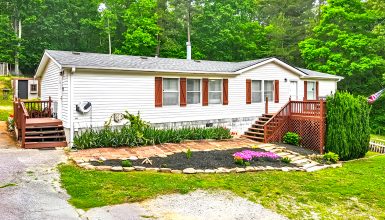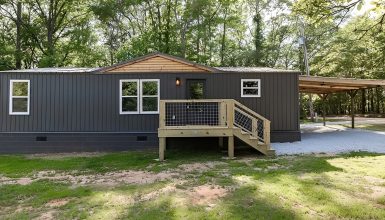
Want to make your manufactured home look more charming from the street? Farmhouse style is a beautiful way to do it. It mixes clean lines, cozy details, and timeless curb appeal. From white siding and black trim to warm wood accents and welcoming porches, these ideas can make any home feel fresh, inviting, and full of character. If you are dreaming about a prettier exterior, these farmhouse manufactured home design ideas are a great place to start.
1. Start With Classic White Siding for a Fresh Farmhouse Base
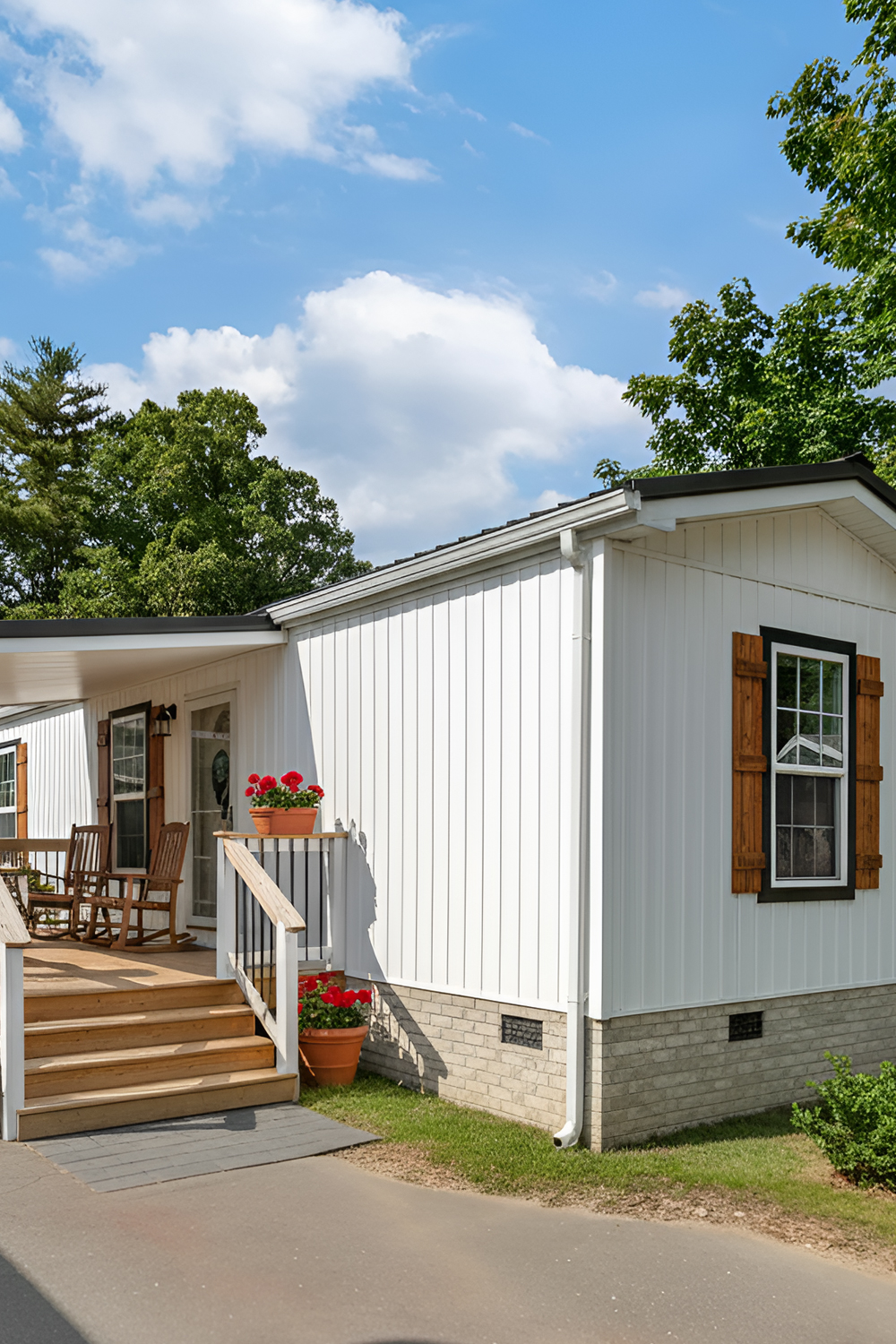
White siding is one of the easiest ways to give a manufactured home that farmhouse look. It feels bright, timeless, and clean. It also acts like a blank canvas, which makes every other exterior detail stand out.
On a manufactured home, white siding can help the structure feel larger and more refined. It reflects light well, so the whole exterior looks crisp during the day. It also pairs beautifully with wood accents, black fixtures, stone details, and soft landscaping.
The key is choosing the right white. A bright white creates a fresh modern farmhouse feel. A warmer creamy white feels softer and more traditional. Both work well, but the mood changes depending on the shade.
The design cue here is balance. When you use white siding, add contrast through trim, shutters, porch posts, or the front door. That contrast keeps the home from looking flat. It gives the exterior shape and depth, which is especially important on simpler manufactured home forms.
2. Add Black Trim for Bold Contrast and Instant Style
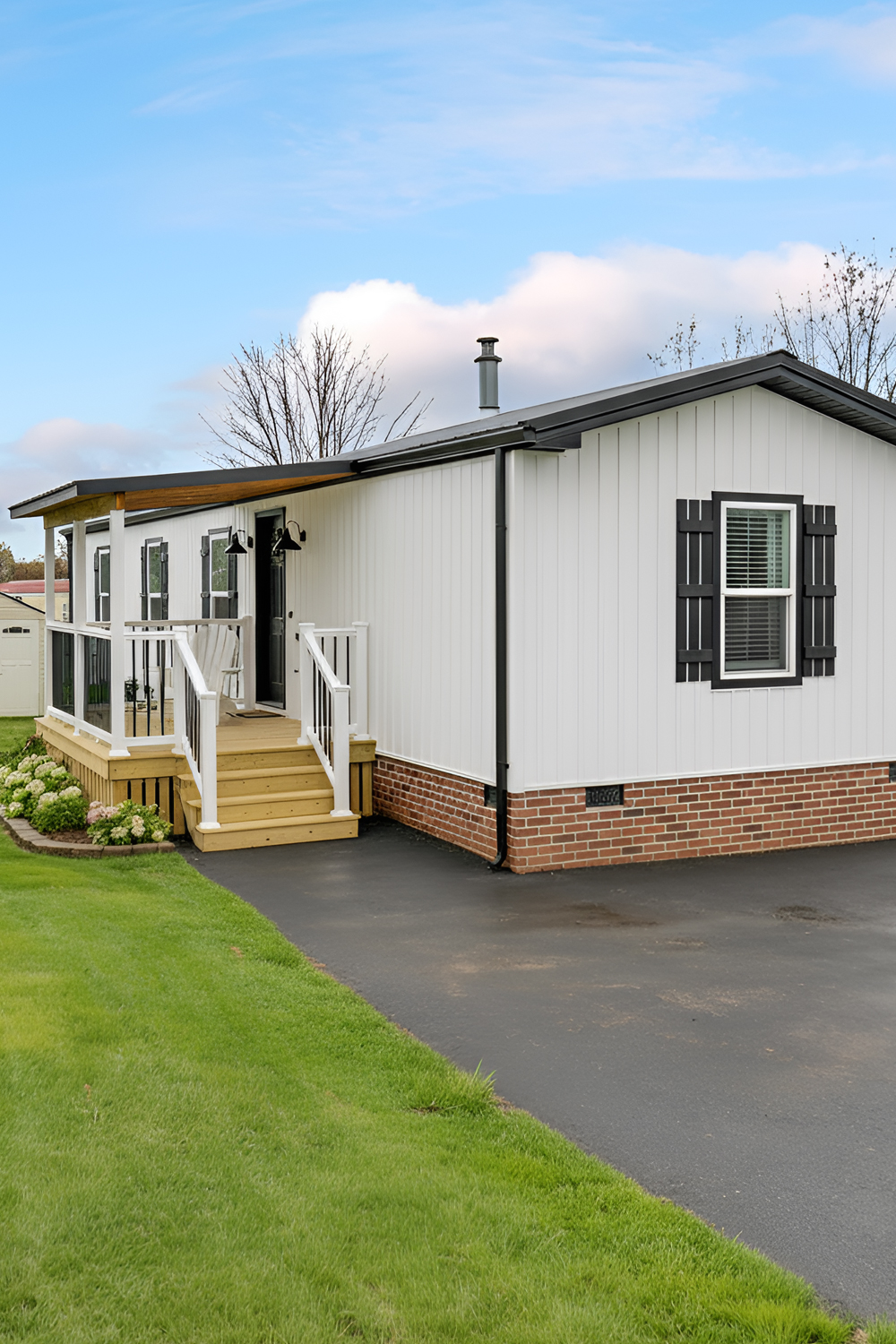
Few details make a farmhouse exterior pop like black trim. It adds sharp contrast against white or light siding, and it gives the home a tailored, designer look.
This works especially well around windows, doors, and roof edges. Even small touches of black can make the whole exterior feel more current. On manufactured homes, that contrast helps define the lines of the structure and adds visual interest without needing major changes.
Black trim also works with many farmhouse directions. It can feel rustic when paired with wood and stone. It can feel modern when paired with clean siding and simple landscaping. That flexibility makes it one of the smartest upgrades for this style.
The cue to watch is proportion. Use black in a way that frames the home rather than overwhelms it. Too much can feel harsh. Just enough creates depth and polish.
3. Build a Deep Front Porch That Feels Warm and Welcoming
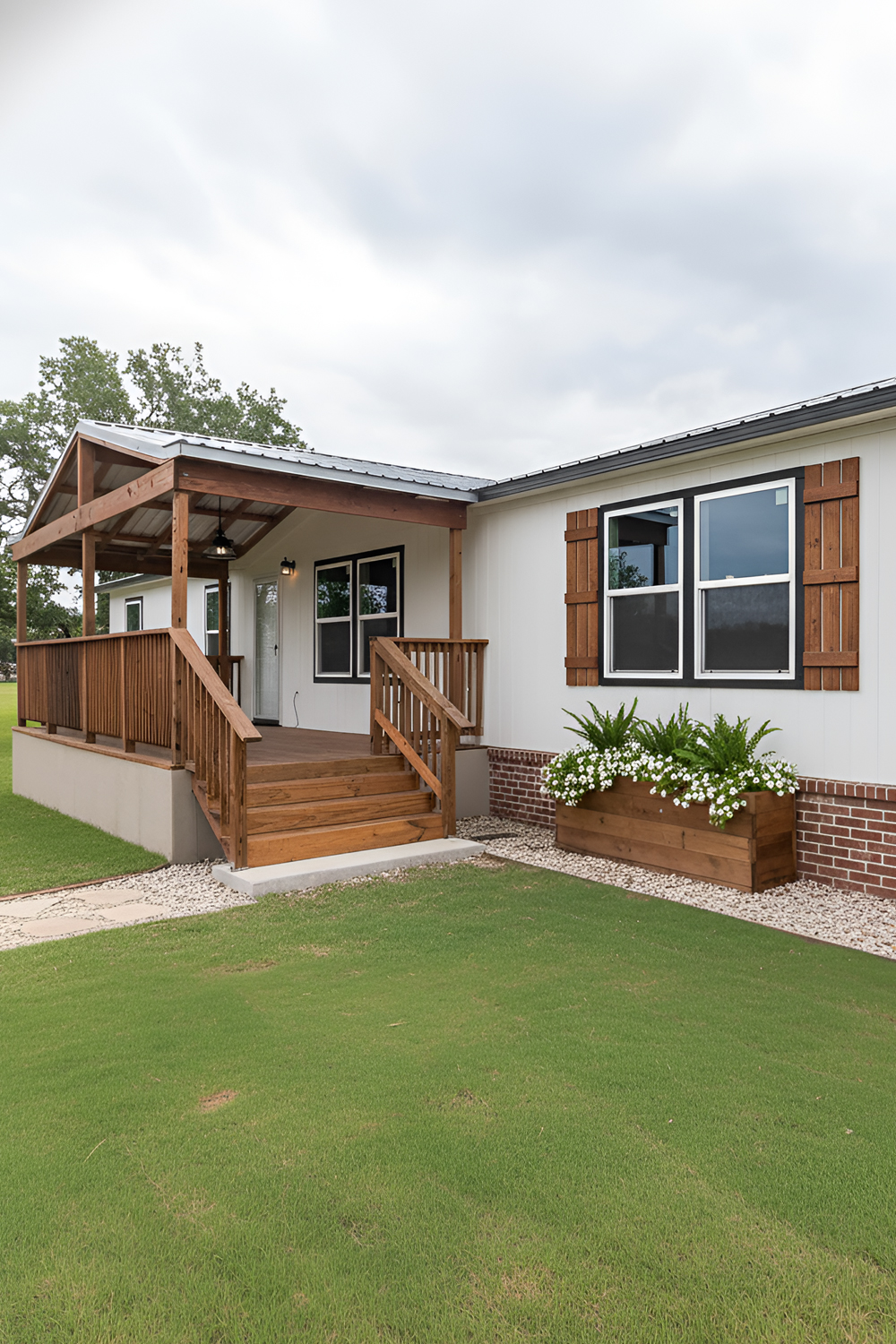
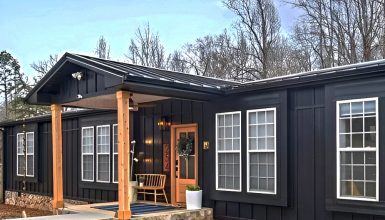
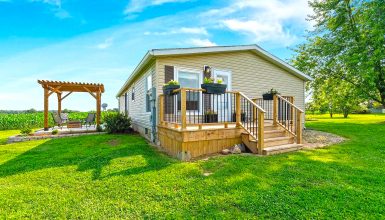
Nothing says farmhouse charm like a front porch. It turns the exterior into more than just a façade. It creates a living space. It makes the home feel friendly and grounded.
For a manufactured home, a porch can also help improve scale. It adds dimension to the front elevation and breaks up a long or flat exterior line. Even a modest porch makes a big difference.
A farmhouse-style porch often includes simple railings, square columns, painted wood floors, rocking chairs, lantern lights, and planters. The goal is comfort. You want the space to feel easy and usable, not overly decorated.
This idea works so well because it adds both function and style. It gives the home a strong focal point. At the same time, it creates a transition from outdoors to indoors, which makes the entry feel more special.
The cue here is layering. Start with the porch structure. Then add texture through furniture, lighting, and potted plants. That mix creates the relaxed farmhouse feeling people love.
4. Use Board and Batten for Texture and Vertical Interest
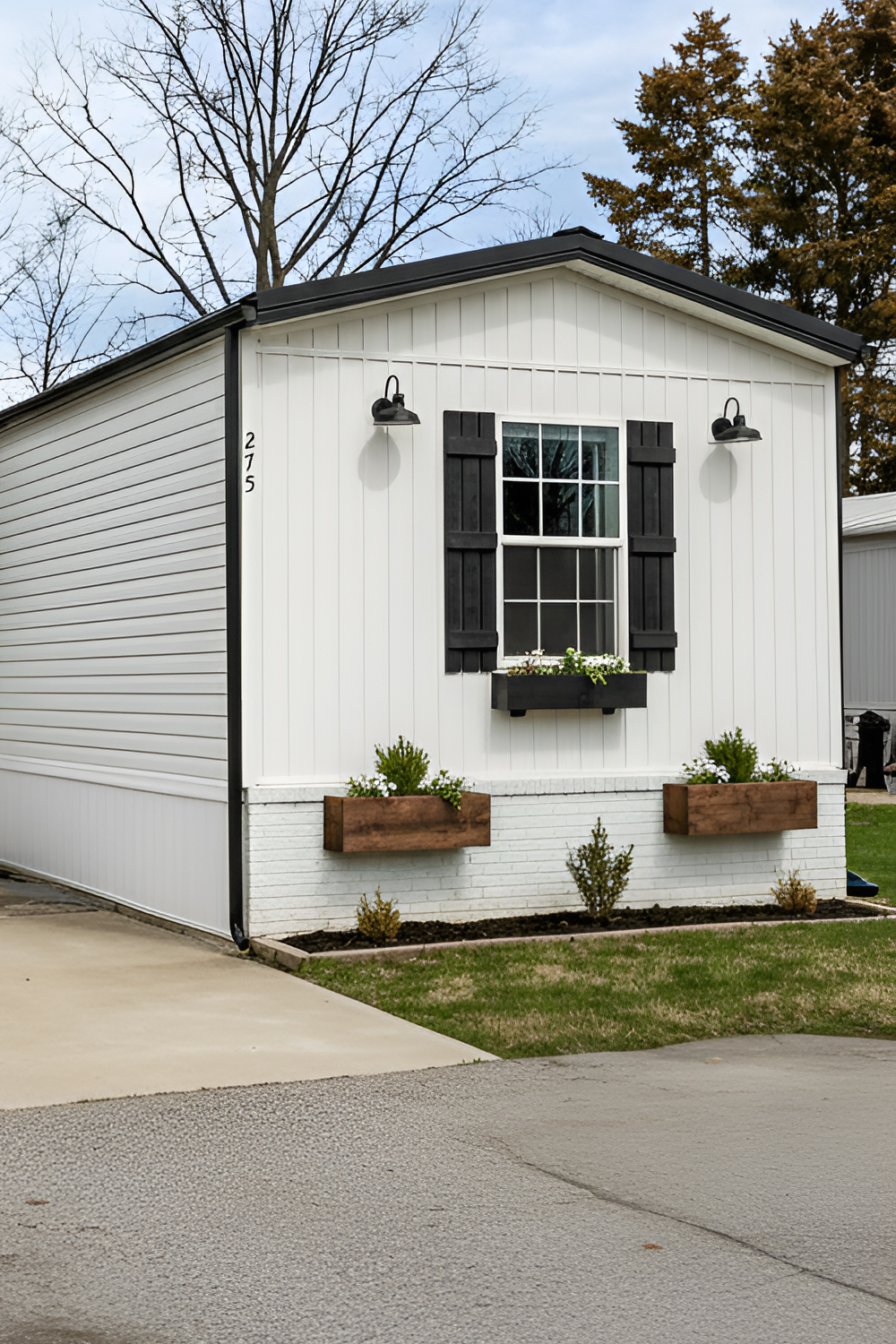
Board and batten siding is a farmhouse favorite for a reason. It brings texture, rhythm, and a handmade look to the exterior. It also adds vertical lines, which can make a manufactured home appear taller and more architectural.
You can use board and batten across the full exterior or only in accent areas like the front gable, entry bump-out, or porch wall. Even a small section can change the look of the home in a big way.
This siding style works best when you want to keep the exterior simple but not plain. It has enough detail to feel interesting, yet it still looks clean and classic. That makes it perfect for farmhouse design.
The cue is placement. Use board and batten where you want the eye to go. On the front of the home, it can highlight the entry and create a custom feel. On a gable, it can add just enough visual break to keep the exterior from feeling too horizontal.
5. Mix in Natural Wood Accents for Warmth and Character
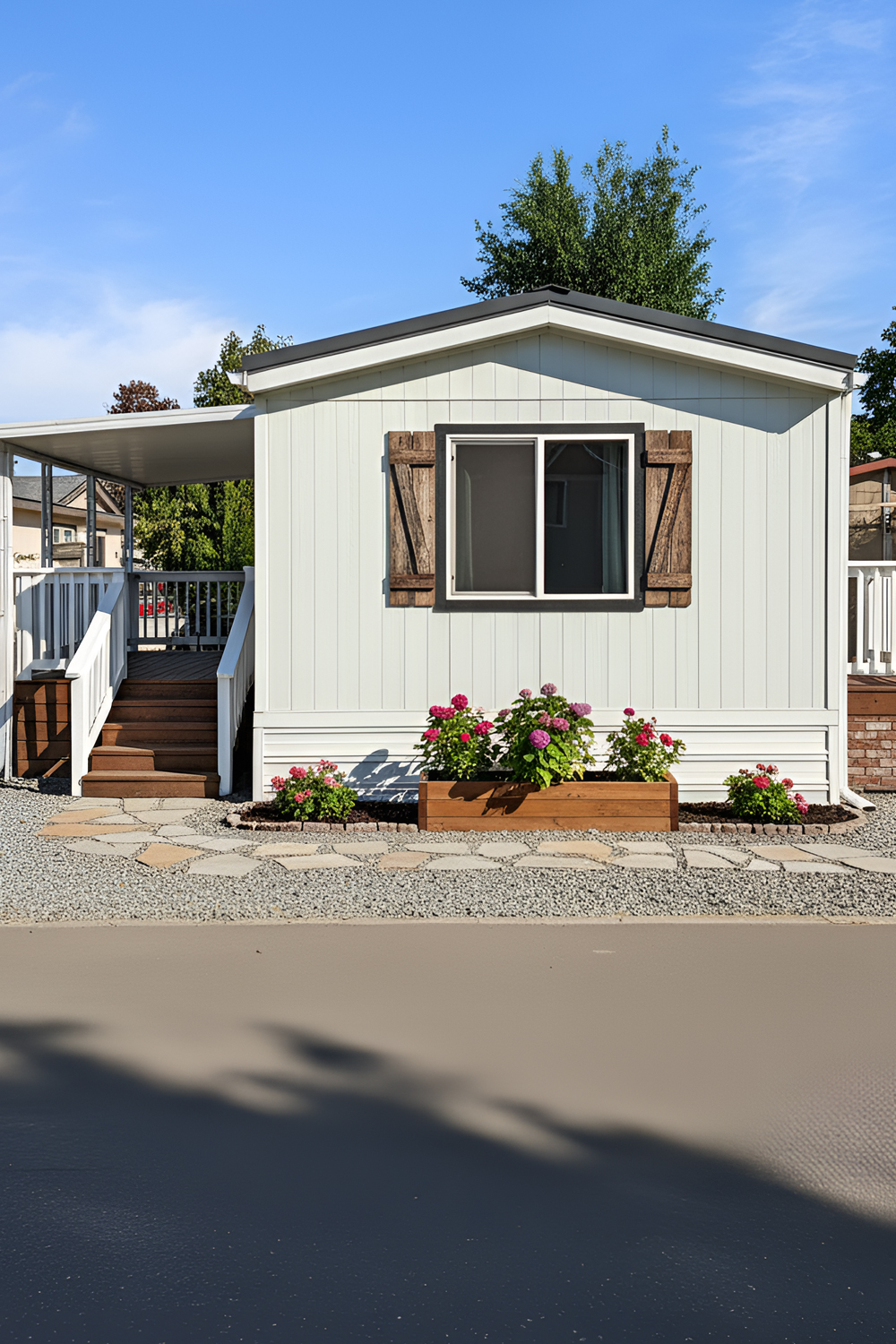
Farmhouse style looks best when it mixes clean finishes with natural materials. That is where wood accents come in. Wood softens the exterior. It adds warmth, age, and texture.
On a manufactured home, wood can appear in many ways. Think porch posts, shutters, gable brackets, window boxes, skirting details, or a stained front door. Even a small wood accent can make the home feel richer and more layered.
Lighter woods feel airy and modern. Dark stained woods feel rustic and grounded. Reclaimed or rough-textured wood adds extra farmhouse charm because it looks weathered and real.
The cue to focus on is authenticity. Choose wood finishes that feel natural rather than overly glossy. The best farmhouse exteriors have a relaxed look. They do not feel too perfect. That slight softness is what makes them inviting.
6. Create a Statement Front Door That Anchors the Whole Exterior
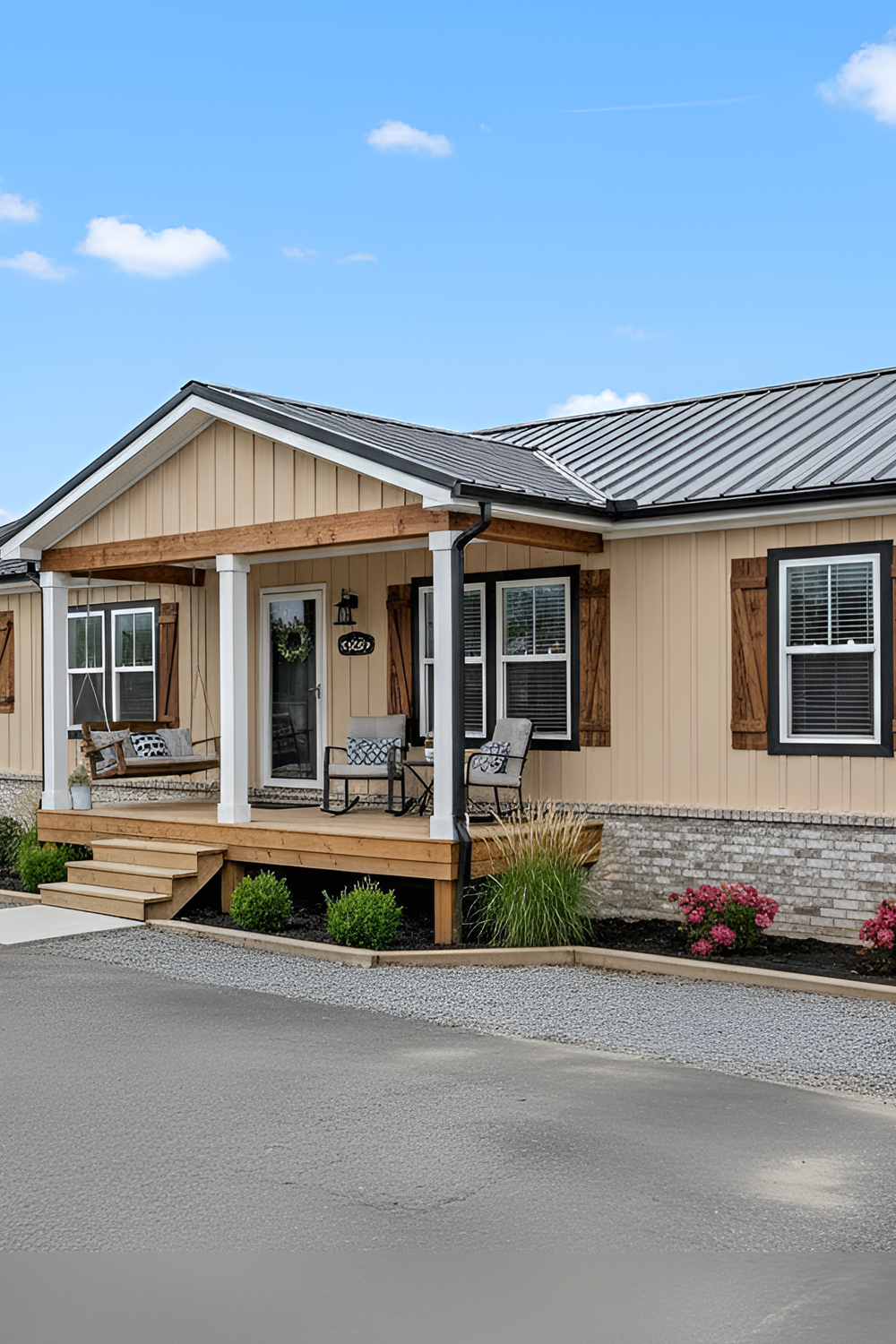
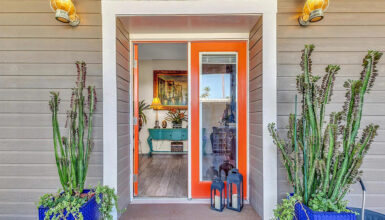
A front door can do a lot of heavy lifting on a farmhouse exterior. It becomes the focal point. It sets the tone. It gives the home personality before anyone even steps inside.
For farmhouse style, popular choices include black, deep green, muted blue, warm wood, or soft gray doors. A Dutch door can add extra charm. A door with simple glass panels can bring in light and make the entrance feel more open.
On manufactured homes, the front door often sits in a central spot, so giving it more presence can elevate the whole design. Add sidelights, a transom, or a bold frame color if the layout allows.
The cue here is contrast and scale. Make sure the door stands out from the siding. Then add simple details around it, like lantern sconces or planters, so the entry feels finished and intentional.
7. Include a Metal Roof for Rustic Farmhouse Appeal
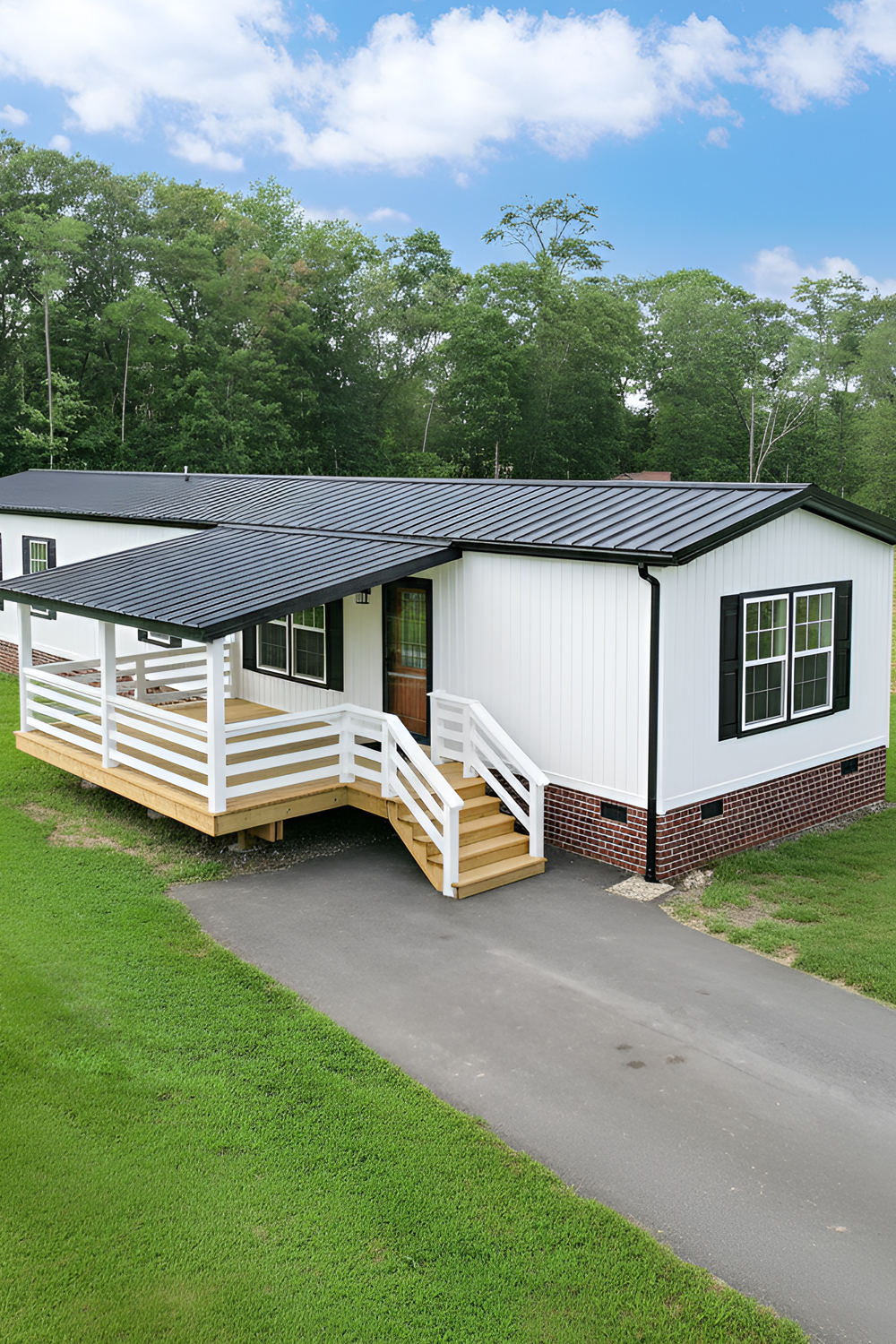
A metal roof gives a manufactured home that unmistakable farmhouse edge. It feels practical, sturdy, and full of country character. At the same time, it can look sleek and current.
Standing seam metal roofs are especially popular in modern farmhouse design. They create clean lines and bring subtle texture to the top of the home. A galvanized finish feels rustic. A black metal roof feels bold and modern. A soft gray roof feels classic and understated.
Beyond looks, a metal roof can also help the home feel more substantial. It adds a sense of permanence that works beautifully with farmhouse styling.
The cue is coordination. Choose a roof color that works with the siding, trim, and overall palette. The roof is a major visual feature, so it should support the rest of the design rather than compete with it.
8. Use Stone or Brick Skirting to Ground the Home
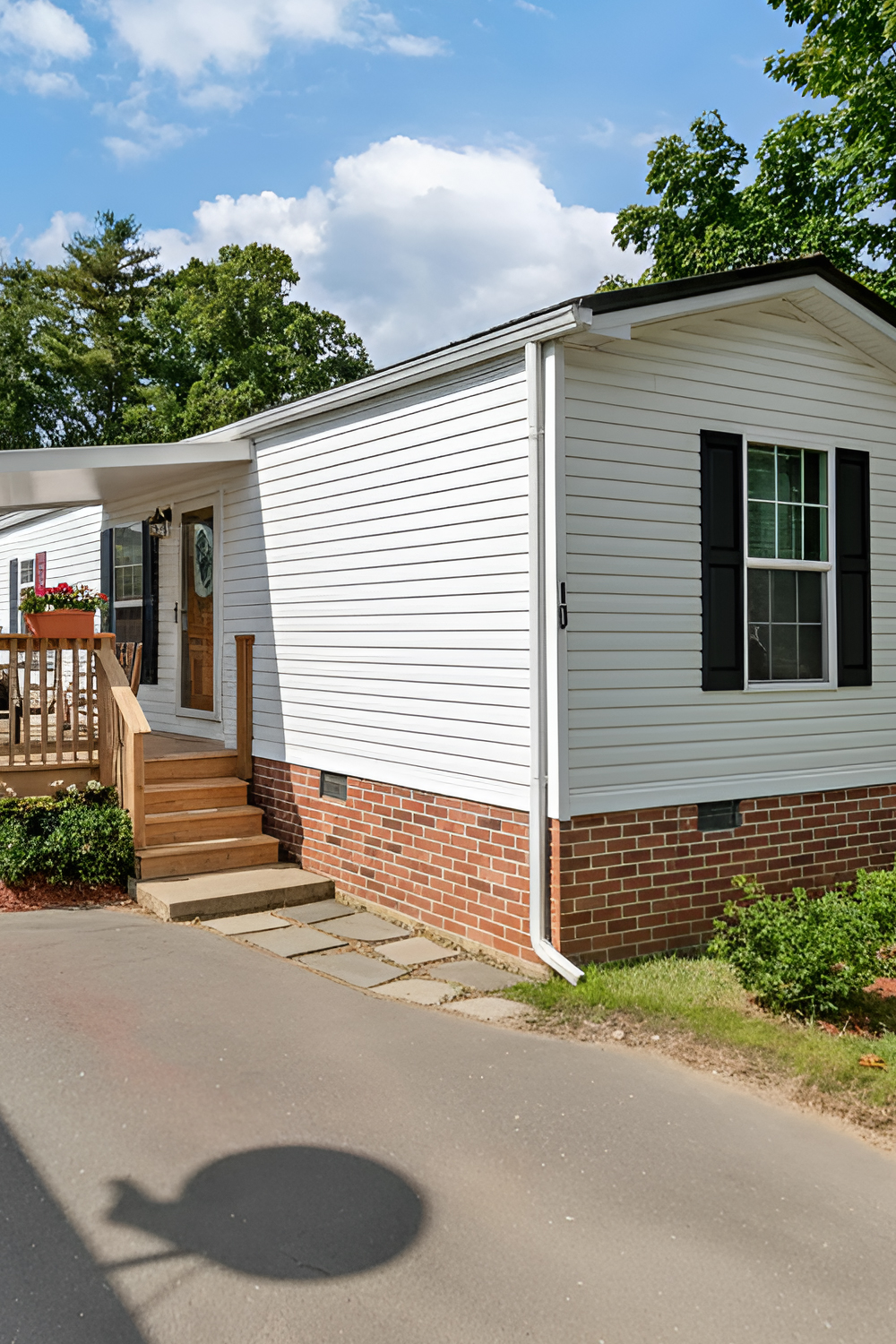
One of the smartest farmhouse exterior ideas for a manufactured home is upgrading the skirting. Standard skirting can look plain, but stone or brick-style skirting gives the home a stronger, more finished foundation.
This detail helps the house feel grounded. It adds weight to the bottom of the structure and makes the exterior look more custom. It also brings in texture, which is important when the main siding is smooth or simple.
Stone works especially well for rustic farmhouse styles. Brick suits both traditional and modern farmhouse looks. Faux panels can also work if they have realistic texture and color variation.
The cue here is realism. Choose tones that look natural and match the rest of the exterior palette. Skirting should support the design, not distract from it. When done well, it can make the whole home feel more elevated.
9. Install Oversized Barn Lights for a Charming Farmhouse Glow
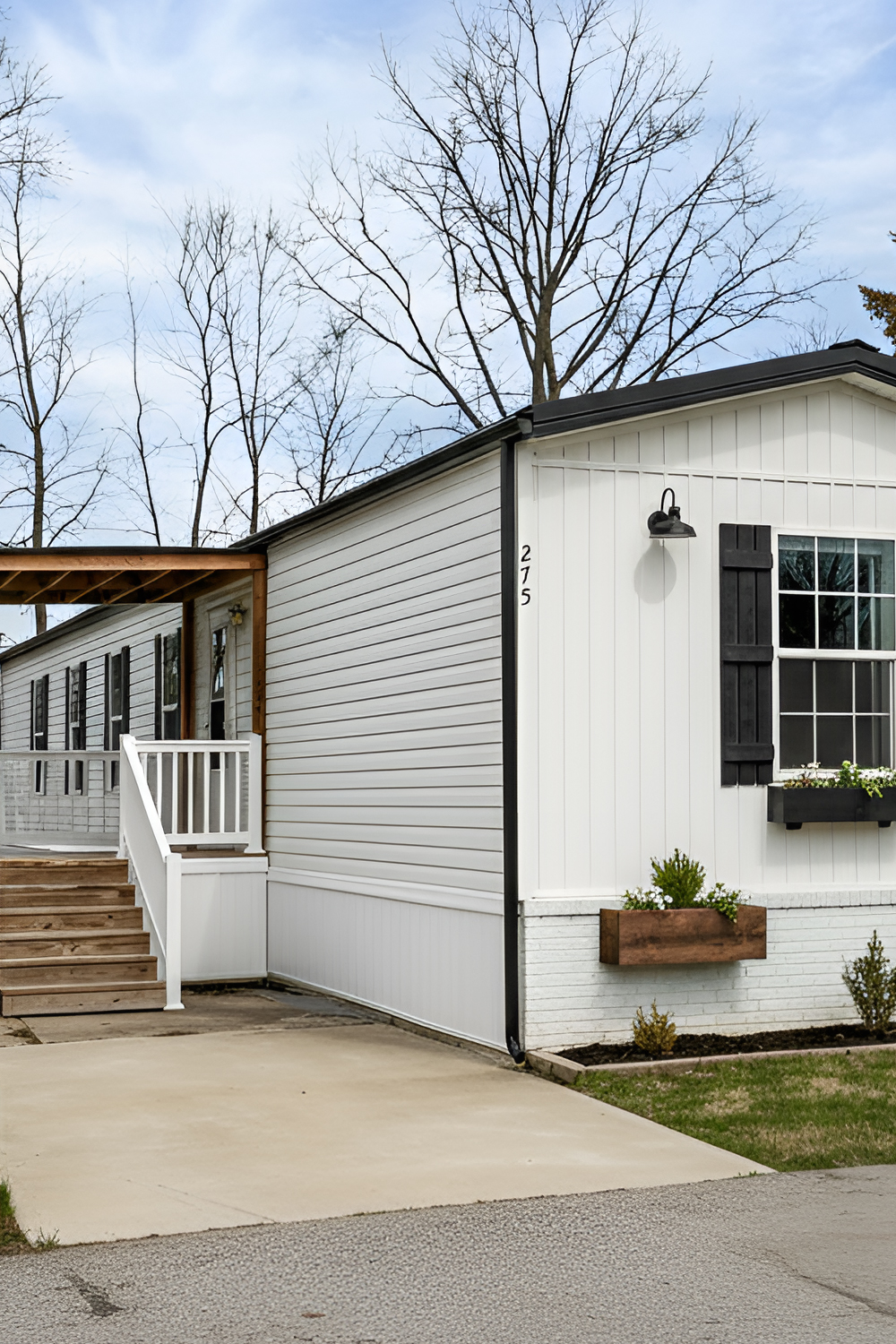
Lighting shapes the mood of an exterior just as much as color or siding. Farmhouse lighting often features gooseneck barn lights, black lantern sconces, or simple metal fixtures with a vintage touch.
These lights look especially good over porches, beside front doors, above garage areas, or near rear patios. They add charm during the day and warm glow at night.
On a manufactured home, the right lighting also helps define important zones. It draws attention to the entry, creates symmetry, and makes the exterior feel more complete.
The cue is scale. Do not go too small. Farmhouse fixtures usually have presence. Larger lights feel more intentional and look better from the street. Just make sure they still fit the size of the home.
10. Add Window Shutters That Feel Simple and Honest
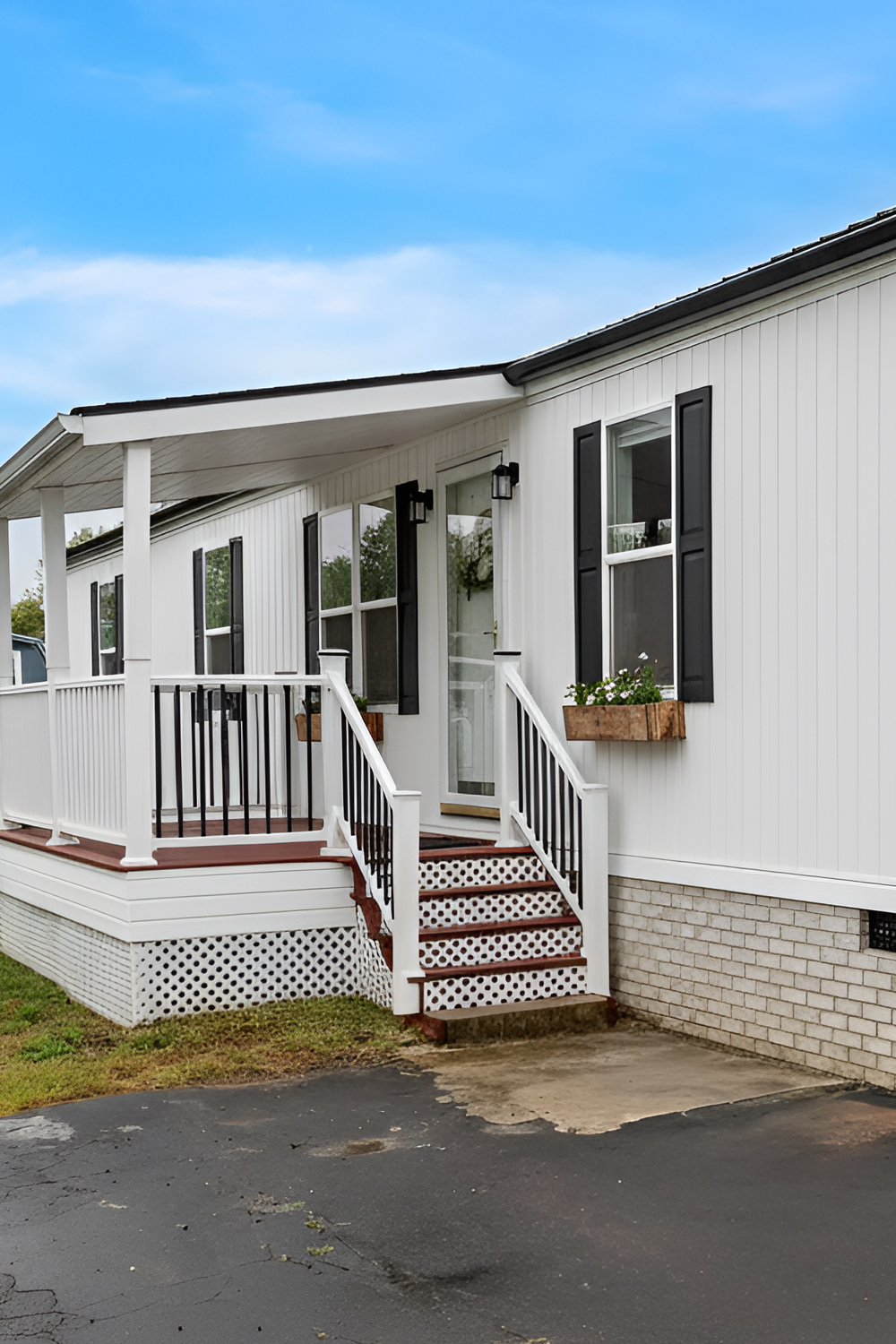
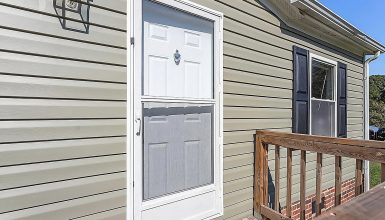
Window shutters can give a farmhouse manufactured home extra charm, especially when the exterior feels a little too plain. They frame the windows and bring in that classic country-house detail people love.
The best farmhouse shutters look simple. Think flat panels, board-and-batten styles, or basic louvered designs in black, wood, or soft muted tones. Decorative shutters can work well, but they should still feel believable and proportional to the window size.
This detail helps break up large siding expanses and adds rhythm across the front of the home. It can also make windows look more substantial.
The cue is restraint. Avoid anything too ornate. Farmhouse style looks best when details feel useful, honest, and easy. That plain beauty is part of the charm.
11. Frame the Entry With Planters and Easy Landscaping
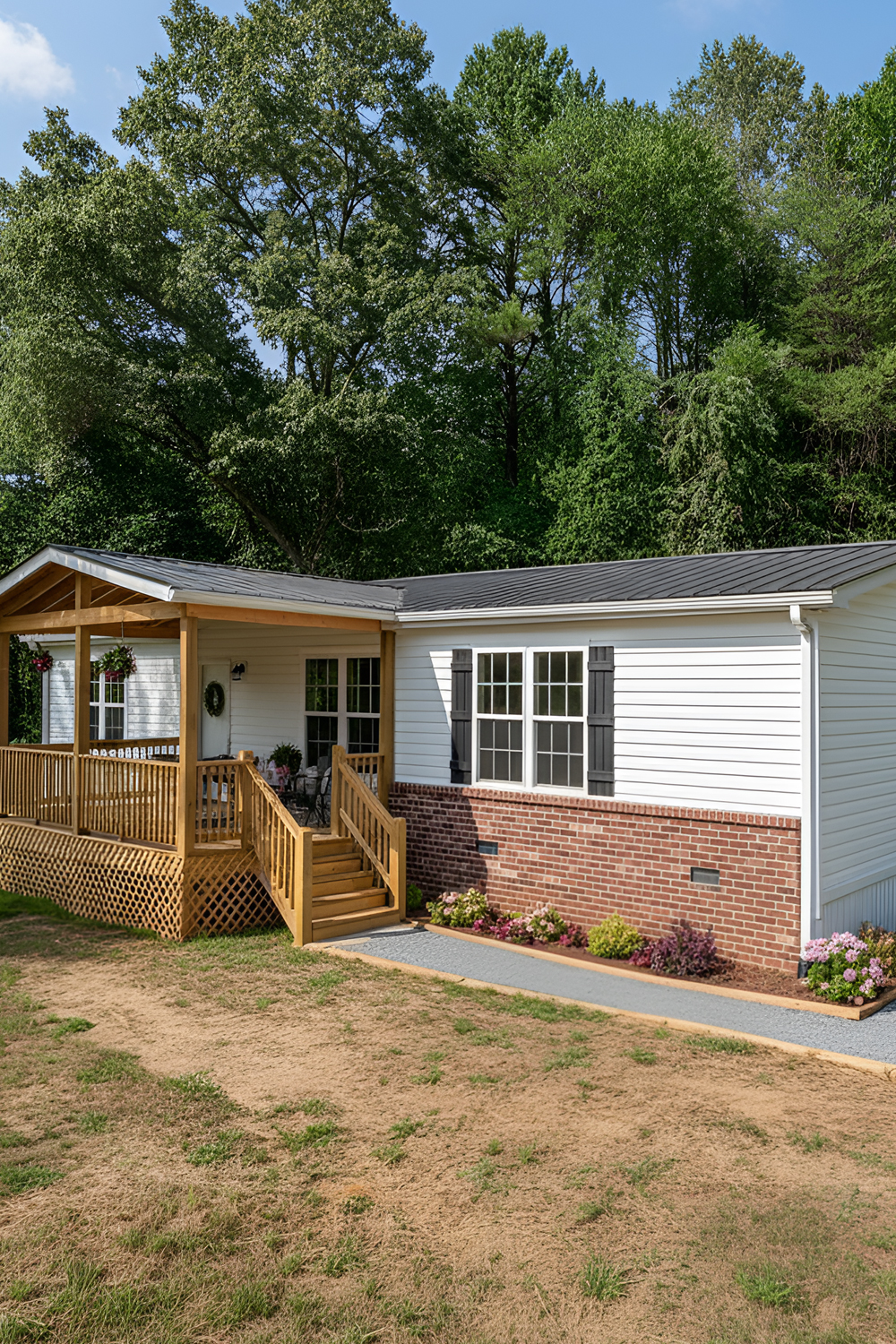
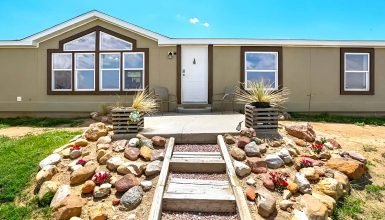
Landscaping can completely change the look of a manufactured home exterior. It softens edges, fills empty areas, and makes the whole property feel cared for. For farmhouse style, the best landscaping feels natural and relaxed.
Large planters by the front door are a great place to start. Use simple containers in black, galvanized metal, terracotta, or weathered wood tones. Fill them with ferns, olive branches, lavender, boxwoods, or seasonal flowers.
Around the home, think about gravel paths, low shrubs, ornamental grasses, hydrangeas, and simple garden beds. The look should feel tidy but not stiff.
The cue here is softness. Use greenery to make the exterior feel settled into the landscape. Even if the architecture is simple, plants can make the home feel layered and full of life.
12. Paint the Exterior a Soft Greige, Cream, or Sage for a Softer Farmhouse Feel
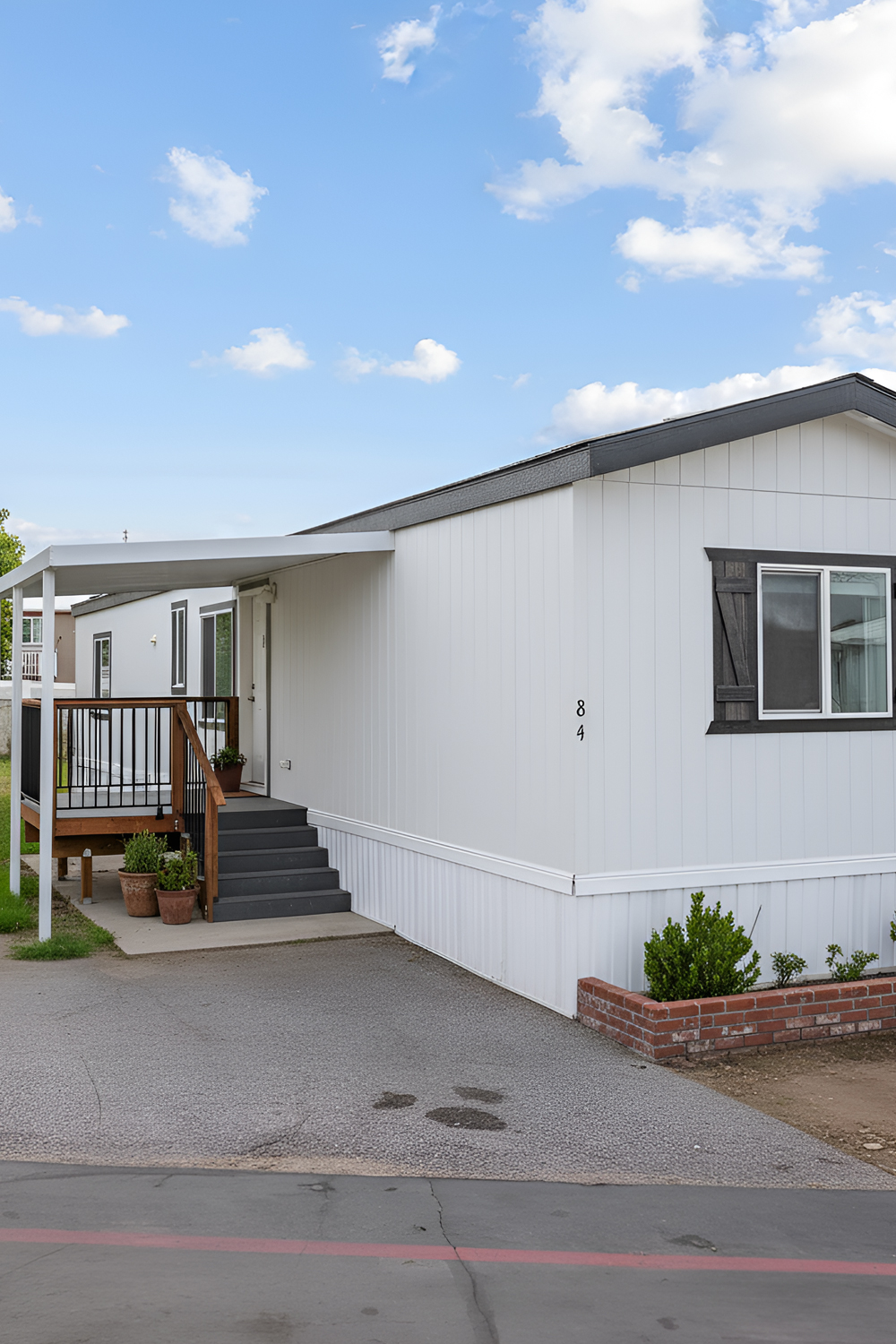
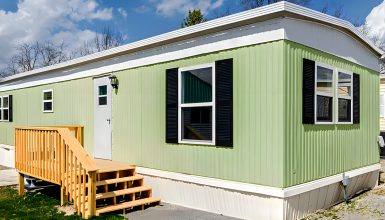
White may be the classic farmhouse choice, but it is not the only one. Soft greige, creamy beige, pale taupe, and muted sage can all create a beautiful farmhouse exterior with a warmer, gentler mood.
These shades work especially well if you want the home to blend into a natural setting. They feel calm and understated. They also pair nicely with wood posts, stone skirting, and black or bronze lighting.
On a manufactured home, these softer colors can make the exterior feel less stark and more connected to the landscape. They are also forgiving in bright sun and dusty settings.
The cue is tone-on-tone layering. When using a muted body color, play with slightly darker trim, natural textures, and planted borders so the design still has depth.
13. Add Gable Details to Create a More Custom Look
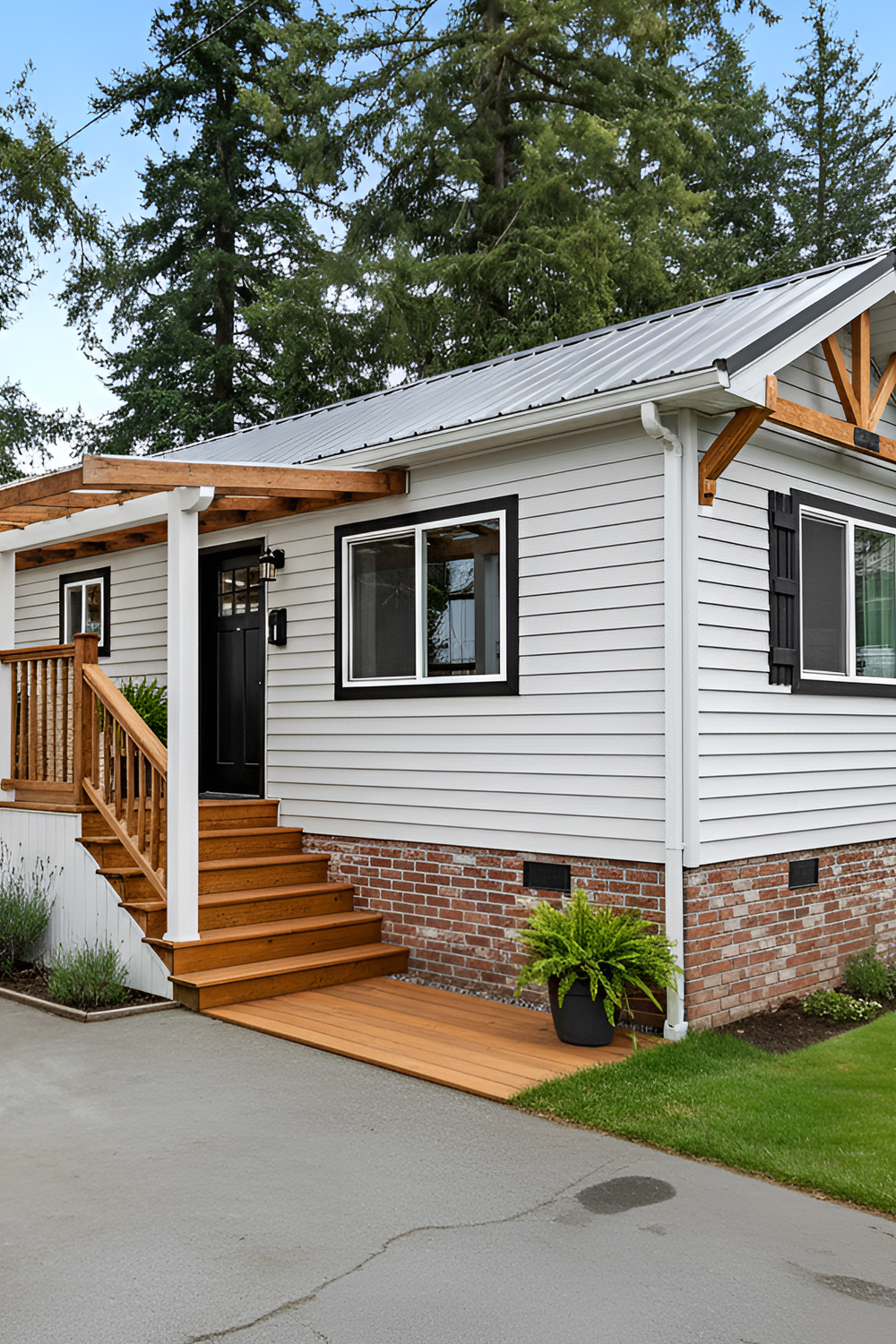
Some manufactured homes can look very linear from the outside. Adding detail to the gables helps solve that. It gives the roofline more character and makes the exterior feel more architectural.
Farmhouse-style gable details might include decorative trusses, wood brackets, vent covers, board-and-batten panels, or small accent windows. These features draw the eye upward and create a more custom-built appearance.
Even if the home has a simple shape, gable accents can make it feel thoughtfully designed. They also help break up wide roof areas and add visual structure.
The cue here is focus. Choose one or two gable details that match the rest of the home. Too many accents can clutter the design. A few strong elements will feel cleaner and more farmhouse-inspired.
14. Use Gravel, Brick, or Paver Walkways to Add Rustic Texture
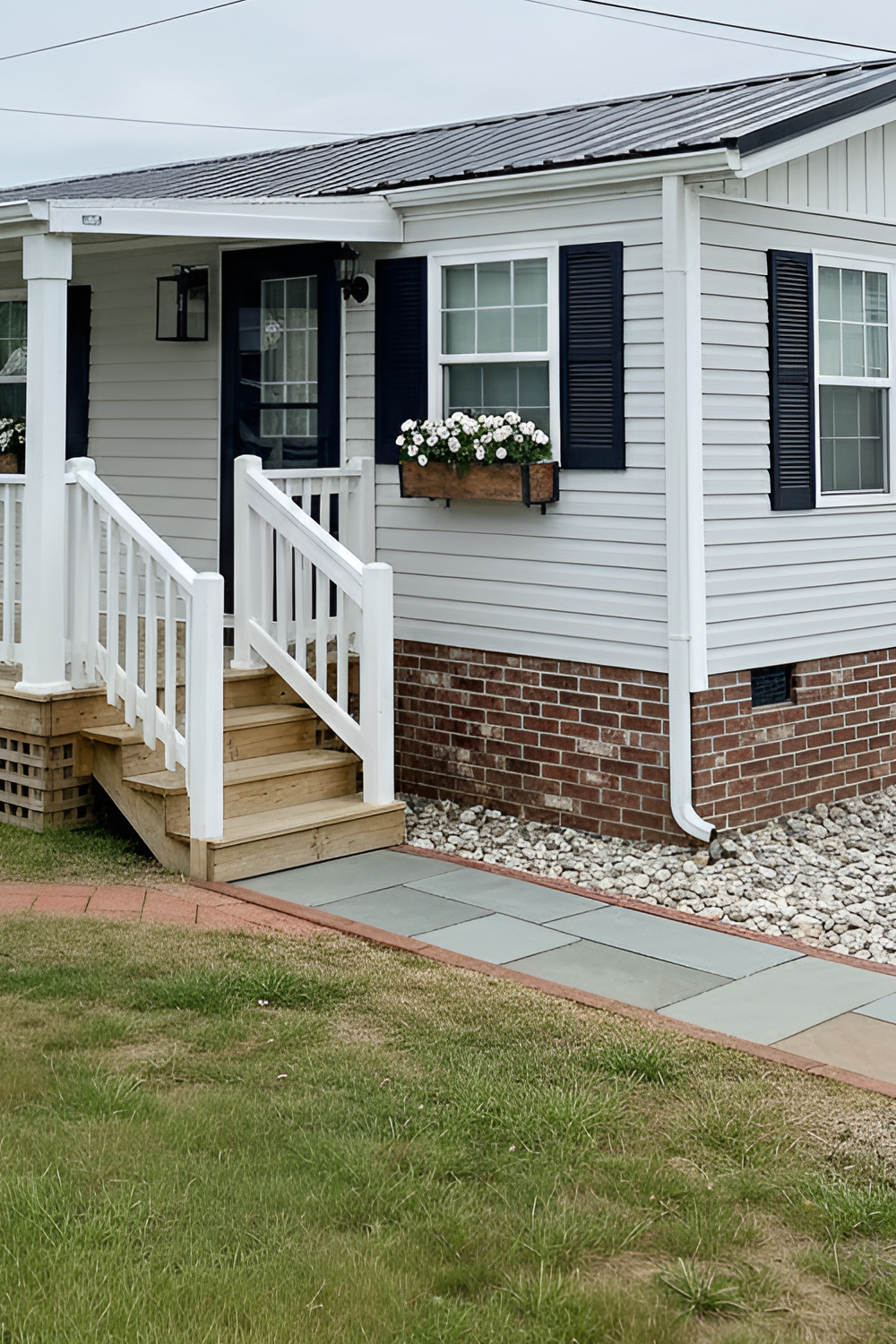
A farmhouse exterior is not just about the house itself. The approach matters too. A gravel drive, brick walkway, or paver path helps set the tone before anyone reaches the door.
These materials feel earthy and grounded. They suit farmhouse style because they are simple, useful, and full of texture. They also work well with porches, planters, and wood accents.
For a manufactured home, improving the walkway can make the whole property feel more intentional. It turns a basic entrance into a more designed experience. Even a short path lined with plants can create a lovely first impression.
The cue is natural imperfection. Farmhouse style welcomes a little texture and weathering. Materials that look slightly aged often feel more authentic than anything too polished.
15. Keep the Overall Look Simple, Balanced, and Collected
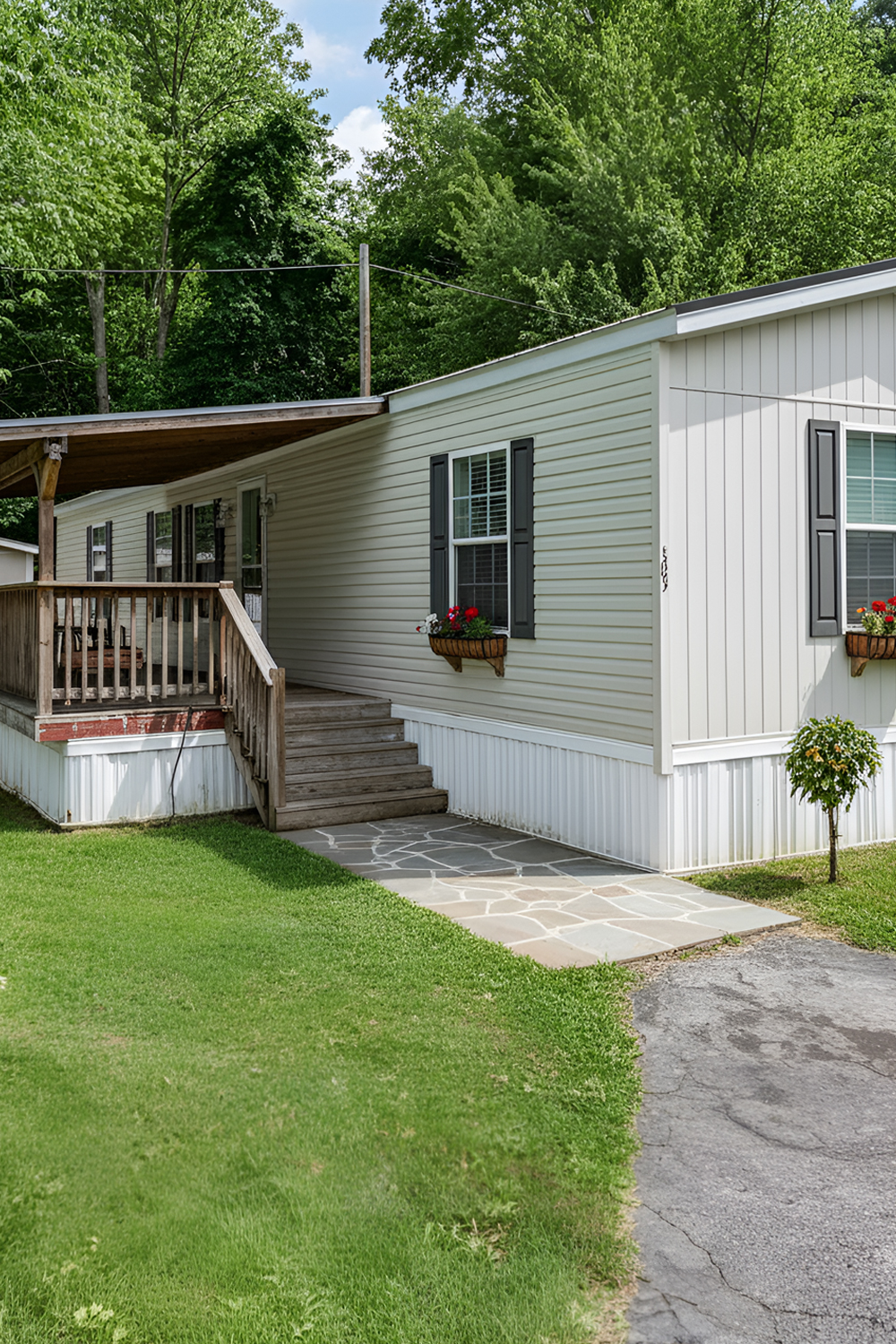
The best farmhouse manufactured home exteriors do not try too hard. They feel collected rather than crowded. They mix practical features with warm details. They feel simple, but never boring.
That is an important idea to remember. Farmhouse design is not about piling on every rustic feature at once. It is about choosing a few strong elements and letting them work together. Maybe that means white siding, black trim, a porch, and wood accents. Maybe it means sage siding, stone skirting, barn lights, and a warm wood door.
The real cue is cohesion. Every detail should feel like it belongs to the same story. The siding, roof, lighting, porch, and landscaping should all support one another. When that happens, the home feels calm and complete.
Conclusion
A farmhouse manufactured home exterior should feel simple, warm, and welcoming. The best designs use a few strong details that work together, not too many elements all at once. A crisp color palette, natural textures, cozy lighting, and thoughtful landscaping can completely change the way your home looks and feels. With the right mix of charm and function, your exterior can feel polished, timeless, and full of personality.