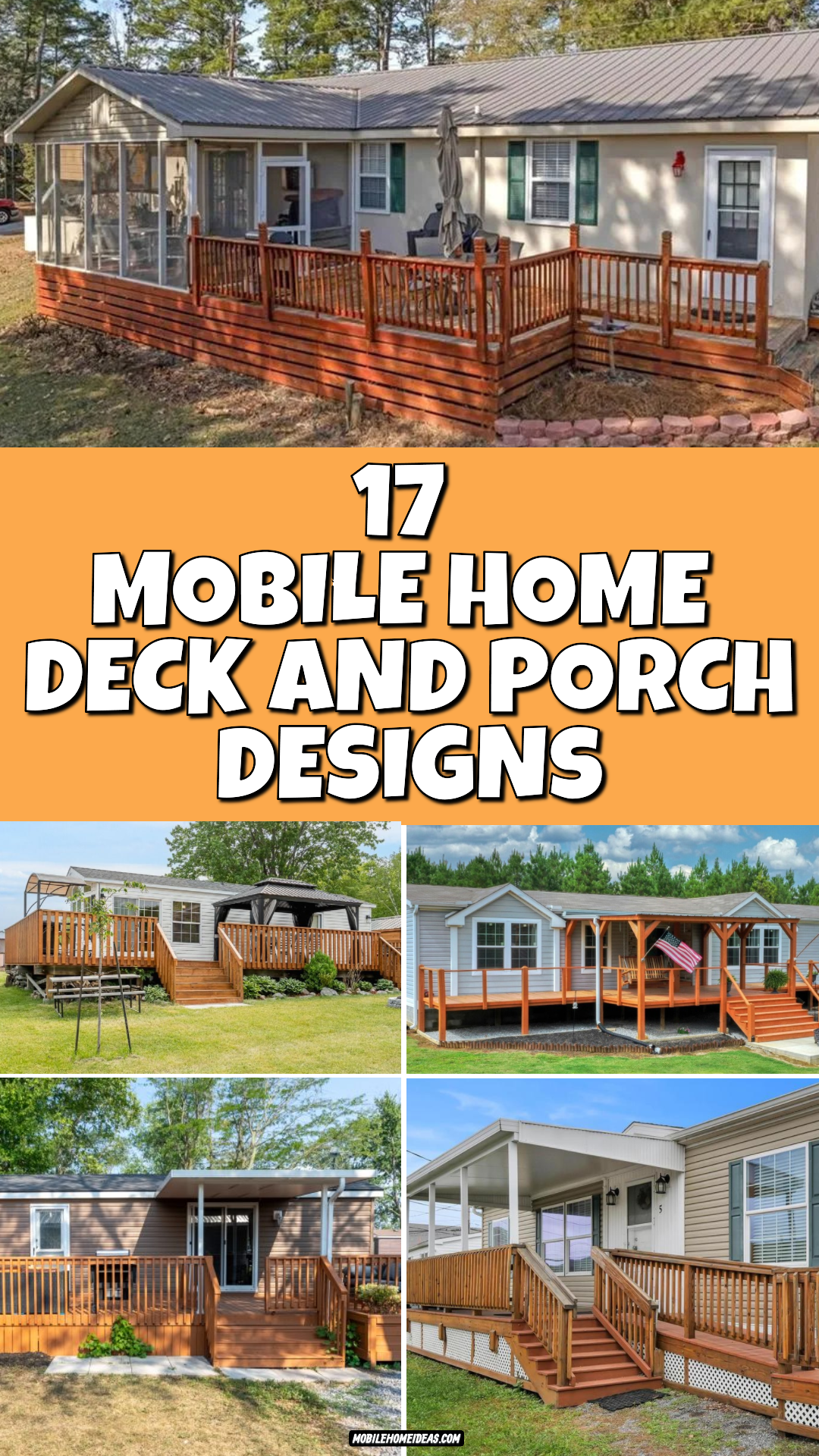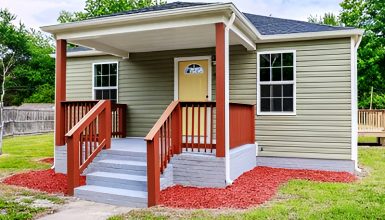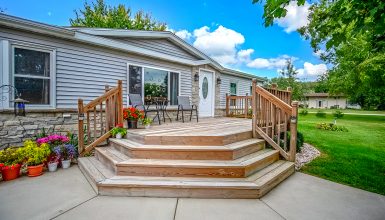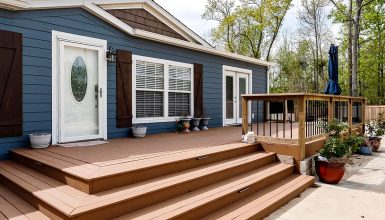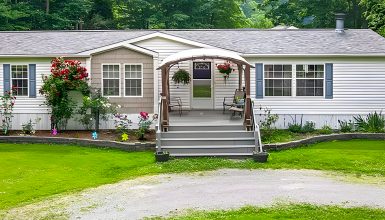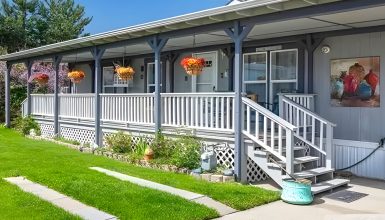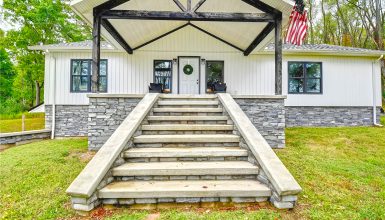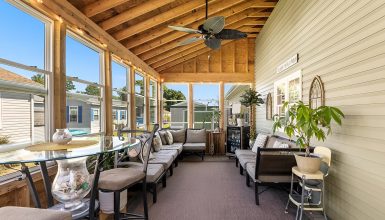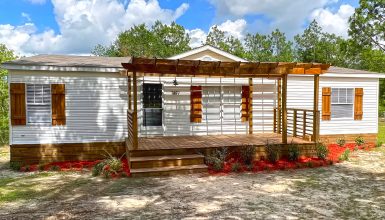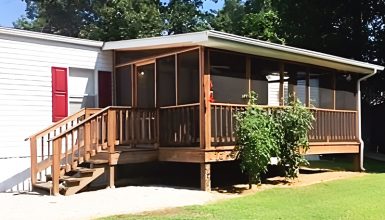
What if your mobile home had the kind of front porch that makes people slow down and smile? The kind that says, “Come on in,” before you even touch the doorknob. That’s the magic of a good deck. It turns a plain entry into a welcome. It also adds a whole new “room” outside.
In this guide, you’ll see 17 real, doable deck and porch ideas. Some go big with wraparound space. Others stay small but smart. Along the way, you’ll pick up easy cues you can copy, like where to place stairs, how to add shade, and which railing styles keep things looking clean. So, if you’re ready to make your home feel bigger and more inviting, let’s jump in.
1. The “Two-Zone” Entertaining Deck (Gazebo + Sun Deck)
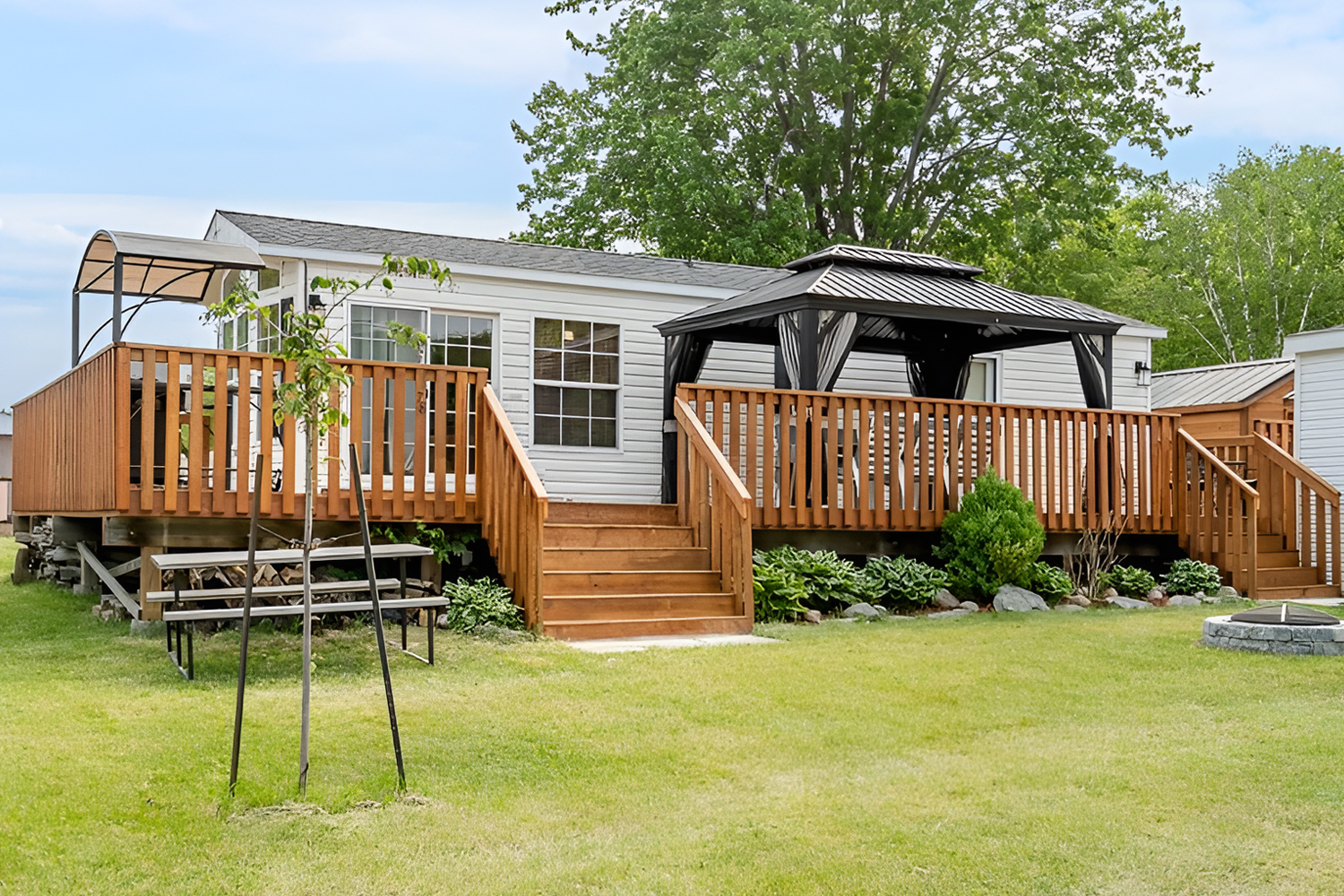
This setup feels like an outdoor floor plan. You get a sunny deck on one side and a shaded hangout on the other. That split matters. It lets you host in any weather, and it keeps the deck from feeling like one big, empty platform.
The center stairs create a clear “front door moment,” too. Guests know where to go. Meanwhile, the matching wood tone ties the whole thing together, so it looks built-in, not added-on.
Design cues to copy:
- Two separate deck zones for sun and shade
- A gazebo or canopy over the “conversation” area
- Wide center stairs that feel easy and inviting
- Simple vertical baluster rails for a clean look
- Low plantings and rocks under the deck for a finished edge
2. The Long Wrap Deck With a Covered Outdoor Room
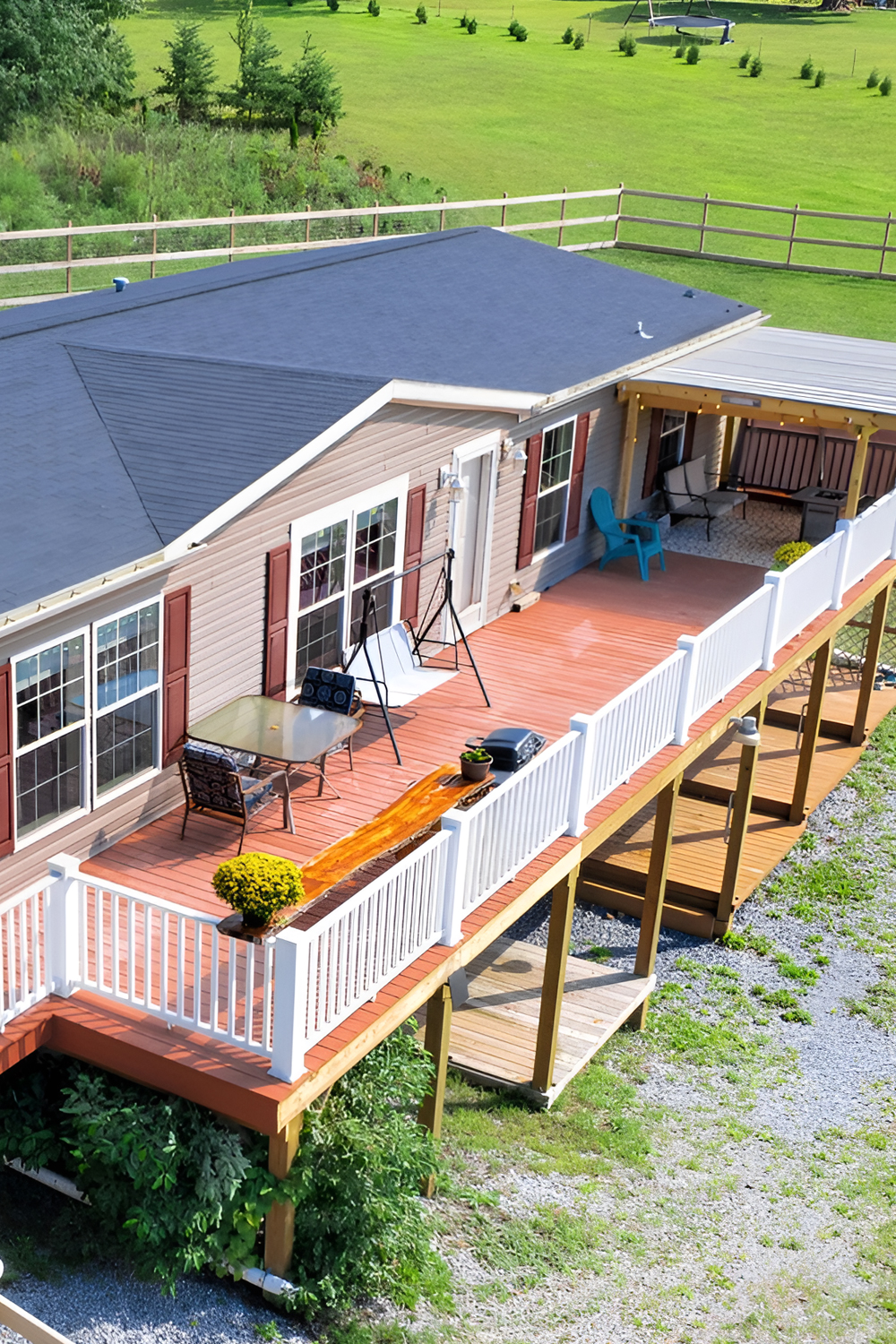
This deck is all about lifestyle. It runs along the side, so it works like an outdoor hallway. You can step outside from multiple doors and land on solid, usable space.
The white railing gives the deck a crisp, cottage feel. Plus, it boosts safety without blocking the view. Then, the covered section at the end acts like an outdoor room. It’s perfect for dining, lounging, or a grill station that stays dry.
Because the deck sits up high, the posts feel strong and steady. The gravel border below also helps with splash-back and mud, which keeps the underside cleaner.
Design cues to copy:
- A long deck run for “walk-out” living
- Bright white rails to sharpen the look
- A roofed end zone for shade and rain cover
- Stairs that land on gravel for easy drainage
- Outdoor furniture grouped like a living room
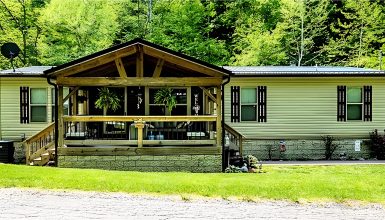
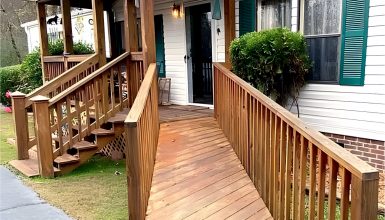
3. The Front Porch With a Timber Frame Welcome
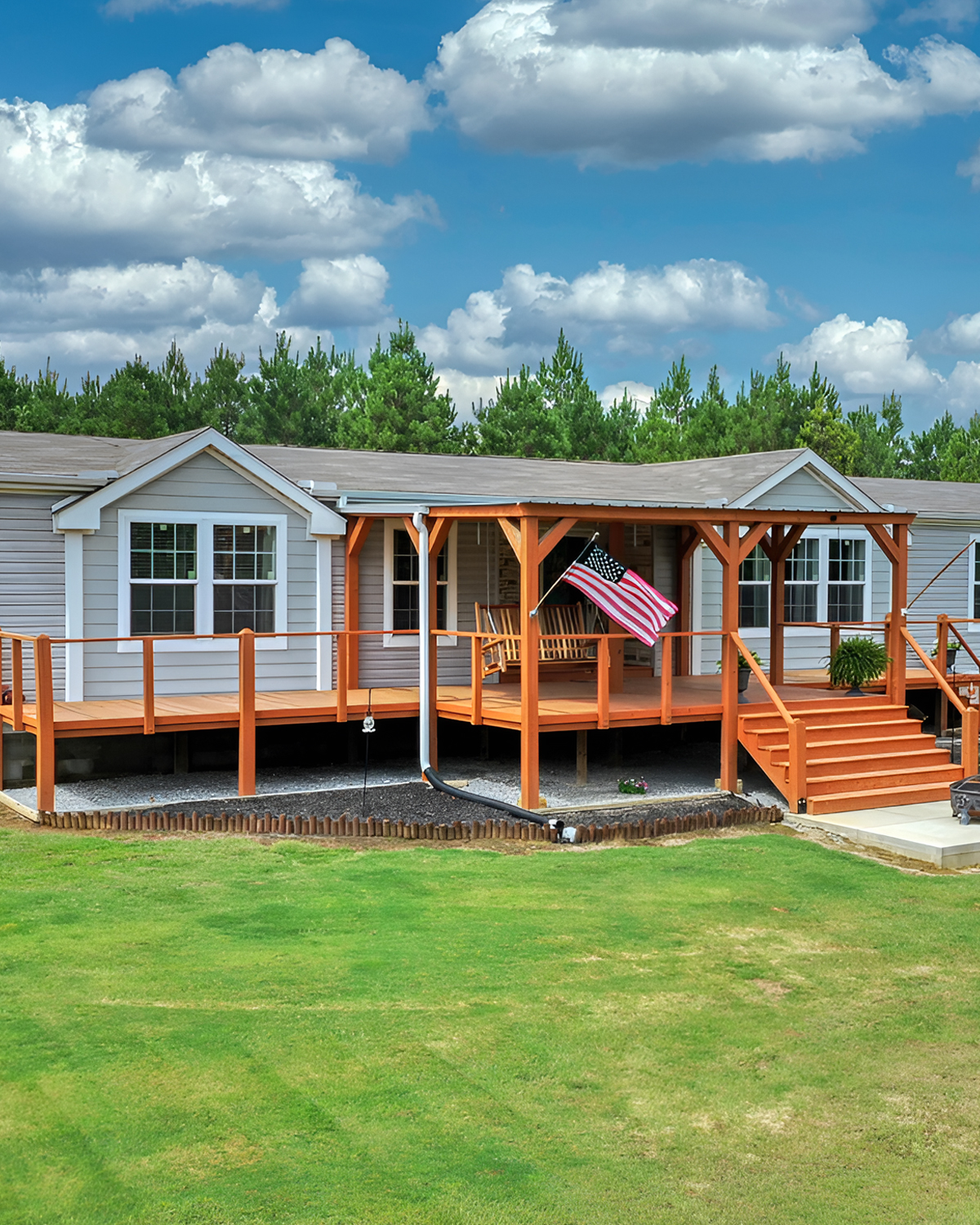
This design nails that “real house” look. The covered entry makes the front door feel important. It also adds comfort. You can stand under cover while you unlock the door. You can sit outside even on a drizzly day.
The wood posts and beams warm up the siding fast. And the porch roof creates height and charm without a huge build. The open rail sections keep it airy, so the home still feels bright.
The stairs sit front and center, which gives the porch a classic, friendly layout. Add a flag, a rocker, or a hanging fern, and you’ve got instant curb appeal.
Design cues to copy:
- A small roof over the entry for a “porch” feel
- Warm wood posts and beams for contrast
- Wide steps that feel steady underfoot
- Open rails that don’t block light
- Gravel or stone below the deck to reduce weeds
4. The Cozy Gable Porch With an Easy Access Ramp
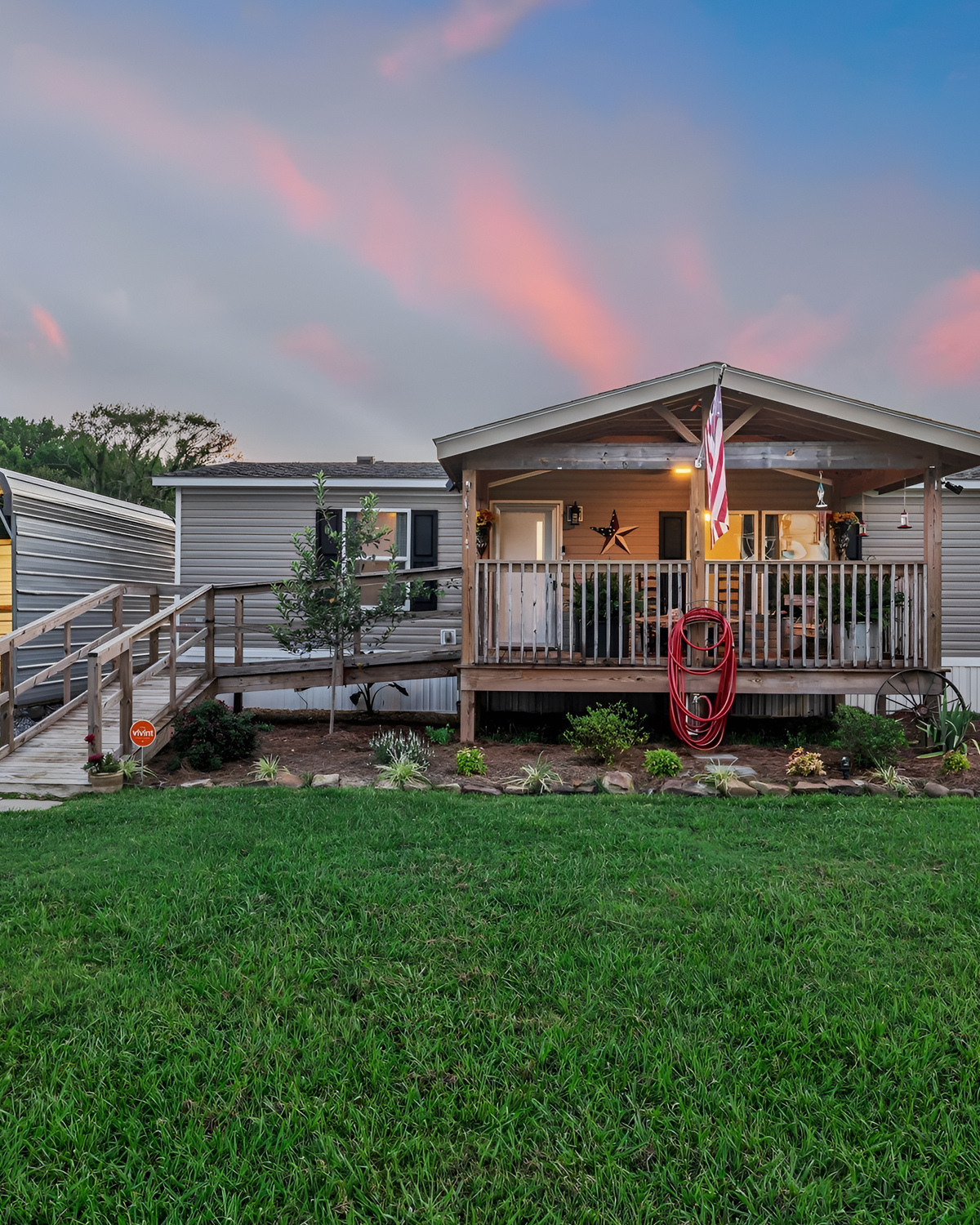
This one feels like a little farmhouse porch. The gable roof adds charm right away. It also makes the porch feel like a true outdoor room, not a tiny stoop.
The ramp is the smartest part. It creates smooth access for strollers, carts, and anyone who wants fewer steps. And because the ramp connects cleanly to the porch, it looks planned, not patched on later.
The landscaping finishes it off. The curved rock border and low plants soften all the straight lines. That balance makes the whole front feel calm and welcoming.
Design cues to copy:
- A gable roof for instant “home” character
- A ramp with rails for safe, daily ease
- Warm porch lighting for night-time curb appeal
- Simple wood balusters for a classic look
- A curved planting bed to soften the base
5. The Modern Flat-Canopy Entry Deck With Built-In Planters
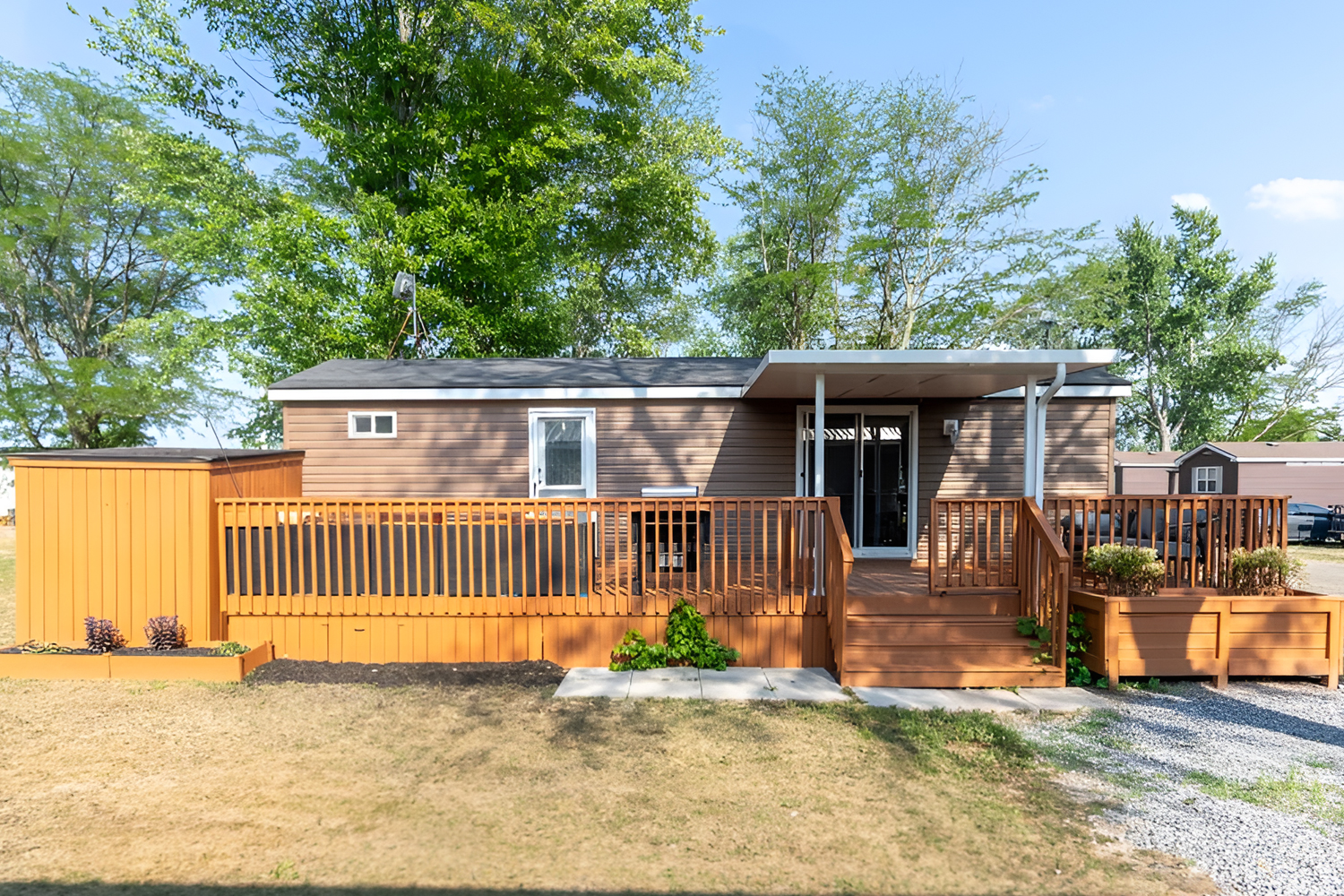
If you love a clean, modern look, this is the one. The flat canopy feels sleek. It also frames the front door like a mini entryway, which looks polished and intentional.
The long deck acts like a front porch, even though it stays low and simple. And the planters do a lot of heavy lifting. They add color. They add privacy. They also keep the deck from looking bare.
This design works great in parks or tighter lots. It gives you outdoor space without eating the whole yard.
Design cues to copy:
- A flat canopy for a modern entry “frame”
- A long, low deck that stretches the front
- Built-in planter boxes to add style fast
- Matching stain on rails, skirting, and planters
- A neat gravel edge on the side for low mess
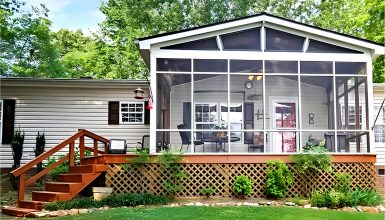
6. The Resort-Style Wrap Deck With a Screened Porch
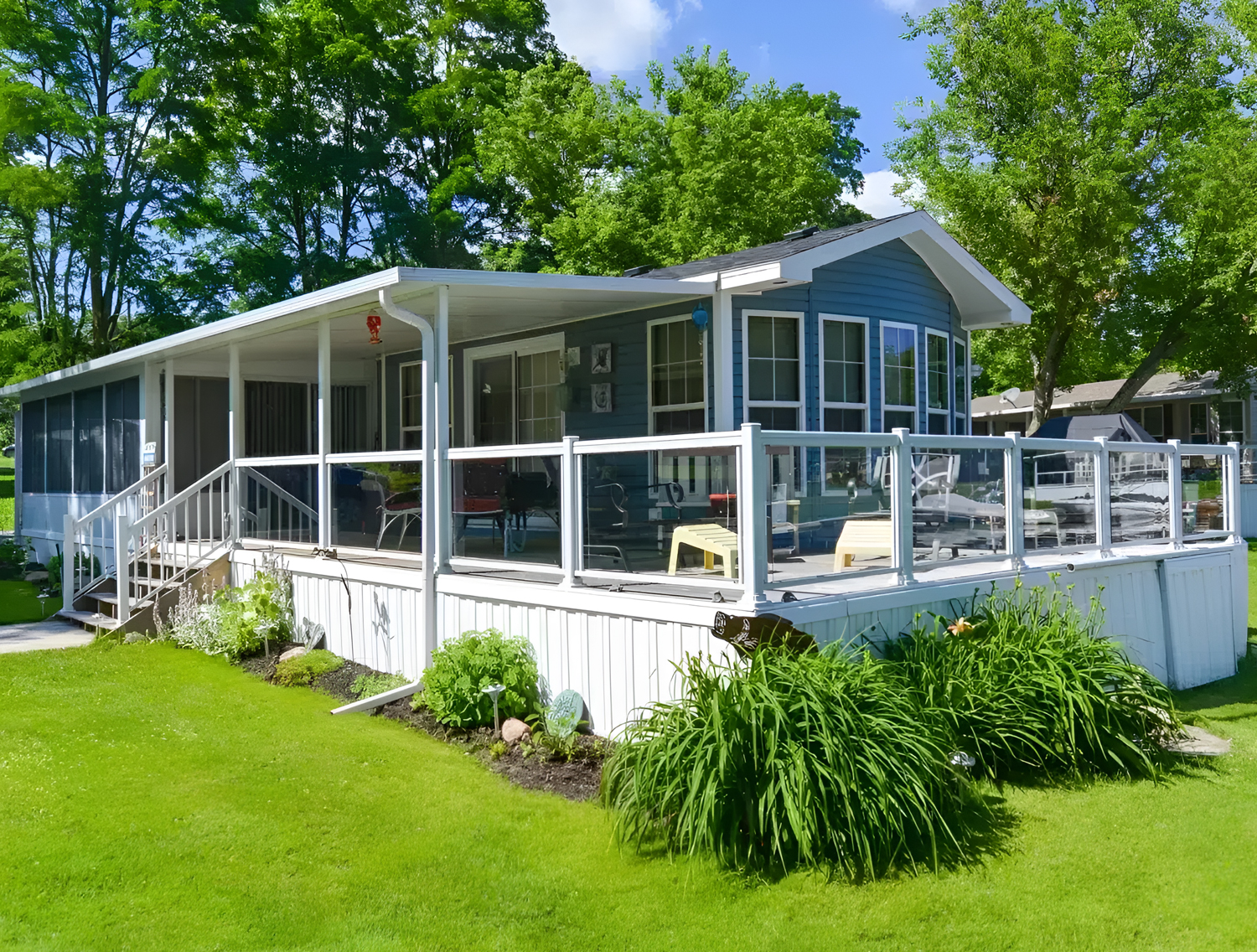
This is the “vacation upgrade” look. The screened porch gives you bug-free lounging. That’s huge near water or trees. It also extends your living space for most of the year.
Then you get the open deck wrap with glass panels. That detail feels high-end. Glass rail panels keep the view open, so the deck feels bigger and brighter. It also looks modern and clean against the classic white trim.
The best part is how it all connects. The screened zone, the open deck, and the entry steps flow as one big outdoor hub.
Design cues to copy:
- A screened porch for comfort and shade
- Glass-panel rails to keep views wide open
- Wraparound deck lines that “hug” the home
- White trim and skirting for a crisp finish
- Simple garden beds at the base for softness
7. The Hillside Deck + Ramp Combo With a Timber Carport
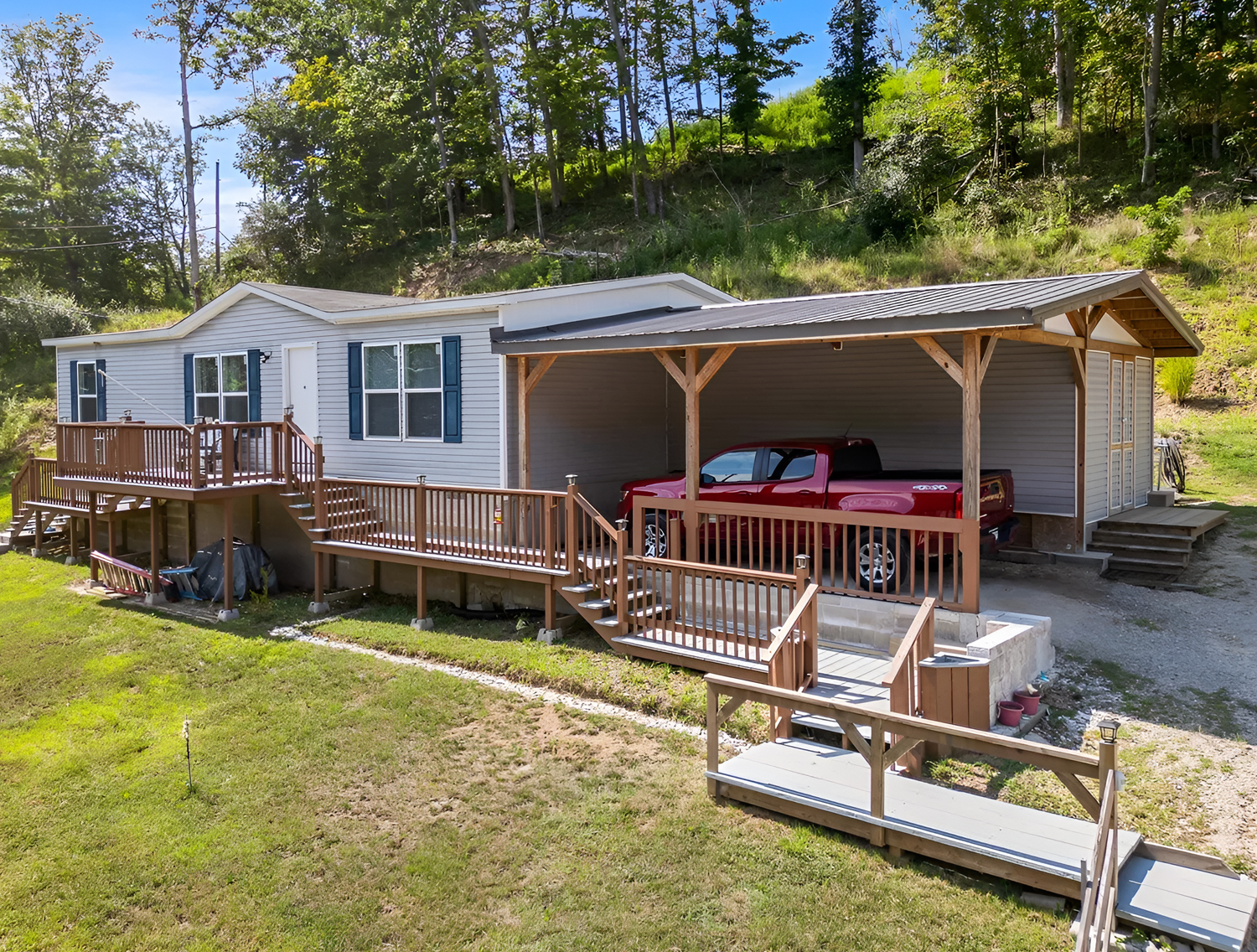
This setup solves real problems. The lot slopes, yet the deck stays usable. That’s because the rail lines guide you through the change in height, and the platform areas create safe stopping points.
The ramp also helps a ton on a hillside. You can move groceries, tools, and bins without fighting stairs. Plus, it makes the whole property feel more connected.
Then you have the timber carport. It matches the deck tone, so everything feels like one design story. The metal roof keeps it durable, and the open sides keep it airy.
Design cues to copy:
- A ramp for easier daily movement
- Level “pause points” so the ramp feels safe
- Matching stain on deck and carport wood
- Metal roofing for low upkeep
- Step lighting or post caps to guide paths at night
8. The Corner Deck That Wraps a Screen Room
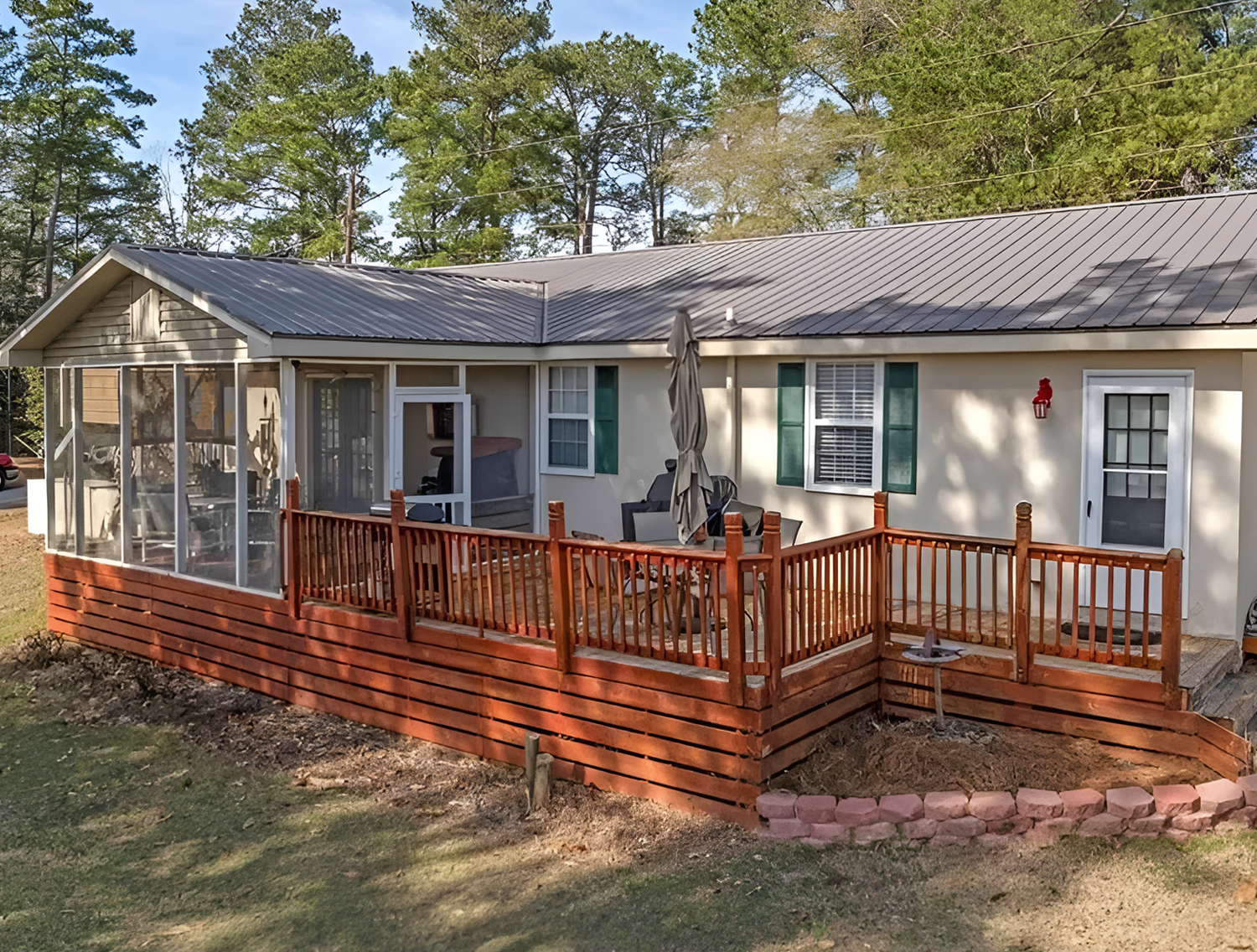
This design blends indoor comfort with outdoor air. The screened room gives you a protected spot for coffee, reading, or dinner. Then the corner deck wraps around it, so you get open-air space too.
The horizontal skirting boards make the base look solid and finished. That detail matters. It hides the underside and makes the whole deck feel built-in.
Also, the corner shape creates a natural “zone.” It’s easy to place a table in one area and chairs in another. So the space stays tidy.
Design cues to copy:
- A screened room for bug-free lounging
- A wrap corner deck for extra square footage
- Horizontal skirting for a clean, solid base
- Rails that match the deck stain
- A small curved border at the edge for a softer look
9. The Ramp-First Entry With a Covered Porch Nook
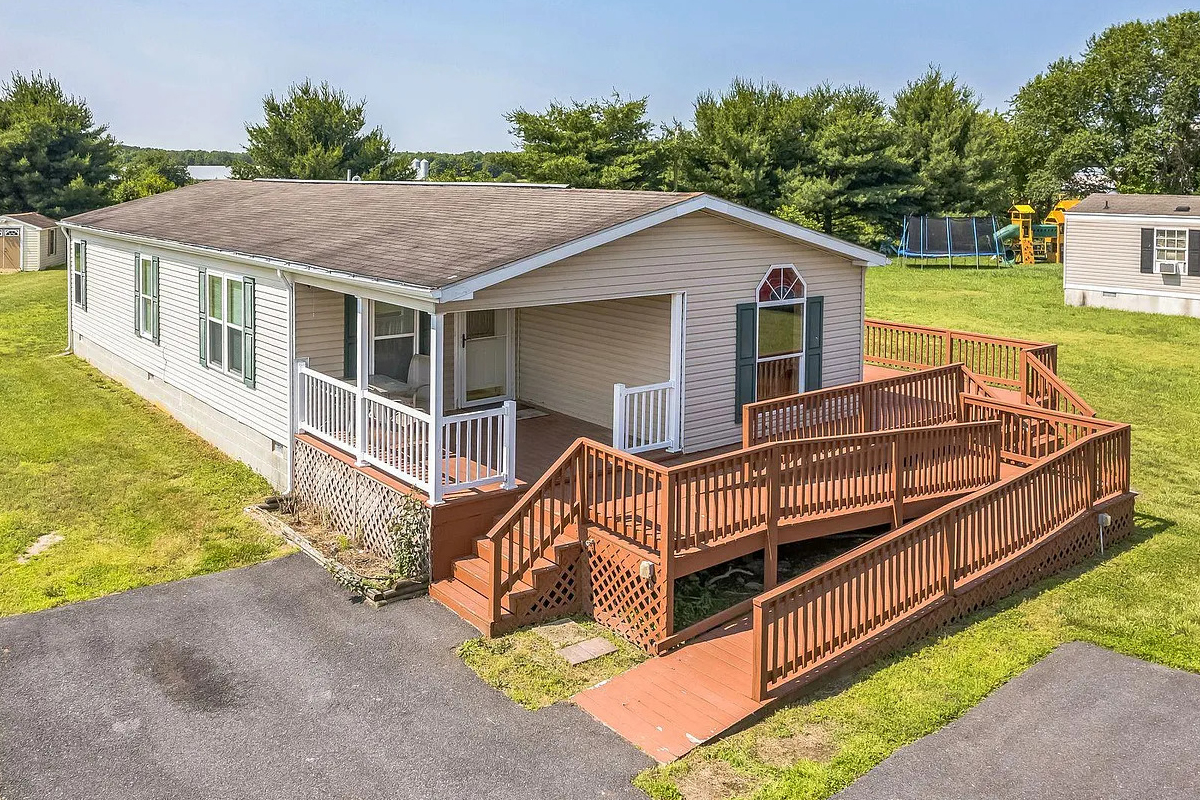
This design puts comfort first. The ramp leads you in with a gentle path. It’s great for anyone who hates icy steps, steep stairs, or heavy loads.
The covered porch nook feels tucked in and cozy. It sits under the gable end, so it looks like part of the original home shape. That built-in feel is the goal with any porch add-on.
The rail layout also keeps things safe. You get clear edges and a guided route from driveway to door.
Design cues to copy:
- A ramp with rails for safe, smooth access
- A covered porch nook for shade and shelter
- Lattice skirting under the deck for a classic finish
- Stairs plus ramp, so you have two ways in
- A landing area big enough for chairs or planters
10. The Classic Wrap Deck With a Covered Front Porch
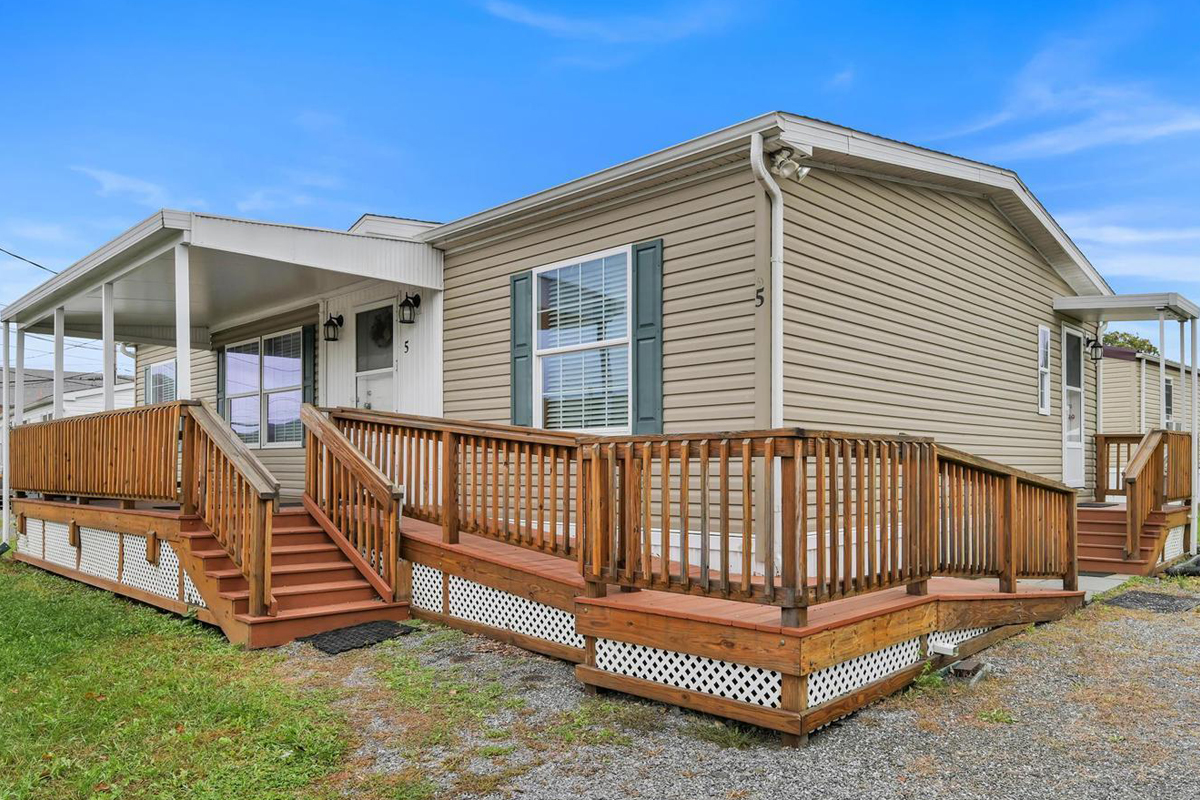
This design feels simple, yet it works hard. The deck wraps the corner, so you get more usable space without a huge footprint. The covered porch section creates a true “front door moment.” That little roof makes the entry feel permanent and welcoming.
The lattice skirting finishes the base. It hides the underside, blocks critters, and makes the deck look built-in. The curved garden border also softens the straight deck lines. As a result, the whole front looks more landscaped and cared for.
Design cues to copy:
- A wraparound corner deck for extra hangout space
- A small gable-style porch roof for shade and shelter
- Lattice skirting for a clean, finished base
- Wide steps centered on the entry
- A curved flower bed edge to soften the deck outline
11. The Center Screened Porch With Matching Side Steps
This home uses symmetry to look polished. The screened porch sits in the center, so it becomes the focal point. You get bug-free lounging, which is a big deal in warm, humid areas. Plus, the screening still lets breezes flow through.
The steps and rails match the porch trim, so everything reads as one project. That consistency is what makes it look high-end. The porch skirting also adds a strong “foundation” line, so the home feels grounded.
Design cues to copy:
- A centered screened porch to anchor the front view
- Matching rails and stair parts for a cohesive look
- Solid skirting panels to make the porch feel sturdy
- A wide landing at the top of the stairs
- Simple porch decor that shows life, not clutter
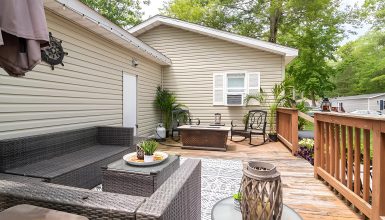
12. The Outdoor Living Room Deck With Planter “Columns”
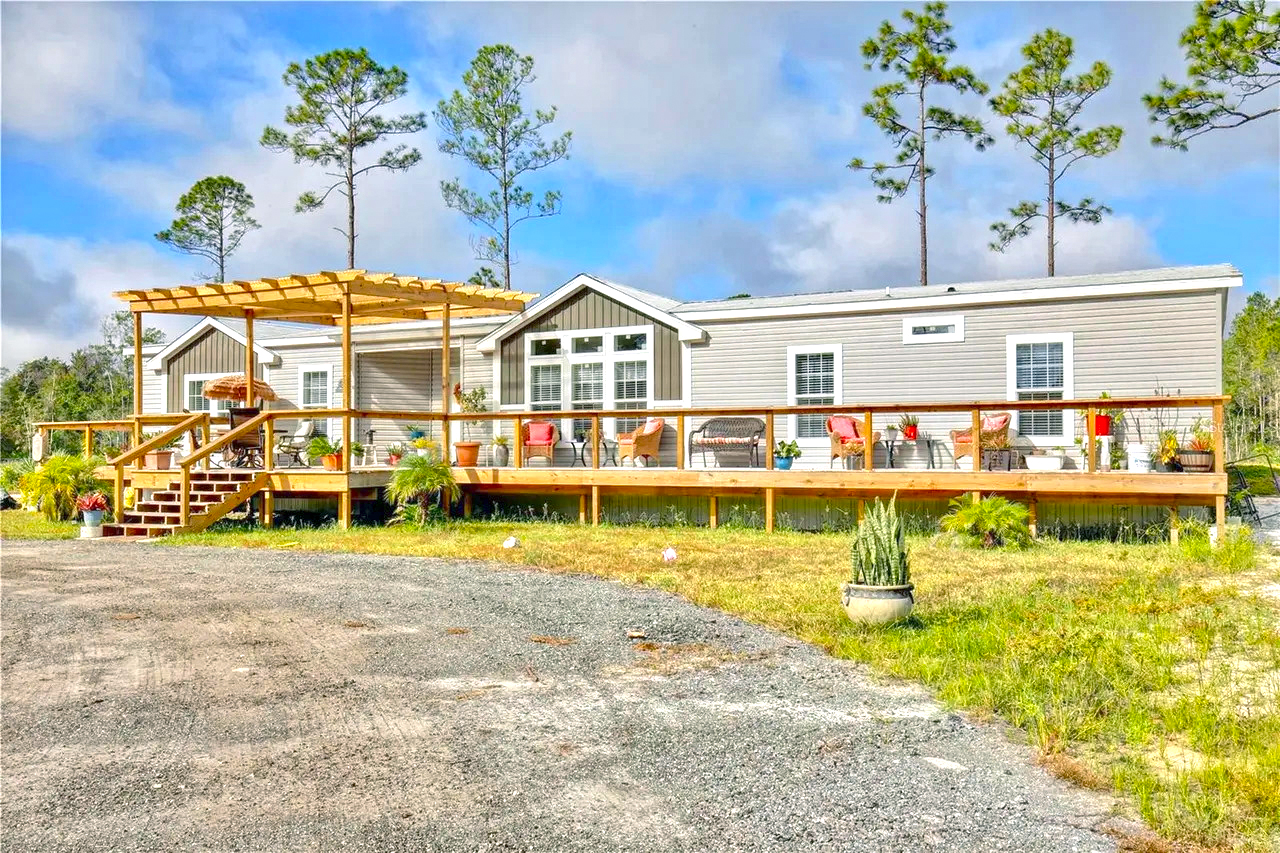
This deck feels like a patio, but lifted and framed. The roof cover over the seating zone creates shade, so you can actually use the space at midday. It also makes the deck feel like an outdoor room, not just a platform.
The chunky planter columns do two jobs. First, they act like visual “bookends,” which makes the entry steps feel grander. Second, they add greenery right where you need it most: at the edge. That keeps the deck from feeling bare.
Design cues to copy:
- A covered section for a true outdoor living room
- Planter boxes or planter columns to frame the steps
- Wide, shallow steps for an easy climb
- Low, open rails so the deck still feels airy
- Hanging plants for instant coziness
13. The Full-Length Front Deck With Lattice and Evergreen Border
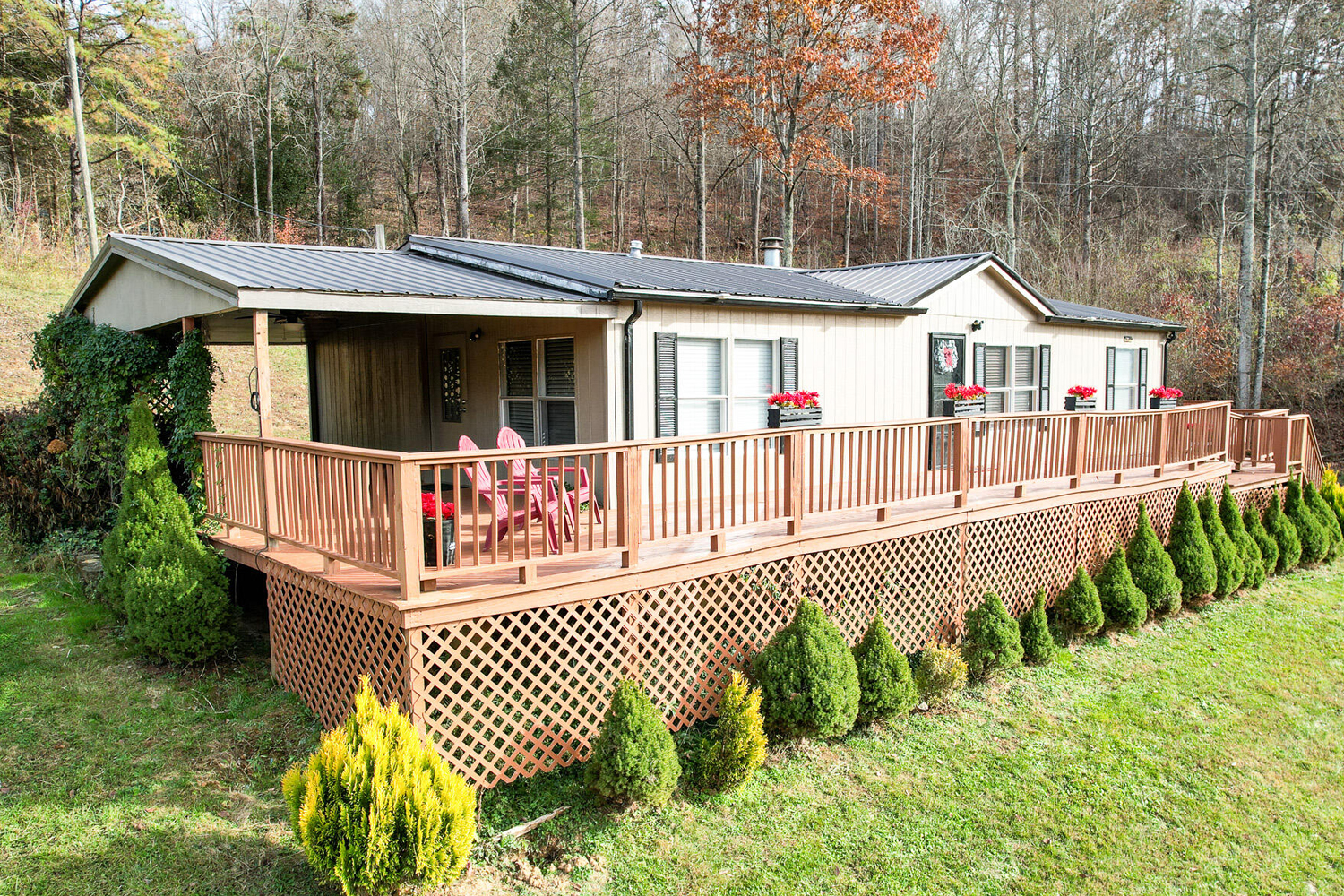
This is the “go big” version, and it’s smart. A long front deck gives you flexible zones. You can place chairs near the door, a dining set farther down, and a grill in another spot. So the deck works like a long porch lane.
The lattice skirting runs the full length, which looks neat and finished. Then the row of shrubs repeats that line at ground level. That repetition makes the whole exterior feel designed. The result looks tidy even with simple furniture.
Design cues to copy:
- A long, straight deck run for multiple activity zones
- Consistent skirting for a clean, continuous base
- Repeating shrubs along the deck edge for structure
- Classic vertical baluster rails for a timeless look
- Pops of color, like window boxes or chairs
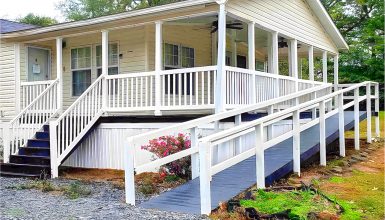
14. The Ramp-and-Stairs Combo Deck With a Covered Porch
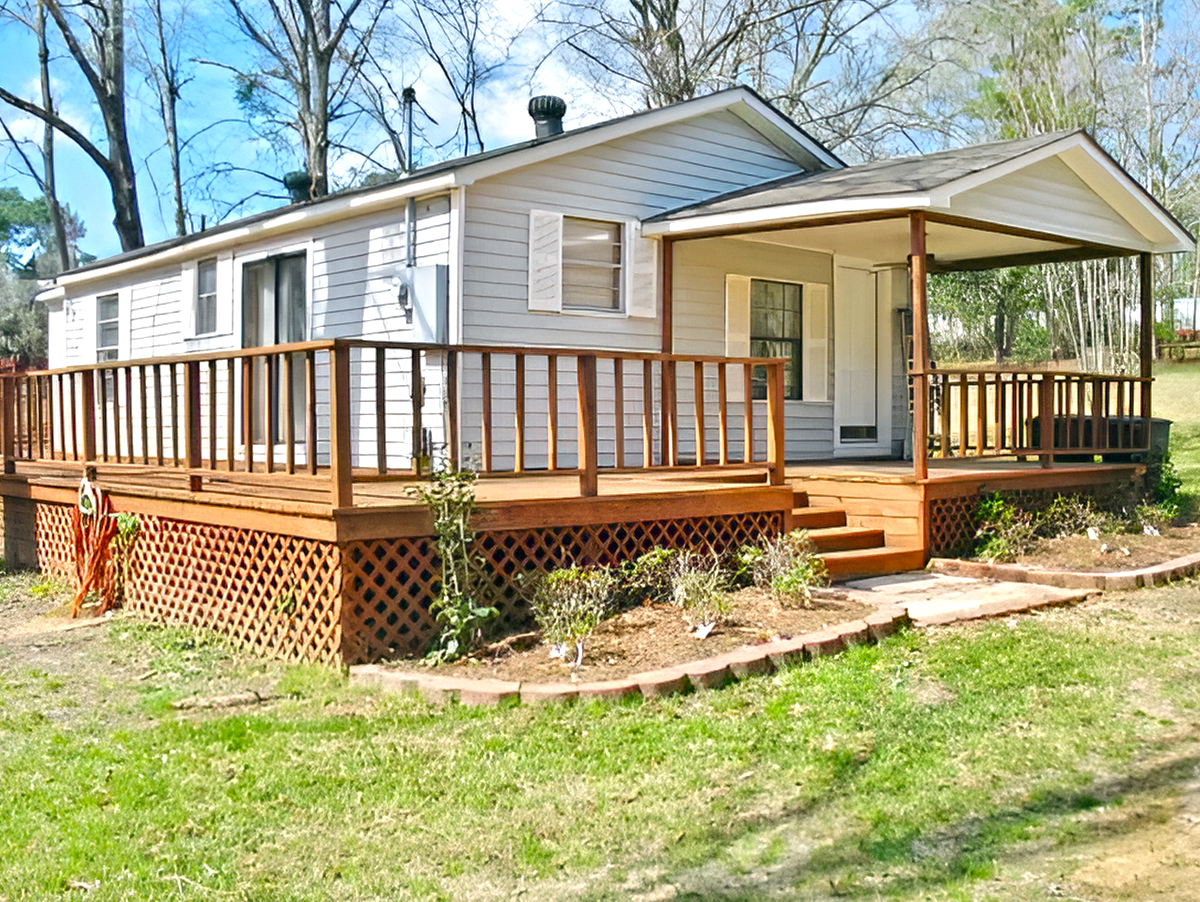
This layout nails everyday function. You get stairs for quick entry. You also get a ramp for strollers, carts, pets, and aging-in-place comfort. That “two-way” access makes the home easier to live in right away.
The wrap rail line also adds safety. It guides guests to the door and defines the deck edge. Meanwhile, the covered porch creates a sheltered spot for packages, shoes, and a small chair. It feels practical and welcoming at the same time.
Design cues to copy:
- A ramp plus stairs so you have two access options
- White skirting for a crisp, finished look
- A covered porch zone to protect the entry
- Rails that wrap corners for safety and flow
- Gravel or stone around the base to reduce mud
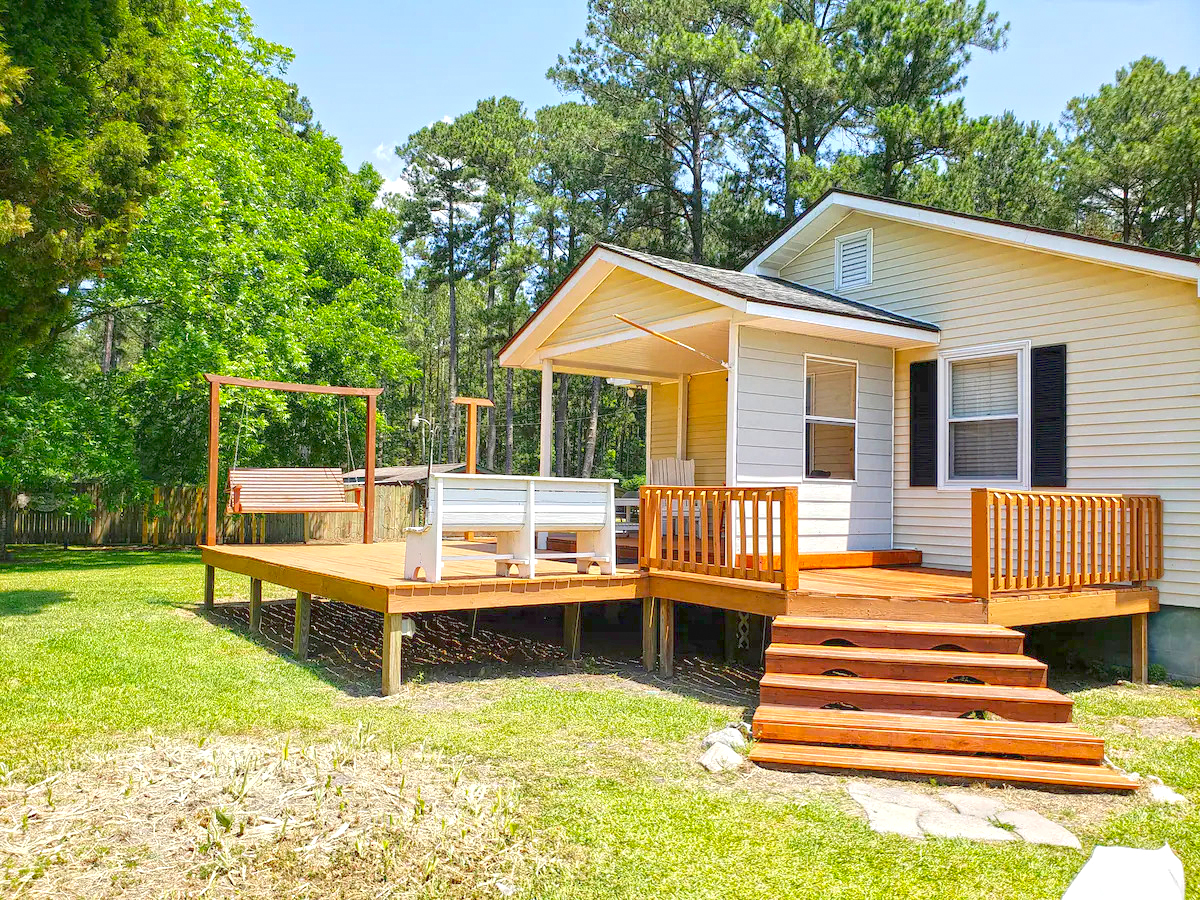
15. The Small Porch + Side Deck With a Swing Frame
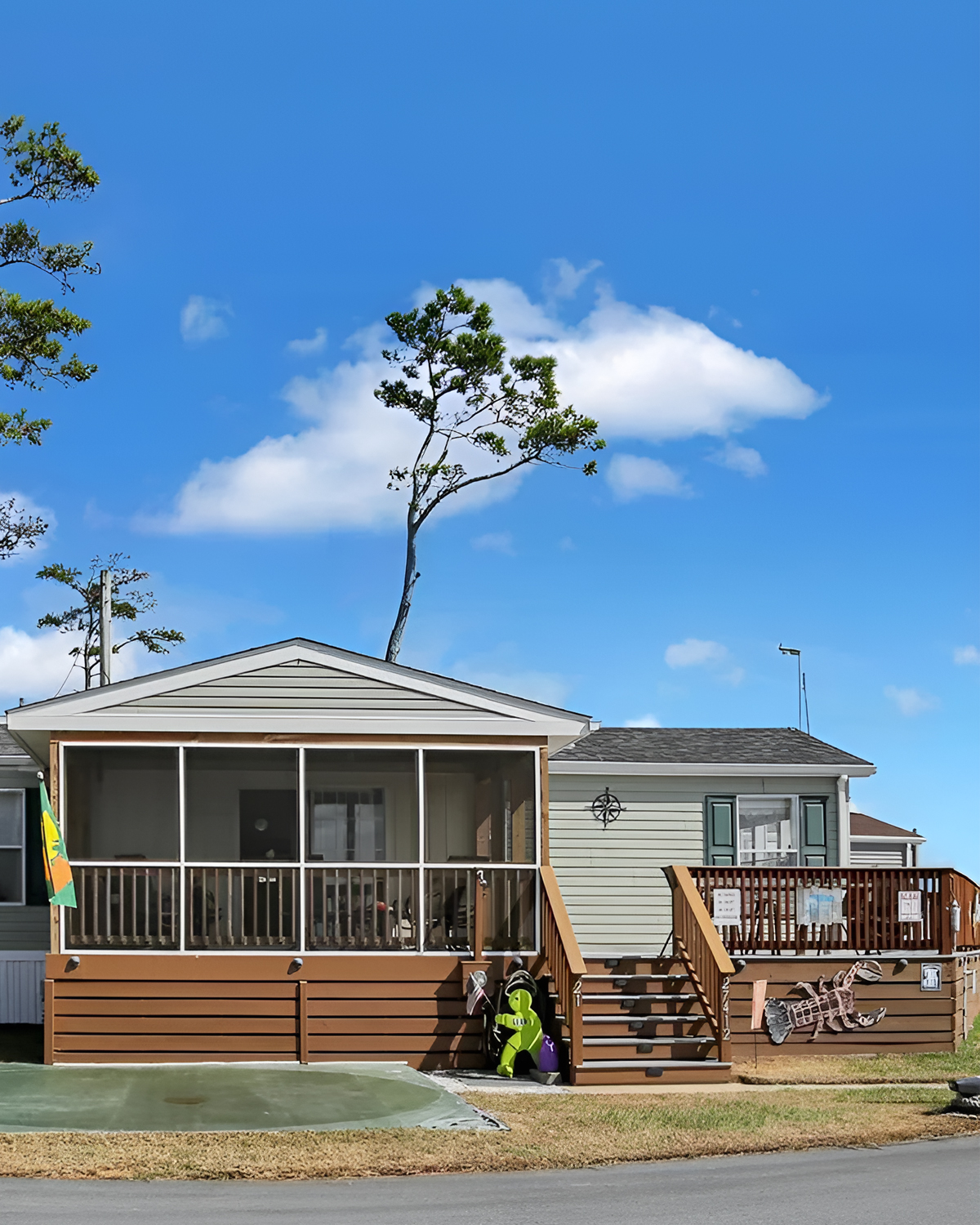
This design proves you don’t need a giant deck to get a big lifestyle boost. The porch section near the door stays compact, which keeps the entry clean and simple. Then the side deck adds the “fun.” That’s where the swing frame creates a destination.
The swing pergola frame also adds height. That helps the home feel less flat from the yard. And because the deck sits slightly raised, it feels like a stage for relaxing, not just a step.
Design cues to copy:
- A small porch at the door to keep the entry tidy
- A connected side deck for lounging or play
- A simple swing frame or pergola-style posts
- Wide stairs with deep treads for comfort
- Minimal rails so the view stays open
16. The Extra-Long Deck With a Pergola Lounge
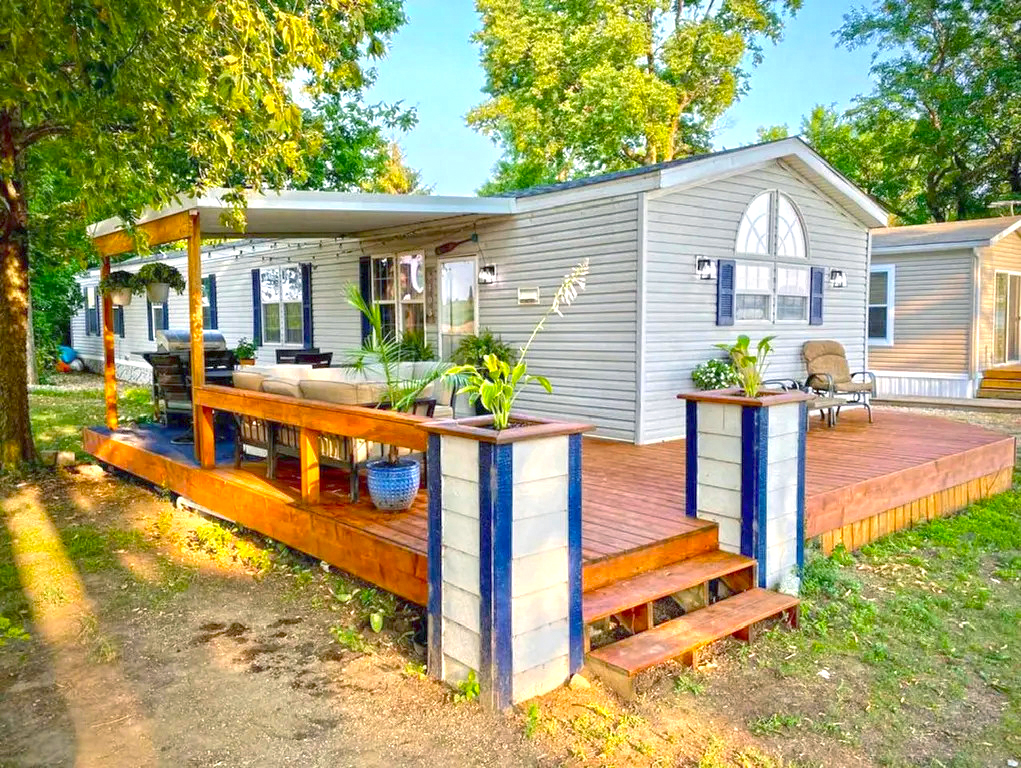
This is a deck that behaves like a front sidewalk, patio, and porch all in one. The long run gives you serious flexibility. You can spread out seating instead of cramming it near the door. That alone makes the home feel bigger.
The pergola area acts like a “room marker.” It tells you where the hangout zone starts. Plus, it adds style without needing a full roof. Add string lights, and it feels like an outdoor living room at night.
Design cues to copy:
- A long deck run to expand daily living space
- A pergola to define the lounge area
- A straight rail line to keep the look clean
- Mixed planters for easy color and texture
- A wide stair entry for smooth traffic flow
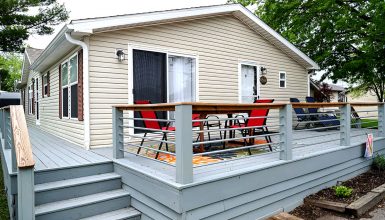
17. The Modern Cable-Rail Deck With a Grill Pergola and Screen Room
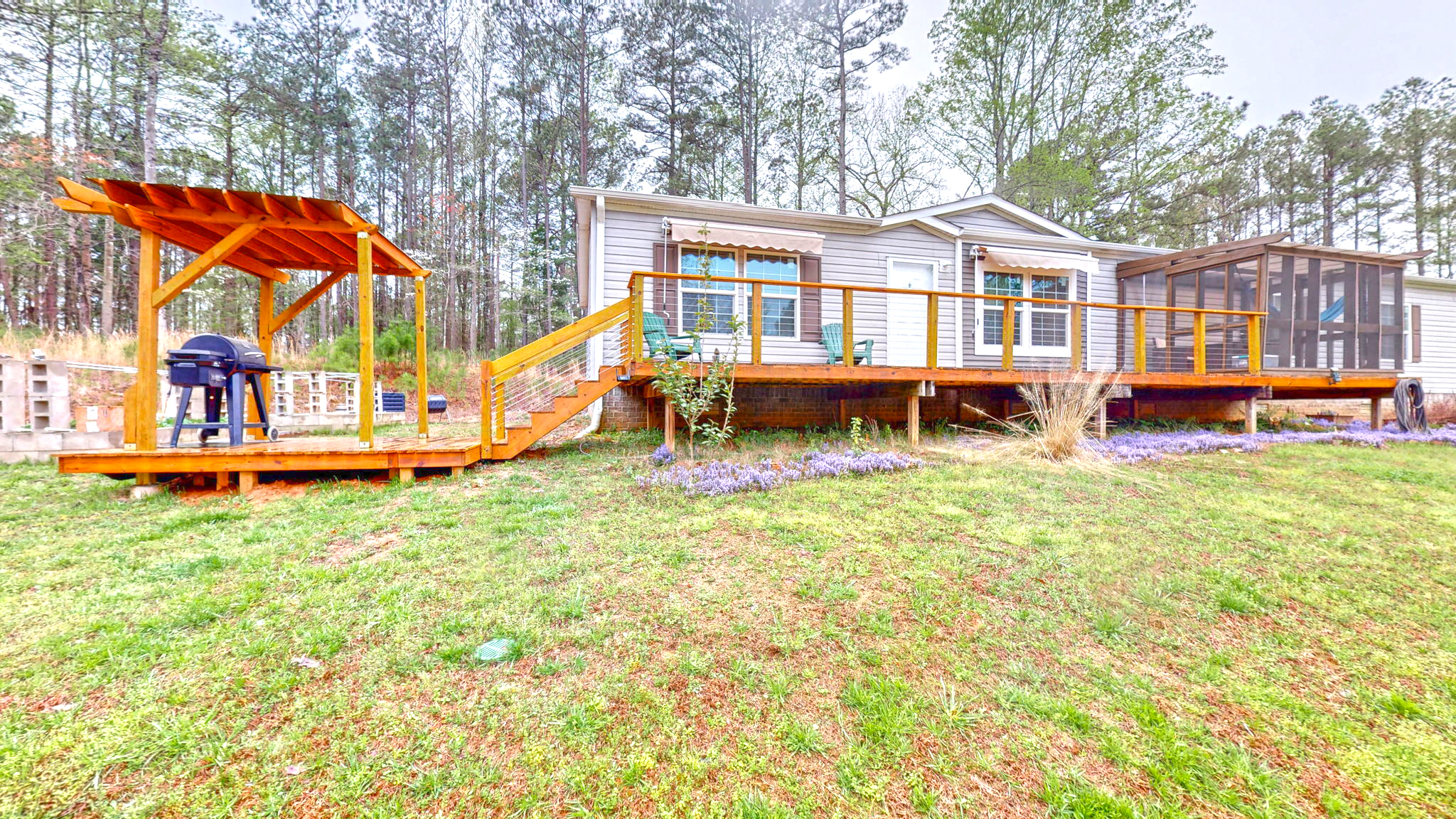
This setup looks modern and organized. Cable rails keep the view open, so the deck feels bigger. They also look sleek against simple siding. That “less visual clutter” effect makes the whole exterior feel updated.
The pergola over the grill creates a clear cooking zone. It also helps with sun control. Then the screened room adds comfort for evenings, bugs, and rainy days. Because each area has a purpose, the whole deck feels like a real outdoor floor plan.
Design cues to copy:
- Cable rails for a modern, open view
- A pergola over the grill to define the cooking zone
- A screened room for all-weather lounging
- Simple, matching wood tones for a unified look
- Low landscaping along the deck edge to soften the height
Conclusion
A deck or porch doesn’t just change how your mobile home looks. It changes how it lives. Suddenly, you have a spot for coffee in the morning. You have a place to grill, sit, and wave at neighbors. And you get an entry that feels finished, not forgotten.
Use these 17 designs like a menu. Mix the ideas you love. Keep the cues that fit your space. Then start with one simple upgrade, like better steps, a shade cover, or skirting that looks neat. Little by little, your outdoor area will feel like your favorite room.